I've been a fan of Japanese popular music for 40 years, and have managed to collect a lot of material during that time. So I decided I wanted to talk about Showa Era music with like-minded fans. My particular era is the 70s and 80s (thus the "kayo kyoku"). The plus part includes a number of songs and artists from the last 30 years and also the early kayo. So, let's talk about New Music, aidoru, City Pop and enka.
Credits
I would like to give credit where credit is due. Videos are from YouTube and other sources such as NicoNico while Oricon rankings and other information are translated from the Japanese Wikipedia unless noted.
Showing posts with label Hiroshi Miyagawa. Show all posts
Showing posts with label Hiroshi Miyagawa. Show all posts
For those people like myself who's known singer Naomi Chiaki(ちあきなおみ)for her biggest hit "Kassai"(喝采)from 1972, this song by her might be a tad different. I heard it performed on a recent episode of "Shin BS Nihon no Uta"(新BS日本の歌).
"Yoru e Isogu Hito"(A Woman Running into the Night) was Chiaki's 26th single released in September 1977, and it was one of a number of songs for her around that time which had the singer requesting works by New Music singer-songwriters such as Miyuki Nakajima(中島みゆき)and Eigo Kawashima(河島英五)to record. For "Yoru e Isogu Hito", folk singer-songwriter Kazuki Tomokawa(友川カズキ)was the one behind words and music here.
The whole thing about this song from my vantage point is that it's about all of the potentially sordid goings-on within an inner city neighbourhood somewhere in the metropolis whether that would be an area like Kabukicho in Tokyo. The titular woman escaping somewhere among the laneways and alleys is the central figure surrounded by a person who stops her by grabbing her by the shoulder, people who are ignoring the scene and passing by and other folks who are staring and laughing at the plight of the lady. Not exactly Mr. Rogers' neighbourhood we are talking about.
"Yoru e Isogu Hito" is also interesting in its arrangement by Hiroshi Miyagawa(宮川泰). It may have been created by a New Music fellow but it still sounds like a kayo kyoku with elements of rock and funk. For that matter, it also sounds custom-fit for Chiaki, albeit a Chiaki who's gotten a little wilder and devilish. In fact, when the singer performed the song on the 1977 edition of NHK's Kohaku Utagassen, she put in quite a lot of theatricality in her performance including some throaty screams at the end, all to emphasize the lyrical theme of a woman in a frenzy. I'd probably say that there was even something of the horror movie in this one. Apparently, the captain of the White (Male) team right after Chiaki's performance admitted that he was somewhat freaked out by what he had just witnessed...saying that was quite the gross-out song.
Going back to my youth, I remember those over-and-over reruns of "Uchuu Senkan Yamato"(宇宙戦艦ヤマト...Space Cruiser Yamato), aka "Star Blazers" outside of Japan, with the original seasons of the Iscandar mission and the Comet Empire saga. That penultimate episode of the latter season when it looked like the evil Prince Zoldar and his empire finally crumbled only to reveal a Super Star Destroyer filled with absolute revenge arguably represented one of the greatest anime cliffhangers.
Of course, sticking with the "Star Blazers" line, the finale had to wrap up some loose threads along with the main one involving the Comet Empire. What happens to the crew of the Argo and what of helmsman Mark Venture who supposedly gave up his life in defense of the ship a few episodes earlier? And what of Trelaina of Telazart, the sylph-like whistleblower who began the entire story and ended up falling for Mark?
Well, in the original "Yamato" series, Trelaina was actually named Teresa which I guess sounded exotic enough for Japanese viewers (although the late singer Teresa Teng was already well-known in Japan), although folks in North America must have wondered whether if the lass had sisters named Mabel and Connie. Anyways, along with the iconic Comet Empire theme done by the legendary composer Hiroshi Miyagawa(宮川泰), another constant musical piece in the second season was Teresa's own theme titled "Teresa no Tameiki"(Teresa's Sighs).
The song as I remember it was a sad and lonely one for Teresa and even her relationship with Mark was all too brief before she seemingly had to make the ultimate sacrifice for Earth. On Christmas Day1978, Miyagawa released a concept album connected with "Yamato" titled "Fumetsu no Uchuu Senkan Yamato: New Disco Arrange"(不滅の宇宙戦艦ヤマト ニュー・ディスコ・アレンジ...The Indestructible Space Cruiser Yamato: New Disco Arrangement) where some of those familiar tracks from the series received some more syncopated oomph. I don't think the treatment given to "Teresa no Tameiki" is particularly disco but it's more of a mild City Pop thing with some of that haunting voice which was common to a fair number of Miyagawa pieces in anime. Had to laugh a little at the name of the group performing the tracks: Yamato Discotheque Orchestra.
There was a scene in "Superman" (2025) when Lois Lane was pouring a ton of sugar into her coffee which struck me as being a very Lois Lane thing to do. I've enjoyed my Tim Hortons double-double, but even I won't put that much sugar into coffee or tea. I did have a friend who was pushing Lane levels of sugar infiltration, though.
Anyways, my last Yukari Ito(伊東ゆかり)article was delving into her City Pop/J-AOR phase in the late 1970s/early 1980s but this time, I'm returning to her very early days as a teenybopper singer back in the early 1960s. To remind folks, Ito was one of a number of pop singers who put out as many Japanese covers of English-language hits as they did original kayo kyoku, and it turns out her 7th single from July 1961, "Pocket Transistor"(ポケット・トランジスター)had a B-side titled "Sixteen Cubes of Sugar". Written by Takashi Otowa(音羽たかし), the pseudonym used by any employee at King Records to translate an English pop song into Japanese, and composed by Jack Keller with arrangement by Hiroshi Miyagawa(宮川泰), Ito does her Connie Francis best on this spritely tune with the amassed energy of sixteen cubes of sugar.
Now as I said before, Ito's "Sixteen Cubes of Sugar" was a cover of an English-language pop song that had probably been released as recently as just a few months before the cover. I'd imagined that it was indeed the aforementioned Connie Francis who had recorded the song, considering the vocals and style. However, the original...with the same title...had been done by American pop singer Brian Hyland who had earlier come up with the more famous kitschy number "Itsy Bitsy Teenie Weenie Yellow Polkadot Bikini".
It was probably one of the few times that "Uta Con"(うたコン)showed an episode tonight which didn't have a particular theme for the first fifteen minutes or so. However, one highlight was seeing 60s aidoru Yukari Ito(伊東ゆかり)and Mie Nakao(中尾ミエ)appear. Those two and Mari Sono(園まり)had formed one of the earliest kayo kyoku Gosanke(御三家),the Spark Sannin Musume(スパーク3人娘), in that decade. And unfortunately, the reason that Sono herself didn't show up with her former comrades is that the singer had passed away on July 26th this year at the age of 80 from heart failure.
The Spark Sannin Musume were scheduled to do a medley of their hits. However, a clumsy scene cut and the one performance of "Aitakute, Aitakute"(逢いたくて逢いたくて)by the remaining members tonight and Sono herself via vintage footage made it pretty clear that Jme had to cut out the rest of the medley in the high likelihood that those songs were Japanese covers of American hit tunes (due to the usual copyright issues). A lot of pop singers back then were doing those as much as they were doing original Japanese kayo.
Well, for my own tribute to Sono, I've decided to feature her January 1964 single"Kiichatta! Utacchata! Naichatta!" (I Heard It! I Sang It! I Cried to It!). It's an original Japanese tune done in a doo-wop rock n' roll style with Hiroshi Miyagawa(宮川泰)handling the music while Kazumi Yasui(安井かずみ)took care of the lyrics. It's pretty darn slick enough so that perhaps even fans of the old American pop from the 50s and 60s might wonder if it had been a cover of something by Connie Francis.
Sono may have had the A-side but both Nakao and Ito also sang the song as B-sides to their own January 1964 singles, "Onna no Ko damon"(おんなのこだもん...Cause I'm a Girl) for Nakao (above) and "Uta wo Oshiete"(歌をおしえて...Teach Me a Song) for Ito (below), with fairly different arrangements.
My belated condolences to Sono's family, friends and fans...and also to her Gosanke mates, Ito and Nakao.
When this movie hit the theatres in late 1963, I was unfortunately yet to arrive on this mad, mad, mad, mad world for several more months, so my first viewing of "It's a Mad, Mad, Mad, Mad World" was through its rerun on CBS one Saturday night when the network hadn't minded donating three hours of air time to this epic comedy.
And boy, was it epic! From what I learned, the movie industry was in some turmoil at the time since television had been stealing cinema's thunder and viewership. The studios had to throw in every trick ranging from Panavision to humongous casts to bring back bums into seats. So, you had these historical epics such as "The Ten Commandments" and big caper movies such as the original "Ocean's Eleven". Then you had "It's a Mad, Mad, Mad, Mad World" directed by Stanley Kramer who, a couple of years earlier. had helped make the extremely serious "Judgment at Nuremberg" with its own big cast including Spencer Tracy, Judy Garland and William Shatner involved with the theme of fascism and war.
"It's a Mad, Mad, Mad, Mad World" then was Kramer's far more jovial take on greed and what it does to people. And in this case, the movie vacuumed up just about every comedian in existence (Sid Caesar, Milton Berle, Dick Shawn, etc.) over forty years and dumped them into California with starring and cameo roles. As a kid, I was heaving up my internal organs like a scared sea cucumber as I watched scenes like Jonathan Winters' one-man rampage in a garage.
Then, there was Barrie Chase's weirdly alluring dance (Chase is now the only surviving cast member) along with an unbelievable final car chase which didn't have any action-movie stars but terrified funny people. And that led to the final comeuppance and takedown of almost everyone via a poor fire truck ladder. Spencer Tracy as an escaping police captain? Check. Peter Falk, years before Columbo? Check. Milton Berle as a milquetoast? Check. The Three Stooges in colour? Double check.
And adding to the joyful lunacy of it all? Ernest Gold's soundtrack including the main theme. The Saul Bass opening credit sequence with the theme are worth the price of admission all on their own. Gold got the whole premise of "It's a Mad, Mad, Mad, Mad World" and reflected that with the crazed circus arrangement of the theme which picks up here and there throughout the movie.
There was even a sung version with Mack David's lyrics and not surprisingly, the content is appropriately mad. The theme was nominated for an Oscar for Best Song but the actual winner for the movie at the Academy Awards was in Best Sound Effects. After all, Jimmy Durante kicked that bucket really melodiously.
As for the comparison that year in Japan, I'm going with the 5th Annual Japan Record Awards and specifically the winning songwriters this time around in 1963.
I have to give credit where credit is due and say that the above photo is from the online site "Streets of Toronto". Somewhere in my home, there is a picture of the old Silver Snail but I couldn't be bothered to sift through drawers and other nooks and crannies to track it down. Now, for all those in my hometown who are into the comics and other aspects of pop culture like anime, the Silver Snail was the emporium for all of that. It used to be located in the bohemian Queen West neighbourhood in an old-fashioned house for the first 36 years of its life.
My first visits to the Silver Snail happened while I was at University of Toronto. My friend introduced me to it and it was only a 15-minute walk down from campus. It was definitely an eye-opening experience just for the wonderful interior décor, the tons of comics and most importantly, the examples of Japanese pop culture I could actually physically buy in the years before the now-customary habit of getting them online. Coincidentally, this all went down when that same friend introduced me to the Chinatown record stores a few blocks north in between the Silver Snail and U of T where I could actually buy Japanese records. I'd say it was a darn fine year. And so, I bought my fair share of J-Merch including the following:
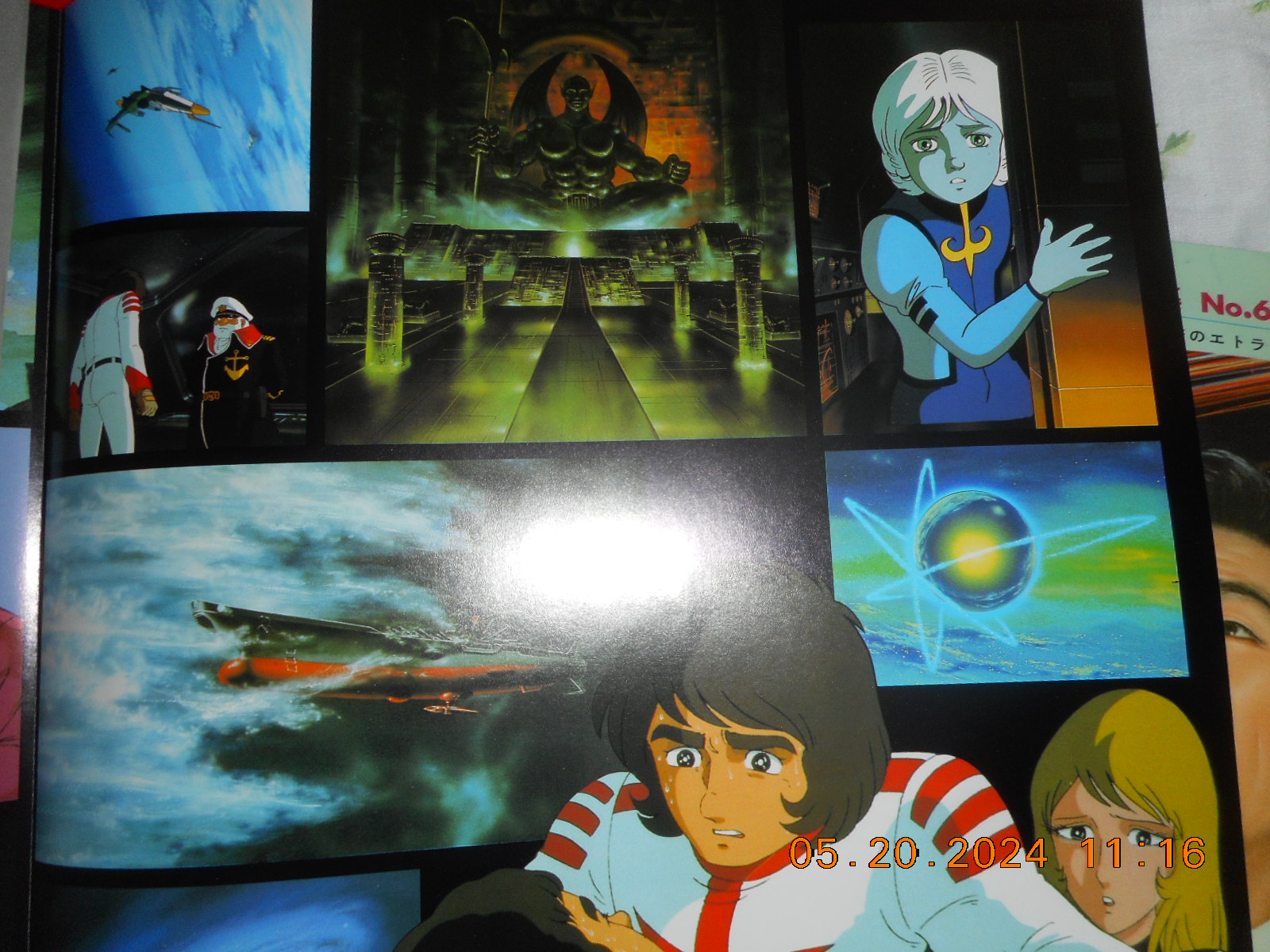
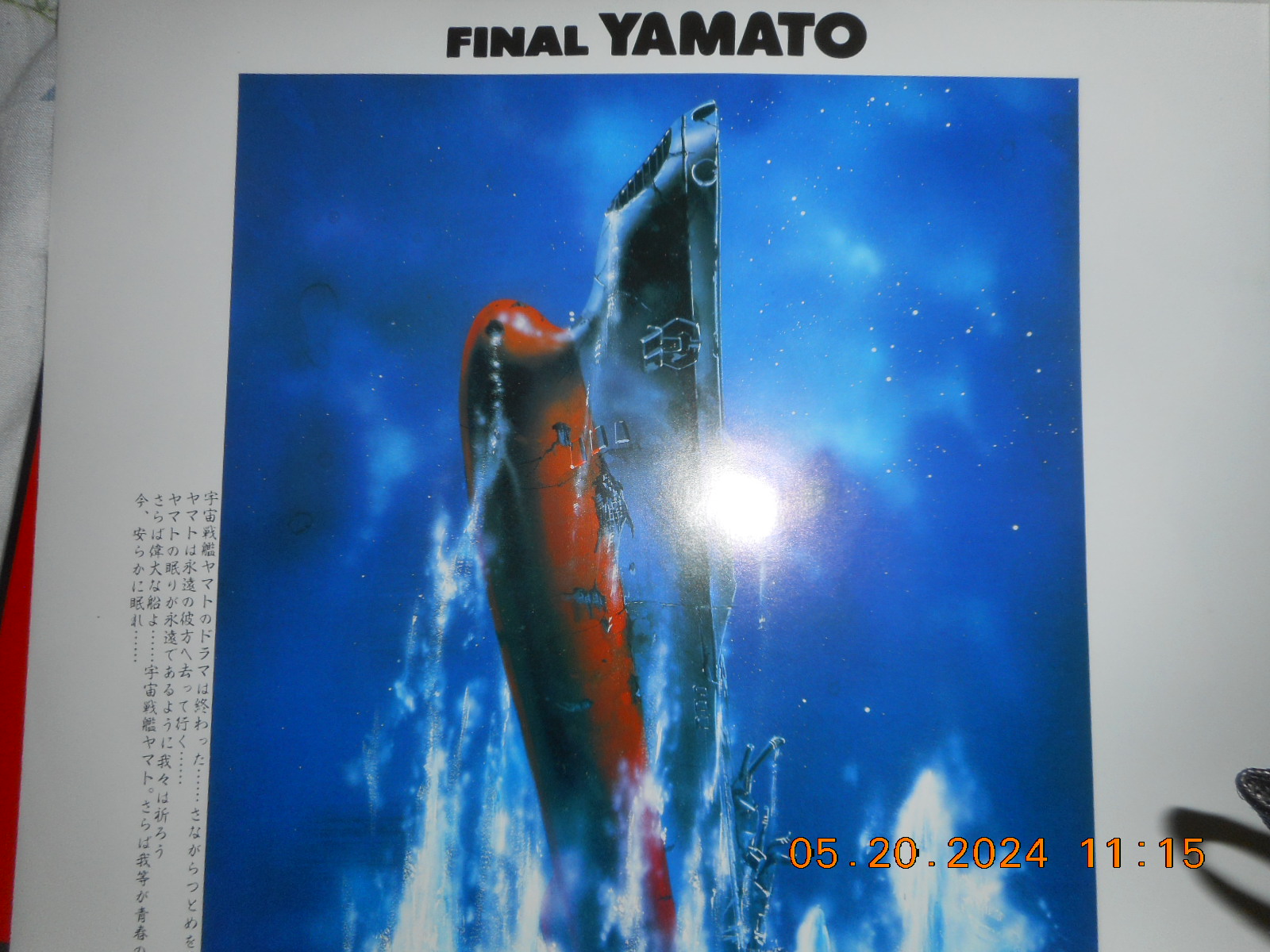
Yup, just like that copy of Seiko Matsuda's(松田聖子)"Train" album that beckoned me to buy it at Wah Yueh in Chinatown, this beauty was also calling my name in Silver Snail. I'd already purchased my fair share of "Uchuu Senkan Yamato" guidebooks at $20 CDN a shot including the one for the supposedly final entry of the original franchise, the film "Uchuu Senkan Yamato Kanketsuhen"(宇宙戦艦ヤマト 完結編...Final Yamato) which was first released in March 1983. So, they put an end to the story of the mighty battleship, eh, I thought. I had no idea until a couple of years later.
Well, it only took a few more longing gazes between the soundtrack and me before I finally pulled the trigger on my wallet. I forgot how much cash I forked out; I remember that it wasn't cheap. At first, I'd assumed that "Uchuu Senkan Yamato Kanketsuhen Tehma Ongakushuu II" (Theme Music Collection II) was the one-and-only soundtrack for the movie. I guess I couldn't read the "II". Apparently, the music for the film was so grand and epic that the record company had to make release it all via two albums. Mind you, I think "II" has the more dramatic cover with a wrecked Yamato making one final rise above the water.
Being unaware of it at the time, with this album, I began the tradition of listening to movie soundtracks before even seeing the movie itself. That was the case with J.J. Abrams'"Star Trek" in 2009 and then "Avengers: Endgame" in 2019 (although I never bought the soundtrack...thank you, YouTube). However, getting back to "Uchuu Senkan Yamato Kanketsuhen Tehma Ongakushuu II", the first impression that I got from the album was that, except for one track, there was nothing in there that tied me back to the old music that I got to know and love from the TV series. It was all very John Williams, Gustav Holst, Sergei Rachmaninoff and any other classical composer that would create music for an 18th-century ball.
And that was true right from the first track, "Futatsu no Ginga"(二つの銀河...Two Galaxies). Now, actually the above video is playing a truncated version that was on a later release called "YAMATO SOUND ALMANAC 1983-Ⅳ" and perhaps even "Uchuu Senkan Yamato Kanketsuhen Tehma Ongakushuu I". I couldn't find the copy from "II" but at least this video will still give you an idea of what hit my ears with a bang when I first put the record onto the turntable. Man, what kinda mess did the Yamato get into now, I thought.
Well, as it turns out, the album was a collaboration between Hiroshi Miyagawa(宮川泰), who was the go-to guy for all things Yamato, and Kentaro Haneda( 羽田健太郎)who had a lot to do with another major anime franchise "Macross"(マクロス)including the Lynn Minmay song "0-G Love". I was curious about what got Miyagawa and Haneda to take such a different approach with the soundtrack for the final movie, and they simply said that they didn't want to get stuck in a rut with variations on the old stuff; they wanted the franchise to go out with a bang of new compositions. By the way, Miyagawa was responsible for "Futatsu no Ginga".
Miyagawa was also behind "Lugal Soutou no Sensou"(ルガール総統の戦争...Supreme Ruler Lugal's War) which is one massive battle song starting with the strings falling down the equivalent height of the Empire State Building. Again, I hadn't seen the movie yet but listening to this track, I could imagine one heck of a firefight between the Yamato and Lugal's forces.
A quick aside from me, but I couldn't help but see the evil Emperor Lugal as looking a whole lot like actor Kelsey Grammer from "Frasier" and "Cheers". I wonder how far the commute was between Boston and the planet Denguil?
"Shima wo Omou"(Remembering Shima) was another Miyagawa composition. I had already seen what was to become of Chief Navigator Shima through the "Final Yamato" guidebook, and then I finally saw the scene many years later. It's naturally going to be very dramatic and tragic but I kinda wished that they hadn't made the piece so loud in the movie since it rather distracted from the very sad outcome.
I mentioned earlier about that one familiar track. Well, it was this one, "Fight Cosmo Tiger II"(FightコスモタイガーⅡ). It certainly starts with the razor slash of brass that launched a major attack by the Yamato's air corps in the old series, but then Miyagawa replaces the rest of it with an epic disco orchestra number that sounds like it flew in from a "Lupin III" soundtrack.
I've been really trying to find any of the tracks that had been composed by Haneda, and I finally found one, "Hisou no Bolero"(悲愴のボレロ...Sorrowful Bolero). To let you in on one thing about this soundtrack...I had actually recorded it onto audiotape and I used to play it all the time whenever I was pulling an all-nighter during high school and university. "Fight Cosmo Tiger II" and "Hisou no Bolero" were the two tracks that blew me awake whenever I was in danger of nodding off, especially the latter track. Ravel would probably be proud of Haneda's own take on a bolero and when it was time for this song, I would usually bonk my desk with my fist when I heard the timpani hit.
How very convenient of you to come back to life, Captain Okita! I was never all that sold on the plot device of the original commander of the Yamato being in a coma all that time just to return for that one final mission. But hey, Captain Kodai had to have his happy ending with Ms. Mori at the end (and boy, did they), so Okita was the guy to take the Yamato to her final fate. And all that was accomplished with the accompaniment of the huge Haneda piece "Symphony of the Aquarius" that seems to encapsulate one climactic battle sequence in its arrangement and time of nearly 10 minutes! If there were ever an opera version of "Yamato", this is the one track that would have to be incorporated.
I'm not usually a classical music fan so it took me some time to get accustomed to this soundtrack but thanks to time, maturity and a lot of all-nighters, I can happily accept this album into the pantheon of Yamato music. As for the Silver Snail, I now realize how long it's been since I visited the place. Back in 2012, the emporium moved out to Yonge Street for the next nine years as a squeezed-in walk-up above a burger joint. I got used to it but it wasn't the same anymore. Then, I literally found out a few minutes before starting this article that the place had moved back to Queen West almost three years ago. It's not at the same old address but a little further west but at least it's got a proper storefront again. I will have to drop by someday.
I've made my comments known about the history of "Uchuu Senkan Yamato"(宇宙戦艦ヤマト), aka "Star Blazers" here in North America and how we as kids swooned and cheered over the exploits of the fine crew of the Yamato. In my area, it was first broadcast on the independent Buffalo affiliate WUTV Channel 29 in the afternoons which put a swift kick into our keesters to get home ASAP from school to catch episodes lest the captain fire the Wave Motion Gun without us.
But then for years afterwards, the first two seasons of the show: the Iscandar odyssey and then the war against the Comet Empire would recycle over and over again going deep into the 1980s as "Yamato" then got shown on our local multicultural channel here in Toronto in the mornings. During that time, I went from junior high school to university just to show how much of a staple it became.
While at University of Toronto, I discovered all of those comic book stores on Queen West, about a 10 to 15-minute walk down from the campus, and one of them was the grand Silver Snail. It was there that a whole bunch of examples of Japanese pop culture was sold and that included the so-called "Perfect Manual" series of Yamato guides. I pretty much bought them all which is where I realized that there had been a third season of "Uchuu Senkan Yamato".
So I was able to get a first look at what that third season looked like with additions of new characters to the crew including those who replaced original crew members who had ended up KIA. I had to say that some of the stills showing scenes from "Uchuu Senkan Yamato III" rather mystified me because the characters looked rather odd. That was back in the mid-1980s and miraculously after several years of rotational broadcasting of Seasons I and II, "Yamato III" finally came to our shores as third installment of "Star Blazers" almost half a decade following its original airing in Japan in 1980.
To be honest, I don't remember that much or hold in all that high regard that third and final televised season of the original iteration of "Yamato". The animation was wonky and the dubbed voice acting wasn't quite as polished as that in the first two seasons. It's then perhaps not that surprising that "Star Blazers III" was perhaps shown just twice here instead of the near-eternal rotation that the first two seasons got. Basically, the producers may have gone one too many times to the well.
Having said that, it was great to hear the legendary theme song by Isao Sasaki(ささきいさお)again along with the familiar soundtrack by Hiroshi Miyagawa(宮川泰). And I have to add that as much as Miyagawa provided the Yamato with one of the most famous and epic theme songs in anime history, he was also more than generous to provide the bad guys from each season with their own epic themes. Gamilas' Desslar got his imperialistic song and the Comet Empire received its musical accolades in the form of something that could have come from an old Vincent Price horror flick. And they were both given disco versions, to boot.
For "Uchuuu Senkan Yamato III", the enemies here were the Bolar Federation. Poor Captain Kodai must have wondered how his solar system ended up in such a rough neighbourhood. But in any case, the Federation also got its own magnificent theme in the form of something rather Russian and romantic. Miyagawa wove something that was only missing a Soviet soldiers' chorus group as backup. I distinctly remember perking my ears up for one episode in which the entire theme was played.
Well, it isn't a disco version but it sure is an amped up take on the theme!
I was mentioning yesterday that I had discovered Harumi Miyako's(都はるみ)1982 single"Tokyo Serenade"(東京セレナーデ)while we were watching an enka compilation video on YouTube. Well, that wasn't the only revelation.
I also came across this kayo kyoku for the first time, too. "Nandemo nai wa" (It's Nothing) was the B-side to Mari Sono's(園まり)23rd single from May 1966"Yasashii Ame"(やさしい雨...A Gentle Rain). Delivered in an appropriately coquettish fashion by the singer, Kazumi Yasui's(安井かずみ) lyrics illustrate a young lady's unspoken words of love to her boyfriend despite the big lug asking what she's keeping close to the chest. Hiroshi Miyagawa(宮川泰)was the composer and arranger for this happy-go-lucky ditty.
Not sure when this cover version of "Nandemo nai wa" was released by Mood Kayo groupHiroshi Wada & Mahina Stars(和田弘とマヒナスターズ)but judging from the similarity of the arrangement, it probably wasn't too long after the Sono original. Actually, this was the first version that my family saw and heard on YouTube yesterday which led me to the original. Speaking of Yasui, it's been a little over thirty years ago that the Yokohama lyricist passed away in March 1994. Just to indicate her length and breadth of experience, Zuzu was also responsible for the words behind Mariya Takeuchi's(竹内まりや)"Fushigi na Peach Pie"(不思議なピーチ・パイ)and Mari Iijima's(飯島真理)"Ai Oboeteimasuka?"(愛・おぼえていますか).
I remember buying these "Perfect Manuals" for the "Uchuu Senkan Yamato"(宇宙戦艦ヤマト...Space Battleship Yamato) series back in the 1980s at Silver Snail, a beloved comic book emporium on Queen West. That was when Japanese goods were still available to be bought physically. Not to say that they were cheap, mind you, but I just had to get my hands on those copies.
Anyways, I was just watching NHK's "Sarameshi"(サラメシ)program on lunching earlier today when this piece of music was played while Japan's Blue Impulse aerobatic demonstration team within the nation's Air Self-Defense Force was doing their thing. It was a natural matchup between music and scene.
The music was "Cosmo Tiger" by Hiroshi Miyagawa(宮川泰), the maestro behind the soundtracks for the aforementioned iconic space adventure series. And basically it was like Captain Kodai of the Yamato suddenly asked his Tiger squadron "Hey, men, how about strafing the bad guys to some disco?". Of course, Squadron Leader Kato would answer "Uh...what's disco?".
Miyagawa has been no stranger when it comes to merging the orchestral with the disco in "Yamato", You have to check out his disco versions of his themes for Desslar and the Comet Empire during the second season of the TV show. But I guess with a wholesale change in characters and situations beginning with the made-for-TV movie "Uchuu Senkan Yamato: Arata naru Tabitachi"(宇宙戦艦ヤマト 新たなる旅立ち...Yamato: The New Voyage) in 1979, the legendary composer must have thought it was time for some new background music.
And he came up with an epic piece with "Cosmo Tiger". Usually when the predecessor Black Tigers and then the Cosmo Tigers of the Yamato went into battle, the music would be very urgent and warlike. But Miyagawa's "Cosmo Tiger", which I think made its melodic debut in "Arata naru Tabitachi", hit me hard when I saw the video and basically embedded itself into my memories as one of the standout themes in the franchise. It's major-chord upbeat and it is that percussive disco march into battle. In fact, it's almost a pity that it has been used in battle scenes since I think it's more for happy Cosmo Tigers soaring and flexing their wings in blissful flight.
This isn't the scene that I saw on "Sarameshi" but it does have the Blue Impulse flying to "Cosmo Tiger".
The powers-that-be even brought back the old "Cosmo Tiger" for the 2012 remake of "Yamato" with a bit of extra spice.
Last night on "Uta Con"(うたコン), singer Yukari Ito(伊東ゆかり)appeared on the show. There was a brief montage of her career through old footage, and although her career began in 1958 when she was around eleven years old, there were even a couple of photos of her as a 6-year-old singing in front of a mix of civilians and American servicemen, so she's actually been behind a microphone for 70 years!
Now, her featured song on "Uta Con" was her trademark kayo "Koyubi no Omoide"(小指の思い出)from 1967, but during the montage, there was another song played that I had never heard before. Titled "Suteki na Cappuccina" (Splendid Cappuccina), at first thought, I'd assumed that it was one of Ito's cover tunes of an old American chestnut since her early discography consisted of two wings of cover tunes and actual kayo kyoku created by Japanese songwriters. Well, as it turns out, "Suteki na Cappuccina" is an example of the latter with the homegrown song being created by lyricist Kazumi Yasui(安井かずみ)and composer Hiroshi Miyagawa(宮川泰).
With a gallant guitar twang, a high-toned backing chorus and a steady rhythmical gait, "Suteki na Cappuccina" sounds like an ideal American girl pop song of those 1960s, and well that is obvious, since it was indeed released as Ito's 30th single in December 1965. I was wondering about that last word, though. What is a cappucina? Well, in Italian, it refers to the capuchin monkey. I'd assumed that it was a variant of coffee but the way it's used in "Suteki na Cappuccina" and one other golden oldie, it's a lady of a goodly amount of popularity.
As for that other golden oldie, I'm talking about Nat King Cole's"Cappuccina" from 1961. It's a different song to be sure, but this particular song does remind me somewhat of "Mack the Knife".
Although I realize that Sachiko Nishida(西田佐知子)had been singing (she's now retired) since the mid-1950s, I kinda pegged when this particular single of hers was released just from hearing the arrangement without knowing anything else about it.
"Namida no Kawaku made" (Until the Tears Run Dry) possesses that big downtown brassy sound with the beefy sax and rumbling percussion, so I figured that it must have come out in the late 1960s or early 1970s. Sure enough, it was released in December 1967 with the legendary Hiroshi Miyagawa(宮川泰)behind the melody. Shigeru Tsukada(塚田茂)provided the lyrics of a woman who's beside herself with desperate grief and hate over the impending death of her relationship with a paramour.
The song earned Nishida her 7th appearance on the Kohaku Utagassen at the end of 1967 and it ranked in at No. 27 on the yearly chart for the newborn Oricon in 1968.
There were a number of singers who covered "Namida no Kawaku made" including Mood Kayo specialist Keiko Fuji(藤圭子). Fuji's version came out in 1973 and has more of a psychedelic rock buzz.
Just in the last few minutes, I found out that actor David McCallum who had played the eccentric but super-sharp Dr. Donald "Ducky" Mallard on the original "NCIS" passed away at the age of 90 earlier today. I haven't watched the show in many years but when I was living in Japan, I did catch a lot of its episodes on cable TV. Although Ducky had his own moments of anger, he was usually the most level-headed and reassuring of the investigative team.
However, being a baby from the 1960s, I first knew McCallum as stoic but baby-faced super-agent Illya Kuryakin in "The Man from UNCLE" assisting his senior partner, suave Napoleon Solo, as played by the late Robert Vaughan. "NCIS" had some fun with the Mallard/Kuryakin thing a couple of times. In the 1970s, I also remember McCallum playing the title character in the updated television version of "The Invisible Man" which only lasted a few months, I believe.
Ironically, earlier in the morning, NHK reported that the last surviving member of the vocal quartet Dark Ducks(ダークダックス), Hajime Tohyama(遠山一), had passed away a few days ago at the age of 93. Members Tohru Sasaki(佐々木行)and Tetsu Kisou(喜早哲)died in 2016 while Hiromu Takamizawa(高見澤宏)left this mortal coil in 2011.
In tribute then, I wanted to post a Dark Ducks song tonight and what I have here is "Giniro no Michi"(The Silver Road), an October 1966kayo kyoku of optimism and going forward. Written by Shigeru Tsukada(塚田茂)and composed by Hiroshi Miyagawa(宮川泰), it was used as the theme song for the NHK musical-variety show "Yume wo Anata ni"(夢をあなたに...Dreams For You). Speaking of the national broadcaster, Dark Ducks were able to get onto the Kohaku Utagassen to perform the song.
According to the article for the song on J-Wiki, the legendary composer noted that "Giniro no Michi" had been inspired by a memory from his childhood when his father, who had been a civil engineer, was involved in the construction of a special track for the Konomai Gold Mine in Hokkaido. Young Miyagawa noticed that puddles by the track glistened in the moonlight which convinced him of the existence of a silver road.
As was often the case back then, songs often had multiple singers and/or bands competing to be the first to record them. "Giniro no Michi" was no different, and though Dark Ducks had been the first act to show the song on television, female duo The Peanuts(ザ・ピーナッツ)beat them (though not by much) in terms of the release date of the single record which was also early October 1966, although their version was actually the B-side to "Roma no Ame"(ローマの雨...The Rain in Rome). Compared to the folksy country twang of the Ducks' version, The Peanuts' take on "Giniro no Michi" starts out sounding like hippie-ish Sunshine Pop before gradually turning into a bold jazzy number.
Some 30 years following the final closure of the Konomai Mine, a stone memorial plaque with the lyrics of "Giniro no Michi" was established in 2003 in the area of the mine near Monbetsu Station. In any case, my condolences go to both the families, friends and fans of David McCallum and Hajime Tohyama.
Well, this all started from reading a tweet from Scott of "Holly Jolly X'masu" fame when he noted that a couple of days ago, it was National Peanut Day. I do love my goobers, especially when it's in peanut brittle or chocolate of any form.
So I figure that it was time for me to put up a song by The Peanuts(ザ・ピーナッツ)since it's been a while. I wrote up about their very first single from April 1959, "Kawaii Hana"(可愛い花), over a decade ago in the very early months of "Kayo Kyoku Plus", so I figure that I would take a look at their sophomore effort which came out a mere two months following that debut.
That 2nd single was "Quizas Quizas Quizas" although it sold in Japan as simply "Quizas Quizas", and like "Kawaii Hana", this particular song was also a cover of a 1947 song written by Cuban songwriter Osvaldo Farrés which became a hit for singerBobby Capó from Puerto Rico. That original Spanish title translates as "Perhaps Perhaps Perhaps", and the lyrics involve a man probably gnashing his teeth while letting his girlfriend dance with another fellow. He wonders whether this could be detrimental to the relationship, and thus the title dances about in his head.
Compared to the dramatic flair of the original by Capó, The Peanuts' cover of "Quizas Quizas Quizas" is more of a slow stealthy tango as if the poor guy who allowed his girlfriend to be possibly seduced by the other fellow is having his doubts very slowly insinuating themselves into his cerebral cortex. Hiroshi Miyagawa(宮川泰)arranged this version while the Japanese lyrics were provided by Takashi Otowa(音羽たかし), the pen name for any director at King Records when a Western song is being translated into Japanese.
The following year, singer Chiemi Eri(江利チエミ)did a really boss version of "Quizas Quizas Quizas" in her August 1960 album"Chiemi Latin wo Utau"(チエミ ラテンを歌う...Chiemi Sings Latin). And she performed it in the original Spanish, to boot. Perez Prado would probably have been very impressed if he'd had a chance to listen to her.
In June 2005, the incomparable Lisa Ono(小野リサ)from Brazil provided her own bossa nova-influenced take on "Quizas Quizas Quizas" in her album "Romance Latino Vol.1 -Los Boleros Al Estilo De Bossanova-". This version is so warm, honeyed and relaxing that there is no virtually no sensation of romantic emasculation here. The guy would probably let the dancing Lothario take his girlfriend away and even give the new couple some money for the hotel with his congratulations.
Yesterday, I wrote about "Itsuwari no DJ"(偽りのDJ)by the comic band Daddy Takechiyo & Tokyo Otoboke Cats(ダディ竹千代&東京おとぼけCATS)and at the same time, I discovered something rather special. During my research, I found out that Daddy had been involved in a fun little lark with some good buddies from the music industry called Takenoya Central Heating(竹野屋セントラルヒーティング)thanks to a radio program called "Pioneer Sound Research" on FM Tokyo in 1980.
Those good buddies happened to be Tatsuro Yamashita(山下達郎), Keisuke Kuwata(桑田佳祐), Mariya Takeuchi(竹内まりや), and Masanori Sera(世良公則), and they had a nice little jam session. On the "Itsuwari no DJ" article, I put up TCH's cover of The Beatles' "Twist and Shout". I was so charmed and delighted by the fact that these legends pulled an all-star gig that I have also decided to provide another couple of songs that they did.
One is another Beatles' classic, "All My Loving" (1964) for which I first heard the original on the airplane stereo offerings while on that flight to Tokyo in 1981. Then right after that, TCH gives their rendition of the kayo chestnut "Koi no Vacance" originally done by The Peanuts in 1963. I was able to find out on the J-Wiki article for "Koi no Vacance" (along with the information on the radio program) who was on which instrument: Tats was on drums, Mariya was on keyboard, Daddy and Kuwata were on guitar, and Sera was on bass. Apparently, both Tats and Kuwata have played the songs on their respective radio shows in the past.
I gather that it must have been a thing in the 1960s going into the 1970s that a lot of kayo seemed to have been arranged so that they sounded like a boisterous march. There are a number of examples that come to mind, including Kazuo Funaki's(舟木一夫)"Koukou Sannen-sei"(高校三年生)and of course, Kiyoko Suizenji's(水前寺清子)"Sanbyaku Rokujuu Go Ho no March" (三百六十五歩のマーチ). Maybe it was just one of those things to get the populace roused up and ready to tackle on the day.
That was what I was thinking about as I listened to "Suttobe Seishun" (Take Off, Youth), the 2nd single for then-16-year-old actress Kyoko Yoshizawa(吉沢京子)from August 1970, and the theme song for one of her first movies "Batsugun Joshi Koukousei Juu-roku-sai Kanjichau"(バツグン女子高校生 16才は感じちゃう...Outstanding High School Girl Senses Being 16). Her singing career lasted just four years while her filmography is considerably longer, and frankly, although her delivery of "Suttobe Seishun" isn't all that polished, I think that was the point of her singing the tune...a callow young girl-next-door making her journey of trepidation through the teen years and her voice reflects that...as would many aidoru in the decades to come.
But perhaps to lyricist Tokiko Iwatani(岩谷時子)and composer Hiroshi Miyagawa(宮川泰), Yoshizawa could do this over a horn-enhanced melody that could have everybody in the town marching proudly in the schoolyard during an annual Sports Day festival.
As a pre-pubescent kid, I once had a thing for morning TV shows. Yeah, it's a weird flex but just humour me for a paragraph. Maybe it was because they were new visual "toys" considering that I couldn't wake up early enough usually, but I remember insisting to Mom to wake me up when this newfangled ABC program titled "Good Morning America" started up in 1975 since it had that catchy theme, a great set that I would love to live in, and the novelty of a veteran American TV actor, David Hartman, as the host. She reluctantly acceded and that was that. I got to see Hartman, actress Nancy Dussault and very newscaster-ly Steve Bell.
Well, in Japan, there was similar programming with jovial and comforting hosts and appealing sets. As a teacher there, one of the first shows that I got to know well was NTV's"Zoom In!! Asa!" (Zoom In!! Morning!). It would start with Norio Fukutome(福留功男), who was the 2nd host in the history of the show from 1988 to 1998, greeting folks from outside the NTV broadcasting centre in Tokyo with his co-host before the theme song came on and the scenes shifted to various locations around the nation with reporters there giving their weather impressions, and then it was back to Fukutome for the morning news.
As for that theme song, it was a nice and pleasant sonic glass of orange juice, and now hearing it again on its own for the first time, not only Vitamin C but Vitamin Nostalgia flooded my veins. Master composer Hiroshi Miyagawa(宮川泰)who has been responsible for his fair share of kayo, anison and TV theme songs was also the one behind the "Zoom In!!" theme. It's sunny and bright and it sounds like Miyagawa must have been watching segments of 1960s American variety shows or game shows for his inspiration. As soon as I hear the song, I get announcers talking about whatever is in the Spiegel catalog in my head. In any case, the theme song was there since the beginning of "Zoom In!!" in 1979, but it looks like Miyagawa's theme got a groovier update somewhere along the line as you can hear below.
One segment of the show that I remember just as much as the opening was Mr. Wicky's One-Point English Conversation in which educator Anton Wicky Ampalavanar used his few minutes to ask folks basic questions in English. I never saw the incident myself but one time, Mr. Wicky was on a variety interview show in which he said that during one broadcast of his segment, one bratty kid came around and gave him the dreaded kanchou, putting his index fingers together and straight and then giving a mighty poke in the area of Mr. Wicky's old rectum, a dastardly trick by children. Apparently the segment ended rather abruptly.
Speaking of NTV in Tokyo, that rather reminds me of the fact that whichever school I worked at during my 17 years in the area, that school was near a famous site. For NOVA, I was just around the corner from Kaminarimon in Asakusa, my final school was within walking distance of Horikoshi High School, an establishment that had a lot of teenage stars as students, and for my second school in the late 1990s to early 2000s, I was not too far away from NTV's old studios in Ichigaya. That opening scene in the top video for "Zoom In!!" was quite familiar to me.
In the last year or so, NHK has been celebrating the fact that it has a hit information variety show co-hosted by an Osakan comedian and a partial CG figure. "Chiko-chan ni Shikarareru"(チコちゃんに叱られる!...Don't Sleep Through Life)has also become a Wednesday night staple on TV Japan, although on the main network back in Japan, it's televised on Fridays.
The format itself is nothing new. There are the two hosts, an NHK announcer, and a duo or trio of celebrity panelists oohing and aahing over the various minutiae of trivia that everyone in Japan seems to lap up like really good Häagen-Dazs for 45 minutes each episode. However, the difference is the existence of the CG emcee Chiko-chan who proclaims herself as this all-knowing 5-year-old with a helium-voiced smart mouth to go with her smart brain. The lass is pretty even-tempered except when the panelists and co-host Takashi Okamura(岡村隆史)can't answer the trivia question posed by her, which is when she blasts out "Bo-tto ikiten ja nee yo!"(ボーっと生きてんじゃねーよ!), literally the English title for the show. If I'm not in error, the catchphrase even made it into the Top 10 Catchphrases of the Year last year.
Frankly, I don't think the video of the entire episode up at the very top here will last all that long (and it didn't) but you may notice that brief intro theme song for Chiko-chan. I certainly was intrigued by it since it seemed pretty darn eccentric and frantic even for Miss J-Smartypants. As it turns out, instead of the song being even younger than her, it's actually over 45 years old.
This theme song was actually the theme song for an NTV show that had its run between April 1977 and March 1978 titled "Curricula Machine"(カリキュラマシーン), a quirky educational program for children that according to the J-Wiki article for it that wanted to bring together the essences of the beloved "Sesame Street" and the very 1960s comedy-variety show "Laugh-In" from the United States. When I read that description, I immediately thought of another hybridization of those two series and came up with "The Muppet Show" from the 1970s.
Those opening credits were pretty bang, bang, bang in terms of the promised gags, and so I gather that the producers wanted a theme to match the energy. As such, the legendary Hiroshi Miyagawa(宮川泰), the composer behind all those hits by The Peanuts and the theme song for "Space Cruiser Yamato"(宇宙戦艦ヤマト), was asked to come up with something similarly bouncy...as in superball bouncy. He came up with this brief and fairly deranged tune with the kids from Nishi Rokugo Shonen Shojo Gasshodan(西六郷少年少女合唱団...Nishi Rokugo Boys & Girls Chorus)throwing in some scatting for good measure. According to a Yahoo! News article by Fuyu Kimata(木俣冬)via the J-Wiki article, one of the producers for "Chiko-chan" felt that the program was a spiritual successor to the avant-garde "Curricula Machine" so he wanted to give respect by using at least part of the original theme (without the scatting). I will probably never see a bowl-headed five-year-old girl on the streets of Tokyo again without thinking of that theme.
At the end of each episode of "Chiko-chan", Okamura and Chiko-chan end up on a Japanese backyard set bantering away and reading a letter from fans, and they are joined by a crow named Kiyoe-chan(キョエちゃん)which gleefully trolls Okamura by yelling "Bakaaaa!"(バカー!...You idiot!).
(instrumental only)
It looks like within the past couple of months, Kiyoe-chan has even contributed the current ending theme, "Daisukitte Imi da yo!" (It Means I Love You!), a heartwarming ditty written and composed by Noriyuki Makihara(槇原敬之). The song has even made it onto NHK's "Minna no Uta"(みんなのうた)series as this lovingly delivered message on how fights between loved ones only emphasize how much love there actually is between the two.
The voice behind Kiyoe-chan is unknown although Chiko-chan is voiced by tarento Yuuichi Kimura(木村祐一). However, one rumour has it that the cheeky bird's voice actually belongs to Kiyoe Yoshioka(吉岡聖恵), the main vocalist for the band Ikimonogakari(いきものがかり)although that sounds a bit too easy as a solution. I'm also thinking of a number of famous seiyuu in the anime industry.
December 9th 2020: Chiko-chan and Okamura have gone on to cut their own single.
I think "Kayo Kyoku Plus" readers who are also fellow "Uchuusenkan Yamato"(宇宙戦艦ヤマト...Space Battleship Yamato)fans know of my love for the classic anime series. Of course, I've also been watching the episodes of the redux version that have come out in dribs and drabs over the past few years beginning with "Yamato 2199" and currently with "Yamato 2202".
"Yamato 2202" is the new version of the Comet Empiresaga and both my anime buddy and I agreed that with all of the addition of new characters and drama, things have gotten perhaps a bit too melodramatic. However, these may just be the quibbles of an aging anime fan. Still, seeing the old "Star Blazers" (the American dub of the series) video above, all those beloved feelings of nostalgia rushed back in like a flood...everything including the amazing theme song, the smoother animation compared to the rougher stuff from the Iscandar series, and the drama (still remember the moving confrontation between Nova and Desslok over the injured Derek Wildstar).
Of course, at the time in North America, no character in cartoons ever died. So it was quite the shock to see Captain Avatar (still going with the "Star Blazers" character names) actually die on screen. What I didn't realize was how many characters actually died (or almost died) in the Comet Empire saga; the producers behind the American version did some fairly nifty editing to make sure that we fans in the United States and Canada did not see the deaths of some regular crew.
Some years later, I learned about the fact that original Comet Empire series on TV was based on the 2nd (and as had been assumed at the time, the final) movie in the "Uchuusenkan Yamato" franchise that came out in the summer of 1978. The deaths in the TV version were nothing compared to the main officers getting picked off in the movie. If you want to, you can see all the deaths in the video above. I personally can't (Now you can't either; the video has been deleted. However, you can see at least two of the deaths in the replacement above)
It was obvious that "Saraba Uchuusenkan Yamato ~ Ai no Senshi-tachi"(さらば宇宙戦艦ヤマト 愛の戦士たち...Arrivederci Yamato)was created to be a heroic tragedy for Kodai-kun and the crew of the mighty space battleship. And the pathos was certainly delivered. Back in my university days, I was reading an issue of the journal "Japan Echo" dealing with this very movie, and apparently in at least one theatre, there wasn't a dry eye in the audience and folks even threw bouquets at the screen! Now, that is a sendoff!
The reason I'm writing about all this is that when I was watching "Yamato 2202", the ending credits have been featuring various singers and songs, and with the second batch of episodes that had come out several months ago, it was legendary singer Kenji Sawada(沢田研二)who provided the ending theme, and it turned out that the song was actually the ending theme for the original 1978 Comet Empire movie.
"Yamato yori Ai wo Komete" (From Yamato With Love) was Sawada's 24th single released in August 1978. The mournful feeling fits perfectly with the tone of the movie right from the opening notes of that piano as Sawada gives his musical elegy to the audience and the brave crew of the Yamato. Considering how popular he was at the time, to have him sing this final number for the ship must have increased the chances of water works gushing from everyone's tear ducts.
For the Yamato, nothing but the best. Famed lyricist Yu Aku(阿久悠)wrote "Yamato yori Ai wo Komete" while composer Katsuo Ono(大野克夫), who has come up with some famous themes of his own, came up with the sad melody. The arrangement was by Hiroshi Miyagawa(宮川泰), the man behind the famous original theme song. It took 3 weeks after its release to break into the Top 10 by getting as high as No. 4 and ending the year as the 46th-ranked single. The first album it was placed on was Sawada's 11th album"Kondo wa, Karei na Utage ni Douzo"(今度は、華麗な宴にどうぞ。...Next Time, Help Yourself to the Gorgeous Banquet)(although the arrangement is supposedly somewhat different) which was also released in August 1978. It also peaked at No. 4.
Well, after all of the thrown bouquets, flooded theatres and most likely demands for the Yamato crew to survive, I gather that the producers relented and came up with a more hopeful TV version. Then that continued on to "Uchuusenkan Yamato Aratanaru Tabidachi"(宇宙戦艦ヤマト新たなる旅立ち...Yamato The New Voyage) as a Fuji-TV made-for-TV movie in 1979 with some new characters to replace the dearly departed. I actually got to see that version on rental VHS tape from the Sanko Japanese food store in downtown Toronto.
I guess if I had to come up with an overarching theme phrase for this article, it would be "All good things must come to an end". After starting their illustrious career with a sung version of a jazz song and then becoming kayo pop stars for the better part of two decades (including a stint as movie princesses providing a song to a gigantic caterpillar), the female pop duo The Peanuts(ザ・ピーナッツ)decided to call it a day, at least when it came to their time as recording artists.
So why not end things with a jazz song to complete the circle? Their final single was "Uwaki no Aitsu" (That Cheating Jerk) from March 1975. It was jazzy as heck but unlike the 1959 "Kawaii Hana"(可愛い花)which started off their career, "Uwaki no Aitsu" was something to let them go out with a bang. There is a mix of jazz and maybe rockabilly in there, and I even wonder if the material that the Manhattan Transfer was performing at about the same time had some influence. Yoko Yamaguchi(山口洋子)wrote the lyrics while Hiroshi Miyagawa(宮川泰), the same fellow who arranged "Kawaii Hana" from the original as performed by saxophonist Sidney Bechet, composed the snazzy melody.
The same songwriting duo also came up with the B-side, "Yokogao" (Profile), a somewhat more sedate jazz number. I actually like this song even better than "Uwaki no Aitsu" since it has that comforting nightclub feeling, and I feel as if Miyagawa threw in some kayo influences and even a musical shoutout to "Blues in the Night" by Harold Arlen and Johnny Mercer. I almost expect the Peanuts to say goodbye to the listeners at the end; it makes for a nice farewell to everyone.
I believe I mentioned "All good things must come to an end". Well, in keeping with that theme, I would like to recognize the fact that Adam West, the actor who first introduced me to Batman as a toddler passed away yesterday at the age of 88. Decades before we all got to re-acquaint ourselves with the superhero as the brooding Dark Knight through revamped comics, graphic novels and movies, I got to know him as the ever-faithful goody-goody good guy with Robin as they threw the fisticuffs every episode. The Bright Knight indeed. So long, ol' chum!
Yup, after all these years, I still have that poster of "Be Forever, Yamato" on my wall. When Toronto's legendary comic book shop, The Silver Snail, could still afford to have Japanese products at its old Queen West location back in the 1980s, I bought a fair amount of paraphernalia regarding "Uchuu Senkan Yamato"(宇宙戦艦ヤマト...Space Cruiser Yamato)mostly in the form of books. However, I did find this poster as well and after some hemming and hawing, I finally pulled the financial trigger.
One of the first articles I ever wrote on this blog happened to be the opening theme for "Uchuu Senkan Yamato" by Hiroshi Miyagawa(宮川泰), the triumphant march that I remember alongside John Williams'"Star Wars" and Alexander Courage's original theme for "Star Trek" as one of the most famous sci-fi overtures. Even today, when I listened to "Uchuu Senkan Yamato", the lumps were still forming in my throat (or as they are now labeled on Twitter, the feels). And then there is the Mood Kayo-esque ballad of "Makka no Scarf"(真っ赤のスカーフ)that can also press a few emotional buttons. Both of them were sung by the anison singer emeritus Isao Sasaki(ささきいさお).
However, not all of the memorable music was performed by Sasaki. There is still one ballad that I had yet to cover until now which remains as one of the musical touchstones for "Yamato". And yet, I didn't know the title of this piece until today. That would be "Mugen ni Hirogaru Dai Uchuu" (The Infinite Universe) which I assume was also composed by Miyagawa although no mention of the song or even the title was made on the song portion of the J-Wiki article for the series, although I think the alternate title was "The Scat" (ugh...nope that doesn't work).
All of the Yamato fans will know "Mugen ni Hirogaru Dai Uchuu" from Kazuko Kawashima's(川島和子)haunting voice and Miyagawa's ethereal music. It's the counterpoint to the Yamato march. Whereas the march signifying the ship boldly going where no one has gone before, "Mugen ni Hirogaru Dai Uchuu" is the song always present in the universe...never needing to move, it's always there.
If memory serves me correctly, this secondary theme was used at the beginning of almost each episode of the first season when the Yamato was heading to Iscandar while the narrator caught everyone up on the story. And it was also used in the more poignant scenes when someone or something was about to end up in the eternal ether. It probably never failed to elicit throat lumps at the very least. And for a lot of us in my generation originally watching the dubbed version of the show in the form of "Star Blazers", this was probably the first TV cartoon to have us tearing up a bit (although most of us will not admit it).
A new version was made for the rebooted 2199 series.
Plus of course, I gotta finish up with the Miku Hatsune(初音ミク)version.


_(cropped).jpg)






.JPG)


