I've been a fan of Japanese popular music for 40 years, and have managed to collect a lot of material during that time. So I decided I wanted to talk about Showa Era music with like-minded fans. My particular era is the 70s and 80s (thus the "kayo kyoku"). The plus part includes a number of songs and artists from the last 30 years and also the early kayo. So, let's talk about New Music, aidoru, City Pop and enka.
Credits
I would like to give credit where credit is due. Videos are from YouTube and other sources such as NicoNico while Oricon rankings and other information are translated from the Japanese Wikipedia unless noted.
The other day, I was listening to one of those aidoru compilation albums that former collaborator JTM was kind enough to give me and I encountered this particular fun one.
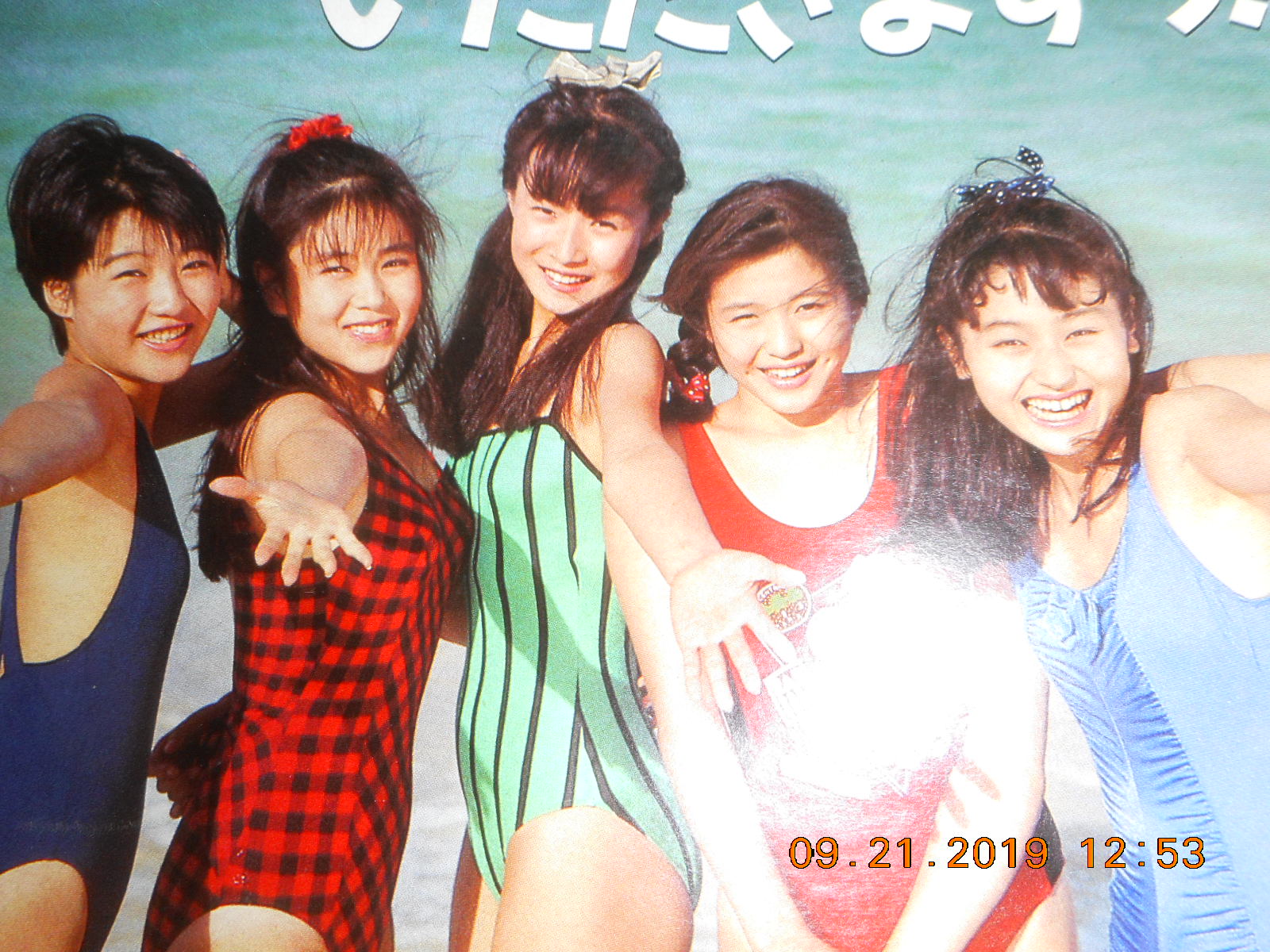
It's been a few years since we've put up a CoCo song onto the blog so the timing is just right. In fact, the song that I heard by this early 90s aidoru group was actually their 14th and final single"You're My Treasure ~ Tooi Yakusoku" (Distant Promise) from July 1994. As hinted in the title, the group used this song to give their thanks to all of the fans for all of the good times and support. It sounds like everyone got their chance to get behind the mike, except for Azusa Senou(瀬能あづさ)who had left CoCo earlier in 1992.
Written by Sayoko Morimoto(森本抄夜子)and composed by Ichiro Hada(羽田一郎), it's got the light and bright vocals by the ladies alongside those nostalgic 90s electric guitars and synths. Not certain how much longer some of the other aidoru groups in the early 1990s lasted but perhaps there was some poignancy especially with CoCo's final single since there was maybe a feeling that the long age of aidoru was coming to an end. But then came Morning Musume(モーニング娘。)some years later. In any case, "You're My Treasure" peaked at No. 17, and the song was also included on the group's final studio album"Sweet & Bitter" also from July 1994 which placed in at No. 28 on the charts.
Earlier
this week I was discussing with a fellow Brazilian friend about Tetsuya Komuro’s
works before his heyday as a producer in the mid-to-late 90s. As I told my
friend, TK was already an accomplished producer before he started working with
TRF, Ryoko Shinohara (篠原涼子), or Namie Amuro (安室奈美恵). In
fact, besides being a member of the famous and glittery band TM
NETWORK, he was also one of the rising composers during the 80’s aidoru era, and
these are the works I want to introduce a little bit here. For a more well rounded view of his career as a Creator, here's J-Canuck's original article on the topic.
Starting
with one of my favorites, TK produced an entire single for sexy aidoru Minako
Tanaka (田中美奈子) in
1990. Released in May of that year, it was called “Yume Mite TRY” (夢見てTRY),
a lovely and very aidoru-like pop song full of sharp synth stabs in the
arrangement, just like was the norm in the late 80s. The coupling song, “I Say
Hello Again”, was also a song created by TK, and it’s a little bit more
adventurous than the tame “Yume Mite TRY”. Let’s say it was more club-ready
than the a-side, which is comprehensible. For me, both songs are very nice, and,
as a big fan of the beautiful Minako Tanaka, I’m very happy with them. “Yume
Mite TRY” is catchier, though.
Eternal
aidoru Seiko Matsuda (松田聖子) also had a song composed by TK for her comeback
album “Strawberry Time”, in 1987. Called “Kimono Beat”, this funky and cute
melodic piece with its singalong chorus is easily one of my highlights in Seiko’s
late 80s phase. Based on that, I’m more than satisfied when I see her
performing it during concert tours, even nowadays.
Another
one of my favorites, CoCo’s“Haru Milky Way” (春・ミルキーウェイ)
wasn’t a song produced by TK for the group. In reality, their song is a different version of “I
WANT YOU BACK”, a song TK recorded himself for his debut album “Digitalian is
eating breakfast”, released in December 1989. I don’t know if he sold the song
for CoCo, even if it wasn’t entirely new, or if they simply agreed to release
it, albeit with different title and lyrics. Well, strange things aside, “Haru
Milky Way” was included in CoCo’s debut album “Strawberry”, released in March
1990, and it’s a fine synthpop tune coming from the aidoru group.
Yuko
Imai’s (今井優子)
second single “Niji-Iro no Aura” (虹色のオーラ), released in December 1988, was also composed by
Komuro, and I just love the uplifting melody in the chorus. In my opinion, it
could easily have been a hit by Misato Watanabe (渡辺美里),
since they were already famous for songs like “My Revolution” and “Kanashii ne”
(悲しいね).
Nothing against Imai, of course, since she was a cute girl with a pleasant
voice, but just a little reminder that maybe Komuro’s songs were purposely
similar to what he did with Watanabe back then.
Cute
aidoru Chiemi Hori (堀ちえみ) also recorded one Komuro song, and it was “Ai wo Ima Shinjite Itai” (愛を今信じていたい) back in 1987, when her aidoru
career was already close to an end. Like J-Canuck acknowledged in his original
Tetsuya Komuro post, it’s interesting to notice how different those 80s songs were from the more hard-hitting Techno he created in the 90s.
Finally, Miho Nakayama (中山美穂) was another example of top aidoru who recorded some
hits composed by Komuro. One of them was the Latin-tinged “50/50” in July 1987, and the other was “JINGI Aishite Moraimasu” (JINGI・愛してもらいます) in July 1986. While “50/50” was a bouncy song full of stereotypical Mexican or
Caribbean sounds, “JINGI Aishite Moraimasu” was more on the cute side with the
twinkly keyboards and overall cheerful tone.
In
the end, these are just some examples of what Tetsuya Komuro was doing during
the 80s. At the time, he also had commercial success with his band TM NETWORK,
with hits for Misato Watanabe, and, by 1989, launched his own solo career with
some nice songs as well. However, today I wanted to concentrate just on the
female aidoru side of his work here. To a couple more examples of female aidoru
singers he produced back then, there was also Kyoko Koizumi’s (小泉今日子) “GOOD MORNING-CALL” (1988), and also Rie Miyazawa’s (宮沢りえ) “DREAM RUSH” (1989).
Well, I gotta say that it isn't everyday that two beloved anison produced years apart share the exact same title. Therefore, today will be that special day. The one that I've already known about for years is "Omoide ga Ippai" by the folk-pop duo, H2O, the touching ballad that ended the anime "Miyuki"(みゆき)back in the early 1980s and has since become a graduation ceremony favourite, usually guaranteed to induce tears in the students.
"Ranma 1/2"(らんま1/2)is an anime that even I have heard about but only through reputation based on the original manga by Rumiko Takahashi(高橋留美子). Even so, I have been listening to the theme song, also titled "Omoide ga Ippai" (Full of Memories) for the second entry of the anime franchise, "Ranma 1/2 Nettohen"(らんま1/2 熱闘編...The Fierce Fighting Edition) which went on for almost 3 years (1989-1992). The song often came up as part of my anime buddy's anison hour and I've got it in my collection of anison without having known its source for a number of years.
The aidoru group CoCo recorded the original version as the coupling song to their 3rd single"Natsu no Tomodachi"(夏の友達...Summer Friends) from May 1990. Written by Neko Oikawa(及川眠子)and composed by Masayuki Iwata(岩田雅之), the cute anison sounds like something Misato Watanabe(渡辺美里)would have sung in her junior high school days; I think it is the synths that make me think that way. The single peaked at No. 3.
But to be honest with you, my preference is for the cover version by the female seiyuu from the cast of "Ranma 1/2". Forming the quintet DoCo in 1990, the members were Kikuko (17 forever) Inoue(井上喜久子), Noriko Hidaka(日高のり子), Megumi Hayashibara(林原めぐみ), Minami Takayama(高山みなみ)and Rei Sakuma(佐久間レイ). Their "Omoide ga Ippai" was recorded for one of the franchise's OVAs "Super Vol. 2" in November 1995.
For me, the difference was just the added depth in DoCo's performance when they recorded it and that soaring instrumental bridge near the end. Incidentally, when asked how their collective name, similar to CoCo, was created, the answer provided was apparently that "D" was next after "C". Plus, there is the fact that the Japanese word "koko" means "here" whereas "doko" means "where".
Yeah,
I know this montage was a cheap idea... but I did with love.
Out of nowhere, I decided to work on this Author’s Pick post. My
intention was to select one song from each of my favorite Japanese artists, but
without a proper theme guiding the list. In the end, I was able to select nine
artists I’m more than sure that deserves a spot here... but I still needed one
more to complete a top ten. My solution was to find a filler artist, so let’s
start with it.
10) Chinatsu Miyoshi -- Anata no Shirts to Love Song (あなたのシャツと Love song)
Honestly,
even though I love Hello! Project’s fallen aidoru Chinatsu Miyoshi (三佳千夏) and her few songs out there, I don’t
think I could put her on this “favorites” type of list. However, I needed a
filler in order to have ten songs – and didn’t want to feature songs by Miho
Nakayama (中山美穂) or
Shizuka Kudo (工藤静香)
–, so her name started popping in my head.
“Anata
no Shirts to Love Song” was Chinatsu’s third and last single, released in May
2000. Unike the beautiful, yet dated, “Unchain My Heart” and the not very
interesting “Love, Yes I Do!”, this one ended up as a good ballad.
Even though I’m not
the biggest ballad fan, I liked it thanks to Chinatu’s pretty vocals (she
sounds like Miki Fujimoto [藤本美貴] to me) and the
overall J-Drama feeling it evokes. I’d never expect something like that coming
from Hello! Project today.
9) Wink
-- Hiki Tomenaide (ひきとめないで)
When
I started listening to Wink, the duo’s singles, such as “Ai ga Tomaranai ~Turn
It Into Love~” (愛が止まらない)
and “Samishii Nettaigyo” (淋しい熱帯魚),
were my main focus. After a while, I decided to give their studio albums a try,
and one of the first ones I listened to was “Especially For You ~Yasashisa ni
Tsutsumarete~” (優しさにつつまれて), released in April 1989.
Comprised
mostly of Euro-inspired covers of Western songs, I still liked the album very
much. Coincidentally, my favorite songs from it were solos by Shoko Aida (相田翔子): “Baby Me”, a cover of Chaka Khan’s
slow groove number; and “Hiki Tomenaide”, a cover of Debby Harry’s “You Got Me in Trouble”.
One of Wink’s many
positive features was giving new life to Western songs. Usually, I just praise
the Euro-inspired arrangements done by their producers, but I forget that
without Shoko and Sachiko’s (鈴木早智子) gentle, cold, and –
at times – even sexy vocals, the songs wouldn’t be the same. In “Hiki Tomenaide”,
for example, Shoko gives a beautiful and restrained rendition that differs in a
great way from Debbie Harry’s more punk-styled and tough vocals. Combined with
the dancey, yet cold synth arrangement, this cover is a very special one in
Wink’s discography.
8) Akina
Nakamori -- Gekka (月華)
Akina
Nakamori’s (中森明菜) 80s
singles are timeless classics, but her 90s stuff – while hit or miss at some
points – is also pretty interesting. Besides the Komuro-penned “Aibu” (愛撫), which is one of my favorites, a song
I keep coming back to is “Gekka”.
Released in October
1994, “Gekka” showcases Akina in her more mature and dramatic persona, which is
not a bad thing considering she was near thirty years old at the time. Coupled
by an exotic arrangement, she sings in her beautiful low register while
delivering well known vibratos in a powerful and notable chorus. In my opinion,
even though the commercial success of past times wouldn’t knock her door again,
Akina’s vocal technique was at its peak around “Gekka’s” release, something the
song admirably reminds us.
7) Minako
Tanaka -- Nemuranai Machi (眠らない街)
It’s
no big surprise how much I like Minako Tanaka (田中美奈子), even though I agree her music career
do not deserve so much praise. Anyway, I truly enjoy her efforts.
Far
away from the Eurobeat songs she released in the beginning of her career,
“Nemuranai Machi” is a highlight from a more mature artist seeking new paths.
The song is from September 1993, but – thanks to its power-pop chorus and
anthemic synths – it could have easily been from the late 80s if we wre talking
about the Anglo-American music market.
In Japan, though,
“Nemuranai Machi” wasn’t far away from successful songs released by acts such
as DEEN and WANDS – to name a few. As we can see, the booming Being J-Pop sound
even hit Minako Tanaka.
6) CoCo
-- Natsuzora no Dreamer (夏空のDreamer)
Unlike the 80s, it wasn’t very easy to find successful aidoru stories
during the early-to-mid-90s, but CoCo surely made its name in the industry with
a plethora of cute cookie-cuttter songs. Amidst them, some were interesting
enough, which was the case of “Natsuzora no Dreamer”.
Released in August 1992, the song starts right with some summery keyboards as the main
instrumental hook. Not only that, it relies on a cheerful chorus that keeps
things going in an exciting manner (I remember how fans got pumped when the
girls sang this tune in concerts). Also, while not very innovative by any means, "Natsuzora no Dreamer" evokes a nostalgic feeling...
probably of a past ideal summer that I didn’t live.
5) access
-- SENSUAL GLIDE
As
was the case with Minako Tanaka’s “Nemuranai Machi”, access’ “SENSUAL GLIDE”
would not be considered a 90s song in the Anglo-American music market. It just
screams 80s, and its even understandable since Daisuke Asakura (浅倉大介) and Hiroyuki Takami (貴水博之) were fans of bands such as Duran Duran
and TM NETWORK (Dai-chan even played keyboards for TM NETWORK years before
access’ formation).
The
dizzy-like synths that permeates the song are a great touch, and I also like
how the frantic guitar gives more depht to the arrangement – especially when
Daisuke plays a keytar solo alongside the guitar during the bridge. Hiro’s
vocals, on the other side, may not be among the best in the world, but I’m a
fan of his rather screechy voice.
Even though “SENSUAL
GLIDE” wasn’t released as a single, it was chosen to be the first song on
access’ debut album “FAST ACCESS”, from February 1993. It was a great opener
that set the tone to what we could expect from the band’s first full lenght
work (previous singles “VIRGIN EMOTION” and “JEWELRY ANGEL” were nice showcases
as well) – a wild combination of synths and guitars that would scare any
serious rocker out there. Let’s just say that, in some way, access’ sound was trapped
in a strange fusion of glam rock with synthpop.
4) Perfume
-- Hurly Burly
Right
now, “Hurly Burly” is kind of a lost song in Perfume’s discography, only
appearing as a coupling song in 2012’s single “Spending all my time”. The
strange marketing scheme was that, instead of the single’s title song, “Hurly
Burly” was promoted in music shows like “Music Station” (ミュージックステーション) and “Music Japan”. Apparently, the
girls were not very confident about performing “Spending all my time” on
television because of the amount of English lines and lack of Japanese ones
(it was told in an interview that the original version didn’t include any Japanese words, but the girls asked Yasutaka
Nakata [中田ヤスタカ] to
include at least some, which he did).
As for “Hurly Burly”,
it could have served as a single on its own. The song is surprisingly joyful
and solid given its odd title and some commercial lines – “what’s your favorite
flavour?” and “juicy juicy sweet”, for example – Nakata insisted to include in
the lyrics (it was a CM song for a Kirin drink). Just like “Spending all my
time”, it can get a little bit repetitive, but the club-ready bass line and the
late 90s Eurodance synths were great ideas from Nakata. Unfortunately, instead
of this fun song, he decided to include the childish “Mirai no Musem” (未来のミュージアム) in Perfume’s electronic-heavy album “LEVEL 3”
(probably due to contractual oligations, since “Mirai no Musem” – a Doraemon [ドラえもん] tie-in – was released as a single, while “Hurly
Burly” was just a coupling song to the Eurohouse banger “Spending all my
time”).
3) Minami
Kuribayashi -- Kaze no Yukue (風のゆくえ)
I’m
forever in love with Minami Kuribayashi (栗林みな実). Like I said in other posts, I don’t
like her entire discography, but I admit feeling close to her in a strange way.
Other than her beauty (she was marketed – and still is to some point – as a sexy seiyuuin her first years), I
respect her vocal technique a lot, even if her overly cute voice sounds
annoying at times.
One of my favorites
from her is second single “Kaze no Yukue”, which was released back in February
2003. A little bit different from her more recent works, which relies heavily
in aggressive synths and noisy guitar solos, “Kaze no Yukue” showcases
Kuribayashi in a gentler way. The beautiful arrangement with keyboards and
strings, coupled with the emotive chorus, is what makes me come back to this
song all the time. I’d love if she started recording songs like this once again.
2) Chisato Moritaka -- Kusaimono ni wa Futa wo Shiro!! (臭いものにはフタをしろ!!)
For
me, Chisato Moritaka (森高千里)
had two main artistic inspirations during her career: one, 70s aidoru duo Pink Lady
(ピンク・レディー) and
their flamboyant style, both in music and fashion; second, The Beatles and
their string of pop-rock classics.
Even
though the flamboyant Moritaka overpowered the guitar-centric one during her
early days, she was able to introduce, little by little, a bit of old school
rock and roll in her discography (her album “Hijitsuryokuha Sengen” [非実力派宣言], for example, is half Eurobeat, half
old school rock and roll).
One
of the first times she opted for releasing a rock tune as a single was in May 1990,
with “Kusaimono ni wa Futa wo Shiro!!”, a close-to-three minutes rockabilly
song.
“Kusaimono
ni wa Futa wo Shiro!!” soon became a highlight in Moritaka’s career, and it’s a
song she enjoys performing in her live concerts a lot, even today. Personally,
I had a hard time swallowing it, but right now I like how catchy and
straightforward it is. Also, the video is pure fun with Chisato performing the
song while dressed in her garish costume (she was even wearing a cape). In the
end, the song just don’t match the outfit, but that’s what lovely about it: in
a way, Moritaka is as close as a pin-up singing rock and roll we can get (the
iconic leg dance during the guitar solo is just too much for me to handle).
Other than that, it’s
funny how she wasn’t really caring for her aidoru image, since she appears
holding a cigarette and drinking in the video. I remember reading somewhere how
Shizuka Kudo, for example, had to hide her smoking habit from the public around
the same time. Moritaka, on the other hand, surely had guts – or her management
wasn’t very worried about it!
1) Megumi
Hayashibara -- Lively Motion
NOTE:
The audio quality of this video is horrible, but it was the only one with the
full song I was able to find.
What’s
my favorite song ever? That’s a tough question, but, if I had to think about
it, Megumi Hayashibara’s (林原めぐみ)
“Lively Motion” would be my answer. However, at the same time I know it’s a
lie... I can’t select only one song from my favorite singer, because that’s plain absurd! Even knowing that, “Lively Motion” would still be my answer.
“Lively
Motion” wasn’t the first Megumi song I heard, or even liked, but it was the one
which made me decide she was going to be my musical companion for life. And that’s
probably why I think about it as my favorite song ever.
Released
in October 1998, it served as the ending theme to Saber Marionette J to X (セイバーマリオネット J to X), an
anime I watched on TV everyday, and even woke up six in the morning during
weekends to watch. While I loved the anime itself, its opening and ending songs
– “Proof of Myself” and “Lively Motion”, respectively –, both sung by
Hayashibara, were what kept me waiting. It’s just strange to watch an anime
focused mainly in the songs, but that’s what I did back in the days.
I
wasn’t familiarised with Japanese music at the time, and neither had a
well-rounded musical taste, so this awkward combination of melodic and
sentimental melodies coupled with a storm of synthesizers really hit me hard at
the time. “Lively Motion” and all the urgency in its chorus was the epythome of
what I wanted to hear in music, but, unfortunately, it didn’t click with anything
from the Anglo-American market – which, by the way, was saturated with
Hip-Hop/contemporary R&B and indie rock bands at the time. The good
thing is Japan was always there to help me with the ride.
“Kimi no Tsubasa ~Daijoubu
Dakara~” was the third
single released by Azusa Senou (瀬能あづさ)
in June 1992. Like I said in the
post about “I miss You”, I was really mad to see Azusa leaving her aidoru
group CoCo behind, but some great
songs from her solo career, and “Kimi no Tsubasa” is probably one of the best
examples, made me forget about this very quickly.
At
first, I thought the song was going to be a cheesy Latin song, based on the
synth notes at the beggining, but it soon moved on to this pretty straighforward pop song.
To
be honest, I’m pretty confortable with the fact that there’s nothing very
complex about “Kimi no Tsubasa”. We can easily say Azusa is not the typical high-pitched aidoru, which is nice for a change, and the arrangement is full
of the shameless keyboards that were
used non-stop during the late 80s and the 90s in Japan. However, what makes
“Kimi no Tsubasa” special to me is the catchy
chorus melody. In fact, I feel there’s some sort of spark in that combination of Azusa’s vocals, cheesy synth
background and this melody altogether, especially in the final section, when
she sings the first and second choruses in a row.
“Kimi
no Tsubasa ~Daijoubu Dakara~” may not be revolutionary, but it’s one of the
songs I’ve been listening to almost everyday since December or January. One can
say I’m really hooked on it.
The
single reached #8 on the Oricon
charts. Lyrics were written by Yoshiko Miura (三浦徳子),
while music was composed by Ichiro Haneda (羽田一郎).
As for the arrangement, Jun Sato (佐藤準) was the responsible.
CoCo
became one of my favourite aidoru groups. They are no strangers to me, as I
liked two of their songs, “EQUAL Romance” (EQUALロマンス)
and “Yokohama Boy Style” (横浜Boy Style), for quite a while, but it
wasn’t until some months ago that I decided to seriously listen to their
discography.
Well,
everything was okay for the group, but, in 1992, CoCo lost one of its members,
Azusa Senou (瀬能あづさ), because she wanted to concentrate on
a solo career. Yes, it’s the same old story of leaving your group behind to try
new things in the entertainment world.
The
thing is, Azusa Senou didn’t have to leave the group in order to have a
successful solo career. All of her partners from CoCo had their individual solo
careers, with varied success. Also, the cute Rieko Miura (三浦理恵子),
without having to leave the group, was even more successful than Azusa.
Based
on that, I never really liked Azusa Senou, and the only reason was because she
abandoned the group. However, I ended listening to most of her solo material
and caught myself liking her stuff A LOT. Maybe I was an hypocrite in this
case, but I’m trying to redeem myself here.
“I
Miss You” was Azusa’s fifth single, which was released in February 1993. At the
time of its release, A-chan, as she was called by her fans, was trying to
mature and leave the aidorudays behind. Her first album, “Crystal Eyes”, which
was released one year before, in 1992, was still aidoru-oriented if compared to
the stuff she released for the second album, “Horizon”. With that in mind, “I
Miss You” is a good example of the more pop-rock sound she incorporated for her
second full lenght release.
One
thing to notice is that, although a solid pop release, “I Miss You”, was not
very different from a lot other songs released by more famous artists during
the early 90s. This mixture of pop-rock with synths in the background was a
common place at the time, and I can even remember one song by minor sexy-aidoru
Minako Tanaka (田中美奈子), called “Nemuranai Machi” (眠らない街),
with a similar arrangement.
Reality
is, the early 90s, as we all know very well, was a very hard time for aidoru acts to
establish themselves in the industry. The so-called “Aidoru Fuyu no Jidai” (アイドル冬の時代)
was a problematic reality, so Azusa Senou had to try different things to stay
relevant. She didn’t accomplish that, but, at least, she tried...
“I
Miss You” reached #27 on the Oricon charts. Lyrics were written by Toshihiko
Takamizawa (高見沢俊彦) and Yoshiko Miura (三浦徳子),
while music was composed solely by Toshihiko Takamizawa. As for the
arrangement, it was done by Takebe Satoshi (武部聡志).
From time to time I have my CoCo days, and this week I decided to give their discography a big try, which was great because I found some pretty nice songs. The one I chose for today is not a hiddem gem or anything. In fact, it’s just "Sasayaka na Yuuwaku", a song that was released as the group’s fourth single back in September 1990.
I probably ignored this song in the past, but after hearing it with more affection, I as astonished at how cool it sounded. Like I always say, it’s not revolutionary, but just a poppy Latin song with a memorable melody and an interesting arrangement consisting of house beats and synths portraying horns and strings (typical early 90s arrangement). Strangely enough, I like the beginning with the studio female singers taking care of a not very understandable line (they repeat the lines through some parts of the song). Also, I truly enjoy when the arrangement breakdown is quickly followed by the girls “zutto zutto zutto hanasanai de...” (ずっとずっとずっと離さないで), and then, finally, Rieko Miura (三浦理恵子), the girl with a cute baby voice, starts singing “sasayaka na yuuwaku...” with just the beat and some twinkles behind.
(That particular video has been taken down but here is another concert performance.)
As we can see above, it’s a live performance from “Yoru no Hit Studio” (夜のヒットスタジオ). I confess that I always feel kind of sad when watching Yoru no Hit Studio's performances from 1990 because, thanks to J-Canuck’s article about the show, I know it was the year that marked its end (they still recorded some specials through the 90s, but the feeling wasn’t the same). Like I said in J-Canuck’s post, I just love this show, and I’m always searching for good quality performances from the 80s on YouTube.
One funny anecdot about the song was when I asked my nihongo teacher what “Sasayaka na Yuuwaku” meant (I just thought about the title while going to my nihongo class). After answering that it was something in the lines of “Modest Temptation”, she made a joke about the thematics of the songs I usually listen to. I thought about explaining that CoCo was a cute aidoru group, but I just laughed and said it was nothing risque. “Sasayaka na Yuuwaku” reached #3 on the Oricon charts. Lyrics were written by Neko Oikawa (及川眠子), while music was composed by Takashi Tsushimi (都志見隆). As for the arrangement, it was done by Satoshi Nakamura (中村哲).
Every time I play Street Fighter (ストリートファイター) I only choose Chun-Li (春麗) (my friends get really mad at me for not changing the character and because Chun-Li is quite annoying to be beaten, even if I’m not a good player at all). I really like this girl (she was a hottie for every 90s kid), her kicking abilities and her agility in the game. Besides that, one of the things I always pay attention when I’m playing the game is "Chun-Li Theme", an electronic composition typical of games from the early 90s (chiptune) with blatant Chinese influences.
To my surprise, "Chun-Li Theme" was given some lyrics and Maki Miyamae (宮前真樹), one of the five components of aidorugroup CoCo, released it as a single in December 1992 under the title of “Yume he no Position”. It’s not really a surprise, as the game became a huge success worldwide, and Chun-Li was the only playable female character of the game at the time (another notable Street Fighter related song is Ryoko Shinohara’s [篠原 涼子] smash hit “Itoshisa toSetsunasa to Kokoro Zuyosa to” [恋しさと せつなさと 心強さと], which was released in 1994).
“Yume he no Position” is notable for respecting Chun-Li Theme's original melody, while only adding vocals and some flourishes here and there in the arrangement (like Chun-Li shouting Spinning Bird Kick [スピニングバードキック] and other memorable Chun-Li's sounds from the game). Maki Miyamae is not a wonderful singer, but we’re not waiting for a high level vocal performance coming from a 90s aidoru. In the end, not much can be talked about “Yume he no Position”, but I quite like how the aidoru world was already capable of dialoguing well with the video game universe back in the early 90s. Nowadays, it’s a very commom practice.
To finish, here’s a
Korean aidoru unit called Orange Caramel dressed like Chun-Li while performing their
cheesy hit “Shanghai Romance”. The song is not related to the original Chun Li
song at all, but I just thought it would be suitable and fun to post it here...
well, I’m a big Orange Caramel fan, and that explains all.
“Yume he no Position” reached #19 on the Oricon charts. Lyrics were written by Neko Oikawa (及川眠子), while music was composed by Yoko Shimomura (下村 陽子) and Alph Lyla (アルフ・ライラ), CAPCOM's house band. As for the arrangement, Seiji Toda (戸田誠司) was the responsible.
CoCo’s “Miss LONELY” was a nice surprise to me earlier this year. Although I’ve listened to CoCo’s singles before, the group’s album tracks were still a mystery to me. The first (and only, until now) album that I decided to check was the 1992’s “Sylph”, mostly because of the beatiful pink cover with the girls posing on it.
Overall, the album suceeded in making a good impression on me, even though it was a rough time for the members, as “Sylph” was the first abum released by the group after the disbandment of member Azusa Senou (瀬能あづさ). In the end, it’s an aidoru album, and its success depends on how much the listener tolerates aidoru vocals and sweet songs. Besides the great “Yokohama Boy Style” (横浜Boy Style) and the generic-but-likeable “Natsuzora no Dreamer” (夏空のDreamer), which were released as singles prior to “Sylph”, the song that really stuck in my head was “Miss LONELY”.
Synths, sax, aidoru vocals, a good pop beat and a melancholic melody was all I needed to fall in love with “Miss LONELY” at first listen. I must say that as an aidoru fan, I was pleased to hear how great the vocals for this song are. In fact, “Miss LONEY” is labeled as Mikiyo Oono (大野幹代) with CoCo, so the lead vocals were done by Michiyo-chan. I will not lie, though. The other three members were essential for making this a great song. Besides harmonies, they alternated with Michiyo during the choruses, contributing to a couple of lines, so, as the lead vocals are somewhat deep, the childish tone delivered by the other girls is beautiful, making this sad song a little cuter. Aso, I’m a big fan of the wordplay used in the song, like when the “miss lonely” title is quickly followed by “misfortune” or “misdoing”, words with a beginning that turns into “misu” when written in katakana. In the end, while not an instant mainstream aidoru hit like their singles, “Miss LONELY” is a more introspective song that is a true hidden gem in CoCo’s discography.
The “Sylph” album reached #29 on the Oricon charts. Lyrics for “Miss LONELY” were written by Neko Oikawa (及川眠子), while music was composed by Megumi Ishii (いしいめぐみ). As for the lovely arrangement, it was done by Seiji Kameda (亀田誠治).
I remember
that “EQUAL Romance” (EQUALロマンス), by aidoru group
CoCo, was the first “old” Japanese song that I ever listened. It was used as
the second ending theme for the animeRanma ½(らんま1/2), which I was watching at the
time.
About the
particular performance chosen to start the article, I was very lucky to find it
on YouTube, because it was the one that I saw while listening to the song for
the first time back in 2006. My first reaction was “WOW! THAT’S KINDA OLD”. We
can surely understand this reaction because, at the time, I was not accustomed
of seeing girls wearing those kinds of clothes with cute little smiles on their
faces while dancing inside a strange blue box lost in the middle of a black
background. In general, aidoru
culture was just something new and strange for me.
“EQUAL
Romance” was CoCo’s debut single back in July 1989. As for the song, it is a
typical aidoru synth-pop tune of the
late 80s, with some cute vocals and a girly melody behind it. I really like it.
It’s just a happy-go-lucky song from the end of the so called aidoru era.
To be honest,
though, CoCo’s discography, as a whole, is not my everyday cup of tea. But I
must confess that the group and some of their songs are cute and fun. And if
purity and naivety are two of the top aidoru
qualities, CoCo surely succeeds on it. Their faces and expressions just make
the spectator want to take care of them.
“EQUAL Romance” reached #7 on the weekly Oricon
charts, selling 119,140 copies. It also reached #82 on the yearly Oricon chart
for 1989 (source: generasia). The song was later included on CoCo’s first
album, “Strawberry”. As for the lyrics, they were written by Neko Oikawa (及川眠子). The
music was composed by Mioko Yamaguchi (山口美央子) and the arrangement was made by Satoshi
Nakamura (中村哲).