I've been a fan of Japanese popular music for 40 years, and have managed to collect a lot of material during that time. So I decided I wanted to talk about Showa Era music with like-minded fans. My particular era is the 70s and 80s (thus the "kayo kyoku"). The plus part includes a number of songs and artists from the last 30 years and also the early kayo. So, let's talk about New Music, aidoru, City Pop and enka.
Credits
I would like to give credit where credit is due. Videos are from YouTube and other sources such as NicoNico while Oricon rankings and other information are translated from the Japanese Wikipedia unless noted.
Going back to my youth, I remember those over-and-over reruns of "Uchuu Senkan Yamato"(宇宙戦艦ヤマト...Space Cruiser Yamato), aka "Star Blazers" outside of Japan, with the original seasons of the Iscandar mission and the Comet Empire saga. That penultimate episode of the latter season when it looked like the evil Prince Zoldar and his empire finally crumbled only to reveal a Super Star Destroyer filled with absolute revenge arguably represented one of the greatest anime cliffhangers.
Of course, sticking with the "Star Blazers" line, the finale had to wrap up some loose threads along with the main one involving the Comet Empire. What happens to the crew of the Argo and what of helmsman Mark Venture who supposedly gave up his life in defense of the ship a few episodes earlier? And what of Trelaina of Telazart, the sylph-like whistleblower who began the entire story and ended up falling for Mark?
Well, in the original "Yamato" series, Trelaina was actually named Teresa which I guess sounded exotic enough for Japanese viewers (although the late singer Teresa Teng was already well-known in Japan), although folks in North America must have wondered whether if the lass had sisters named Mabel and Connie. Anyways, along with the iconic Comet Empire theme done by the legendary composer Hiroshi Miyagawa(宮川泰), another constant musical piece in the second season was Teresa's own theme titled "Teresa no Tameiki"(Teresa's Sighs).
The song as I remember it was a sad and lonely one for Teresa and even her relationship with Mark was all too brief before she seemingly had to make the ultimate sacrifice for Earth. On Christmas Day1978, Miyagawa released a concept album connected with "Yamato" titled "Fumetsu no Uchuu Senkan Yamato: New Disco Arrange"(不滅の宇宙戦艦ヤマト ニュー・ディスコ・アレンジ...The Indestructible Space Cruiser Yamato: New Disco Arrangement) where some of those familiar tracks from the series received some more syncopated oomph. I don't think the treatment given to "Teresa no Tameiki" is particularly disco but it's more of a mild City Pop thing with some of that haunting voice which was common to a fair number of Miyagawa pieces in anime. Had to laugh a little at the name of the group performing the tracks: Yamato Discotheque Orchestra.
I have to give credit where credit is due and say that the above photo is from the online site "Streets of Toronto". Somewhere in my home, there is a picture of the old Silver Snail but I couldn't be bothered to sift through drawers and other nooks and crannies to track it down. Now, for all those in my hometown who are into the comics and other aspects of pop culture like anime, the Silver Snail was the emporium for all of that. It used to be located in the bohemian Queen West neighbourhood in an old-fashioned house for the first 36 years of its life.
My first visits to the Silver Snail happened while I was at University of Toronto. My friend introduced me to it and it was only a 15-minute walk down from campus. It was definitely an eye-opening experience just for the wonderful interior décor, the tons of comics and most importantly, the examples of Japanese pop culture I could actually physically buy in the years before the now-customary habit of getting them online. Coincidentally, this all went down when that same friend introduced me to the Chinatown record stores a few blocks north in between the Silver Snail and U of T where I could actually buy Japanese records. I'd say it was a darn fine year. And so, I bought my fair share of J-Merch including the following:
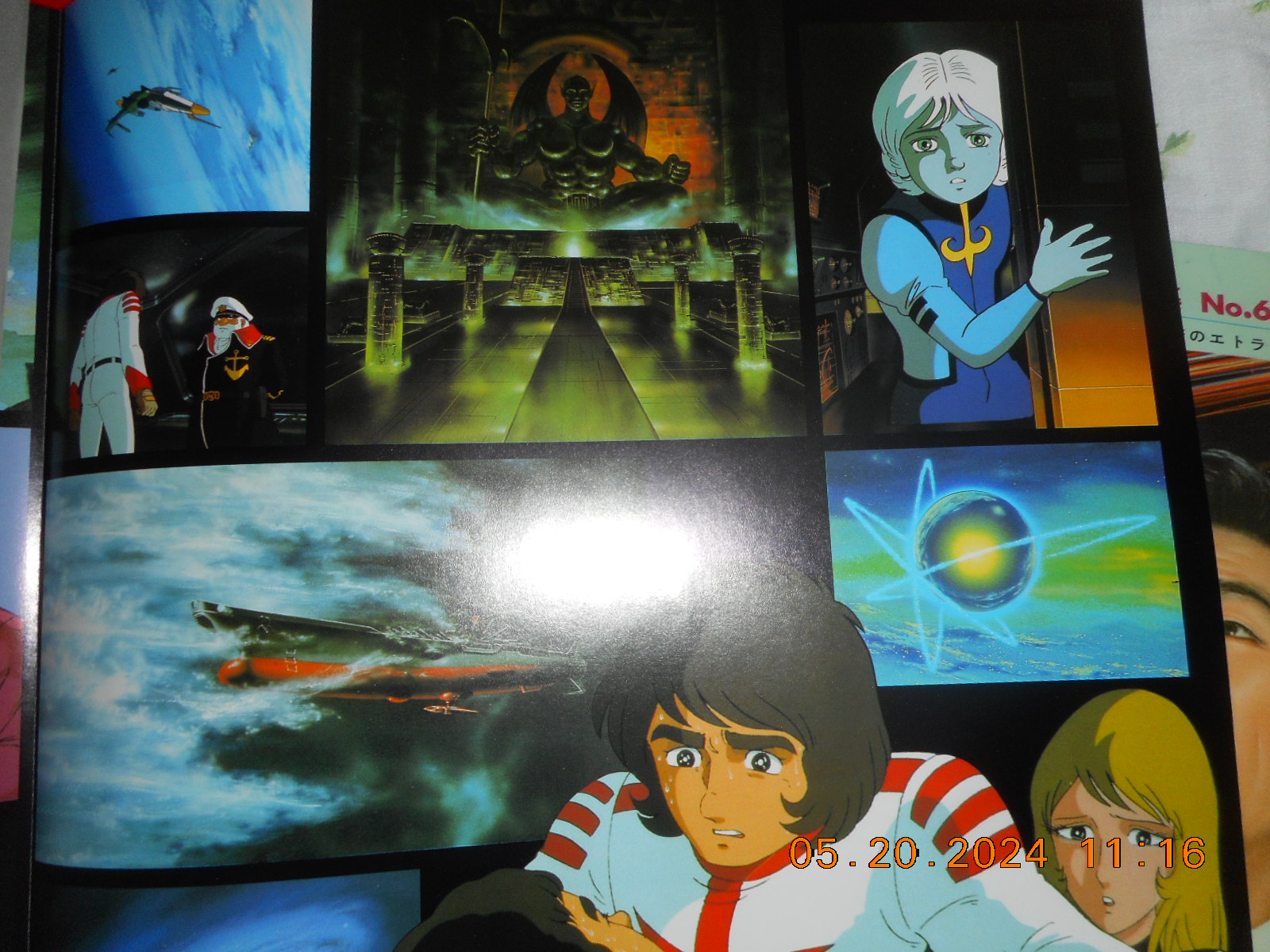
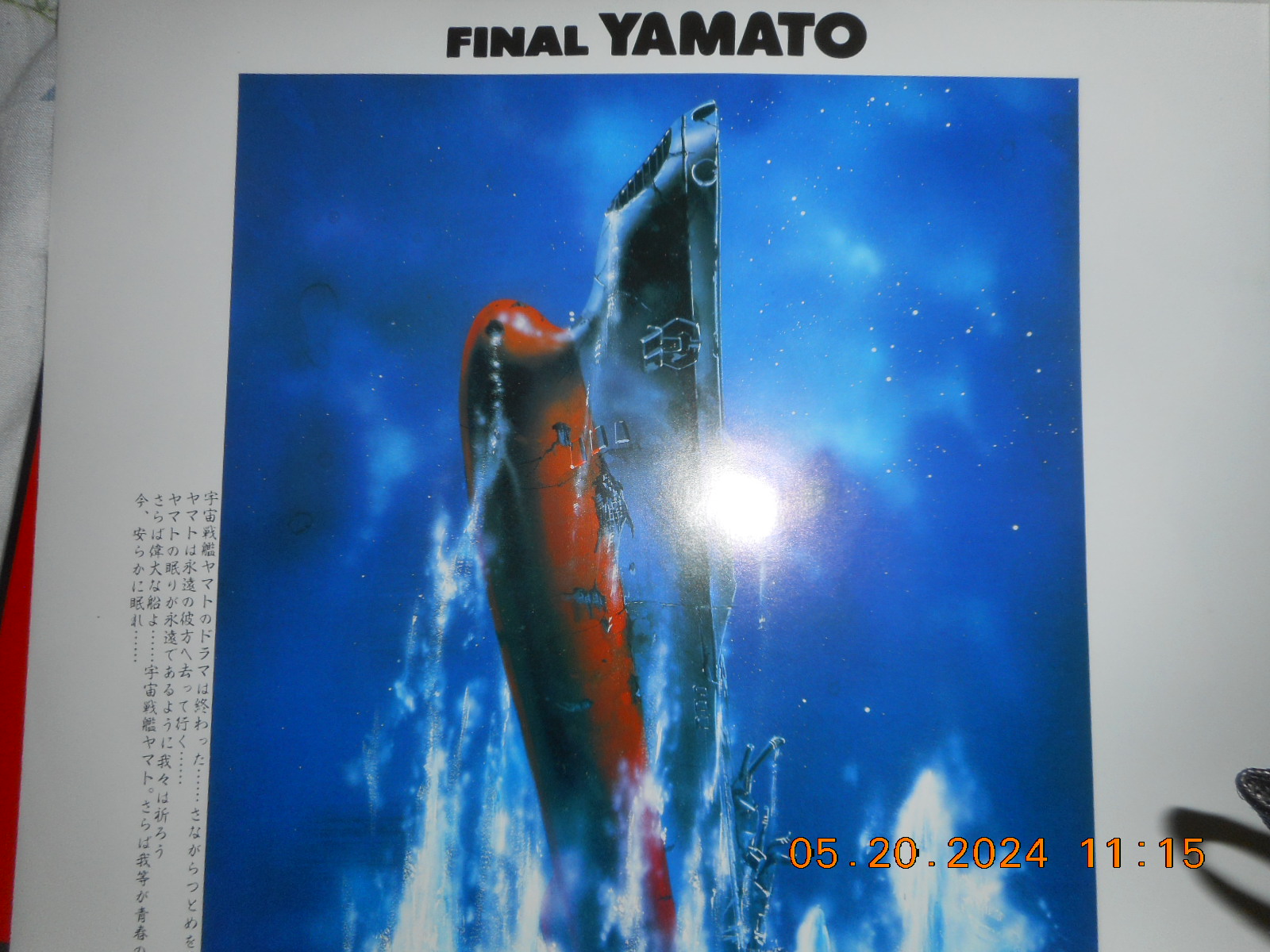
Yup, just like that copy of Seiko Matsuda's(松田聖子)"Train" album that beckoned me to buy it at Wah Yueh in Chinatown, this beauty was also calling my name in Silver Snail. I'd already purchased my fair share of "Uchuu Senkan Yamato" guidebooks at $20 CDN a shot including the one for the supposedly final entry of the original franchise, the film "Uchuu Senkan Yamato Kanketsuhen"(宇宙戦艦ヤマト 完結編...Final Yamato) which was first released in March 1983. So, they put an end to the story of the mighty battleship, eh, I thought. I had no idea until a couple of years later.
Well, it only took a few more longing gazes between the soundtrack and me before I finally pulled the trigger on my wallet. I forgot how much cash I forked out; I remember that it wasn't cheap. At first, I'd assumed that "Uchuu Senkan Yamato Kanketsuhen Tehma Ongakushuu II" (Theme Music Collection II) was the one-and-only soundtrack for the movie. I guess I couldn't read the "II". Apparently, the music for the film was so grand and epic that the record company had to make release it all via two albums. Mind you, I think "II" has the more dramatic cover with a wrecked Yamato making one final rise above the water.
Being unaware of it at the time, with this album, I began the tradition of listening to movie soundtracks before even seeing the movie itself. That was the case with J.J. Abrams'"Star Trek" in 2009 and then "Avengers: Endgame" in 2019 (although I never bought the soundtrack...thank you, YouTube). However, getting back to "Uchuu Senkan Yamato Kanketsuhen Tehma Ongakushuu II", the first impression that I got from the album was that, except for one track, there was nothing in there that tied me back to the old music that I got to know and love from the TV series. It was all very John Williams, Gustav Holst, Sergei Rachmaninoff and any other classical composer that would create music for an 18th-century ball.
And that was true right from the first track, "Futatsu no Ginga"(二つの銀河...Two Galaxies). Now, actually the above video is playing a truncated version that was on a later release called "YAMATO SOUND ALMANAC 1983-Ⅳ" and perhaps even "Uchuu Senkan Yamato Kanketsuhen Tehma Ongakushuu I". I couldn't find the copy from "II" but at least this video will still give you an idea of what hit my ears with a bang when I first put the record onto the turntable. Man, what kinda mess did the Yamato get into now, I thought.
Well, as it turns out, the album was a collaboration between Hiroshi Miyagawa(宮川泰), who was the go-to guy for all things Yamato, and Kentaro Haneda( 羽田健太郎)who had a lot to do with another major anime franchise "Macross"(マクロス)including the Lynn Minmay song "0-G Love". I was curious about what got Miyagawa and Haneda to take such a different approach with the soundtrack for the final movie, and they simply said that they didn't want to get stuck in a rut with variations on the old stuff; they wanted the franchise to go out with a bang of new compositions. By the way, Miyagawa was responsible for "Futatsu no Ginga".
Miyagawa was also behind "Lugal Soutou no Sensou"(ルガール総統の戦争...Supreme Ruler Lugal's War) which is one massive battle song starting with the strings falling down the equivalent height of the Empire State Building. Again, I hadn't seen the movie yet but listening to this track, I could imagine one heck of a firefight between the Yamato and Lugal's forces.
A quick aside from me, but I couldn't help but see the evil Emperor Lugal as looking a whole lot like actor Kelsey Grammer from "Frasier" and "Cheers". I wonder how far the commute was between Boston and the planet Denguil?
"Shima wo Omou"(Remembering Shima) was another Miyagawa composition. I had already seen what was to become of Chief Navigator Shima through the "Final Yamato" guidebook, and then I finally saw the scene many years later. It's naturally going to be very dramatic and tragic but I kinda wished that they hadn't made the piece so loud in the movie since it rather distracted from the very sad outcome.
I mentioned earlier about that one familiar track. Well, it was this one, "Fight Cosmo Tiger II"(FightコスモタイガーⅡ). It certainly starts with the razor slash of brass that launched a major attack by the Yamato's air corps in the old series, but then Miyagawa replaces the rest of it with an epic disco orchestra number that sounds like it flew in from a "Lupin III" soundtrack.
I've been really trying to find any of the tracks that had been composed by Haneda, and I finally found one, "Hisou no Bolero"(悲愴のボレロ...Sorrowful Bolero). To let you in on one thing about this soundtrack...I had actually recorded it onto audiotape and I used to play it all the time whenever I was pulling an all-nighter during high school and university. "Fight Cosmo Tiger II" and "Hisou no Bolero" were the two tracks that blew me awake whenever I was in danger of nodding off, especially the latter track. Ravel would probably be proud of Haneda's own take on a bolero and when it was time for this song, I would usually bonk my desk with my fist when I heard the timpani hit.
How very convenient of you to come back to life, Captain Okita! I was never all that sold on the plot device of the original commander of the Yamato being in a coma all that time just to return for that one final mission. But hey, Captain Kodai had to have his happy ending with Ms. Mori at the end (and boy, did they), so Okita was the guy to take the Yamato to her final fate. And all that was accomplished with the accompaniment of the huge Haneda piece "Symphony of the Aquarius" that seems to encapsulate one climactic battle sequence in its arrangement and time of nearly 10 minutes! If there were ever an opera version of "Yamato", this is the one track that would have to be incorporated.
I'm not usually a classical music fan so it took me some time to get accustomed to this soundtrack but thanks to time, maturity and a lot of all-nighters, I can happily accept this album into the pantheon of Yamato music. As for the Silver Snail, I now realize how long it's been since I visited the place. Back in 2012, the emporium moved out to Yonge Street for the next nine years as a squeezed-in walk-up above a burger joint. I got used to it but it wasn't the same anymore. Then, I literally found out a few minutes before starting this article that the place had moved back to Queen West almost three years ago. It's not at the same old address but a little further west but at least it's got a proper storefront again. I will have to drop by someday.
Seeing back on Tuesday that I put up the congratulatory posting on a couple of Akina Nakamori(中森明菜)songs getting used as train station melodies at Kiyose Station, I've decided to put some more melodies into KKP. I've known for a long time that pop songs have been used among the vast network of stations across Japan but this is the first time that I'm putting up such an article here on the blog. As such, the following are only a few of such melodies.
This is only played at Kinosaki Onsen Station on the San'in Main Line in Toyooka City, Hyogo Prefecture during the winter because the area is known for its haul of tasty crab, and the Puffy trademark tune has the lyric of "Let's go and have some crab!".
The evergreen folk song by both Iruka(イルカ)and the band Kaguyahime(かぐや姫)can be heard at Tsukumi Station on the Nippou Main Line in Tsukumi City, Oita Prefecture. According to an archived article, songwriter Shozo Ise(伊勢正三)had based the song on this particular station itself.
C'mon...there was no way that this song was NOT going to be included as a train station melody somewhere in Japan. In fact, it's used at a number of stations...one being Keikyu Kawasaki Station on the Keikyu Main Line in Kawasaki City west of Tokyo. Kawasaki City is special, though, because Kyu Sakamoto(坂本九)was born in the city.
Up at Onuma Koen Station on the Hakodate Main Line in the town of Nanae, Hokkaido, this tear-worthy ballad plays for about ten minutes a shot in various arrangements while folks wait for the train. Apparently, the setting in the song was the town itself.
One of anime's greatest theme songs also resides at Kure Station on the Kure Line in Kure, Hiroshima Prefecture. The real-life battleship Yamato was built at the former Kure Naval Arsenal which is one reason for the theme being used at the station. The other reason is that the late creator of "Uchuu Senkan Yamato", Leiji Matsumoto(松本零士), was the Director Emeritus of the Yamato Museum located near the station.
Of course, I have to finish off with the one train station melody that I used to hear all the time while I was living in the Tokyo area. I used to hear the "Astro Boy" theme when I was making the transfer from the JR Yamanote Line loop to the Tozai Line at Takadanobaba Station to head on back to Chiba Prefecture.
So, for any of you who have lived in Japan, are there any train station melodies that were part of your lives?
A couple of days ago, I wrote up an article on one of composer Hiroshi Miyagawa's(宮川泰)delectable pieces for the "Uchuu Senkan Yamato"(宇宙戦艦ヤマト)TV series, and as a result, I ended up looking at some of the old YouTube videos of various scenes from throughout the history of the original franchise from the 1970s into the 1980s.
Then, I re-encountered "Final Yamato" which was, as the title would suggest, the final entry of the entire odyssey in 1983. And them I remembered this scene when everything was all fine and dandy at the end which was represented by the remaining crew (sorry, Mr. Shima) running toward the seashore to admire the safe and happy Earth. It was a chance for fans to say goodbye to the veteran officers and some of the newer crew that joined in the more recent years.
It was all accompanied by a relaxing song ("Have a nice dream") that I had first assumed was by either the vocal group Circus(サーカス)or Hi-Fi Set(ハイ・ファイ・セット)just from how the folks sounded. And I now notice that "Ashita ni Kakeru Niji" (Rainbow to Tomorrow) had that City Pop or J-AOR beat which would be great on radio. As it turned out, it was actually a duet with Tomoko Kuwae(桑江知子)and rock band Tranzam(トランザム)behind the microphone. I'm not 100% sure but I think it was Tome Kitagawa(トメ北川)working with Kuwae. Both of them had the song released as singles in January 1983, a couple of months before the movie came out. Lyricist Yu Aku(阿久悠)and composer Daisuke Inoue(井上大輔)created the song with Tranzam arranging everything.
Along with the relaxing feeling, there is also something rather celebratory and "Miller Time!" about "Ashita ni Kakeru Niji", and I think after saving the Earth from the galaxy's biggest drowning accident, the gallant crew of the Yamato deserve a fine round of the suds. Of course, immediately after this tune came the scene (in the first theatrical run) of the Kodais thoroughly enjoying their honeymoon, if you know what I mean. 😜 That was all consummated (cough, cough) to Junko Yagami's(八神純子)"Love Supreme"(ラブ・シュープリーム).
I've made my comments known about the history of "Uchuu Senkan Yamato"(宇宙戦艦ヤマト), aka "Star Blazers" here in North America and how we as kids swooned and cheered over the exploits of the fine crew of the Yamato. In my area, it was first broadcast on the independent Buffalo affiliate WUTV Channel 29 in the afternoons which put a swift kick into our keesters to get home ASAP from school to catch episodes lest the captain fire the Wave Motion Gun without us.
But then for years afterwards, the first two seasons of the show: the Iscandar odyssey and then the war against the Comet Empire would recycle over and over again going deep into the 1980s as "Yamato" then got shown on our local multicultural channel here in Toronto in the mornings. During that time, I went from junior high school to university just to show how much of a staple it became.
While at University of Toronto, I discovered all of those comic book stores on Queen West, about a 10 to 15-minute walk down from the campus, and one of them was the grand Silver Snail. It was there that a whole bunch of examples of Japanese pop culture was sold and that included the so-called "Perfect Manual" series of Yamato guides. I pretty much bought them all which is where I realized that there had been a third season of "Uchuu Senkan Yamato".
So I was able to get a first look at what that third season looked like with additions of new characters to the crew including those who replaced original crew members who had ended up KIA. I had to say that some of the stills showing scenes from "Uchuu Senkan Yamato III" rather mystified me because the characters looked rather odd. That was back in the mid-1980s and miraculously after several years of rotational broadcasting of Seasons I and II, "Yamato III" finally came to our shores as third installment of "Star Blazers" almost half a decade following its original airing in Japan in 1980.
To be honest, I don't remember that much or hold in all that high regard that third and final televised season of the original iteration of "Yamato". The animation was wonky and the dubbed voice acting wasn't quite as polished as that in the first two seasons. It's then perhaps not that surprising that "Star Blazers III" was perhaps shown just twice here instead of the near-eternal rotation that the first two seasons got. Basically, the producers may have gone one too many times to the well.
Having said that, it was great to hear the legendary theme song by Isao Sasaki(ささきいさお)again along with the familiar soundtrack by Hiroshi Miyagawa(宮川泰). And I have to add that as much as Miyagawa provided the Yamato with one of the most famous and epic theme songs in anime history, he was also more than generous to provide the bad guys from each season with their own epic themes. Gamilas' Desslar got his imperialistic song and the Comet Empire received its musical accolades in the form of something that could have come from an old Vincent Price horror flick. And they were both given disco versions, to boot.
For "Uchuuu Senkan Yamato III", the enemies here were the Bolar Federation. Poor Captain Kodai must have wondered how his solar system ended up in such a rough neighbourhood. But in any case, the Federation also got its own magnificent theme in the form of something rather Russian and romantic. Miyagawa wove something that was only missing a Soviet soldiers' chorus group as backup. I distinctly remember perking my ears up for one episode in which the entire theme was played.
Well, it isn't a disco version but it sure is an amped up take on the theme!
I remember buying these "Perfect Manuals" for the "Uchuu Senkan Yamato"(宇宙戦艦ヤマト...Space Battleship Yamato) series back in the 1980s at Silver Snail, a beloved comic book emporium on Queen West. That was when Japanese goods were still available to be bought physically. Not to say that they were cheap, mind you, but I just had to get my hands on those copies.
Anyways, I was just watching NHK's "Sarameshi"(サラメシ)program on lunching earlier today when this piece of music was played while Japan's Blue Impulse aerobatic demonstration team within the nation's Air Self-Defense Force was doing their thing. It was a natural matchup between music and scene.
The music was "Cosmo Tiger" by Hiroshi Miyagawa(宮川泰), the maestro behind the soundtracks for the aforementioned iconic space adventure series. And basically it was like Captain Kodai of the Yamato suddenly asked his Tiger squadron "Hey, men, how about strafing the bad guys to some disco?". Of course, Squadron Leader Kato would answer "Uh...what's disco?".
Miyagawa has been no stranger when it comes to merging the orchestral with the disco in "Yamato", You have to check out his disco versions of his themes for Desslar and the Comet Empire during the second season of the TV show. But I guess with a wholesale change in characters and situations beginning with the made-for-TV movie "Uchuu Senkan Yamato: Arata naru Tabitachi"(宇宙戦艦ヤマト 新たなる旅立ち...Yamato: The New Voyage) in 1979, the legendary composer must have thought it was time for some new background music.
And he came up with an epic piece with "Cosmo Tiger". Usually when the predecessor Black Tigers and then the Cosmo Tigers of the Yamato went into battle, the music would be very urgent and warlike. But Miyagawa's "Cosmo Tiger", which I think made its melodic debut in "Arata naru Tabitachi", hit me hard when I saw the video and basically embedded itself into my memories as one of the standout themes in the franchise. It's major-chord upbeat and it is that percussive disco march into battle. In fact, it's almost a pity that it has been used in battle scenes since I think it's more for happy Cosmo Tigers soaring and flexing their wings in blissful flight.
This isn't the scene that I saw on "Sarameshi" but it does have the Blue Impulse flying to "Cosmo Tiger".
The powers-that-be even brought back the old "Cosmo Tiger" for the 2012 remake of "Yamato" with a bit of extra spice.
I only heard from Twitter friend Mitch in the last few hours but manga legend Leiji Matsumoto has passed away at the age of 85. He actually left this mortal coil on February 13th this year but the news has only started getting around the media.
He was responsible for a long line of manga but for me, the ones that will always stand out are "Uchuu Senkan Yamato"(宇宙戦艦ヤマト)and "Galaxy Express 999"(銀河鉄道999). His way of drawing characters may seem rather poignant now but the anime adaptations of the aforementioned projects left a huge impression on me. A lot of the main male characters had that windswept hair and the eyebrows so thick and angry that Peter Capaldi could only look in admiration. Then the female characters always looked so lithe and slender with eyelashes that could sweep an entire wall with just one batting.
Years later during my life in Japan, when I saw this video by techno duo Daft Punk and caught the animated characters playing in the band, I knew that it was Matsumoto behind them from their iconic appearances. I was stunned and very delighted.
One story (exaggerated or not) that I have about Matsumoto may have some of you getting a little disgusted so I'm giving you a chance to scroll past this paragraph and onto the videos. I found out through an old Fuji-TV trivia quiz show that a fellow manga artist often visited Matsumoto. One time, Matsumoto was kind enough to provide a bowl of ramen as part of his hospitality and it came topped with some mushrooms. What had celebrity jaws dropping onto the floor was that the fungi was bred on Matsumoto's underwear that he had never bothered changing. He simply kept wearing them and turned them inside out each day until one day he just decided to throw them into the closet. I forgot how his friend reacted.😈
Anyways, it's still rather sudden news so other than the above, the best tribute that I can give you is through the famous songs from "Uchuu Senkan Yamato" and "Galaxy Express 999", all done by the famous anison artist, Isao Sasaki(ささきいさお). My condolences go to his family, friends, fans and fellow manga artists.
I think "Kayo Kyoku Plus" readers who are also fellow "Uchuusenkan Yamato"(宇宙戦艦ヤマト...Space Battleship Yamato)fans know of my love for the classic anime series. Of course, I've also been watching the episodes of the redux version that have come out in dribs and drabs over the past few years beginning with "Yamato 2199" and currently with "Yamato 2202".
"Yamato 2202" is the new version of the Comet Empiresaga and both my anime buddy and I agreed that with all of the addition of new characters and drama, things have gotten perhaps a bit too melodramatic. However, these may just be the quibbles of an aging anime fan. Still, seeing the old "Star Blazers" (the American dub of the series) video above, all those beloved feelings of nostalgia rushed back in like a flood...everything including the amazing theme song, the smoother animation compared to the rougher stuff from the Iscandar series, and the drama (still remember the moving confrontation between Nova and Desslok over the injured Derek Wildstar).
Of course, at the time in North America, no character in cartoons ever died. So it was quite the shock to see Captain Avatar (still going with the "Star Blazers" character names) actually die on screen. What I didn't realize was how many characters actually died (or almost died) in the Comet Empire saga; the producers behind the American version did some fairly nifty editing to make sure that we fans in the United States and Canada did not see the deaths of some regular crew.
Some years later, I learned about the fact that original Comet Empire series on TV was based on the 2nd (and as had been assumed at the time, the final) movie in the "Uchuusenkan Yamato" franchise that came out in the summer of 1978. The deaths in the TV version were nothing compared to the main officers getting picked off in the movie. If you want to, you can see all the deaths in the video above. I personally can't (Now you can't either; the video has been deleted. However, you can see at least two of the deaths in the replacement above)
It was obvious that "Saraba Uchuusenkan Yamato ~ Ai no Senshi-tachi"(さらば宇宙戦艦ヤマト 愛の戦士たち...Arrivederci Yamato)was created to be a heroic tragedy for Kodai-kun and the crew of the mighty space battleship. And the pathos was certainly delivered. Back in my university days, I was reading an issue of the journal "Japan Echo" dealing with this very movie, and apparently in at least one theatre, there wasn't a dry eye in the audience and folks even threw bouquets at the screen! Now, that is a sendoff!
The reason I'm writing about all this is that when I was watching "Yamato 2202", the ending credits have been featuring various singers and songs, and with the second batch of episodes that had come out several months ago, it was legendary singer Kenji Sawada(沢田研二)who provided the ending theme, and it turned out that the song was actually the ending theme for the original 1978 Comet Empire movie.
"Yamato yori Ai wo Komete" (From Yamato With Love) was Sawada's 24th single released in August 1978. The mournful feeling fits perfectly with the tone of the movie right from the opening notes of that piano as Sawada gives his musical elegy to the audience and the brave crew of the Yamato. Considering how popular he was at the time, to have him sing this final number for the ship must have increased the chances of water works gushing from everyone's tear ducts.
For the Yamato, nothing but the best. Famed lyricist Yu Aku(阿久悠)wrote "Yamato yori Ai wo Komete" while composer Katsuo Ono(大野克夫), who has come up with some famous themes of his own, came up with the sad melody. The arrangement was by Hiroshi Miyagawa(宮川泰), the man behind the famous original theme song. It took 3 weeks after its release to break into the Top 10 by getting as high as No. 4 and ending the year as the 46th-ranked single. The first album it was placed on was Sawada's 11th album"Kondo wa, Karei na Utage ni Douzo"(今度は、華麗な宴にどうぞ。...Next Time, Help Yourself to the Gorgeous Banquet)(although the arrangement is supposedly somewhat different) which was also released in August 1978. It also peaked at No. 4.
Well, after all of the thrown bouquets, flooded theatres and most likely demands for the Yamato crew to survive, I gather that the producers relented and came up with a more hopeful TV version. Then that continued on to "Uchuusenkan Yamato Aratanaru Tabidachi"(宇宙戦艦ヤマト新たなる旅立ち...Yamato The New Voyage) as a Fuji-TV made-for-TV movie in 1979 with some new characters to replace the dearly departed. I actually got to see that version on rental VHS tape from the Sanko Japanese food store in downtown Toronto.
Yup, after all these years, I still have that poster of "Be Forever, Yamato" on my wall. When Toronto's legendary comic book shop, The Silver Snail, could still afford to have Japanese products at its old Queen West location back in the 1980s, I bought a fair amount of paraphernalia regarding "Uchuu Senkan Yamato"(宇宙戦艦ヤマト...Space Cruiser Yamato)mostly in the form of books. However, I did find this poster as well and after some hemming and hawing, I finally pulled the financial trigger.
One of the first articles I ever wrote on this blog happened to be the opening theme for "Uchuu Senkan Yamato" by Hiroshi Miyagawa(宮川泰), the triumphant march that I remember alongside John Williams'"Star Wars" and Alexander Courage's original theme for "Star Trek" as one of the most famous sci-fi overtures. Even today, when I listened to "Uchuu Senkan Yamato", the lumps were still forming in my throat (or as they are now labeled on Twitter, the feels). And then there is the Mood Kayo-esque ballad of "Makka no Scarf"(真っ赤のスカーフ)that can also press a few emotional buttons. Both of them were sung by the anison singer emeritus Isao Sasaki(ささきいさお).
However, not all of the memorable music was performed by Sasaki. There is still one ballad that I had yet to cover until now which remains as one of the musical touchstones for "Yamato". And yet, I didn't know the title of this piece until today. That would be "Mugen ni Hirogaru Dai Uchuu" (The Infinite Universe) which I assume was also composed by Miyagawa although no mention of the song or even the title was made on the song portion of the J-Wiki article for the series, although I think the alternate title was "The Scat" (ugh...nope that doesn't work).
All of the Yamato fans will know "Mugen ni Hirogaru Dai Uchuu" from Kazuko Kawashima's(川島和子)haunting voice and Miyagawa's ethereal music. It's the counterpoint to the Yamato march. Whereas the march signifying the ship boldly going where no one has gone before, "Mugen ni Hirogaru Dai Uchuu" is the song always present in the universe...never needing to move, it's always there.
If memory serves me correctly, this secondary theme was used at the beginning of almost each episode of the first season when the Yamato was heading to Iscandar while the narrator caught everyone up on the story. And it was also used in the more poignant scenes when someone or something was about to end up in the eternal ether. It probably never failed to elicit throat lumps at the very least. And for a lot of us in my generation originally watching the dubbed version of the show in the form of "Star Blazers", this was probably the first TV cartoon to have us tearing up a bit (although most of us will not admit it).
A new version was made for the rebooted 2199 series.
Plus of course, I gotta finish up with the Miku Hatsune(初音ミク)version.
Yep, one of my geek articles this time. When it comes to one of my old favourite animes of all time, "Uchuu Senkan Yamato"(宇宙戦艦ヤマト...Space Cruiser Yamato), there have been a lot of songs that were created for the franchise, especially with the maestro of anison himself, Isao Sasaki(ささきいさお). Of course, there is the theme song which can still put a charge through me like a good cappuccino. However, I also have to say that some of the instrumental tracks were really outstanding to me.
Case in point: the theme song for Desslar(デスラー), the mighty leader of the Gamilas Empire and the arch villain (later to become sage ally) in the early parts of the franchise. When I first saw (the very un-blue) Desslar lounging around in his huge bathtub, there was merely a creepy twang of what sounded like an electric guitar to introduce him. The twang did aurally describe the man as somewhat of a debauched figure full of himself who first considered the Yamato as another pathetic attempt at resistance.
But then when the 2nd season with the Comet Empire was televised in 1978 (a few years later in Toronto), composer Hiroshi Miyagawa(宮川泰)must have decided that the Man In Blue needed something epic, so he whipped up this new theme for Desslar which begins with this thumping relentless bass before the brass just comes crashing in like a musical blitzkrieg.
Then there was one episode in the Comet Empire saga which had Desslar turning on his erstwhile benefactors and fleeing from the empire in a good old-fashioned jailbreak with the help of his loyal adjutant, Talan, while a disco-fied version of Desslar's theme ran as quickly as the fugitive Gamilans. At the time, I just went "HOLY FREAKIN' MOO COW!" (or something equivalent) and thought that this was one of the coolest sequences I've seen in the show.
And it looks like I found a recording of "Disco Desslar" right here.
Of course, the more overarching villain theme song was that for the Comet Empire, an organ piece which sounded like a mix between something for a church of evil and an intro to a house of horrors (the only thing missing was Vincent Price's cackling). It's been branded into my brain...as soon as I hear it, I know what it is and where it comes from. I actually heard it being used in a variety show one night with the target of the borrowed theme being a particularly aggressive amoeba...really.
I gather with all of the disco versions of theme songs released at the time such as "Star Wars", "Close Encounters of the Third Kind" and "Desslar's Theme", the Comet Empire had to go the way of the mirror ball as well. I'm not sure which episode but an excerpt of it was used in one of the later episodes of the Comet Empire saga.
But I have to say that the most epic version of the Comet Empire's theme was at the very end of the 2nd-last episode when it seemed as if the comet was finally destroyed...only for a Super Star Destroyer to emerge from the ashes and make the Yamato look like a flea. The show once again managed to freak me out. Good days, they were.
I'm finishing up the trilogy of articles here I've done for the songs from the 1980 entry of the original "Uchuusenkan Yamato"(宇宙戦艦ヤマト...Space Cruiser Yamato)series, "Yamato yo Towa ni"(ヤマトよ永遠に...Be Forever Yamato). After "Hoshi no Pendant"(星のペンダント)and "Ai no Inochi"(愛の生命), which were both grand and emotional in their own way, there was the showstopper and the official theme at the end of the movie, "Ai yo Sono Hi Made" (Love, Until That Day) sung originally by Akira Fuse(布施明).
The above video has the final scenes from "Be Forever Yamato", and "Ai yo Sono Hi Made" leads it off. Every time I've seen the end of the film when Fuse is singing the song, I kinda get that cornball and throat-lumping impression at the same time. I mean, I couldn't quite believe that the animators actually went for that cliché lovers-running-joyfully-toward-each-other-in-a-field shtick, but that was more of a dream sequence representing how Kodai-kun and Yuki were feeling than what was actually happening, of course. Still, considering all of the battles and sacrifices that the crew of the Yamato went through in that particular chapter of the franchise (and the horrifying massacre of humans by the alien invaders), I think perhaps some sappiness was deserved for the characters.
Fuse composed the song while Yu Aku (阿久悠)wrote the words for release as one of Fuse's last singles in July 1980. The ballad has that old sunset cowboy feel that perhaps a number of anime ending themes had back then, and there is also that hint in there that perhaps the singer was channeling a bit of Frank Sinatra's"My Way". Moreover, it fit quite nicely with Kodai and the rest of the crew heading back to Earth after another of their long arduous missions.
I'm pretty sure that "Ai yo Sono Hi Made" is somewhere in the anison section of a catalogue in a karaoke box, but I think the challenger for this song better have some supremely leather lungs and vocal cords.
Speaking of anison, the master himself, Isao Sasaki (ささきいさお)did his own cover version of the song. Of course, his version is also beautifully delivered which makes it rather difficult for me to choose between his and Fuse's takes. However, I'm gonna have to go with the original guy ultimately due to the arrangement by Hiroshi Miyagawa(宮川泰).
Well, try listening to this as you look at the sunset. Yeah, schmaltzy I am.
P.S. I'm a bit surprised that I hadn't mentioned it earlier in the other articles, but I first saw "Be Forever Yamato" through video rental. It was actually a taping of the television broadcast of the movie, and as it turned out, the television station, due to reasons of time (and boy, Japanese networks are extremely anal when it comes to going long on programming....even baseball games going into extra innings), cut out the "Star Wars"-like battle scene in the middle of the film. I didn't even realize that there was such a scene until I finally got the DVD years later!
I'm covering both sides of Hiromi Iwasaki's (岩崎宏美)21st single, "Ginga Densetsu"/"Ai no Inochi" as the second part of my tribute to the 3rd movie in the "Space Cruiser Yamato" series, "Yamato yo Towa ni"(ヤマトよ永遠に...Be Forever Yamato). I started with Isao Sasaki's(ささきいさお) "Hoshi no Pendant" which musically saw off the mighty battleship in grand anthemic fashion as it launched to rescue the Earth once more.
"Ginga Densetsu"(Galactic Legend) has that title which would befit the crew and the Yamato itself, and hint at another epic march. However, it's actually an epic love ballad by Iwasaki that seems to hint at uncertainty then turns to hope. Instead of a battle tune, "Ginga Densetsu" is more on the line of "star-crossed lovers", which for this movie are Susumu Kodai and Yuki Mori.
I actually heard this song on one of Iwasaki'sBEST tapes some years before learning of its connection to my favourite anime, and in fact, it never appeared in "Be Forever Yamato" proper but was heard at the very end of the end credits when the screen had already gone completely black. In a way, it's a pity since I think this is one of her best efforts with some of the finest strings I ever heard in a kayo kyoku. This could've easily been used as an ending theme for "Kayo Suspense Gekijo"(火曜サスペンス劇場...The Tuesday Night Suspense Drama), a show for which Iwasaki had contributed at least three songs during the 80s.
The song was written by Yu Aku(阿久悠) and composed by Hiroshi Miyagawa(宮川泰) for release in August 1980. With the movie becoming a major hit, "Ginga no Densetsu", which was the A-side, managed to get as high as No. 18 on the Oricon weeklies and won a Gold Prize at the Japan Record Awards.
I only found out just in the last hour that Akira Fuse(布施明), a man with a pretty epic voice himself, did a cover of "Ginga no Densetsu" as a B-side to his own contribution to "Be Forever Yamato","Ai yo Sono Hi Made"(愛よその日まで...Love, Until That Day). That single actually came out in July 1980, about a month before the Iwasaki A-side came out, but apparently Iwasaki had recorded the song first. In any case, indulge in Fuse's epicness!
Compared to "Ginga no Densetsu",Iwasaki'sB-side of "Ai no Inochi" (Love Life) is closer to some of the softer and perhaps folksier pop ballads that Iwasaki had sung at the time. Yoko Yamaguchi and Kingo Hamada(山口洋子・浜田金吾)were behind the writing and composing of this song, an excerpt of which appeared during the movie as Kodai-kun was wracked with guilt about having to leave behind the love of his life back on occupied Earth. The song is appropriately melancholy.
As for the movie itself, "Be Forever Yamato" was a pretty big leap for the series as the animation was a lot sharper and the story quite a bit darker. I remember the alien invaders murdering commuters on a subway as it was going past by strafing machine guns....the image has stuck with me as one of the lasting memories of that movie. Still not quite sure about the story especially when it came to the double-galaxy bit but it was definitely epic. And it had the songs to match.
Hard to believe Isao Sasaki(ささきいさお) was once doing rockabilly tunes. The man is the master of the anison...especially when it comes to those majestic marches and ballads that he did for "Space Cruiser Yamato"(宇宙戦艦ヤマト). The goosebumps still stand up and salute whenever that main theme or "Makka no Scarf"(真っ赤のスカーフ) comes over the speakers.
"Hoshi no Pendant"(Star Pendant) may not be as well remembered as those two, but it's still one of those ballads that can get me in the nostalgic gut. Written by Yu Aku(阿久悠) and composed by Hiroshi Miyagawa(宮川泰), the men behind the originalYamatotheme, it's another lush orchestral ballad sung by Sasaki for the third motion picture in the franchise, "Yamato yo Towa ni"(ヤマトよ永遠に...Be Forever Yamato). It seems that this particular movie which came out in August 1980, just in time for the kiddies during Summer Vacation, had quite the selection of epic tunes performed by Sasaki, Hiromi Iwasaki(岩崎宏美)and Akira Fuse(布施明). Half-jokingly, the movie could almost have been a musical.
This song also seems to be a hybrid of the Yamato march and the ballad that is "Makka no Scarf". It starts off as this stellar tender-hearted love song but then as it goes into the refrain, the horns make their staccato presence known. If I remember correctly, Sasaki cues in just when the Yamato launches yet again to save the Earth.
I had written the first Sasakiarticle in March last year just when the reboot of the franchise, "Space Cruiser Yamato 2199" was about to launch itself. Well, my friend and I have gone through the majority of the series, and I gotta say it's been a fine ride. Of course, the special effects have been kicked up way more than a notch, and there's quite a bit more story to chew on. I can say that J.J. Abrams may have been quite the inspiration.
"Love Supreme" was the love ballad written and composed by Junko Yagami(八神純子) for what was then supposed to have been the final movie for the "Uchusenkan Yamato"(宇宙戦艦ヤマト...Space Battleship Yamato) series, "Final Yamato" (before the reboot series came on last month) in 1983. The movie had two alternate endings: one had Captain Susumu Kodai and the love of his life, Yuki Mori, in one final embrace before a fadeout and a somewhat boring journey through the stars while veteran thespian Tatsuya Nakadai gave a eulogy on the great vessel.
The other ending was quite a bit more....interesting, shall we say? As Yagami's love song played, we got to see Kodai and Mori consummate their love onscreen and in stereo. Nothing graphic but there was no doubt what was happening there. I could only imagine what some of the audience members were thinking. (Get a third bridge!....inside joke). For me, I had a very cold shower and just thought of Dr. Sado.
A more conventional version was sung by Yagami as her 15th single, released in February 1983. It also came out as part of her 5th original album, "Lonely Girl" a couple of weeks later. Not the finest song she's ever done, but her vocals still soar.
"Makka no Scarf"(The Scarlet Scarf) was the secondary theme for the first season of "Space Cruiser Yamato"(宇宙戦艦ヤマト). Veteran anime singer Isao Sasaki(ささきいさお), who also sang the main title march for the series, gives a wistful ballad here. The lyrics talk about a man, perhaps going off to war, seeing a young girl waving a scarlet scarf and hoping that he can return to see her welcoming him back.
In the original series in Japan, this song was played as the end credit theme of the Iscandar series, but when it was shipped over to North America as "Star Blazers", it was not included, instead having the main march played again. However, in both versions, it was played as part of the background music, and in the episode following the Argo's defeat of that big gun on Pluto where the crew was in a reflective mood, an instrumental of the song was played on "Star Blazers"with the English chorus of "We will return!" I used to get a lump in my throat whenever I heard that.
As with the triumphant march, "Makka no Scarf" was created by lyricist Yu Aku(阿久悠)and composer Hiroshi Miyagawa(宮川泰).
I heard a sound yesterday while I was having brunch with my good friend, The Anime King, at EggsSmart. And that was my jaw hitting the table, rattling my scrambled eggs and sausages, when he told me that "Space Cruiser Yamato" was being rebooted and premiering in less than 2 months, kinda like J.J. Abrams'2009 "Star Trek". Of course, me being the late bloomer that I always have been, I found out several months after the news had been officially given...even before I left Japan (hanging my head in shame).
Over here in North America, of course, it was known as the just-as-beloved "Star Blazers". As junior high schoolers back in the late 70s, a lot of us basically sprinted home once class ended at 3:15 so that we could catch the adventures of Captain Avatar, Derek Wildstar and company heading for Iscandar to get the Earth-saving Cosmo DNA. And just like John Williams and the London Symphony Orchestra did for "Star Wars" in 1977, voice actor/singer Isao Sasaki(ささきいさお) and the songwriting partnership of Yu Aku (阿久悠)and Hiroshi Miyagawa (宮川泰)was that 10th baseball player on the team with what is arguably the most famous anime theme song of all. It can probably still rouse us 40-somethings out of our armchairs and salute the TV. Then again, it was composed to be a military march.
That opening fanfare can still get my hair standing straight up on the back of my neck, even 38 years after it first played on the Nippon Television Network. It's been played at various venues, and that even includes the Macy's Thanksgiving Parade in New York City one year by the city's police department marching band!
Yu Aku wrote the lyrics for the song. He was basically the Irving Berlin of Japanese popular music, having written for dozens of enka and pop singers including Pink Lady and Beat Takeshi (yup, he also sang, too).
Well, I'm keeping my ears peeled to hear how the theme sounds like in 2012. The 70-year-old Sasaki will be doing this one, too.






.JPG)


