I've been a fan of Japanese popular music for 40 years, and have managed to collect a lot of material during that time. So I decided I wanted to talk about Showa Era music with like-minded fans. My particular era is the 70s and 80s (thus the "kayo kyoku"). The plus part includes a number of songs and artists from the last 30 years and also the early kayo. So, let's talk about New Music, aidoru, City Pop and enka.
Credits
I would like to give credit where credit is due. Videos are from YouTube and other sources such as NicoNico while Oricon rankings and other information are translated from the Japanese Wikipedia unless noted.
If I could do a decent Lt. Columbo impression, I would say, "May I say, sir, that is one fine album cover you have there...like I was telling Mrs. Columbo...that's my wife, you see...".
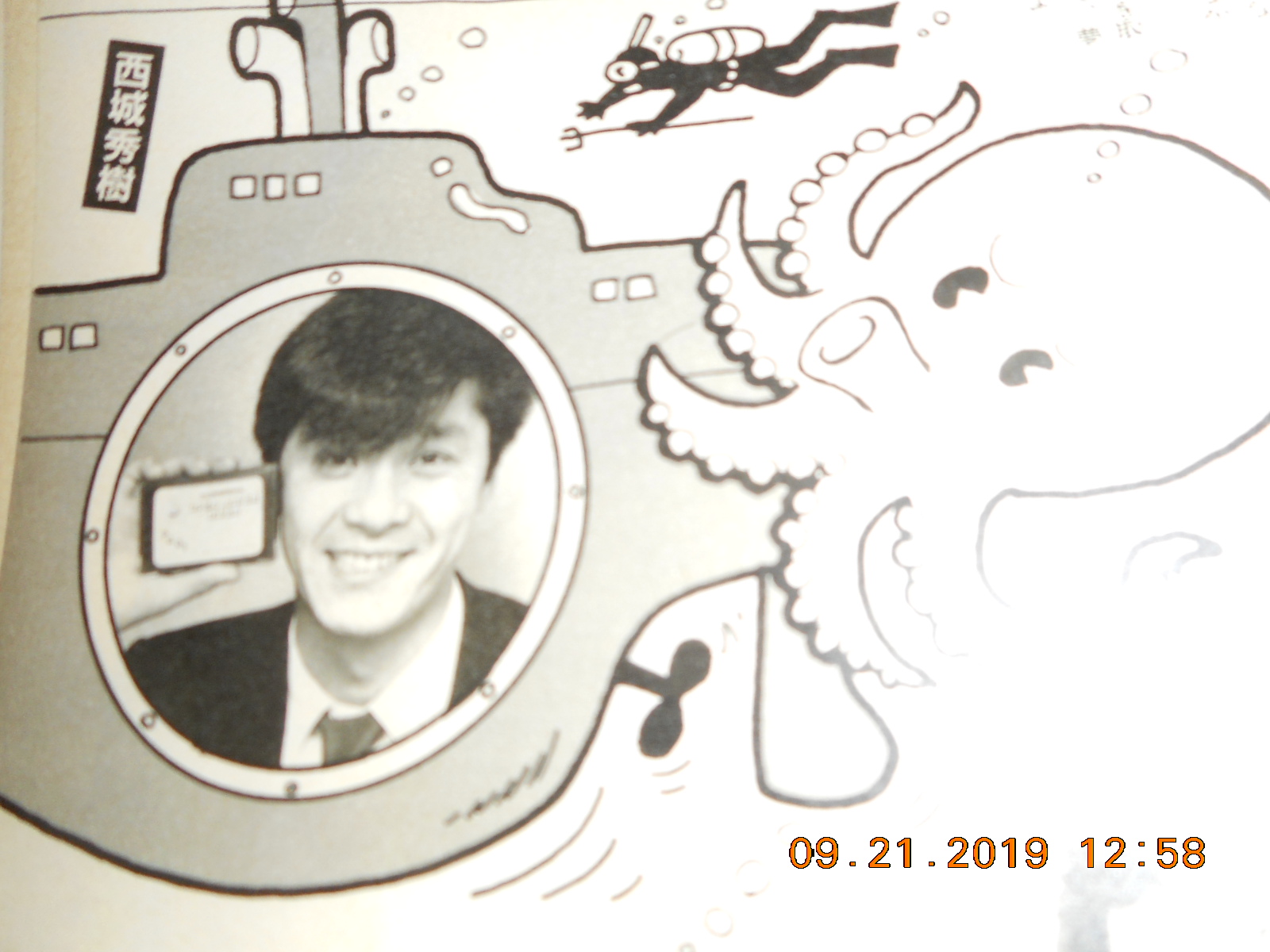
Yep, that is indeed one truly gorgeous City Pop-appropriate cover for Hideki Saijo's(西城秀樹)17th album from July 1985, "Twilight Made...Hideki". All those pastel blues and pinks and peaches....just have this enormous urge to wrap a fluffy pink cardigan around my waist and ask for a Perrier with a lemon twist. It would still be a challenge to tie it into a knot knowing my girth, mind you. But back to the cover, that design reminds me so much of the covers for the albums of AOR king Bobby Caldwell.
However, this is, of course, not a blog about album covers. I would like to have your attention directed to the first track, the oh-so-smooth "Sweet Surrender". The entire album has a lot of City Pop experts helping out on it (you can take a look at the credits on "Rate Your Music") but Track 1 has a couple of heavyweights behind "Sweet Surrender", Minako Yoshida(吉田美奈子)on lyrics (and backing chorus) and Toshiki Kadomatsu(角松敏生)providing the music which is urban and urbane and possesses some rhythmic nimbleness as if Hideki were beating traffic in the city effortlessly by driving his sports car in physics-breaking ways. Trumpeter Shin Kazuhara(数原晋)is also in on the action with the brass arrangement.
There were quite a few keyboardists involved in "Twilight Made" so I can't peg right now who was handling the keys on "Sweet Surrender", but my compliments to him especially when at certain times in the song, the synths take on that Omega Tribe arrangement. Until recently, I only knew Saijo as the long-haired 70s aidoru but with his 80s material, he seemed tailor-made for the City Pop world. OK, "Twilight Made" is going on the wish list!
No matter how the trio of Takamizawa, Sakurai and Sakazaki (sounds like a Japanese accounting firm, I know) would prefer to refer themselves in terms of their group, Alfee or The Alfee, my memories of them will always involve a sort of epic rock opera since their music has incorporated the shredding electric guitars and the classical strings. One great example is their 19th single"Koibito-tachi no Pavement"(恋人たちのペイヴメント)from 1984. There is something very Queen-esque about that one.
For their March 1987 single"Kimi ga Toori Sugita Ato ni"(Don't Pass Me By), the rock aspect is toned down considerably and I think the members have gone more with acoustic guitars here, but the strings and epic sensation are back along with the wistful innocence of youth and baseball. Well, J, you ask, how does baseball fit into this?
It just so happens that "Kimi ga Toori Sugita Ato ni" is the opening theme for the final movie based on Mitsuru Adachi's(あだち充)"Touch"(タッチ)high school baseball franchise, "Touch 3 ~ Kimi ga Toori Sugita Ato ni" which came out in April 1987. Alfee sang the ending theme as well, but as someone who has never seen the movie, I kinda wonder whether "Kimi ga Toori Sugita Ato ni" would have been the better ending theme since it has that bittersweet tone of a pitcher on the mound at sunset following a game that his team just had to win but didn't although they gave it their all. Toshihiko Takamizawa's(高見沢俊彦)lyrics actually go for a fellow's retained love for a lady that was either not reciprocated or couldn't stand the test of time during the relationship. Y'know...just reading the last two sentences, this could apply to good ol' Charlie Brown. In any case, he is hoping that he won't be forgotten.
I also have to mention that I enjoy the classical music riffs that begin and finish the song. Very Alfee. "Kimi ga Toori Sugita Ato ni" reached No. 5 on the Oricon weeklies and ended the year as the 58th-ranked single for 1987. As for an album, the song was placed onto "BEST SELECTION II THE ALFEE" which was released in May 1988. Ah, incidentally, although the band referred to themselves as The Alfee during this time, the single itself just had them labeled as Alfee.
Of course, when it comes to the representative song for the "Touch" franchise, you just have to look here.
Well, it was pretty much as expected. Premier Ford announced today that everybody in Ontario except for the urban areas in the Golden Horseshoe including Toronto, that region hugging the western end of Lake Ontario, can start opening up the shops and restaurants as of this Friday. The GTA will have to wait at least another week to see if our infection rates decrease enough to warrant our turn at re-opening.
Going way back in the illustrious career of Minako Yoshida(吉田美奈子)to check out the first track in her debut album"Tobira no Fuyu"(扉の冬...The Door's Winter)released in September 1973. Despite the title and somewhat pensive expression on the 20-year-old Yoshida's face on the cover, "Soto wa Minna" (Everyone's Outside) has got oodles of summer warmth.
Yoshida wrote and composed all of the tracks and she's backed up by the band Caramel Mama(キャラメル・ママ)which would later get its name change to Tin Pan Alley. So, behind her in recording were former Happy End bandmates Haruomi Hosono(細野晴臣)and Shigeru Suzuki(鈴木茂)on bass/acoustic guitar and electric guitar/percussion respectively with Tatsuo Hayashi(林立夫)on drums and Masataka Matsutoya(松任谷正隆)on organ. Meanwhile, Yoshida herself would handle piano and percussion. However, I would love to know who was taking care of the splendid brass section...that is one reason that the warmth was in there.
With "Soto wa Minna", Yoshida's lyrics seem to talk about getting out there and seizing the day, a sentiment that I figure a lot of people would love to do at this time. There is mention about forests and trees in the song, but "Soto wa Minna" has an arrangement that makes me feel there is some New York City soul, presaging the musical direction that she would take as the decade went by. It's a short and sweet number but it makes for a fine introduction to "Tobira no Fuyu", and as I finish this, I'm already a number of tracks into the album. If at all possible, I will have to add this to the Yoshida collection.
It should be a most interesting talk with my anime buddy on the phone tonight when it comes to the latest episode of "Kaguya-sama wa Kokurasetai"(かぐや様は告らせたい)which is approaching the end of an eventful Season 2. My impression on the show in general has been that it's been hitting me as a mix of "The Big Bang Theory", "Frasier" and "Family Guy", and Episode 9 which I caught on Saturday has especially struck me as that last show with all of the pop cultural references ("Peanuts", for heaven's sake!). In fact, I think even Seth MacFarlane might have gone "Whoa!".
But as I hinted at the top of the article, a lot of fans of the anime had been wondering whether there would be another cute little dance by one of the characters to level up with or even top The Chika Dance that surprised viewers at the end of Episode 3 in Season 1. Well, what it lacked in length (all of 20 seconds) was more than compensated by the main character's stab at voguing just to get that calming ritual to be able to stand up to Miyuki's perceived advances. Heck, there was no coyness in hiding that it was indeed a parody of Madonna's"Vogue" if the viewers caught that image on Kaguya's smartphone (the feather boas opening the sequence sealed the deal). Lady Donna and "Pose" indeed! Certainly, the reactors in the reaction videos were once again delightfully caught off-guard.
Not surprisingly, the space under the music video for Madonna's"Vogue" on YouTube have been liberally peppered since the weekend with comments about the fact that "Kaguya-sama" had sent the writers there. So, once again, I have another Reminiscing of Youth article.
To be more precise, though, it should be a Reminiscing of J-Canuck's 24th Year since that was how old I was when "Vogue" was released in March 1990. Knowing about her since she came up with her early 1980s hits of "Holiday" and "Borderline", Madonna kept on hitting home runs out of the park throughout the rest of the decade, and she did it again at the beginning of the final decade of the 20th century with this song accompanied by a newfangled hand jive.
I was in Gunma, Japan at the time and naively (capital N) tried to incorporate "Dick Tracy", the 1990 film starring Warren Beatty, Al Pacino and Madonna based on the original comic, into my lessons at the junior high schools that I was teaching at. But, really, it was no dice with the students. It was even hard with "Batman" the previous year. "Vogue" did end up on the soundtrack for the movie, which I think is an underrated work considering how much effort was placed into the setting, costumes and makeup, etc., and yep, along with the CD single of the song, I did buy that soundtrack and it's on the shelf behind me. I will have to listen to that one again this week sometime.
"Vogue" hit No. 1 in Canada, America and even Japan, and ended up as the No. 5 song on the US Billboard Hot 100 for the year.
So, what were the Top 3 singles on Oricon for March 1990 when one of Madonna's most famous songs was released?
Over the past several months, I've had these two songs treated as if they were siblings. It's easy to do so because the parent, so to speak, is singer-songwriter Kenshi Yonezu(米津玄師). One of the "kids" is "Kite" by Arashi(嵐)which may still remain the official NHK song for the Tokyo Olympics as long as there's the chance for them to be held next year.
The other "kid" is "Paprika" by 5-strong children's song-and-dance unit Foorin. I'd also thought that "Paprika" had been meant to be another NHK song for the Olympics, but as it turns out, this was a product for the national broadcaster's "2020 Ouen Song Project"(2020応援ソングプロジェクト...2020 Cheer Song Project).
Foorin's members are Hyuuga Yoshida(吉田日向), Moeno Sumida(住田萌乃), Takeru Narahara(楢原嵩琉), Ririko Ikeshita(池下リリコ)and Chise Niitsu(新津ちせ)who are currently of elementary school and junior high school age. Apparently, songwriter Yonezu named the group as such since he felt that their cheerful singing and dancing reminded him of a foorin(風鈴)or wind chime, according to J-Wiki.
"Paprika", which was released as a CD single in August 2018, got plenty of attention as Foorin appeared on a number of shows including "Music Station" and the 2019 FNS Song Festival last year. As well, I saw the kids regularly perform the song as a part of NHK's"Minna no Uta"(みんなのうた)series. Moreover, Foorin got to appear on the year-end Kohaku Utagassen both in 2018 and 2019, and on the latter show, they were joined by international versions of Foorin on the Shibuya stage to perform "Paprika".
I remember watching that mass Foorin performance and found that one of the members in one of the groups just seemed to be trying a little too hard for the camera, so I kinda reacted like Dr. Evil did at about 1:00 in the above video.
The CD went Gold and in its digital download format, "Paprika" went Platinum, as it peaked at No. 16 on Oricon. It would also end 2019 as the No. 7 single on Billboard Japan's Top 100. Yonezu himself provided a slightly funkier cover as a digital download-only single in February 2020 (which has also gone Gold) and also as a track on his 5th studio album"Stray Sheep" that is due to be released in August this year. One commenter (Jurist) for the above video for Yonezu's "Paprika" gives a detailed explanation about how the original songwriter's take on the song adds further deeper dimensions in the meaning.
Ah, just before I finish off, I just wanted to let you know about another feat that Foorin pulled off by winning a Grand prize at the Japan Record Awards last year according to a few sources including a "Nikkan Sports" article via J-Wiki. Since the average age of the group was 11.2 years, the five of them collectively became the youngest recipients of the award, and three of the group were the first-ever elementary school students to get it.
Nice Sunday out there. Not too hot, not too cool and plenty sunny.☀
Also, not sure whether this Kanako Wada(和田加奈子)tune was ever associated with "Kimagure Orange Road"(きまぐれオレンジロード)despite the thumbnail above, but regardless of anime affiliations, "Music ni Katayosete" (Let The Music Carry Me) is a lovely tune to hear right now. There's some boss sax in there and that arrangement of West Coast pop, thanks to Yuji Toriyama(鳥山雄司). Wada was responsible for the lyrics while Ken Sato(佐藤健)took care of this melody that is representative of what I loved about plain ol' Japanese pop music in the 1980s. And the protagonist in this story looks to be echoing the same sentiments as she requests for some of that good-time music that she and someone close to her once listened to. Is it a former love or someone that didn't quite get to that level? Who knows?
"Music ni Katayosete" is a track on Wada's December 1987 album"KANA". Good to have her company again.
For our next Junko Yagami(八神純子)song, we won't be delving into her Latin-tinged late 1970s material, her early 1980s City Pop or her mid-to-late 80s R&B.
We're going way back to her 2nd single from February 1975 when she was a 17-year-old teenager. This would be "Shiawase no Toki"(Happy Times), and even with this early ballad, it was evident that the Nagoya native had talent in her singing and songwriting. With arrangement by Mitsuo Hagita(萩田光雄), "Shiawase no Toki" is an aural version of a shojo manga containing pure innocent love between a boy and a girl, as Yagami sings like an angel from the heavens providing musical support for the couple.
According to her J-Wiki bio, at the same time that she was attending Aichi Shukutoku High School, Yagami was also going to a vocal talent school run by Yamaha. During that time, she entered the 8th Yamaha Popular Song Contest (PopCon) in October 1974 for which she was nominated for both "Shiawase no Toki" and what would become her debut single"Ame no Hi no Hitorigoto"(雨の日のひとりごと). Both won prizes at PopCon, and for two songs to be entered and win in the same contest had never occurred and hasn't been repeated since. It's quite the feat that would herald a most amazing career.