I've been a fan of Japanese popular music for 40 years, and have managed to collect a lot of material during that time. So I decided I wanted to talk about Showa Era music with like-minded fans. My particular era is the 70s and 80s (thus the "kayo kyoku"). The plus part includes a number of songs and artists from the last 30 years and also the early kayo. So, let's talk about New Music, aidoru, City Pop and enka.
Credits
I would like to give credit where credit is due. Videos are from YouTube and other sources such as NicoNico while Oricon rankings and other information are translated from the Japanese Wikipedia unless noted.
Wow! The more you know, eh? All these years and I hadn't known that comedians Tsutomu Sekine(関根勤) and Kazuki Kosakai(小堺一機)had actually been a comedic duo. Of course, I knew them individually: Sekine has been a mainstay tarento on a ton of variety shows as well as a celebrity impressionist. Kosakai is someone I knew who had that long-running talk show on Fuji-TV during weekday afternoons. But apparently since 1981, the two of them were known as the duo Kosakin(コサキン).
The two also had their own radio show "Kosakin de WOW!"(コサキンDEワァオ!)for about 28 years between 1981 and 2009 (with specials about once a year starting from 2020). They even had their own brief late-night variety show "Kosakinruu no Okonnaide, Kiite!!"(コサキンルーの怒んないで聞いて!!...Kosakinruu, Don't Get Angry, Just Listen!!)from 1993 to 1994.
The ending theme for that show was Seiko Sato's(佐藤聖子)"Kono Koi ga Subete" (All This Love) which can be found on her January 1994 album "Marvelous Act". Written by Yui Nishiwaki(西脇唯)and composed by Sato herself, it's quite the upbeat song for a late-night show that approaches 90s City Pop. I'd also think that it could have been fine adorning some prime-time show as well.
Back in October, I finally put Yui Nishiwaki's(西脇唯)name up on the title byline after a number of her songs for other singers had been posted in the past. The official introduction to her voice was via her 1993 "Shichi-gatsu no Ame nara"(7月のな雨ら).
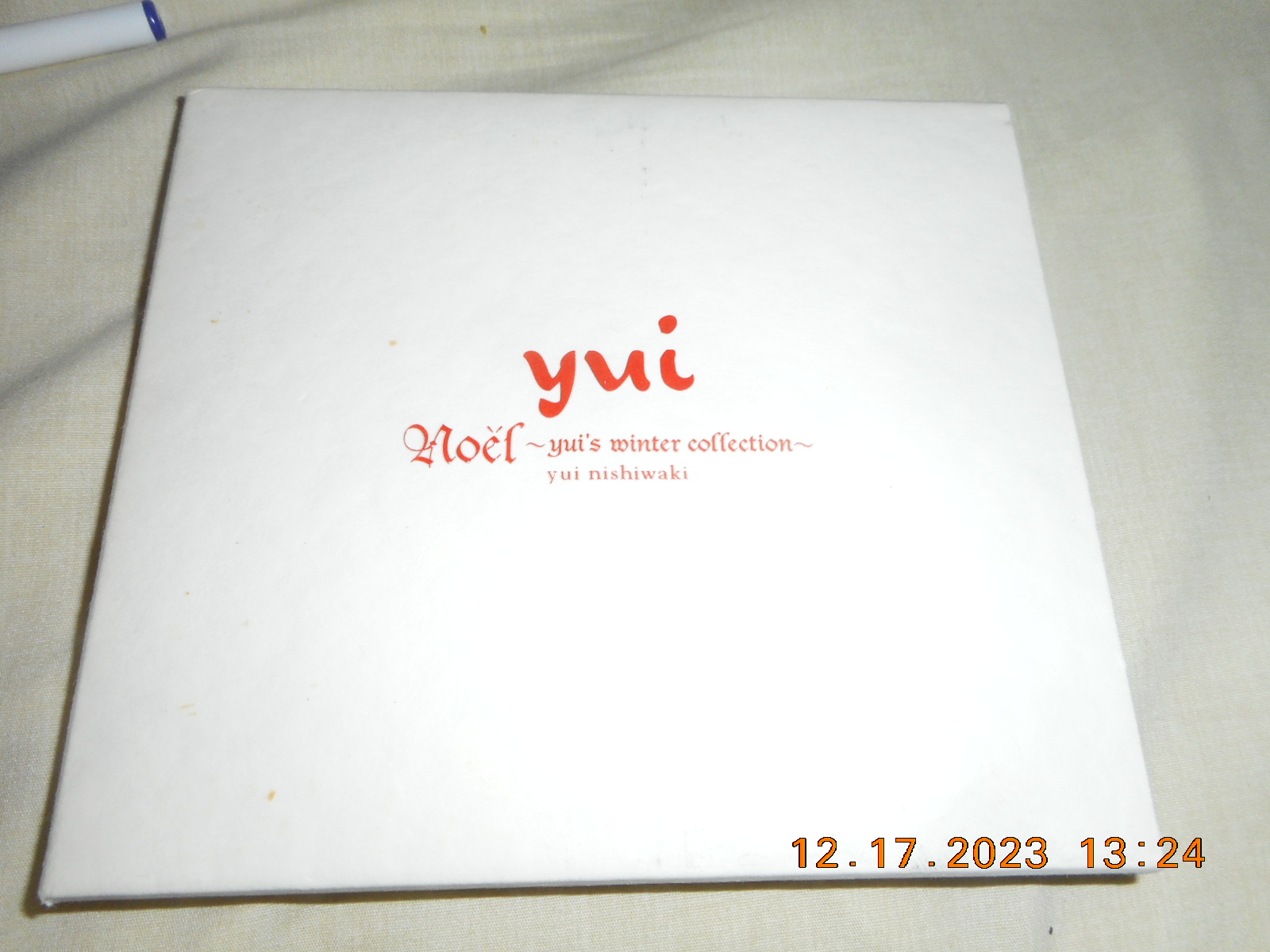
All that fuss on Nishiwaki was sparked by an album that I had bought titled "Noel〜yui's winter collection〜" from November 1998. I gave it a go but didn't find too many of the tracks all that appealing so it stayed up on the shelves for a very long time. "Noel" wasn't the first album to get that sort of treatment from me; my very first Taeko Ohnuki(大貫妙子)album which was a BEST compilation from her early 1980s period ended up the same way for several years since I couldn't quite "get" what she was about until I finally saw and heard the light.
But first, I ought to at least write some on the song of note here, "Holy Snow", which was Nishiwaki's 9th single from November 1996. It's a pleasant love song about a couple realizing their affections for each other on the ski slopes that was written and composed by the singer. She follows in the footsteps of a number of female singers from that time and a little further back in the late 1980s such as Midori Karashima(辛島美登里)and Akiko Kobayashi(小林明子), creating these very woolly blanket-comfy tunes.
However, the version that I heard of "Holy Snow" was the one from the aforementioned "Noel" from 1998. The album was a special selection of winter-themed tunes which were given some rearrangement under the producers' eyes of Nishiwaki and Swedish singer Ulf Turesson who has been mentioned in Tomoyo Harada's(原田知世)"Romance" of 1997. In fact, looking at the liner notes for "Noel", it appears that the musicians were all from Sweden, and although it's not made clear in the notes, the assumption is that the album had been produced in that nation.
I remember at the time when I was living in Japan in the late 1990s that the Swedish band The Cardigans were all the rage there, and so some of the J-Pop artists such as Harada and evidently Nishiwaki were seeking out Turesson and Tore Johansson for production help on their songs and albums. "Holy Snow" has retained that quiet and comfy flavour but the "Noel" version has brought in the strings and a laconic guitar to give make things a fair bit woodsier for the lack of a better word. Despite the "Noel" title of the album, not all of the tracks there are about Christmas and "Holy Snow" certainly doesn't hint at December 25th although the winter and romance are in there. The setting could be anytime between December and March.
As for my second verdict on "Noel"? Now that I understand the circumstances behind the album and have more seasoned ears, I actually do appreciate the tracks a lot more and only wish that one other track "Fuyu Yasumi"(冬休み...Winter Holiday) was on YouTube.
I'm kinda gobsmacked right now on realizing that although I've had singer-songwriter Yui Nishiwaki(西脇唯)represented on the blog since 2016, she's always been included as just the songwriter for other artists. For instance, she composed Hiroko Moriguchi's(森口博子)"ETERNAL WIND~Hohoemi wa Hikaru Kaze no Naka~"(ほほえみは光る風の中)in 1991 which helped earn the singer-TV personality the title of Gundam Oneesan. As well, I have to admit that I actually have Nishiwaki's 1998 Xmas album "Noel〜yui's winter collection〜" but the songs never quite clicked with me for the most part. I'll have to give them another go after so many years.
Well, allow me some redemption then. It's interesting all of the songs that I have posted thus far which were composed by Nishiwaki had all been released before the lady herself actually put out her own official debut single in May 1993 under her kanji name. "Shichi-gatsu no Ame nara" (July Rain) is a dramatic pop song about impending doom over a romantic relationship that was used as one of the many ending themes for the late-night information variety program "Tonight" on TV Asahi, although I think that it could also have sufficed as a theme song for a J-Drama. Arranged by Nobuyuki Shimizu(清水信之), "Shichi-gatsu no Ame nara" went as high as No. 25 on Oricon.
Nishiwaki released most of her own discography in the 1990s and of course, she's provided many songs for other singers over the years.
Never heard of singer-songwriter Seiko Sato(佐藤聖子)before but she had her time behind the microphone between 1992 and 1998, and the Saitama Prefecture native was also appearing as a tarento on television. During those 1990s, she released thirteen singles and six albums of which her debut album was "Bright Lights" from February 1992.
"Hoshi no Inai Shuumatsu" (Starless Weekend) is the track that launches "Bright Lights". Written by Yui Nishiwaki(西脇唯)and composed by Sato, it's a song that straddles the line between bouncy girl pop and 90s City Pop. I'm not sure that they needed those hints of New Jack Swing, though. But I do like Sato's voice which reminds me of Reimy(麗美)and Cindy. The lyrics tell of a young woman heading home from the supermarket and looking up at the night sky, but instead of pining for love, she sees bright hope up there despite the lack of astral bodies.
Once Sato retired from singing, she went full-time into practicing her flamenco dancing, a hobby that she had started back in elementary school. In fact, she established her own flamenco school, according to her J-Wiki profile.
My anime buddy provided me with "Gundam Build Divers"(ガンダムビルドダイバーズ)recently, and to be honest, it hasn't really grabbed me, although he told me that it took until Episode 7 for things to really get going. I just finished Episode 3, and I'm already starting to think of letting this one go, but I will play it by ear.
Anyways, this isn't the first time that tarento and former 80s aidoruHiroko Moriguchi(森口博子)has appeared in "Kayo Kyoku Plus" with JTM introducing her in his grand article "JTM's 80s Playlist - J-Dorama/Anime/Movie Edition" from nearly 5 years ago (look for entry No. 6). That entry spoke about her debut single, "Mizu No Hoshi E Ai Wo Komete"(水の星へ愛をこめて)as a theme song for one of the many "Gundam" shows that have appeared over the decades.
I've also mentioned in a past article that my personal recollections about her exclusively talked about her status as an overall giggly comedic tarento and impersonator. Just before she made her big break in the 1980s, she received her training with The School Mates(スクールメイツ), an entertainment group in which she often appeared on TV as a background dancer.
I'd had no idea until my anime buddy informed me that Moriguchi was known in anime circles as "The Gundam Oneesan" for her contributions to the franchise's anison.
Additionally, I had assumed that "Kido Senshi Gundam Formula 91"(機動戦士ガンダムF91...Mobile Suit Gundam F91)was another in a line of Gundam TV series, but actually, it turned out to be a movie released in March 1991.
Moriguchi was tasked to sing the theme song for the movie, "ETERNAL WIND~Hohoemi wa Hikaru Kaze no Naka~" (Smile in the Shining Wind). Written by singer-songwriter Yui Nishiwaki(西脇唯)and composed by Nishiwaki and Yoko Osatohara(緒里原洋子...I hope I've got the name right), it's a pretty uplifting song with that taste of pop-rock from that period of time.
"ETERNAL WIND" was also Moriguchi's 9th single from February 1991 which has proven to be her most successful single thus far, peaking at No. 9, and finishing the year as the 47th-ranked song. Apparently, it was also used as the ending theme for the Sony Playstation 2 game "Kido Senshi Gundam Climax U.C."(機動戦士ガンダム クライマックスU.C.)released in March 2006.
Hey, why not leave things off with one of Moriguchi's most popular impressions...that of Shizuka Kudo(工藤静香)?
P.S. December 13, 2022: Enka and pop singer Kiyoshi Hiyama(氷川きよし)had his year-end television special earlier tonight before he takes an extended leave of absence from 2023. He revealed that he and Moriguchi had attended the same junior high school in Fukuoka, although the latter had graduated many years prior. As well, at his classmates' urging, he sang "ETERNAL WIND" in front of everyone and he stated that their warm reaction gave the impetus for him to go into singing as a career.
Never heard of Ritsuko Kurosawa(黒沢律子)before. But listening to her "Sayonara ga Nemuranai"(Goodbyes Never Sleep), I figure she might have gotten her first Canadian fan. Admittedly, it's from the nostalgic point of view since the arrangement of the song by Toshihiko Miyoshi(三好敏彦)pretty much screams early 1990s with that certain synthesizer and the power pop stylings that are reminiscent of ZARD.
Unfortunately, there's not a whole lot of information about Kurosawa aside from the fact that she debuted in 1990. "Sayonara ga Nemuranai", written by singer-songwriter Yui Nishiwaki(西脇唯)and composer Keiko Yokoyama(横山敬子), comes from what was probably her 2nd album, "RITZ" from December 1991. According to this one page, "RITZ" is now out of print and possibly her other albums might be in the same boat. Kurosawa's vocals may not be the most standout but this one song has gotten me on the hook at least.
Hiroko Moriguchi (森口博子) may have started as a cute aidoruback in the mid-80s, but it’s as
a 90s pop singer that I remember her the most, especially after the hit ballad
single “ETERNAL WIND ~Hohoemi Hikaru Kaze no Naka~” (ETERNAL WIND〜ほほえみは光る風の中〜) in 1991.
One
of her greatest songs, and also her debut, “Mizu no Hoshi e Ai wo Komete” (水の星へ愛をこめて), have already been covered by fellow contributor JTM in
the past, but there are a lot of minor, yet interesting, songs from her that
would be nice to talk about. “Speed” is just one of them.
Released
in September 1992, “Speed” is a very uplifting song with a singalong chorus and
lovely keyboards splashed through the song. One of the many courtesies from the
90s, of course. Speaking of it, “Speed” may not sound innovative, as it’s very
immersed in its time, but it’s a charming song, nonetheless. As for Hiroko,
I’ve always found her a rather strong vocalist (if compared to other aidoru
singers out there), and she shows some of her pipes in “Speed”.
I
may have been very negligent with Moriguchi in the past few years, but lately
I’m starting to rediscover her discography. Songs like “Speed”, although far
from the melodical gorgeousness of “Mizu no Hoshi e Ai wo Komete” (a gift from
Neil Sedaka), are what I like from her. It’s a pity she’s also a bit too fond
of ballads.
To finish, here’s
Moriguchi performing “Speed” in 2015. She’s as cute and talented as ever.
Lyrics were written by Yui Nishiwaki (西脇唯), while music and
arrangement were done by Kaori Okui (奥居香).
Being my first
full album entry, I had to talk about Megumi Hayashibara (林原めぐみ), as she is the artist
I had listened the most in the past 10 years. Also, it's no mystery that her discography is the biggest treasure in my music collection (Yeah, I'm like a proud dad when it comes to my Megumi's CDs). But trying to pick one album from
her big discography was kind of difficult for me. In the end, I chose “Half
and, Half”, her debut album and, surprisingly, the one I find most cohesive (“SpHERE”,
her fifth album, and “Fuwari” [ふわり], her ninth, are two close runner-ups).
Released in
March 1991, “Half and, Half” is an interesting aidoru crafted album. Strange enough, besides Megumi being almost
23 years old when the album was released, the team responsible for the “artist
image” decided to make her a kawaii
aidoru. Based on that, we can take the “Why
Don’t You Come Into My Heart?” question placed in red right below the album
title as a warm invitation from a Japanese aidoru
singer aiming at the public to follow her in this new path (not so new if we
take in consideration that Megumi started recording some anime songs back in 1989). Talking about anime, it's worth note that "Half and, Half" is Megumi's only album to date with no anime-related songs placed in it. I only put the anime tag in this article because of Megumi's huge relation with the genre.
The aidoru approach per se is more than enough for we to conclude that “Half and, Half”
is full of cute, dreamy, playful and saccharine songs, like “a Late Comer”,
“Don’t Say ‘Wake Up Baby’” and “College Ring wo Kai ni Yukou” (カレッジリングを買いにゆこう). Of that bunch I
selected just “A Late Comer” to talk about, as the other two are kind of too
much for me in normal days. So, please, enjoy the “A Late Comer” video (sorry the video has been taken down) where
Megumi acts like the typical innocent and girly aidoru.
“a Late Comer” is the second song of the album and, although cute and silly, shows some interesting
musical elements accompanying Megumi’s vocals. Maybe it’s too much, but “A Late
Comer” is for me a “Nu jazz” song, where the traditional feel and sound of Jazz
is mixed with other styles and instruments. If anything, it can also be called
“aidoru Jazz” (if that means
something at all). I don’t know how to categorize it, but I can hear some Jazz
in it, and it’s a nice variation to the album, while not sounding too out of
place.
On the other
extreme, songs like “Kimi no Answer” (君のAnswer), “Nijiiro no Sneaker” (虹色のSneaker) and “Manatsu noValentine” (真夏のバレンタイン) are perfect examples of the
heavy “eurobeat-esque” synth-pop sound that was so used in Japanese aidoru songs during the late 80s/early
90s. These three are very nice songs, and just like “A Late Comer”, they have
videos, so I recommend the reader/listener take some time to watch them while enjoying
the songs. After all, who doesn’t like to have fun watching a young Megumi
running and smiling to the camera? As for the other selected songs, they are
just audio videos from YouTube.
Apparently, a
video for “Kimi no Answer” exists as it was released in a Video Single Format back in the days. It’s nothing more than a
compilation of scenes from her other videos of the era and some backing scenes
as well. Quality is horrible, but this is a rare video. As for the song, aside
being the album opener and a nice synth-pop tune, it has quite an story behind, as Megumi, in her
“VINTAGE A” compilation liner notes, remembers that she was recording the song
while the Operation Desert Storm was taking place in the Gulf War and somehow she
connected the lyrics with that moment. As I know nothing about “Kimi no Answer”
lyrics, I can’t share my own opinions about the subject, though.
“Nijiiro no
Sneaker” is the mellow synth-pop aidoru
song, which has also served as Megumi’s major label debut and lead single of
“Half and, Half”, released a few weeks before the album. Also, the song was
used as the theme song of Megumi’s “Heartful Station” radio program until 2003,
when it was replaced by “Makenaide, Makenaide…” (負けないで、負けないで…), a beautiful Megumi song, more
mature than the “Half and, Half” stuff. Back to “Nijiiro no Sneaker”, I find the
guitar solo at the end quite nostalgic.
(Unfortunately the video has been taken down. Please refer to the Amazon link above.)
About “Manatsu
no Valentine”, the summer tune about Valentine’s Day, I consider it one of the
strongest songs of the whole bunch. It’s very bouncy and cute with the whole
“in-your-face” aidoru vibe. As I’ve
already talked in Megumi’s “Forever Dreamer” entry, “Manatsu no Valentine” serves
as a good example of an eurobeat song with an aidoru approach, or vice-versa, which was a very common combination
at the time.
“Ame no Hi no
Shakespeare -TO FLY AWAY-” (雨の日のシェイクスピア-TO FLY AWAY-), is easily one of my favorites. It has a more
serious vibe than the other songs presented until now. It also gives me an airy
feeling when the song breaks for a bit and Megumi starts the “la la la” thing
before the full arrangement moves it forward again. Also, Megumi’s vocals are
very lovely in this song.
(Unfortunately the video has been taken down. Please refer to the Amazon link above.)
NOTE: The name of the song is mistaken in this video. The actual song is "Friends". As for "College Ring wo Kai ni Yukou", it's a song from "Half and, Half" that I chose not to feature in the article.
Right after
“Ame no Hi no Shakespeare -TO FLY AWAY-”, “Friends”, one of the catchiest songs
of “Half and, Half” and another personal favorite, sees Megumi using her deeper
tone in the verses just to release her cute and child-like voice for the joyful
chorus. Also worth of note is the very well put together arrangement of the
song. It’s full of infectious guitar solos and sharp synth riffs that make me
feel truly happy every time I hear it.
With “Regret ga Naiteiru” (リクレットが泣いている), we’re facing one
of the two ballads of the album. Megumi’s voice is very lovely in this
beautiful song, probably making this her best deliver in the album. As a side
note, “Regret ga Naiteiru” is another favorite of mine (Yeah, I really like
this album).
(Sorry but the video has been taken down.)
Near the end,
we have “EL WAKT”, your typical Latin inspired song that must appear in almost
all pop albums. Megumi has a bunch of Latin songs in her discography, and this one
was her first try. It’s an OK song that, unfortunately, kind of drags a bit
because of the elongated notes. Also, I’d love to know what “EL WAKT” means.
The last song
of the album is the classical inspired ballad “BECAUSE”. This one always makes
me sad because I know the album is almost finishing, and the song itself is, in
essence, well, …kind of sad. Megumi’s vocals are very angelic and vulnerable.
As for the arrangement, the orchestra is just beautiful, which makes “BECAUSE” a
great way to finish Megumi’s first album, “Half and, Half”.
All in all,
“Half and, Half” is a very nostalgic album with a specific sound that throws
the listener back to the mainstream dance-pop sound of the early 90s combined
with the usual aidoru cuteness. It’s
a very dated sound to today’s standards but, in my opinion, that just adds fun
to the game. Also, it’s important to note that Megumi was a very raw singer at
the time, which makes the whole “Half and, Half” album an interesting listen.
This notable rawness was also something that, alongside the arrangements, added
a naïve feeling to most of the songs. I remember reading in Megumi’s manga autobiography that she sounded
awful during the recording sessions for the album, but her producer, then, said
that the way she sang it was more important than the actual quality of the
singing. And, to be honest, that’s probably the true essence of a Japanese aidoru. And for a registered nurse who
turned into a seiyuu (voice actress),
and then into a singer, Megumi did quite a good job in this album. Of course
she got better with time, but that’s subject for future posts.
The album
reached #45 on the Oricon chart, selling 20,180 copies. The edition I bought is
a 2005 reissue that reached #288 and sold 763 copies.
And here are the names responsible for lyrics, music and arrangement of each song presented in this article.
Track 1 - "Kimi no Answer": lyrics by Yumi Yoshimoto (吉元由美), music and arrangement by Haruhiko Nishioka (西岡治彦).
Track 2 - "a Late Comer": lyrics by Keiko Kimoto (木本慶子), music by Masaya Ozeki (尾関昌也) and arrangement by Toshiyuki Omori (大森俊之).
Track 3 - "Nijiiro no Sneaker": lyrics and music by Midori Karashima (辛島美登里), and arrangement by Yasuhisa Murase (村瀬恭久).
Track 4 - "Manatsu no Valentine": lyrics by Yui Nishiwaki (西脇唯), music by Cozy Kubo and arrangement by Takashi Furukawa (古川貴司).
Track 6 - "Ame no Hi no Shakespeare -TO FLY AWAY-": lyrics by Miho Matsuba (松葉みほ), music and arrangement by Toro Okada (岡田徹).
Track 7 - "Friends": lyrics by Keiko Kimoto (木本慶子), music by Masaya Ozaki (尾関昌也) and arrangement by Toshiyuki Omori (大森俊之).
Track 9 - "Regret ga Naiteru": lyrics by Yumi Yoshimoto (吉元由美), music by Katsuki Yamaura (山浦克己) and arrangement by Norimasa Yamanaka (山中紀昌).
Track 11 - "EL WAKT": lyrics by Yui Nishiwaki (西脇唯), music by Katsuki Yamaura (山浦克己) and arrangement by Yasunori Nakamura (中村康就).
Track 12 - "BECAUSE": lyrics and music by Yui Nishiwaki (西脇唯), and arrangement by Tomoki Hasegawa (長谷川智樹).
To finish, here are some photos of my “Half and, Half”.