I've been a fan of Japanese popular music for 40 years, and have managed to collect a lot of material during that time. So I decided I wanted to talk about Showa Era music with like-minded fans. My particular era is the 70s and 80s (thus the "kayo kyoku"). The plus part includes a number of songs and artists from the last 30 years and also the early kayo. So, let's talk about New Music, aidoru, City Pop and enka.
Credits
I would like to give credit where credit is due. Videos are from YouTube and other sources such as NicoNico while Oricon rankings and other information are translated from the Japanese Wikipedia unless noted.
Yes, "Seibu Keisatsu"(西部警察)...the one Japanese cop show that could even make The Untouchables and Al Capone shake at all of the ammunition fired in a single episode. Mind you, it also generated some very shibui theme songs. There was the Mood Kayo of star Yujiro Ishihara's(石原裕次郎)"Yoake no Machi"(夜明けの街)and "Yuusha tachi"(勇者たち), and although this song wasn't officially part of the "Seibu Keisatsu" grand soundtrack, I've always thought that Akira Terao's(寺尾聡)"Ruby no Yubiwa"(ルビーの指輪)had a stake in the series since the singer-songwriter and thespian had played one of the maverick cops on the show as he was coming up with this City Pop hit and its source album "Reflections".
Well, for the third instalment of "Seibu Keisatsu" which ran from April 1983 to October 1984, the ending theme was some refined sophisticated pop in the form of Mieko Inoue's(井上美恵子)"Kaze no Shoutaijou"(Invitation of the Wind). I couldn't find any single piece of information on this singer outside of the fact that she had sung this particular song which spurs on thoughts of classy nights on the Riviera and pleasant evenings in Shinjuku hotel bars.
Takako Ozawa(大沢孝子)was behind the words while Kentaro Haneda(羽田健太郎)took care of the music. The bossa nova-spiced arrangement has me thinking Keiko Maruyama(丸山恵子)while the vocals by Inoue reminds me slightly of Machiko Watanabe(渡辺真知子). If anyone out there can inform us a bit more of Inoue, that would be greatly appreciated.
I have to give credit where credit is due and say that the above photo is from the online site "Streets of Toronto". Somewhere in my home, there is a picture of the old Silver Snail but I couldn't be bothered to sift through drawers and other nooks and crannies to track it down. Now, for all those in my hometown who are into the comics and other aspects of pop culture like anime, the Silver Snail was the emporium for all of that. It used to be located in the bohemian Queen West neighbourhood in an old-fashioned house for the first 36 years of its life.
My first visits to the Silver Snail happened while I was at University of Toronto. My friend introduced me to it and it was only a 15-minute walk down from campus. It was definitely an eye-opening experience just for the wonderful interior décor, the tons of comics and most importantly, the examples of Japanese pop culture I could actually physically buy in the years before the now-customary habit of getting them online. Coincidentally, this all went down when that same friend introduced me to the Chinatown record stores a few blocks north in between the Silver Snail and U of T where I could actually buy Japanese records. I'd say it was a darn fine year. And so, I bought my fair share of J-Merch including the following:
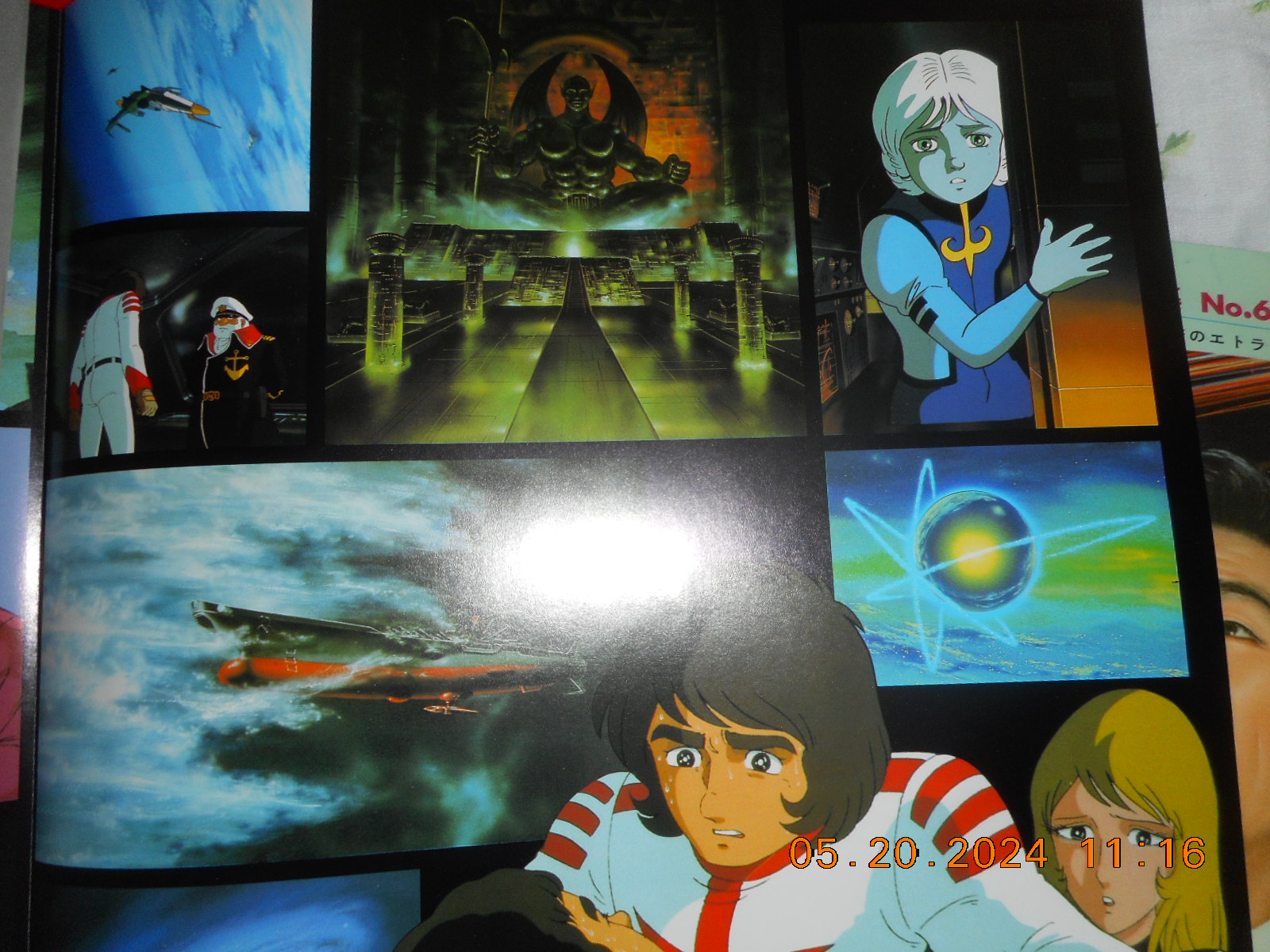
Yup, just like that copy of Seiko Matsuda's(松田聖子)"Train" album that beckoned me to buy it at Wah Yueh in Chinatown, this beauty was also calling my name in Silver Snail. I'd already purchased my fair share of "Uchuu Senkan Yamato" guidebooks at $20 CDN a shot including the one for the supposedly final entry of the original franchise, the film "Uchuu Senkan Yamato Kanketsuhen"(宇宙戦艦ヤマト 完結編...Final Yamato) which was first released in March 1983. So, they put an end to the story of the mighty battleship, eh, I thought. I had no idea until a couple of years later.
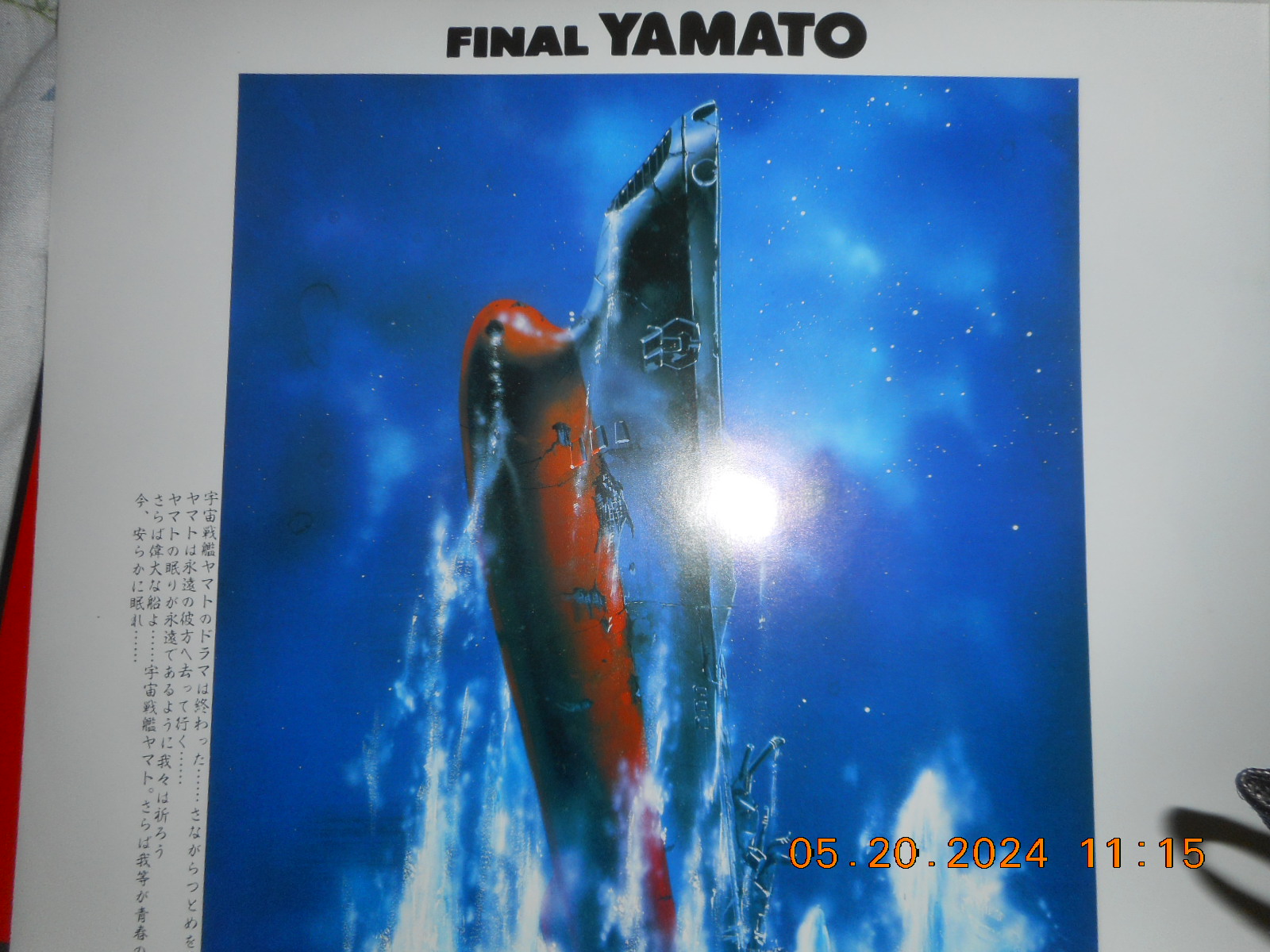
Well, it only took a few more longing gazes between the soundtrack and me before I finally pulled the trigger on my wallet. I forgot how much cash I forked out; I remember that it wasn't cheap. At first, I'd assumed that "Uchuu Senkan Yamato Kanketsuhen Tehma Ongakushuu II" (Theme Music Collection II) was the one-and-only soundtrack for the movie. I guess I couldn't read the "II". Apparently, the music for the film was so grand and epic that the record company had to make release it all via two albums. Mind you, I think "II" has the more dramatic cover with a wrecked Yamato making one final rise above the water.
Being unaware of it at the time, with this album, I began the tradition of listening to movie soundtracks before even seeing the movie itself. That was the case with J.J. Abrams'"Star Trek" in 2009 and then "Avengers: Endgame" in 2019 (although I never bought the soundtrack...thank you, YouTube). However, getting back to "Uchuu Senkan Yamato Kanketsuhen Tehma Ongakushuu II", the first impression that I got from the album was that, except for one track, there was nothing in there that tied me back to the old music that I got to know and love from the TV series. It was all very John Williams, Gustav Holst, Sergei Rachmaninoff and any other classical composer that would create music for an 18th-century ball.
And that was true right from the first track, "Futatsu no Ginga"(二つの銀河...Two Galaxies). Now, actually the above video is playing a truncated version that was on a later release called "YAMATO SOUND ALMANAC 1983-Ⅳ" and perhaps even "Uchuu Senkan Yamato Kanketsuhen Tehma Ongakushuu I". I couldn't find the copy from "II" but at least this video will still give you an idea of what hit my ears with a bang when I first put the record onto the turntable. Man, what kinda mess did the Yamato get into now, I thought.
Well, as it turns out, the album was a collaboration between Hiroshi Miyagawa(宮川泰), who was the go-to guy for all things Yamato, and Kentaro Haneda( 羽田健太郎)who had a lot to do with another major anime franchise "Macross"(マクロス)including the Lynn Minmay song "0-G Love". I was curious about what got Miyagawa and Haneda to take such a different approach with the soundtrack for the final movie, and they simply said that they didn't want to get stuck in a rut with variations on the old stuff; they wanted the franchise to go out with a bang of new compositions. By the way, Miyagawa was responsible for "Futatsu no Ginga".
Miyagawa was also behind "Lugal Soutou no Sensou"(ルガール総統の戦争...Supreme Ruler Lugal's War) which is one massive battle song starting with the strings falling down the equivalent height of the Empire State Building. Again, I hadn't seen the movie yet but listening to this track, I could imagine one heck of a firefight between the Yamato and Lugal's forces.
A quick aside from me, but I couldn't help but see the evil Emperor Lugal as looking a whole lot like actor Kelsey Grammer from "Frasier" and "Cheers". I wonder how far the commute was between Boston and the planet Denguil?
"Shima wo Omou"(Remembering Shima) was another Miyagawa composition. I had already seen what was to become of Chief Navigator Shima through the "Final Yamato" guidebook, and then I finally saw the scene many years later. It's naturally going to be very dramatic and tragic but I kinda wished that they hadn't made the piece so loud in the movie since it rather distracted from the very sad outcome.
I mentioned earlier about that one familiar track. Well, it was this one, "Fight Cosmo Tiger II"(FightコスモタイガーⅡ). It certainly starts with the razor slash of brass that launched a major attack by the Yamato's air corps in the old series, but then Miyagawa replaces the rest of it with an epic disco orchestra number that sounds like it flew in from a "Lupin III" soundtrack.
I've been really trying to find any of the tracks that had been composed by Haneda, and I finally found one, "Hisou no Bolero"(悲愴のボレロ...Sorrowful Bolero). To let you in on one thing about this soundtrack...I had actually recorded it onto audiotape and I used to play it all the time whenever I was pulling an all-nighter during high school and university. "Fight Cosmo Tiger II" and "Hisou no Bolero" were the two tracks that blew me awake whenever I was in danger of nodding off, especially the latter track. Ravel would probably be proud of Haneda's own take on a bolero and when it was time for this song, I would usually bonk my desk with my fist when I heard the timpani hit.
How very convenient of you to come back to life, Captain Okita! I was never all that sold on the plot device of the original commander of the Yamato being in a coma all that time just to return for that one final mission. But hey, Captain Kodai had to have his happy ending with Ms. Mori at the end (and boy, did they), so Okita was the guy to take the Yamato to her final fate. And all that was accomplished with the accompaniment of the huge Haneda piece "Symphony of the Aquarius" that seems to encapsulate one climactic battle sequence in its arrangement and time of nearly 10 minutes! If there were ever an opera version of "Yamato", this is the one track that would have to be incorporated.
I'm not usually a classical music fan so it took me some time to get accustomed to this soundtrack but thanks to time, maturity and a lot of all-nighters, I can happily accept this album into the pantheon of Yamato music. As for the Silver Snail, I now realize how long it's been since I visited the place. Back in 2012, the emporium moved out to Yonge Street for the next nine years as a squeezed-in walk-up above a burger joint. I got used to it but it wasn't the same anymore. Then, I literally found out a few minutes before starting this article that the place had moved back to Queen West almost three years ago. It's not at the same old address but a little further west but at least it's got a proper storefront again. I will have to drop by someday.
Y'know...I recollect seeing a commercial on one of those ancient videotapes that I'd rented from Nippon Video in the 1980s that pushed this anime feature presentation. It showed a glistening old-style sailing vessel in space but that was all I got to know about it. The movie, by the way, was titled "Odin ~ Koushi Hansen Starlight"(オーディーン 光子帆船スターライト...Odin: Photon Sailer Starlight) which came out in theatres in the summer of 1985. From what I've read about it on Wikipedia, one of the main forces behind the anime adaptation of the legendary "Uchuu Senkan Yamato"(宇宙戦艦ヤマト...Space Battleship Yamato) series, Yoshinobu Nishizaki(西崎義展), wanted lightning to strike twice with "Odin", a mere two years following the supposed ending of the Yamato via "Final Yamato" in 1983. Alas, the movie got spanked critically although the shining Starlight got some accolades.
A couple of the theme songs for "Odin" were provided by the heavy metal band LOUDNESS, but there were also some quieter tunes for the movie provided by Yoko Katori(鹿取容子・鹿取洋子). Katori has been on KKP as a City Pop singer such as her 1980 "Chance Tonight", and I guess as a bit of perhaps coincidental emulation of Junko Yagami(八神純子)contributing a love song for the aforementioned "Final Yamato", Katori was brought on board to sing "Platonic"(プラトニック)and then "Watashi no Odin ~ Odin no Otome" (My Odin: Girl of Odin) as her final single released in August 1985...the same time as the movie.
This article is on the B-side, "Watashi no Odin". Starting off with a rock guitar which brings in some serious New Adult Music vibes, the orchestra then sweeps in thanks to the melody and arrangement by Kentaro Haneda(羽田健太郎), the same person behind much of what got onto the "Macross"(マクロス) soundtrack. Maybe the movie wasn't the greatest, but "Watashi no Odin" did put a thrill up on my spine as I remember some of the wonderful soundtrack music provided for both "Macross" and "Yamato" back in the 1980s. In fact, I'd probably say that this particular song would have been at home as well in either of those franchises. Yu Aku(阿久悠)provided the lyrics.
J-Canuck here. Just to give credit where credit is due, the following article was contributed by one of our commenters, Fireminer, and it is about one of Lynn Minmay's beloved tunes. However, I'll let Fireminer take it from here.
Super Dimension Fortress Macross is a show that needed little introduction. Much like Space Battleship Yamato and Mobile Suit Gundam before it, Macross captured the zeitgeist of that generation of young adults—the so-called shinjinrui (new breed)—and codified their modes of entertainment, consumption and organization into the otaku subculture we know. Macross’s effects on the anime and idol culture can still be felt even today?
But what about Macross’s legacies on its own descendants? Like all long-running franchise (41 years to be exact), Macross sequels contain plenty of shout-outs to the original, and arguably the most enduring one is Watashi no Kare wa Pilot (私の彼はパイロット My Boyfriend is a Pilot). First appearing as an instrumental piece in episode 5, the song was eventually sung by Lynn Minmay (voiced by Mari Iijima) on her idol debut. It is nothing if not a lovely little tune and an interplay of young, dreamy love and the anxiety and thrills it brings about, on a backdrop of mankind’s existential war.
(One interesting little tidbit is that Lynn Minmay was directly based on Seiko Matsuda. According to an interview with director Noburo Ishiguro -- https://www.zimmerit.moe/noboru-ishiguro-macross-animeigo-interview/ -- Macross’s character designer Haruhiko Mikimoto was a member of Matsuda’s fanclub at the time. There are also several shout-outs to Seiko Matsuda and Akina Nakamori in Macross -- https://yackdeculture.tumblr.com/post/86954906554)
After various appearances in the show and the movie compilation/in-universe propaganda The Super Dimension Fortress Macross: Do You Remember Love?, Watashi no Kare wa Pilot was sung once again years later by a character in Macross Plus, albeit as a karaoke song. Macross Plus also marked the return of original creator Shoji Kawamori, who was absent for the OVA sequel Macross II: Lovers Again.
In Macross Plus’s sister show Macross 7 (both were conceived at the same time, with Macross Plus the OVA taking place in-universe before Macross 7), Watashi no Kare wa Pilot was covered by Mylene Flare Jenius (voiced by Chie Kajiura), herself an idol and daughter of two of the chracters from the original series.
In a lot of ways the 2008 series Macross Frontier can be seen as a modernized version of the original Macross, complete with its own take on Watashi no Kare wa Pilot. Named Watashi no Kare wa Pilot - MISS MACROSS 2059, it was sung by Ranka Lee as she participated in the Miss Macross Frontier beauty pageant before becoming an idol—a plotline that greatly resembled the rise of Lynn Minmay.
There is something very different about the original Macross to its sequel, which I would argue mainly comes from two things: director Noboru Ishiguro (who was in a band and thus knew a lot about how to maximize the impact of film scores in his works), and the era it was born in. Watashi no Kare wa Pilot is like that too, wrapping itself in the conventions of idol music at the time, yet also having a timeless quality.
The last time I referred to veteran singer Yukari Ito(伊東ゆかり), it was through one of the Gosanke(御三家)series which dealt with the Spark Sannin Musume(スパーク3人娘)in the early 1960s when she starred alongside Mie Nakao(中尾ミエ)and Mari Sono(園まり). Back then, she was merely in her mid-teens singing that combination of American pop hit covers and original kayo.
Well, by the late 1970s and early 1980s, she was getting into more mature fare which included City Pop. As such, I found this cool number, "Climax", which was the final track of her October 1978 album"Yukari ~ Anata no Tonari ni"(あなたの隣りに...By Your Side). Regarding that album cover, her mother probably scolded her heavily for sitting on that side table and armchair in her high heels but it was all about showing off her sex appeal.
"Climax", which was written by Konosuke Fuji(藤公之介)and composed by Kentaro Haneda(羽田健太郎), is a lovely slow disco jam with a bit of Mancini-esque flair that evokes images of that courtly tryst in big bad Tokyo beginning from a classy bar to a hotel room...with no questions asked. Ito's silken and sexy delivery is perfect here. I guess that it would be an ideal way to finish off an album. Good night now.😎
The above photo shows off a little side street in the Koedo district of Kawagoe, Saitama Prefecture. The area is just like the Kanto region's little piece of Kyoto, although the house on the right gives the show away. I wouldn't mind returning there again the next time I'm back in Tokyo and maybe if things go well for both Canada and Japan, I can get back in about a year.
Here is a song from the vocal trio Hi-Fi Set(ハイ・ファイ・セット), "Sukoshi dake Mawari Michi"(Just a Little Detour), their 11th single from April 1978 and a track on their 5th album"Swing" which came out a couple of months later. A mid-tempo number of remembrance of a romance past, a fellow finds himself in an old familiar area where he and an old flame used to walk. He's gotten over the stages of heartbreak and regret and now views the old times and that pathway as fond nostalgia.
Written by Machiko Ryu and Tsuzuru Nakasato(竜真知子・中里綴), the music was created by Tadao Inoue(井上忠夫), formerly of the Group Sounds bandJackey Yoshikawa & His Blue Comets(ジャッキー吉川とブルーコメツツ), and this was his real name before he decided to switch to the stage name of Daisuke Inoue(井上大輔). Kentaro Haneda(羽田健太郎)was responsible for the arrangement. I'm not sure if that is a sitar that introduces the song but listening to it, I'm reminded of some of the Motown soul from earlier in the decade. Then there is also the delicate harp that also brings us into the light vocals of Junko Yamamoto(山本潤子)with Shigeru Okawa(大川茂)and Toshihiko Yamamoto(山本俊彦)backing her up, and the light and cheerful rhythm which illustrates the happier state of mind of that fellow.
Wow! Would you get a load of those opening credits? They remind me so much of those "Force Five" shows that I saw as a kid, and yet "Uchuu Senshi Baldios"(宇宙戦士 バルディオス), which had its run from June 1980, wasn't a part of that five-pack of mecha anime (for obvious reasons since the mecha franchise was a late 1970s program) that made my wake-up calls for school somewhat less painful. However, seeing those credits for Baldios showed the similarities between that mecha and Getter Robo G(ゲッターロボG)which was brought into the "Force Five" realm as "Starvengers".
I can pick out a mecha anime opening theme song from the late 70s or early 80s fairly easily. There's something about the arrangement from that time with the soaring or shimmering strings flying over a rhythm that sounds like fusion which has me thinking about anime like "Macross"(マクロス)or some of the soundtrack from "Uchuu Senkan Yamato"(宇宙戦艦ヤマト)in its later seasons going into the 80s. And that's definitely the case with the opening theme for "Uchuu Senshi Baldios" (Space Warrior Baldios),"Ashita ni Ikiro Baldios" (Live for Tomorrow, Baldios) by Koichi Ise(伊勢功一). The fanfare horns, those strings and the thumping bass scream heroic robots for me.
"Ashita ni Ikiro Baldios" was written by Kougo Hotomi(保富康午)and composed/arranged by Kentaro Haneda(羽田健太郎). As for the singer Ise, it's his first time on the blog so let's provide some information about him. Ise is a native of Kobe, and after dropping out of Kansai University, he made his way to Tokyo with aspirations to become a pop singer. In 1968, he made his debut as the vocalist for the group Hiroo Nakagawa and Angeles(中川浩夫とアンジェラス)who would end up releasing 7 singles before deciding to go solo sometime in the early 1970s. Since then, he has released his own share of singles and albums, and apparently has done the dinner show circuit several times a year.
It was a thing that had been sitting here, black and quiet like a holstered gun, unlisted, unknown to anybody, used only for local outgoing calls, and when it was triggered it had the soft, muted sound of a silenced automatic. The first ring was a warning sound. The second time would be death calling."
Mickey Spillane
Look...I had wanted to come up with my own Spillane-esque quote to introduce this song but after wracking my brains for a few minutes, I figured that only the master of crime novels was the right person to provide this. Incidentally, this is a quote that I found from his section of "Libquotes" and the original source is his 1996 novel "Black Alley".
The reason for me going all insane for Spillane is that this song, "Twilight Memory", from the "Space Cobra"(スペースコブラ)anime soundtrack simply sounds perfect for the quintessential noir. I did read some of the original manga but never got to see the 1982 anime. However, I could imagine from my memories that "Space Cobra" may have gotten some inspiration from Mickey Spillane, and thereby the anime begat this wonderfully warm and cool and romantic "Twilight Memory".
All kudos to the composer Kentaro Haneda(羽田健太郎)for this track performed by The Columbia Studio Orchestra which could adorn any actor voiceover of a hard-boiled Spillane description. That lone and lonely trumpet with the strings and then the guitar could be the musical accompaniment for Mike Hammer hitting that all-night diner from Edward Hopper's"Nighthawks" painting, where he grimaces over his bowl of searing, stomach-ripping chili as he tries to unravel another hard-as-granite case.
Yet, despite all that old-time night jazz, somewhere in the middle, "Twilight Memory" takes on a more Japanese 80s urban contemporary beat for a brief stint before the trumpet comes back to give its final opinion on life. Moreover, the whole song seems to be a hybrid of Spillane-friendly film noir jazz and those 80s orchestrations of some of the epic film anime that I used to know.
Oh, goofy me. In the years since I put up the article for the ending theme for the original "Macross"(超時空要塞マクロス)TV series, I had completely forgotten to give tribute to the opening theme for the series. Well, time to rectify this omission.
Mind you, as I did mention in "Runner"(ランナー), I still prefer the ending theme over the opening theme...not particularly because I think "Macross" is bad or anything but I have always been the sap for a sappy sunset ballad.
In any case, as was the case with "Runner", "Macross" was heroically sung by the late Makoto Fujiwara(藤原誠)and was created by Akane Asa and Kentaro Haneda(阿佐茜・羽田健太郎). I had described it as such in "Runner" but I will quote myself here as well: "The opening theme, "Macross" was this spirited steed of an anison which combined some of the old stomp-and-march vocals with a bit of a new pop orchestral sweep."
Listening to the original "Macross", I also discovered that Haneda had included that staccato trumpet phrase which signified the Valkyries getting ready for battle.
Strangely enough, though, I had never seen the anime series in its entirety. The 1984 movie treatment "Ai wo Oboeteimasuka?"(愛・おぼえていますか...Do You Remember Love?)was my first exposure to "Macross" after watching the US treatment of it via "Robotech". And yikes, was it an upgrade from the series! The animation struck me as being rougher and more glorious at the same time.
Additionally, it was my first time hearing the opening theme from the 1982 series although I hadn't known it was at the time. Haneda, as he did for the series, also took care of the soundtrack for the movie. His opening suite at the beginning of "Ai wo Oboeteimasuka?" combining the opening notes from "Macross" and what would become the overarching love theme for the movie is still awesome and manages to raise the hair at the back of my neck. It starts off ominously then hopeful before becoming cheerfully humdrum and urbane at the same time. I hadn't realized that an anime soundtrack could start off so sweeping and romantic. The overture almost seemed to say "OK, you liked the series but this is no longer....your elder brother's....Macross now. Buckle up!"
Yup, the Xmas tree in the lobby has been up for several days now so the big day is not too far off. I've already paid my debts for the Yuletide since I absolutely hate having a financial Sword of Damocles hanging over my head for the Holidays. Another thing I'm doing for Christmas 2016 is trying to reach 100 Xmas songs for the blog.
I think one of the greatest anime soundtracks that I have ever heard is the one for the 1984 Macross movie"Ai wo Oboeteimasuka?"(愛・おぼえていますか...Do You Remember Love?). Sure, the title theme song by Mari Iijima(飯島真理)is one for the ages. However, the entire soundtrack by composer Kentaro Haneda(羽田健太郎), who also took care of the score for the original TV series and Lynn Minmay's songs, is simply incredible. In fact, I got my hands on an audiotape of the soundtrack and played that constantly for a few years before I finally got to see the actual movie.
The soundtrack is epic, emotional and even urban in feeling. There was just something about the sound of that orchestra that enhanced the atmosphere in the movie another 100%. Just imagine a particularly fine vintage of Worcestershire sauce on that Porterhouse of yours. And one of the tracks from the CD (I finally bought it years later) also had me thinking of Christmas, "Teenage Dream". I mean, the bells are in there and that horn arrangement just seemed to speak of that particular holiday season.
But as Haneda himself related it in the booklet for the album, although he did put in that Xmas-y arrangement, his idea was just some teens realizing their dream, as the title blatantly puts it out there. And yep, I remember the scene which "Teenage Dream" adorned...the one where Hikaru and Minmay paint the town red including a failed attempt to "show" the latter how a love hotel operated (she was never that naive, dude!). Still, I couldn't help but feel that the song could have made for a fine jingle in a department store commercial in December. Having said that, though, "Teenage Dream" is the musical embodiment of that wonderful if brief respite during a violent time when two kids could act happily like kids instead of a teen super idol and an ace pilot.
Nope, Mari Iijima has nothing to do with any singing on this track but she does have an Xmas tune that I wrote about almost a year ago to the day right here.
Zero-gravity love...um...er...yes, well...perhaps it is something that the folks at NASA Mission Control muse about when things are somewhat slow. For me, there are two things that come to mind when the phrase is uttered. One is the final scene from the 007 movie, "Moonraker" when James Bond provides a definitive demonstration of it to the world authorities including his boss M.
The other thing is the much more innocent "0-G Love" as sung by everyone's favorite space aidoru, Lynn Minmay (whose voice is provided by singer-songwriter Mari Iijima) from the very first entry of the "Macross"(マクロス)franchise. Of course, when Minmay is mentioned, I'm always going to think of "Ai Oboeteimasuka?"(愛・おぼえていますか), the weaponized song of choice that is used by the good guys in the 1984 movie version of the same title.
However, I also think of that quintessentially cute little insert song that Minmay sings at the beginning of the movie, "0-G Love", which is about as light and fluffy as anti-gravity or a well-made souffle, and given even more airiness thanks to Iijima's(飯島真理)adorable delivery. I heard that it was actually first used back in the original TV series but I never heard it or any of the other original songs proper since what I caught in my university days was the Americanized version titled "Robotech" by Harmony Gold.
The song was written and composed by Akane Asa and Kentaro Haneda(阿佐茜・羽田健太郎), the same duo who created the majority of tunes for Iijima/Minmay including the lonesome cowboy-like "Runner" for the late Makoto Fujiwara(藤原誠). The translation for the lyrics is available up at Anime Lyrics, and basically it's about that the girl secretly soaring up to Cloud Nine after getting the kiss from her beau. Without getting too geeky, I have to admit that I love the way Iijima pronounces "furafura" and "fuwafuwa". Teen love indeed.
I wonder if I should just create a category labeled "Macross". But it would still be pretty limited, since I've only seen the original series and movie, and not the various sequels (December 20 2016...and yet, I've gone ahead and done it). In any case, Mari Iijima(飯島真理)never had a total monopoly on the music of this landmark anime which was one of the, if not the earliest, examples to tie up the genre with pop music.
Makoto Fujiwara(藤原誠) was responsible for the opening and ending themes of the original series when it debuted in October 1982. The opening theme, "Macross" was this spirited steed of an anison which combined some of the old stomp-and-march vocals with a bit of a new pop orchestral sweep. It's probably the more famous of the two songs, but personally if I had to choose, I would prefer the ending theme, "Runner". Like a lot of ending themes for anime, "Runner"is the ballad counterpoint to the more frenetic "Macross". But I've always enjoyed the languid guitar and the strings which frame "Runner". Another anison vet by the name of Isao Taira(たいらいさお) had actually recorded it, but I guess at the last minute, the producers decided to go with Fujiwara again and his version is the one up there for posterity.
"Runner" was composed by Kentaro Haneda(羽田健太郎)and written by Akane Asa(阿佐茜), the same duo behind the opening. I have no idea how Taira's version sounded but I know I like Fujiwara's take on it. It sounds like a tune that should be heard no earlier than dusk, and ideally, somewhere in the western, less populated states of America. It has that kind of Lone Wolf vibe to it....after the hero takes care of the bad guys, he just heads off into the sunset alone while the rescued damsel or kid screams something like "SHANE!" However, the lyrics hint at not so much of the John Wayne cowboy but at the proverbial runner always striving for that goal, never quitting, although the words are vague enough so that they can refer to anyone....say, a transformable Valkyrie ace pilot.
The above video is of the ending credits of the show showing Hikaru's flyer against an appropriately setting sky while the song is being played....this time with Mari Iijima dueting with Fujiwara. Not perfectly harmonized but hey, the song survives it pretty well.
(Apologies but the powers-that-be have taken down the video for Fujiwara.)
The Tokyo-born Fujiwara actually started out playing the flute during his teen years and was in the school band which was done up in a Big Band style. However, he became a singer at the age of 24 and released his first single, "Nagai Tabi no Owari"(長い旅の終わり...Long Journey's End) in May 1972, which got as high as No. 57 on the Oricon charts. I'm not sure if it had been his idea or that of his handlers, but he was styled as "the Japanese Englebert Humperdinck", and looking at the above video and hearing his big voice, I could see why.
The video, by the way, is of "Sayonara no Riyu"(さよならの理由...The Reason for Goodbye), one of the tracks on his debut album, "Ai to Jiyu no Yoake"(愛と自由の夜明け...Sunset of Love and Freedom), also released in 1972. That and one other album, also released in 1972, would be the only ones of his career, although he would continue to release singles into 1980. Fujiwara would enter the world of anime songs and commercial jingles later on. Sadly, he would pass away from cancer in 2002 at the age of 55 (according to the Yahoo Japan search page for the man).