Credits

I would like to give credit where credit is due. Videos are from YouTube and other sources such as NicoNico while Oricon rankings and other information are translated from the Japanese Wikipedia unless noted.
Showing posts with label Shinji Tanimura. Show all posts

Thursday, April 17, 2025

Elmer Bernstein -- "Airplane!" Soundtrack Excerpts


Last week, I got to see the teaser for the remake of "The Naked Gun", this time starring Liam Neeson as Frank Drebin Jr., the son of the hilariously famous Frank Drebin played by the late Leslie Nielsen. So, of course, all the zany humour in this new version can go back to the original movie from 1988 and that movie can go all the way back to the 1982 short-lived series "Police Squad!".

Nielsen cemented his newfound status as a comic actor late in his long entertainment career in "Police Squad!" but it had been discovered a few years earlier in 1980 on "Airplane!" which had him playing straight-talking Dr. Rumack. 

In recent months, a lot of the younger generation and their YouTube reaction channels have also been discovering the humour onslaught loaded like bullets in a machine gun in "Airplane!". One of my cinematic regrets is that I never got to see any of the 1970s Mel Brooks movies such as "Blazing Saddles" at the theatre (probably wouldn't have been allowed to get into the cinema anyways at my age), but all that was countered when my brother and I got to see "Airplane!" in its first run when it was released at the end of June 1980. I don't think I've ever had that much fun at a movie...before and since. Laughter was ranging from loud to absolutely screaming.

David Zucker, Jerry Zucker and Jim Abrahams were the geniuses at overdoing Brooks' humour in terms of quantity and speed, and as I mentioned in the "Police Squad!" ROY article last year, one of the big factors in the success of "Airplane!" was casting familiar straight dramatic actors from television and movies as some of the characters such as Peter Graves from "Mission: Impossible", Robert Stack from "The Untouchables" and Nielsen himself who had been in all sorts of serious roles ranging from starship captain to corrupt corporate executive.


The actors themselves were initially skeptical about whether they could actually pull this off and say these lines like "Have you ever been in a Turkish prison?", so they needed some reassuring from the Zucker Brothers and Abrahams. However, one person involved in the production got it right away apparently, and that was movie composer Elmer Bernstein. This is the same man behind the epic soundtracks for "The Ten Commandments" and "The Magnificent Seven", and he was asked by the guys to not come up with anything epic, but something befitting a B-movie suspense movie...something corny and overdone.

And yet, when Bernstein completed his work, the "Airplane!" soundtrack not only fulfilled the producers' requests but it was still epic. I can hear any part of this soundtrack in a "Name That Tune" situation and I'd still recognize it more than forty years later. Of course, it all starts with the main title with a goodly nod to John Williams and a certain shark, before everything kicks in. At 4:38, "Lisa/Farewell/Take Off/Another Meeting" expresses the situation about the sick girl needing that heart operation but it also goes into one of my favourite scenes when a young couple sadly separates as if the lad were getting on a train rather than a plane.

I also wanted to show the scene as well as the music accompanying it if I can. At 8:48 on the soundtrack above is the Bee Gees' classic "Stayin' Alive" which of course provided the music for the flashback disco scene right here. The video doesn't show it but there was also the aftermath with Ted and Elaine sharing that cheek-to-cheek dance as they danced to the nighty-night jazz of "Love Theme from Airplane!" (13:31), a theme that gets picked up all throughout the movie in various versions.

"Thar She Blows" is a very appropriately titled track considering the scene that it accompanies. I wasn't sure whether Bernstein and the orchestra were trying to stifle laughter while recording that one. All I can say is that I had never heard of an automatic pilot joining the Mile High Club until this movie.

27:27 is "Punch-Up/Kramer" which contains another one of my favourite scenes where Robert Stack's no-nonsense Rex Kramer shows in no uncertain terms how he feels about religious groups asking for donations at airports. At the time I saw "Airplane!", I recognized Stack's face, probably from guest roles on dramas but I hadn't known that he was the first TV Eliot Ness from "The Untouchables".

Finally at 39:47 is the song that had Ted regain his mojo and save everybody by the end. I hadn't known it at the time but that was the "Notre Dame Victory March". It also showed up at the end credits (always loved Stephen Stucker as Air Traffic Controller Johnny...he pretty much stole the show). 

Considering that "Airplane!" was released in the Toronto/Buffalo area on June 27th 1980, let's see what was on top of Oricon. I've got the first three here from June 30th.

1. Monta & Brothers -- Dancing All Night


2. Shinji Tanimura -- Subaru (昴)


3. Tatsuro Yamashita -- Ride On Time

Tuesday, October 8, 2024

Shinji Tanimura -- Santo Monogatari(三都物語)

From YouTube

NHK's "Uta Con"(うたコン)gave a poignant tribute to the late singer-songwriter Shinji Tanimura(谷村新司)who had left this world rather suddenly a year ago today. We didn't get the news until a week after his death but on hearing about his departure, I wrote up my own little tribute to the singer with one of the smoothest voices.

The tribute article includes his biggest hits which were also performed on "Uta Con" including the epic "Subaru"(昴)and the hit song that he provided Momoe Yamaguchi(山口百恵), "Ii Hi Tabidachi" (いい日旅立ち) . However, I also heard a song that I hadn't gotten the privilege of hearing before, "Santo Monogatari" (A Tale of Three Cities).

Released in June 1992 as his 28th single, "Santo Monogatari" had been created by composer Tanimura and lyricist Yu Aku(阿久悠)as a campaign song for the West Japan Railway company for boosting tourism to the three cities of Kobe, Osaka and Kyoto which are in relative proximity to each other. As an artist who I'm just about to dub "Mr. New Adult Music", "Santo Monogatari" pretty much seals the deal with an arrangement by Yasuo Sakou(佐孝康夫)that combines the emotion of a typical enka tune and the classiness of a sophisticated pop song, and tying it all together is the buttery voice of Tanimura. The song reached No. 41 on Oricon.

Monday, March 18, 2024

Thank You, Shigeichi Negishi!


In the last few days, I saw reports that the inventor of karaoke (there have been a couple of theories on that), Shigeichi Negishi(根岸重一), who had come up with something called a Sparko Box in 1967 for those who wanted to sing their favourite kayo kyoku, passed away on January 26th at the age of 100. First off, my condolences to his family, friends and fans.

Secondly, although I've already posted some of my own personal choices when it comes to karaoke such as my five go-to karaoke tunes, I still would like to provide my own tribute to the man and his invention by putting up another five songs. However, these are songs that I didn't personally try out but are those entries that my friends and other customers tackled quite often at our karaoke haunt of Kuri back in our university years.

Ah, by the way, as of this writing, we're getting close to 7 million views since we got started back in 2012. Maybe by the time I get back here tomorrow, we'll have reached it! Thanks to all of you!

Anri -- Kanashimi ga Tomaranai (悲しみがとまらない)


Checkers -- Namida no Request (涙のリクエスト)


Seiko Matsuda -- Akai Sweet Pea (赤いスイートピー)


Akina Nakamori -- Shojo A (少女A)


Shinji Tanimura -- Subaru (昴)

Thursday, November 2, 2023

ribbon -- Ai no Diary(愛のダイアリー)


To be honest, I didn't pay too much attention to the aidoru groups of the early 1990s although I do possess a few of the decade's "Myojo"(明星)magazine issues that had them within their pages such as ribbon and CoCo. These were the last groups before the so-called Aidoru Winter of that decade when it seemed as if the concept and genre of the female teenybopper singers had been thrown onto the pop music ash heap of history (it really only lasted a few years while the Komuro Steamroller took over the pop culture zeitgeist in the mid-90s before Morning Musume came onto the scene).

Marcos V. was the first KKP writer to bring the aidoru group ribbon onto our humble pages when he posted his thoughts on their 1990 2nd single "Soba ni Iru ne" (そばにいるね...I'm By Your Side) back in 2014. The trio consisted of Hiromi Nagasaku(永作博美), Arimi Matsuno(松野有里巳)and Aiko Sato(佐藤愛子)and I think Nagasaku has been the member that has lasted the longest in Japanese show business since she has gone into acting and appearing on TV programs as a tarento. Above is a popular segment where Nagasaku goes through a rather intense foot massage.


I managed to find my own ribbon song titled "Ai no Diary" (Diary of Love) which is special from a few angles. For one thing, it's one of the group's entries that was never put onto a single or a regular album, only appearing up until that point in their June 1993 BEST compilation "More Delicious ribbon Best II" which peaked at No. 45 on Oricon. Another thing is that "Ai no Diary" had been written and composed by the late Shinji Tanimura(谷村新司)whose tribute I gave a few weeks ago on hearing about his death on October 8th.

Tanimura had created songs for many singers such as the classic "Ii Hi Tabidachi" (いい日旅立ち) for Momoe Yamaguchi(山口百恵)all the way back in 1978, and my impression of him as a songwriter was that he made these elegant ballads that belonged in the New Adult Music realm of Japanese popular music; not enka but not totally pop either. So it was with some surprise to realize that he came up with "Ai no Diary" for an aidoru group like ribbon. Indeed, it's also unusual for the fact that the song is quite long at over 5 1/2 minutes. However, it's worth listening to under Hiroshi Shinkawa's(新川博)arrangement. It's an aidoru song of that decade, to be sure, with the synths and all that, but at the same time, I can actually hear Tanimura's voice (spiritually speaking) in the trio's vocals and his lyrics have that familiar reassuring pat on the shoulder for anyone who's going through tough times. It's almost like a "Subaru"(昴)for aidoru.

I was reading about ribbon's fate on J-Wiki and it seems as if unlike the cases with the other aidoru groups in that decade, Nagasaku and company didn't have any official finale in terms of their songs, albums or concerts or any announcements of a breakup. Basically, their end was characterized by a very long fade beginning at the end of 1993 with what would be their 13th and final single in October, "Yoake Nante Iranai"(夜明けなんていらない...What Do I Need a Sunrise For?). J-Wiki would note the final album, concert and other appearances on TV and such in a timeline which would extend as far as 1994, maybe 1995 with the feeling that not even the members were sure when the end would be or whether it had already happened. 😦


Monday, October 16, 2023

A Tribute to Shinji Tanimura(谷村新司)


Singer-songwriter Shinji Tanimura passed away on October 8th 2023 at the age of 74. Most of us had only heard about his death late on the 15th or early on the 16th, and according to NHK and Wikipedia, though at this point, the cause of death hasn't been announced, Tanimura had been suffering from enteritis earlier this year.

Born in December 1948, he was the son of a couple who ran a hot spring in Nagano Town in Metropolitan Osaka. In 1965 while in high school, he along with Chizuko Shimazu(島津ちづ子)and Mineyuki Yamamoto(山本峰行)formed the folk trio The Rock Candies(ザ・ロック・キャンディーズ), a group in the style of Peter Paul and Mary. Several years later in 1971, Tanimura and Takao Horiuchi(堀内孝雄)created the folk group Alice(アリス)which had a more folksy rock style and begat hits such as "Fuyu no Inazuma"(冬の稲妻).


While with Alice, Tanimura was also providing songs for other singers, notably "Ii Hi Tabidachi" (いい日旅立ち) for Momoe Yamaguchi(山口百恵), one of her last big hits in 1978. Tanimura would cover the song in an even more genteel manner in 1986.

As I mentioned in the original article, Tanimura and his partner Horiuchi would come up with the hit "Kimi no Hitomi wa Ichi-man Boruto"(君のひとみは10000ボルト)in 1978, and though I had thought it was an Alice song, it was officially a single pegged to Horiuchi.

Alice may have been known for its good time rock n' roll folk but Tanimura's solo work could be described as elegant. At one point, I was wondering whether the singer had actually opted to become an enka singer but his material wasn't quite that traditional-sounding. Instead, I would categorize it as that middle ground between kayo kyoku and enka known as New Adult Music. It was often classy, epic, orchestral and dignified. His 1980 "Subaru"(昴)was the first Tanimura song that I'd heard as a soloist at my old karaoke joint Kuri, and I can imagine that on hearing of his passing, a lot of karaoke singers gave their tribute to him by tackling this one.

Another ballad that had some shivers going up my spine when I first heard the intro was his 1983 "Nijuuni Sai"(22歳). It had the folksy beat from his past and the epic dignity of his present (at the time).

Through Noelle Tham's article in 2014, I found out that Tanimura along with fellow songwriter and singer Yuzo Kayama(加山雄三)had been the ones behind "Sarai"(サライ), another epic ballad of inspiration and reassurance. I had assumed that the song was a lot older than its 1992 birthdate considering that it's been used for a certain NTV telethon year after year just like how "Auld Lang Syne" has been used to signal the end of every edition of the Kohaku Utagassen on NHK.

The final song that I'll leave here in this tribute to Tanimura is a new one on KKP. "Gunshou"(群青...Ultramarine) was his 4th single released in July 1981 and it was the theme song to the August 1981 Toei Studios movie "Rengo Kantai"(連合艦隊...Imperial Navy) which described the downfall of the Japanese Navy in World War II. According to the J-Wiki article on the song itself, Tanimura had initially turned down the request by the movie's director Shūe Matsubayashi(松林宗恵)to create a theme song for "Rengo Kantai" because of the subject matter. However, Matsubayashi was finally able to persuade him by relaying his approach and opinions, and "Gunshou" was the result. The late Katsuhisa Hattori(服部克久)arranged both "Gunshou" and "Subaru", and when Hattori passed away in 2020, Tanimura himself gave great praise on Hattori's arrangements.

Tanimura leaves behind three children including singer-songwriter Shiori Tanimura(谷村詩織). I offer my condolences to his family, friends and fans.

Thursday, October 5, 2023

Pat Benatar -- You Better Run


It says something about how iconic MTV was when Pat Benatar's "You Better Run" has been noted on Wikipedia as the second video ever presented on the channel (above at 5:40) right after The Buggles' "Video Killed The Radio Star". 

Here's a slightly sharper form of the music video for "You Better Run" which came out as a single in July 1980 and was my introduction to the snarly and sexy Benatar, although I've enjoyed "Hit Me With Your Best Shot" even more. As such, it was the first Benatar song to be placed as a ROY article on KKP. Unfortunately, I didn't get to see it on that legendary first broadcast of MTV since we couldn't get it on our cable. Actually, I saw it on some local late-night music video show probably while my parents were out socializing one Saturday night. Listening to "You Better Run" and watching the singer strut around, I could imagine myself fleeing from the lady whenever she yelled out the title. Not someone to cross. Although "Hit Me With Your Best Shot" was a Top 10 single, "You Better Run" did more modestly by ranking in at No. 42 on America's Billboard.

I keep getting educated as I do these ROY articles about how many of these 80s classics are actually covers of earlier originals. As has been the case with "Bette Davis Eyes" and "They Don't Know", I've found out that "You Better Run" was originally recorded by the rock band The (Young) Rascals back in 1966, as something that may have preceded the whole punk craze a decade later. The original rose to No. 20 on Billboard.

Now, what was scoring in the Top 3 of Oricon in July 1980?

1. Monta & Brothers -- Dancing All Night


2. Toshihiko Tahara -- Kimi ni Kettei! (キミに決定!)


3. Shinji Tanimura -- Subaru (昴)

Thursday, August 24, 2023

"Xanadu" Soundtrack


I gather that this is my second Reminiscings of Youth dealing with an album after Quincy Jones' "The Dude" a month or so ago, and though I finally did get the soundtrack to "Xanadu" a few years ago, I've only seen the 1980 movie through certain scenes only. Yep, I enjoyed "Grease" with Olivia Newton-John and John Travolta but only heard the bad word-of-mouth for ONJ's other Hollywood movie musical so I ended up skipping it. I may end up seeing it in its entirety someday. Also, I have to note that this is being written just a few weeks following the singer's first anniversary of her passing.

But like a lot of folks, I have appreciated a number of the songs that had been featured in the June 1980 soundtrack more than I have the actual movie, and everyone involved in "Xanadu" went all out on the variety of genres. The Labels section is now occupied by stars that I hadn't expected to see here such as the legendary Gene Kelly, rock band The Tubes, and Cliff Richard.

The title song "Xanadu" has been the one musical remnant that I held onto all these years from the movie. As performed by OJN and Electric Light Orchestra's Jeff Lynne on backup vocals, it's been categorized as post-disco while I'm still hearing it as quite breezy disco. Through a now non-existent YouTube video of an interview with Lynne according to the relevant Wikipedia article, the ELO leader has gone on record to say that "Xanadu" is his least favourite among his own creations. On a personal aside, ELO was one of my targets when I had my Yellow Magic Orchestra-on-the-brain phase thinking that with its initials as a nickname/abbreviation and its eclectic brand of music, I thought that it was also into technopop but such was not the case. Yet, there are at least a couple of ELO tunes that I will eventually cover in ROY articles in the near future. On America's Billboard, "Xanadu" scored a No. 8 while on Canada's RPM chart, it peaked at No. 9 after being released in May 1980.

Arguably, "Magic" is the one standout track on the album that eclipses almost all of the others, and for the longest time, I hadn't been aware that it was actually from "Xanadu". Created by John Farrar, it was another OJN hit that seemed to have permanent residency status on the radio, and from my current viewpoint, it's truly a magical ballad thanks to some of the production effects, the orchestra strings and the feeling of being transported into the night sky while this is playing. I wouldn't be surprised if this had been a popular slow dance tune at the school dances back in the day. Another May 1980 release, "Magic" went to No. 1 in both Canada and the United States.

I had assumed that "Suddenly", another Farrar-penned single from the "Xanadu" soundtrack, was a B-side for another one of Olivia's singles or it was on her "Physical" album from 1981. Regardless, it's another classic love duet, this time with Cliff Richard that was released in October 1980. It also has its magical qualities although it's not quite up there with "Magic". It ranked in at No. 60 on RPM and No. 20 on Billboard.


One of the few non-single tracks on "Xanadu" is "Dancin'" which has Olivia collaborating with The Tubes. OK, maybe the movie "Xanadu" as a whole wasn't the finest piece of cinematic art to ever grace the screen, but this one scene is indeed incredible to the extent (especially at the end) that if it had been performed at the Oscars, it would have brought the house down. I never would have imagined that nightclub jazz and glam rock could ever be mashed up like this, but I guess miracles can occur in "Xanadu". 


Welcome to KKP ROY, Mr. Gene Kelly! If I hadn't ever been aware of "Xanadu", and someone threw out his name and Olivia Newton-John at me, I would have assumed that we were playing the advanced level of Six Degrees of Kevin Bacon. But there they were in the above scene dancing to their duet "Whenever You're Away from Me", a throwback to those musical dance extravaganzas that Kelly had excelled at back in the 1940s and 1950s. Not surprisingly from what I've read of the comments, the master dancer made sure that the choreographed scene would meet his tough and exacting standards. No pressure on OJN at all. One of the things that stuck in my head about the movie was that his Danny McGuire character was the final film role that he ever played although he did appear as himself in a couple of film documentaries on the world of entertainment in his final years before his death in 1996.

It's rather ironic when I write of Kelly being in his one final musical in 1980 since a year before, I recollect watching an episode of the original TV series "Battlestar Galactica" where Kelly's old hoofing buddy, Fred Astaire, had a role as an elderly man who may have been Lt. Starbuck's father. 


My last words on the soundtrack will deal with ELO's "All Over the World", another single that I hadn't associated with the movie but knew about due to its presence on the radio. Via the Wikipedia article, one magazine felt that the song was "souped-up '50s and '60s pop at its best" while I feel that it was uplifting disco about getting the whole globe to sing. Of course, I had to include the scene in "Xanadu" where "All Over the World" was played since it's got Gene and company dancing about on roller skates. It ranked in at No. 16 on RPM while in America, it got as high as No. 13.

"Xanadu" the soundtrack may have won the day, the month and the year over "Xanadu" the movie, but from what I've read from some of the other commenters on YouTube, the latter isn't too shabby at all, provided that viewers can take a little more cheese than usual. In any case, the soundtrack hit No. 2 on RPM and No. 4 on Billboard.

So, after all that, what was scoring as the Top 3 on Oricon in June 1980?

1. Monta & Brothers -- Dancing All Night


2. Shinji Tanimura -- Subaru (昴)


3. The Chanels (later Rats & Star) -- Runaway


Thursday, February 2, 2023

Kate Bush -- Babooshka


To be honest, when I decided to bring in Kate Bush for this week's Reminiscings of Youth, I had planned to talk about "Running Up That Hill" since the 80s hit received a new lease of life due to its use in an episode of "Stranger Things" last year.

But then, I came upon "Babooshka", her single from June 1980 and my mind was set. The image of Bush in that Valkyrie costume has forever remained with me since I first saw the music video decades ago. And watching it once more last night, I remember being rather flabbergasted at not only how pretty (and terrifying) she looked but also at the whole thing about her in a black bodysuit interacting with a contrabass as she switched scenes between that and her Valkyrie self.

Still trying to gain my bearings with all sorts of music at that time, I couldn't quite understand the genre of "Babooshka", although it's been described in Wikipedia as a rock song. However, my feeling is that it was either Art Pop or Baroque New Wave Pop (which could be one and the same). Regardless, the video and the song and her vocal style stand out very clearly, and isn't that what any singer wants? Bush definitely succeeded, and the chorus was playing out in my head repeatedly when I went to bed last night and when I woke up this morning. 

To further emphasize that I've always been more of a melody man than someone who is into the lyrics, I had never paid attention to the straight-ahead story of the titular embittered wife Babooshka putting on the guise of a younger woman through correspondence as a test to see if her husband would stray away from the marriage. In fact, I'd thought "Babooshka" that was simply a play on the singer-songwriter's name because of that second syllable in the title.

Although there's no information on how the song did on the charts in either America or Canada, "Babooshka" was Bush's 2nd Top 5 single in the UK by hitting No. 5 according to the relevant Wikipedia article. I will have to do "Running Up That Hill" sometime in March. Anyways, what was at the top of Oricon in June 1980?

1. Monta & Brothers -- Dancing All Night


2. Shinji Tanimura -- Subaru (昴)


3. The Chanels -- Runaway


Saturday, July 23, 2022

Shinji Tanimura -- Gion Matsuri(祇園祭)


Before I returned to the computer, I'd been watching NHK's coverage of the annual Gion Festival in Kyoto throughout July via TV Japan. I believe that it's the first time that the flamboyant event has been held in about three years due to the ravages of the pandemic on festivals and tourism. Looking at the crowds packing the streets, I gather that everyone had been looking forward to this for a long time, although I have to worry a bit about the infection rates.

I had my own upfront experience with the Gion Festival. Back in 1981, when we were on the graduation trip from the Toronto Japanese Language School, one of our stops was indeed the ancient capital of Kyoto. We got to see some of the pageantry on parade on the main streets. Mind you, the sidewalks were crammed three people deep, so I was grateful that I had already been in the middle of my growth spurts by that point. However, puberty didn't prevent the torrid heat and humidity from hitting us hard. I must have sweated off a kilogram by the time we got back to our hotel and I remember literally collapsing on my bed for a good long while.

Remembering those old times from over 40 years ago, and noticing that I still had over an hour before my Skype student, I opted to check whether there was something in the kayo discography that had something to do with the Gion Festival. Fortunately, I didn't have to search long. There was a song with that very title by smooth songsmith and singer Shinji Tanimura(谷村新司).

His 17th solo single released in January 1986, "Gion Matsuri" (Gion Festival) is more melodically aligned with Tanimura's style than the impression that would be associated with a venerable event like the Gion. There are no traditional instruments and min'yo melodies involved here. Instead, the music by Tanimura is an elegant, folksy and introspective ballad with strings, guitar and oboe involving the singer's words of romance and nostalgia about the titular festival.

The B-side for "Gion Matsuri" happens to be Tanimura's own cover of "Ii Hi Tabidachi"(いい日旅立ち), a song for Momoe Yamaguchi(山口百恵)that has become one of her enduring trademark tunes.

Tuesday, May 19, 2020

The Rock Candies -- Dokoka ni Shiawase ga(どこかに幸せが)


Considering the name of the group and the year, I probably would be forgiven for thinking that this trio was another in the long line of guitar-jangling Group Sounds bands just like Ox or The Spiders.


However, The Rock Candies(ザ・ロック・キャンディーズ)was a folk group in the style of Peter, Paul & Mary that first formed up in the Kansai area in 1967 and went on until their disbandment in 1971 according to their J-Wiki entry. I actually have mentioned about this group in a past article, since one of the three members happened to be vocalist/guitarist Shinji Tanimura(谷村新司)who would join up with the more famous band Alice in the succeeding decade. The other two members of The Rock Candies were vocalist Chizuko Shimazu(島津ちづ子)and vocalist/guitarist Mineyuki Yamamoto(山本峰行).

Their debut single in September 1968 was "Dokoka ni Shiawase ga" (Happiness Somewhere), a gentle ballad about seeking that joy in the world, and I have to say that it is a short and sweet song. The harmonies are wonderful, but the young Tanimura stands out for me especially because his voice back then seems to sound almost like Roy Orbison's famous tones.

cover version by The Rock O' Candies

During their time together, The Rock Candies released a total of 4 singles and one studio album titled "Sanbika ~ Rock Candies' First and Last Album"(讃美歌...Hymn) in 1971.

Monday, March 30, 2020

Shinji Tanimura -- Hi wa Mata Noboru(陽はまた昇る)


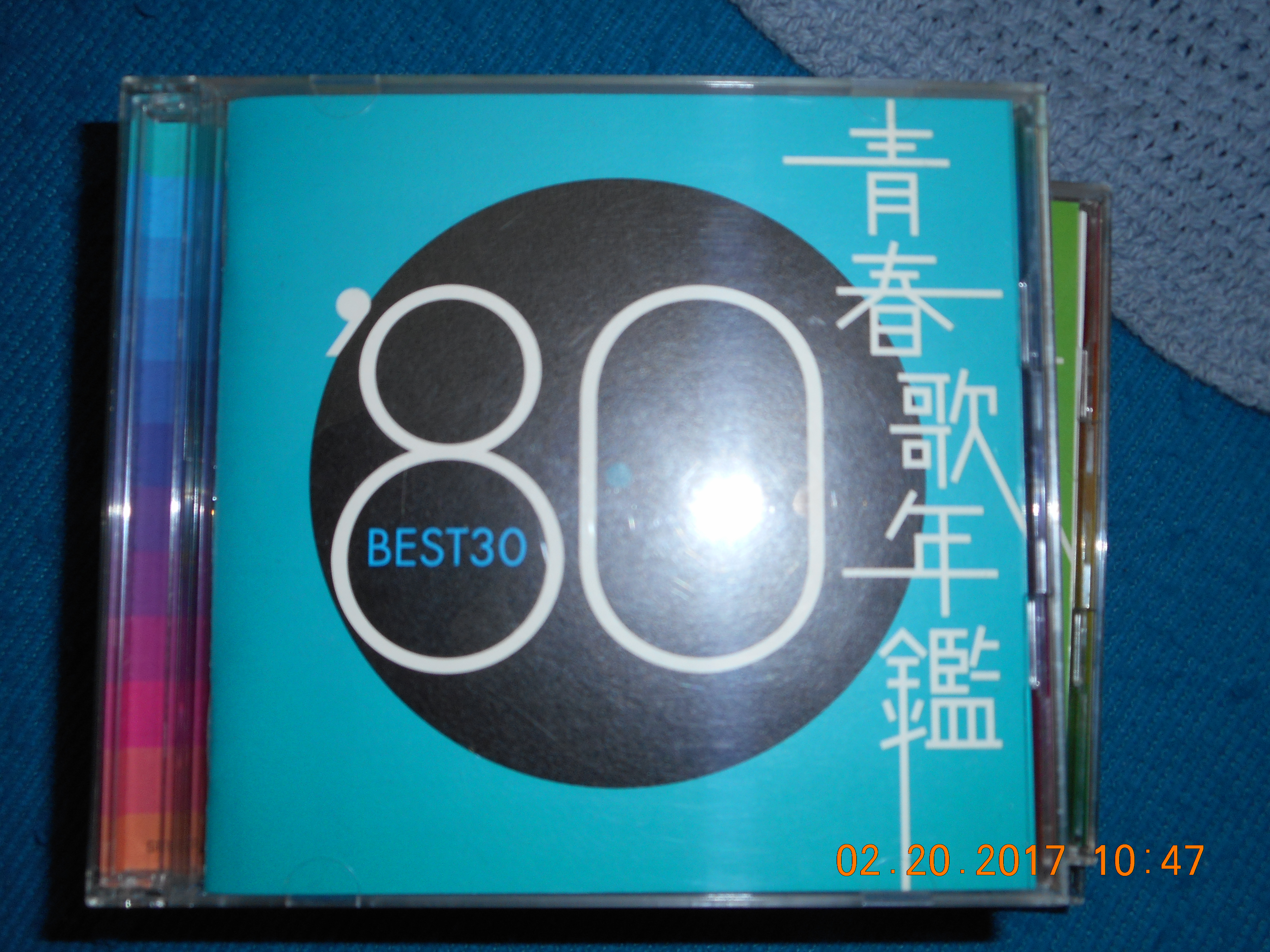
Yup, indeed I was listening to the above "Seishun Uta Nenkan"(青春歌年鑑)entry for 1979. Nice to wax nostalgic in my ears (perhaps, "wax" and "ears" shouldn't be used in the same sentence unless medically important).


On Disc 2 is singer-songwriter Shinji Tanimura's(谷村新司)"Hi wa Mata Noboru" (The Sun Will Rise Once More). Tanimura's debut single as a solo artist away from his folk group Alice(アリス)was released in June 1979, almost a year before his next creation, the regal karaoke favourite "Subaru"(昴), garnered him plenty of acclaim.

"Hi wa Mata Noboru" is also quite epic although some of his folk roots remain in his creation. Those strings and piano really put some majesty into the story of encouraging someone who has suffered loss...most likely romantic in nature. It can really take the listener farther afield into some courtyard in Europe, perhaps. "Subaru" may have overshadowed his solo debut song, but I think "Hi wa Mata Noboru" can also pull at the heartstrings pretty effectively.

Saturday, September 28, 2019

Shinji Tanimura & Tomoko Ogawa -- Wasurete Ii no ~ Ai no Makugire(忘れていいの-愛の幕切れ-)


One of the weirder examples of Wasei-eigo(和製英語)or Japlish that made my internal organs itch as a teacher was the term adulty. I've had a few students spout that at me and it meant "mature" or "sophisticated", although when I heard it, it sounded like something that an elementary school kid would say. Of course, I corrected my young charges of that saying but there was always that one student who could never shake the habit.😩


Well, allow me to bring something adulty into your day today on "Kayo Kyoku Plus". This is "Wasurete Ii no ~ Ai no Makugire" (It's All Right To Forget ~ The Last Scene of Love), a duet originally performed by former 60s aidoru Tomoko Ogawa(小川知子)and singer-songwriter Shinji Tanimura(谷村新司)as a single back in February 1984.

It's about as mature and sophisticated as a ballad of heartbreak can be. A couple, resigned to the fact that their relationship has come to its inevitable end, exchange their goodbyes before one of them gets on the bus and takes off forever. Tanimura wrote and composed "Wasurete Ii no" and it really feels like one of his ballads since I've always treated his love songs as musical equivalents of a well-cooked steak. This one, in particular, is a filet mignon. Koji Makaino(馬飼野康二)arranged the song and it does remind me of some of the classy love tunes by singers such as Mariko Takahashi(高橋真梨子), Hiromi Iwasaki(岩崎宏美)and Mieko Nishijima(西島三重子).

The above video has Tanimura and Ogawa singing their duet although I'm not sure if it was because of a bad cold or the need to show the emotion, but Ogawa doesn't sound too steady for some reason. However, the setting is quite adulty! "Wasurete Ii no" went as high as No. 21 on Oricon and ended 1984 as the 91st-ranked single.


As such a tender ballad, cover versions are a foregone conclusion, and indeed singers like Iwasaki have performed "Wasurete Ii no" with Tanimura over the years. I gotta say that Iwasaki hits this one right out of the park. Wouldn't be surprised if this had been one of the more popular duet songs to be performed at karaoke back in the day.


Tanimura has even provided his own solo version of his creation.

Monday, April 16, 2018

Takajin Yashiki -- Suna no Juujika(砂の十字架)


A few weeks ago when I was watching the usual stuff at my anime buddy's house, he decided to show the 1981 movie adaptation of "Kido Senshi Gundam"(機動戦士ガンダム...Mobile Suit Gundam)from the original 1979 TV series. It was quite the opportunity since for all these years, I had heard about the popularity of the franchise (being compared to "Star Trek"), the famous movie "Gyakushuu no Sha"(逆襲のシャア...Char's Counterattack), the lead character of Amuro Ray(アムロ・レイ)and how he became a popular guy to imitate on those monomane specials, and last but not least, all of those Gundam battle suits.


However I had never seen how all those parts first came together, and considering all those incredible numbers of Gundam suits that I observed at the Gundam Museum in Odaiba twice, I had assumed that there would be a ton of those robots flying about in the movie...kinda like "Transformers". Actually, though, it was just the RX-78 Gundam against the multitude of Zeon Zakus. Plus, I had never even heard of the warship The White Base.

The 1981 movie being a distillation of the the entire TV series that ran from 1979-1980, it certainly felt like it. I don't think I've ever seen Amuro get pulled into all sorts of emotional states and adventures as fast as he did during those 2 hours plus of the movie. No wonder he's high-strung. But I can finally say that I have an idea of the origins of the franchise now.


And man, is that ending theme for the movie epic and sweeping! "Suna no Juujika" (Cross in the Sand) sounds like a waltz that would be played at a Zeon grand ball. There were more surprises in store when I found out that the song was sung by the late Takajin Yashiki(やしきたかじん), who I had known up to now as the pro-Osaka singer behind the power ballad "Yappa Sukiyanen"(やっぱ好きやねん).

This was Yashiki's 7th single from February 1981 and it was written and composed by Shinji Tanimura(谷村新司)from the folk duo Alice(アリス). I simply went "Ahh...naruhodo" since the songwriter could make truly amazing proud ballads out of a constellation and even the age of 22. And the way Yashiki sings "Suna no Juujika" just echoes Tanimura's style. In fact, I think it could even reflect Amuro's dramatics.

If I'm not mistaken, this may have been Yashiki's most successful song, selling around 130,000 records and hitting as high as No. 21 on Oricon.


Thursday, September 1, 2016

Yuzo Kayama and The Yanchars -- Za . Lonelyhearts Oyaji Band (座・ロンリーハーツ親父バンド)

Ah, this song (and MV) never fails to lift my spirits.

From what I've been seeing, Yuzo Kayama (加山雄三) collaborates with many bands to come up with a number of his works since ever. There's The Launchers (ザ・ランチャーズ) and The Wild Ones (ザ・ワイルド・ワンズ) that go way back during the Group Sounds era and to when the Wakadaisho was actually wakai and awkward. Fast-forwarding to just last year in 2015, he was in the unit, THE King ALL STARS that looked like some hip rock group. But my favourite Kayama-collaboration has got to be with The Yanchars (ザ・ヤンチャーズ) back in 2010, during Kayama's 50th anniversary of being in showbiz.

Here are the members of The Yanchars: Kosetsu Minami (南こうせつ), Masashi Sada (さだまさし), Ryoko Moriyama (森山良子), Shinji Tanimura (谷村新司), and THE ALFEE. It's like a gathering of Kayama's pals! As for why I love this gathering of folk veterans - it's the music video. It had them looking cool with shades and strumming guitars, and adorable (especially Minami in that chullo) at the same time. Before seeing this clip, I never paid much attention to these guys as I don't listen to folk all that much, but they've definitely made their presence known to me by showing off their fun side.


Kayama and The Yanchars had released only one single, "Za . Lonelyhearts Oyaji Band", on 7th April 2010. It peaked at 36th place on the Oricon charts, which I think is quite decent for a group of aged singers. Witnessing the chemistry between the members and judging by how much I like this song, I really wished that they would have come up with more than just one piece. Oh well, I take what I can get.

Putting "Za. Lonelyhearts Oyaji Band" together were Sada, who was in charge of the lyrics, and Kayama as Kosaku Dan (弾厚作), who composed the music. What interested me in this tune was its amusing name that literally has "old man band" in it. Then what got me hooked was the bright and cheerful melody that is mostly folk-oriented, but then there's the screaming electric guitar that comes in from time to time that spices things up and gives it a rock vein. Hearing it with the voices of the folks behind the mic, the first thing I thought was, "ROOOAD TRIP!!!" - I can clearly envision a bunch of oldies going on a road trip in a beat up Volkswagen Kombi to relive the memories of bygone days. And speaking of memories, I'm guessing that's the main focus of "... Oyaji Band". Y'know, said oldies who were once in a garage band of sorts coming back together to play again for nostalgia's sake. Same old songs and it's as if nothing had changed over the years despite going through the pains of growing up. Come to think of it, perhaps the band's original name was "Za . Lonelyhearts Band" and the "Oyaji" bit was added years later. :)

tora3hime.ti-da.net/e3591961

Hmm, I wonder what "Yanchar" in The Yanchars stands for. If I'm not mistaken, Sada came up with the name. The only possibility I could think of is "Yanchar" meaning "Mischievous/Naughty" in Japanese... Actually that would be quite funny if it were really the case.

Friday, September 11, 2015

Yuzo Kayama -- Hoshi no Tabibito (星の旅人)


Whenever I listen to "Hoshi no Tabibito", this one scene from an episode of "Steven Universe" pops into my head. Titled "Story for Steven", that episode centers around Steven's dad, Greg, in his younger days as a budding rock star and how he managed to encounter the mysterious Rose Quartz (Steven's mom). At the beginning of Greg's "story", he begins with the song "Like a Comet" that has him singing about the career path he had chosen, with most of the lyrics referencing to outer space. After all, his last name is Universe.


So, what made me equate "Hoshi no Tabibito" to Greg's passionate-but-sadly-ignored (only Rose showed up) performance of "Like a Comet"? Well, although Yuzo Kayama's (加山雄三) 59th single is not so much of a cheesy rock song than it is an inspirational and modern-sounding folk song, it keeps to the space gimmick of "Like a Comet" through the pulsating beat that accompanies the tinkling of the acoustic guitar and the elegant strings gives you the image of space and the starry night sky. Then as the song increases in speed, it gives you a feeling that you're flying through the cosmos with the shining stars right at your side and space nebulae of brilliant colours all around you. And what I saw in Greg's beautiful music video (I suppose you could call it that) has some sort of semblance to that, especially those bits after his CD surfing and when he's on his knees strumming his electric guitar while gazing hopefully at the sparkly sky.

Composing "Hoshi no Tabibito" was the Wakadaisho himself - I realise that the music he came up with in his later works were often leaning to the genre of folk, but still have a hint of rock in it. Shinji Tanimura (谷村新司) was in charge of the lyrics. "Hoshi no Tabibito" was released in 2007 and peaked at 197th place on the Oricon charts. This tune is also one of the tracks in Kayama's compilation album "PREMIUM BEST" (released in 2012), which was how I got to know of it and quickly grew to like it.


The video above has the both of them singing this song. Kayama and Tanimura seem to be pretty good pals, judging by the number times they've performed together and collaborated on songs.

Kayama, still as cool as ever even in
his 70s.

Friday, May 8, 2015

Akina Nakamori -- NEW AKINA Etranger (NEW AKINA エトランゼ)


Where do I begin here? From what angle do I approach this?

Well, let's see...the very first Akina Nakamori(中森明菜)song that I heard was "Kinku"(禁区)on the 1983 Kohaku Utagassen and then came a number of her early hits on broadcasts of "Sounds of Japan" followed by my first purchases of her albums "Bitter and Sweet" and "D404ME" when she was already hitting superstardom. And then, I just had to buy her BEST compilation of those first few years of her still young career. So I basically got my grounding for Akina-chan, pre and post vocal change.

Then somewhere down the line, I ended up borrowing a video tape titled "NEW AKINA Etranger - Akina Nakamori in Europe" which had the bonny lass taking a nice little trip through France. Some of that video is right up at the top there with the young aidoru of my memories traipsing around Paris with that big hair, crinkly eyes and winning smile. Of course, the music from her just-released album was also playing in the background.

It took a couple of years but during my time in Gunma Prefecture, I finally bought that album, "NEW AKINA Etranger" which was originally released in August 1983 as her 4th album. According to the write-up on J-Wiki, it was touted as somewhat of a reboot for the singer with the catchphrase being:

"Recording and filming in Europe, and encountering new songwriters. The second history of Akina begins here."

Pretty bold words. Aside from her early singles, I don't have anything to represent her first 3 albums so I can't really make any comparison about Stage 1 Akina and Stage 2 Akina....with the exception of that high voice that she once had at the beginning.

(cover version)

Not sure why there was a need for a re-launch of Akina since my assumption was that she was already going fairly well as an aidoru. My only guess is that the powers-that-be that hovered over and around her felt that their client was someone who was ready to take that next leap up. As I said, I bought "Etranger" about a quarter of a century ago but it hasn't been until recently that I actually started to appreciate what this album has (nothing like a blog on kayo kyoku to focus one). After listening to it a couple of times through, it's got quite the potpourri of styles thanks to those different and famous songwriters and I think the album overall reflected Akina's past, present and future at that time whether or not that was ever the intention.

Track No. 1 above is "Sayonara ne"(さよならね...Goodbye). With a dramatic blast of electric guitars by Tsuyoshi Kon and Fujimal Yoshino(今剛・吉野藤丸), Takao Kisugi (来生たかお)pushes forth a strutting melody of strings and guitars that is reminiscent of what Akina's style was like at the time. His sister, Etsuko Kisugi(来生えつこ), further emphasizes the aidoru's ol' bad-girl image through her lyrics that have the heroine rejecting anything that sniffs of good-guy nobility. Being the full geek that I am, I have been watching the first season of "Gotham", the prequel program of sorts for the Batman mythology, and the awkward relationship between the future Catwoman and the future Batman (as uncomfortable teens) just leaped to mind as I was listening to "Sayonara ne".

(cover version)

The next three tracks on the album rather emphasized all the talk about Nakamori being the next Momoe Yamaguchi(山口百恵). "Venus Tanjo"(ヴィーナス誕生...Birth of Venus)is this really ethereal ballad with the inclusion of an electric guitar solo that had me thinking of one of Momoe's last songs "Sayonara no Mukou Gawa" (a song that I'll have to tackle one of these days). The lyricist for both songs was Yoko Aki (阿木燿子)with Kazuo Zaitsu(財津和夫)of Tulip fame providing the heavenly music for "Venus Tanjo". This is just one of two songs from the album that I still remember hearing on the video of Akina's travels through France, and it was appropriately used to finish the proceedings.

(cover version)

"Sukoshi Dake Scandal"(少しだけスキャンダル...Just A Little Scandal)is a song that reminded me of Momoe's latter period when she was singing all those singles dealing with jaded women and the men they treat like toys. However, instead of Yoko Aki and hubby Ryudo Uzaki(宇崎竜童)penning this one, the songwriter here was Sho(翔)of the rock band Yokohama Ginbae(横浜銀蝿). I've yet to provide an article on those guys but I saw one of their videos, and they definitely have that teen delinquent image. 


As soon as I heard that rolling piano, I was pretty sure that was Shinji Tanimura(谷村新司) behind "Kansho Kiko"(感傷紀行...Sentimental Travelogue). Tanimura was also behind Yamaguchi's wonderful "Ii Hi Tabidachi"(いい日旅立ち), and I could imagine Momoe tackling this one as well if she had decided to continue on with her career into the 80s. I'm not sure if Akina had used the same style in her earlier albums, but with this song, she has that breathy delivery that I would also hear later in "Bitter & Sweet".

(cover version)

Haruomi Hosono and Masao Urino (細野晴臣・売野雅勇)were also two of the new songwriters on the album who also took care of the aforementioned "Kinku", Akina's 6th single in the same year that "Etranger" came out. Hosono still had that technopop in his veins, so he and Urino came up with "Mon Amour - Glass ni Hanbun no Tasogare"(モナムール (グラスに半分の黄昏)...Half-Glass Twilight), which was also the only other song that I remember popping up in the video. Hosono provided the only instruments in "Mon Amour" in the form of an electric bass, a Prophet 5 and some Linn drums. Lyrically, it's about a woman who has just said goodbye to her paramour in Paris while the melody takes on a tone that seems to hearken to a toy soldier theme song filtered through synthesizers. Hosono and Urino also provided another song for the album, "Renaissance", but I just wanted to go with "Mon Amour" since it has the more technopoppy sound.

My final track for this article is "Stripe" which literally knocked me back. The intro was also fairly techno kayo but it wasn't Hosono behind this one this time. Instead it was again the Kisugi siblings who took care of it and the song quickly took on that typical 80s aidoru lilt with the strings coming to the fore and the keyboards settling down. However what took me for the loop was Akina's voice which returned to her 1982 high tones. After hearing the first several songs where the singer was evolving her vocal cords to that familiar huskiness, it was surprising to suddenly hear her voice coming out like that again.

"Etranger", Akina's re-launch was a hit. It reached No. 1 on the Oricon weeklies and ended up as the 10th-ranked album of 1983. It also earned a Japan Record Award. My favorite album of hers will still be "Bitter & Sweet", but "Etranger" has come out as a revelation since it seems that the producers and Akina were willing and able to experiment a bit with her sound through this album. And I think it was interesting that no official singles were included...perhaps everyone involved wanted to make sure that the project was its own entity without any influence of any 45" that might provide too easy a familiarity. Not sure if my last statement makes sense but hopefully the readers will understand.

New Akina Etranger

Thursday, September 18, 2014

Shinji Tanimura & Yuzo Kayama -- Sarai (サライ)


Just last Saturday, I managed to catch Folk singer Masashi Sada's (さだ まさし) recent charity concert tour (shown on NHK) for the 2011 disasters, starting from his hometown of Nagasaki to Tohoku. Truth be told, I was a little bummed out since the showing of his concert took the place of 'BS Nippon no uta'. If 'Nippon no uta' were to go on as per normal, I would've been an episode closer to watching Kiyoshi Maekawa (前川 清)and Takashi Hosokawa (細川たかし) performing together for the show's 'Special stage'... so you can see the somewhat mild displeasure. Adding to that, the next two Saturdays were to be occupied by Sumo wrestling competitions... *Sigh*

However, the silver lining in that was that Mr Wakadaisho was one of the handful of special guests at Sada's concert. In total, Yuzo Kayama (加山雄三) sang 4 songs, including the heartwarming 'Kimi to itsumademo' (君といつまでも), as well as 'Sarai', a duet between Kayama and Shinji Tanimura (谷村新司). Since there was no Tanimura, Sada was the replacement. I have to admit, his impression of the leader of Folk-Rock group Alice (アリス) was pretty silly.

                                                                                 amazon.co.jp

I've heard of 'Sarai' before when I discovered Kayama, but I merely acknowledged its existance. Only until hearing it on the aforementioned concert did I go, "Huh, this song actually sounds really good!" As expected from a collaboration between Chinpei with his renowned lyric-writing skills and The Wakadaisho settling the composing duties under his pen name Kosaku Dan (弾 厚作). Besides the relaxing music, you've got the contrasting voices of both singers; Tanimura with his higher, gentler and silvery vocals and Kayama with his stronger, deep husky voice taking turns to sing their parts.

                                                                                   amazon.co.jp

The song was released in 1992 on November 16, and was the theme song for the 15th episode of what seems to be a charity show called '24 hour TV Aiwa chikyu wo suku' (24時間テレビ 「愛は地球を救う」), which had been airing every August since 1978. And if I didn't read wrongly, 'Sarai' had been sung as the show's ending theme since it was created. I must say, this song does sound like a good, nice way to round off such a show!

Here's some trivia about this song: It's title, 'Sarai' is actually a Persian word meaning 'Home', which fits with the song's theme 'Kokoro no furusato' ( 心のふるさと), or 'The heart's home'. Initially, the song was supposed to be called 'Sabaku no naka no oasis' (砂漠の中のオアシス), which meant 'The desert's oasis'. So they were deciding which fit the theme better, and eventually they settled with the more exotic sounding 'Sarai', which seemed to encapsulate the theme better.

Anyway, the song did quite alright, peaking at 20th position on the Oricon charts. And since it is literally the charity show's song, a portion of the CD sales and karaoke copyright thing went to charity. How thoughtful.


Here's them singing it in 1992


                                                       http://matome.naver.jp/odai/2140913876353111501

Friday, May 30, 2014

Yoshie Kashiwabara -- The Best


When I think of my favourite aidorus from the 1980s, Seiko Matsuda and Akina Nakamori (松田聖子・中森明菜)will always take the top two places. The bronze medal then could be split between two cute singers from Osaka, Naoko Kawai (河合奈保子)and Yoshie Kashiwabara(柏原芳恵). But while Matsuda and Nakamori, and to a certain extent Kawai, broke out of their aidoru mold a few years into their respective careers to head into full-blown pop superstardom, I always thought that Kashiwabara was the one who kept things close to her aidoru roots although the melodies that were given to her stretched things out more than would be the case for the average teenybopper Japanese singer.

Back in my U of T days, as I did my regular shopping at Wah Yueh, I made my biggest purchase at the Chinese record shop by getting "Yoshie Kashiwabara -- The Best", the 2-LP album which cost 4,000 yen in Japan....I've completely forgotten how much I paid for it in Canadian bucks. All I know is that I didn't say anything to my parents that day. In any case, after having listened to her "Haru Nanoni" on the 1983 Kohaku Utagassen, I knew the opportunity was there for me to get it. And why not? Looking like the most elegant bartender on the cover with that elaborate penmanship on the upper right had me parting with my money quickly.

LP 1

Side A


1. No. 1
2. Mainichi ga Valentine 毎日がバレンタイン
3. Dai Nisho Kuchizuke 第二章・くちづけ
4. Otome Gokoro Nani Iro? 乙女心何色?
5. Glass no Natsu ガラスの夏
6. Melancholy Hakusho めらんこりい白書

Side B

7. Hello, Goodbye
8. Koibito Tachi no Cafe Terrace 恋人たちのカフェテラス
9. Nagisa no Cinderella 渚のシンデレラ
10. Ano Basho Kara あの場所から
11. Karin 花梨
12. Haru Nanoni 春なのに

LP 2

Side A


1. Chotto Nara Biyaku ちょっとなら媚薬
2. Natsu Moyo 夏模様
3. Tiny Memory
4. Camouflage
5. Tremolo
6. Itazura Night Doll 悪戯NIGHT DOLL

Side B

1. Saiai 最愛
2. Lonely Canary
3. Machikutabirete Yokohama 待ちくたびれてヨコハマ
4. Taiyo ga Shitteiru 太陽が知っている
5. Shinobi Ai し・の・び・愛

Yep, even for a BEST album, that's a pretty big chunk...almost all of her singles between 1980 and 1985.


My first entry here is from Side A of LP1, "Mainichi ga Valentine" (Everyday is Valentine's) which was her 2nd single from September 1980. Written by Yu Aku (阿久悠)and composed by Makoto Kawaguchi(川口真), the song has that mix of 70s aidoru and some of that American 50s sound that was getting pretty popular at the time. It only got as high as No. 64 on the weeklies and sold a little under 30,000 copies.

It has been many years since I've listened to this 2-LP set due to the fact that I hadn't had access to a working phonograph during all that time. So it was great to listen to Yoshie-chan's old hits once again. But I have to admit that on hearing the first few singles, I felt that there had been a little work to be done in terms of matching her voice with the right material.

                                        
(the above is a karaoke cover)

I think things started looking up with this ballad, "Melancholy Hakusho" (Melancholy White Paper). Her 6th single from September 1981 was once again written by Yu Aku with music this time by Katsuo Ono(小野克夫). As a prelude to her most famous ballad, "Haru Nanoni", "Melancholy Hakusho" had the strings-led romantic sweep with Kashiwabara taking on that certain breathy quality as she sang about a budding romance that quickly went south for some reason. This tune hit higher at No. 23 and sold a little over 50,000 records. Bigger things would be waiting around the corner for her with her next single, "Hello, Goodbye" which became the biggest-selling single of her career.


"Karin" (Rosewood) was her 13th single from October 1982. I mentioned at the top that although Kashiwabara pretty much remained an aidoru, her songs took on different melodies. "Karin" was one such example as it was written and composed by Shinji Tanimura (谷村新司)from the folk group Alice. Tanimura may have performed some pretty muscular folk songs when he was part of the group, but when he went solo or wrote/composed for other singers (such as "Ii Hi Tabidachi" for Momoe Yamaguchi), he created some tenderhearted ballads. And I could clearly hear Tanimura's lilt through Kashiwabara's higher delivery which brought a certain innocence to the proceedings.

"Karin" peaked at No. 10 and ranked No. 97 on the Oricon annual chart. It also won a Gold Prize at the Japan Record Awards that year.


(karaoke cover)

Following her hit Miyuki Nakajima-penned ballad, "Haru Nanoni", her next (15th) single from April 1983 abruptly changed direction with "Chotto Nara Biyaku" (A Little Aphrodisiac). I'm continuing the Momoe Yamaguchi (山口百恵)association here since the creators of this song were Ryudo Uzaki and Yoko Aki(宇崎竜童・阿木燿子), the husband-and-wife team behind many of Yamaguchi's harder-edged songs from the latter half of her career. Compared to the lovelorn good girl from her previous single, Kashiwabara is the bad girl in this single as the lyrics mention the title drug being dissolved in a glass of something, running away and smoking. The song does remind me a bit of the tough-and-cynical Momoe of the late 70s although seeing Yoshie performing it in a debutante's dress as above and the Beatles' lyric of "Love me do" easily take the edge off. I'm not sure whether the Japanese authorities cried foul over the contents of the song, but it did hit No. 10 on the weeklies and sold over 120,000 records.


Single No. 16 was "Natsu Moyo" (Summer Pattern) from June 1983, and it was back to the tenderhearted ballad for the singer. Kazuhiko Matsuo(松尾一彦), Off-Course member, created the music while singer-actress Mariko Fuji (藤真利子)under her pen name of Anri Bibi (微美杏里)provided the lyrics. Once again, the theme is of a girl who has lost or is about to lose that favourite guy of hers. Perhaps the stories in her ballads aren't exactly novel, but hey, I'm still a sucker for a lot of old 80s J-ballads.

"Natsu Moyo" broke the Top 10 and reached No. 8 and later became the 81st-ranked song of 1983, selling about 160,000 records. Now, as for that pen name that Fuji created for herself, maybe the actress was a fan of Vivian Leigh (try reading the name as the Japanese do).


My final song for this article is "Taiyo ga Shitteiru" (The Sun Knows) from July 1985 in which Yoshie sings about desiring to explore the more sinful side of romance. Kazuhiko Matsuo also composed her 24th single which has a bit of summer spice as if the singer is having those desires somewhere in the Caribbean...or Guam. Goro Matsui (松井五郎)provided the lyrics. Although it peaked at No. 10, "Taiyo ga Shitteiru" only sold a little less than 60,000 records.

It was good to go over this particular record set, especially since "Yoshie Kashiwabara - The Best" doesn't seem to exist anymore. I couldn't find it listed in the J-Wiki article for her discography so I could only guess that it was released in 1986 (the last track of "Shinobi Ai" was released in September 1985) and I have no idea how it fared on the Oricon charts. There are, of course, other BEST compilations for the singer; in fact, I bought one such CD a few years ago in my phonograph-less desperation.

But listening to all of the songs again over a couple of days, I wondered what would have happened if Yoshie had decided to push the envelope a bit more and break out just as Seiko and Akina had, or taken a brief detour into something like City Pop or AOR as Naoko Kawai had. Perhaps she would have entered the higher echelons of superstardom (I'm not weeping here since she has been able to carve another career as an actress and photobook model) and earned somewhat more than the modest rankings and sales she did make. Still, the "What If" doesn't take away from some of the nice tracks I re-discovered on her first BEST release, and those songs were able to take me back to those early days of exploring anything and everything of the old stuff.

Still a few more songs on that LP list to explore in individual articles in the future.