I've been a fan of Japanese popular music for 40 years, and have managed to collect a lot of material during that time. So I decided I wanted to talk about Showa Era music with like-minded fans. My particular era is the 70s and 80s (thus the "kayo kyoku"). The plus part includes a number of songs and artists from the last 30 years and also the early kayo. So, let's talk about New Music, aidoru, City Pop and enka.
Credits
I would like to give credit where credit is due. Videos are from YouTube and other sources such as NicoNico while Oricon rankings and other information are translated from the Japanese Wikipedia unless noted.
Yes, there is nothing like the above phrases to let you know that whatever trouble you may face, you will always have comrades to have your back.
Well, apparently, there has been an Opposition rebuttal in Japan. Back in January this year, an enka song came out titled "Aah, Hitori Tabi" (Ahh, The Journey Alone) and it's about taking that path and facing all those obstacles that might come in the way...all by your lonesome because ultimately it is really all up to you. This must sound like manna from heaven to all those lone wolves out there.
Ironically, the song is tackled by a trio (not one lone wolf) and it's a family affair, to boot. We've got the brothers Ichiro Toba(鳥羽一郎)and Yutaka Yamakawa(山川豊)plus Toba's son, enka singer Tetsuji Kimura(木村徹二), behind the mikes solemnly singing about the solo path. Furthermore, "Aah, Hitori Tabi" was produced, written and composed by Kimura's older brother, enka singer and songwriter Ryuzo Kimura(木村竜蔵)just to add to the family contributions.
Of course, Toba and Yamakawa are famous for often getting together to perform the classic enka, Toba's own "Kyodai Bune"(兄弟船), about sharing the challenges of catching that fish on a boat. Interestingly enough, Kimura's lyrics also include the fact that women as well as men also face that resolute journey on their own.
Since "Aah, Hitori Tabi" can be considered to be one of those shibui enka, karaoke singers will probably have to make sure that their most stoic faces are on display. Because after all, that is the ippiki ohkami way.
Once again, NHK's "Shin BS Nihon no Uta"(新・BS日本のうた)came to the rescue with another new enka discovery although the actual song is a few decades old.
Enka singer Ichiro Toba(鳥羽一郎)has been famous for his debut single and hit"Kyodai Bune"(兄弟船)from 1982, and I'm gathering that he may leave this mortal coil (not soon, I certainly hope) being known as the oceangoing enka master.
What he sang on that episode of "Shin BS Nihon no Uta" was another enka devoted to the sea, "Umi no Inori"(A Prayer for the Sea), which was his 8th single from May 1985. Created by the same duo behind "Kyodai Bune", lyricist Tetsuro Hoshino(星野哲郎)and composer Toru Funamura(船村徹), you couldn't have another more manly-man enka than "Umi no Inori" with its blasting trumpet, tempestuous strings and gentle guitar representing the fickleness of the great blue. Just like "Kyodai Bune", there's very much of a man in his grand element...his home and mate for life is the great blue ocean.
I threw "Moon over Casablanca in Art Deco style" into the Bing AI art generator last night and I got a pretty good image, but then I saw those huge skyscrapers in the background and went "What?". Don't ever recall seeing concrete towers over Rick and Ilsa in the legendary "Casablanca". But then again, my mind was returning to 1942 instead of staying anchored firmly in 2024. The Moroccan city now has skyscrapers including the Casablanca Twin Center. No idea whether there is a Rick's Café Américain in there.
Now as for why I'm mooning over Casablanca at the start of this work week is that yesterday, NHK had its usual episode of "Shin BS Nihon no Uta"(新・BS日本のうた), and a couple of singers performed a cover of Ichiro Toba's(鳥羽一郎)"Casablanca Goodbye" (カサブランカ・グッバイ). Realizing that I've gone over a couple of other kayo kyoku with the famous city in their title, I decided that perhaps I can highlight those Casablanca songs. By no means is the word Casablanca as ubiquitous in Japanese song titles as the words "ai"(愛...love) or "haru"(春...spring), but considering the city's pedigree in pop culture everywhere, I just thought it was good enough for an Author's Pick.
Since the list isn't too extensive, I thought I would finish things off with a rendition of the immortal "As Time Goes By" from "Casablanca" by jazz singer Yasuko Agawa(阿川泰子)from her 1978 album"Flyin' Over". Also, just to let you know, the movie will be celebrating its 82nd birthday at the end of next month.
Happy Monday! And it's a regular Monday here but I had been wondering why the Jme TV schedule was all different today. For instance, we only had a half hour of NHK's "News at 9" broadcast instead of the usual one hour and as it turned out, that was due to the fact that it was the third Monday of July, the national holiday known as Marine Day in Japan. So, I figure that everyone was out at the beach or on the water today. Then again, I figure that everyone has been out at the beach or on the water every weekend during this blistering summer.
Well, I thought about putting up something ocean-based as a kayo kyoku today and it didn't take me long to find this one called "Showa Kitamaebune"(The Northbound Ships of Showa) which was enka singer Ichiro Toba's(鳥羽一郎)14th single from May 1987. Crustily sung by Toba, the kitamaebune even has an English Wikipedia entry which talks about Edo Era and Meiji Era merchant ships which went along a route from Osaka all the way up to Hokkaido while stopping off at ports along the Sea of Japan. However, with the advent of railroads on land, the kitamaebune had soon been tossed onto the transportation heap of history before the end of the Meiji Era.
Written by Tetsuro Hoshino(星野哲郎)and composed by Toru Funamura(船村徹), I'm assuming that the kitamaebune depicted in this muscular enka number was talking more of a manly man's farewell to his younger sister as she joins her new husband up further north sometime in the Showa Era (1926-1989). The song might have that feeling of a tough Saburo Kitajima(北島三郎)song but the lyrics reveal more of the tender side of a bittersweet goodbye and good luck to a beloved family member.
The above video comes from NP-office and it silently shows a typical kitamaebune.
Seeing that I'm a little short on time tonight compared to other days or nights, I've decided to finish up a little more quickly with another entry from the AI Gallery. The first two times with Bing, I went with a City Pop theme, but this time around, I'm going with enka. In addition, instead of just merely throwing in the translations of the titles, I'm opting to throw in the description of my images whenever I hear these songs. So, without further ado, here are three of the most famous enka singers and their hits.
Over the years that I've been doing "Kayo Kyoku Plus", I've been gaining some more aural experience in terms of the sounds of certain composers and/or arrangers. With Ryuichi Sakamoto(坂本龍一), it's that odd pleasurable quirk that he can slide into his synthesizers while Yumi Matsutoya(松任谷由実)can often put in that reassuring breezy melody. In the enka genre, I've realized that the late composer Toru Funamura(船村徹)may have always injected that distinctively pensive guitar of his, perfect for brooding over a tumbler of whiskey or a glass of shochu.
Funamura was responsible for the composition of this particular ballad by enka singer Ichiro Toba(鳥羽一郎),"Wasure Yado" (An Inn of Forgotten Memories). The B-side to his 5th single"Wakare no Yado"(別れの宿...An Inn of Parting) released in April 1984, the lyrics by Daisaburo Nakayama(中山大三郎)talk of a woman somehow looking on or imagining her former paramour and his wife following a brief affair at their old haunt of an inn. Through the tears, the heartbroken woman is wishing them well as she tries to reassure herself that this is for the best. Couldn't get more enka than this. Meanwhile, that Funamura guitar hits right from the start going high and then low as Toba gives a woodsy and resonant delivery. The heart-on-sleeve strings which alternately glide and pluck adds to the melancholy atmosphere.
Toba's version is actually a cover of the original by Eiko Segawa(瀬川瑛子)whose "Wasure Yado" was released in November 1983. I couldn't find the recorded version of the song but listening to the above performance, Segawa gives a more emotion-drenched take and the arrangement sounds folksier. I can definitely hear the disappointment and mourning in her vocals.
I don't know whether Hiroshi Itsuki's(五木ひろし)cover of "Wasure Yado" was ever officially released as part of a single or an album in tribute to Funamura, and if it was, when it was released. That Funamura guitar sound still exists but the arrangement takes on a bigger presence because of some epic strings and other added flourishes.
When it comes to enka singer Ichiro Toba(鳥羽一郎), I think the song that most people will always associate him with is his debut single"Kyodai Bune"(兄弟船), a song so manly and seaworthy that I can smell the sweat and the fish.
Along with that 1982 hit for Toba, here is a similarly themed song that was released in April 1986 as his 14th single, titled "Otoko no Minato" (A Man's Harbour). The lyrics by Jun Hozumi and Shinobu Yuuki(穂積淳・結城忍)relate the tale of hitting the oceans on that small ship to bring in the haul of fish, a job that has been passed down from calloused-hand generation to calloused-hand generation. The music by Tensho Nakamura(中村典正)is appropriately majestic and wistful...much like the cover of Toba's single...to induce those images of the mercurial sea: smooth sailing or tempestuous trial? I guess the 1980s were the beginning of placing together the instrumental triumvirate of grand strings, rock guitar and gentle acoustic guitar in enka.
Of course, there are the vocals by Toba which are alternatively pining and powerful. By the time the song is finished, it's almost inevitable that a cigarette is going to have to be pulled out or an alcoholic libation will be needed to be poured.
On the first Takeo Fujishima(藤島桓夫)article I wrote for the blog, I mentioned that the late enka singer performed a series of songs based on ports early in his career. Well, I've come across the first in that series titled appropriately enough "Hajimete Kita Minato" (First-Time Port), released in 1954.
Ports are an oft-used trope in enka and Mood Kayo. It's not that surprising either because the harbours are the launch points for adventures beyond and the destinations for wide-eyed newcomers. Plus, they can make for ideal spots to say goodbye to a loved one or simply a love relationship. Fujishima and songwriter Kazuo Toyoda(豊田一雄)started their series of port-based songs with this one to describe the protagonist's experiences at his first port that left a lifetime of impression despite a short stay of just 4 or 5 days. As they say, you always remember your first.
(Unfortunately the video has been taken down)
Y'know, I actually enjoy this live performance of "Hajimete Kita Minato" by Fujishima even more than the original recording although the latter expressed the cheerful hustle and bustle of a postwar port. I guess it's because Fujishima's voice gained some more timbre in the years since he first recorded the song so that there is a bit more grandeur involved.
But I gotta say that Ichiro Toba's(鳥羽一郎)cover of the 1954 original is simply great. He's got the fine gravelly voice and the arrangement is gentle and happily work-a-day. It's as if that same port from decades back lost the frenetic peak of bustle in the immediate postwar period only to gain a certain comfortable groove of activity as the years passed by. According to the notes on YouTube, Toba's version was on his 1989 release, "Kokoro ni Shimiru Omoide no Uta"(心に沁みる思い出の歌...Beloved Songs To Warm The Heart). The title says it all.
It has been quite a long time since I've posted articles regarding Ichiro Toba (鳥羽一郎) and, for that matter, Yutaka Yamakawa (山川豊). It has probably been more than a year since so I've decided to do just that, starting with the older of the enka siblings.
In terms of appearance and demeanor Toba is the gruff and scrappy one; as I've said in one of my earlier articles on him, I find that he looks like a surly old bear that got rudely woken up from its nap - it amuses me every time I see him on stage. Complementing his looks is his type of enka - the manly man, and quite often the sea-faring sort that would showcase his roots as a gritty fisherman. With that in mind it seems as though he wouldn't deviate from his usual shtick, and yet there is "Casablanca Goodbye" to prove me wrong - that Toba is able to pull off something softer and elegant.
item.rakuten.co.jp/tsta-shop/i0331/
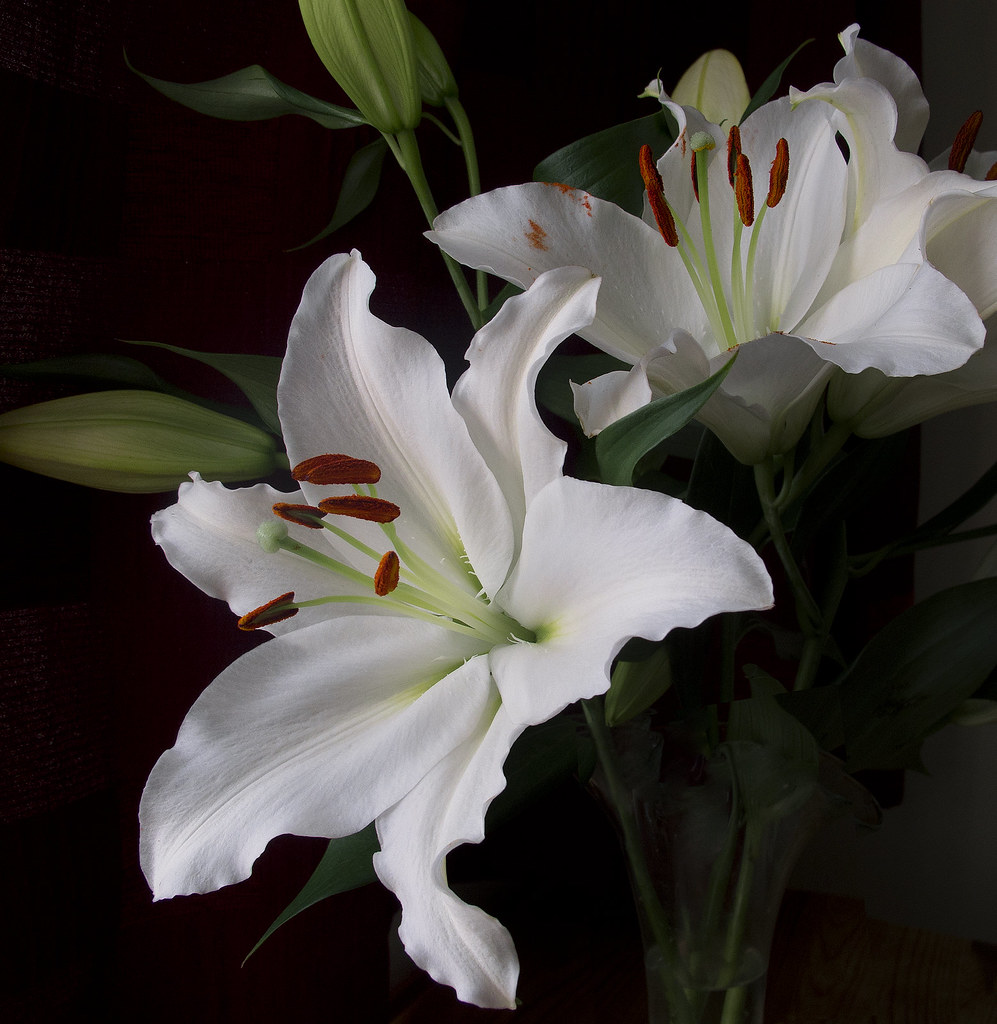
What makes "Casablanca Goodbye" stand out to me is that, for starters, it is written in all katakana, which is a rare sight in Toba's discography. And rather than the raging sea or a boat or a location in Japan, this kayokyoku revolves around a white lily (Lilium Casa Blanca) - nope, not the romantic drama film with Humphrey Bogart and Ingrid Bergman. Playwright and author Makiko Uchidate (内館牧子) penned the lyrics about what I think tells of both sides of a breakup. The man parts from his lady who seems to have feelings for someone else. But rather than talking things out or getting into a heated argument, the disappointed fellow simply throws a Casablanca lily at her doorstep and walks away without a word, leaving the woman to realize that their relationship is over once she sees the abandoned flower (ouch).
As for the melody, Takashi Miki (三木たかし) had put together something rather European with the forlorn strings, and the rhythmic beat and what I think could be the high-pitched twang from the mandolin gives "Casablanca Goodbye" this ballroom dance music feel. Speaking of dancing, you can watch Yamakawa (unfortunately that video has been taken down) providing an accompanying dance routine as Toba sang. He didn't seem particularly amused though at his brother's endeavor though.
"Casablanca Goodbye" was released on 21st August 1996. I'm not sure how well it did on the charts, but since Toba still sings it from time to time, and that he performed it twice on the Kohaku (once in 1996 and again in 1997), I'm guessing that it fared quite decently.
Here's Hiroshi Itsuki's (五木ひろし) attempt at "Casablanca Goodbye". Itsuki is actually the one whom I felt this tune would fit better, especially in terms of the music. But then when it comes to the lyrics, I find that the "leaving without a word" sort of breakup fits Toba more - assuming he's not in his pugnacious mood.
(Sorry but the video has been taken down)
To round things up for this write up, since I've been talking about Toba being able to channel his soft side, I've recently found out from the video above that this grumpy-looking enka singer that many fear enjoys lazing around on a Hello Kitty mat that's lined with hearts... Toba Jr., Ryuzo Kimura (木村竜蔵), brought this hilarious habit to light in his parody of "Road" (ロード), aptly renamed "Ichiro", on one of Sanma Akashiya's (明石家さんま) variety shows. It was also later revealed that Tobabejeweled his cell phone under the influence of his daughter, whom he has a soft spot for. Well, so much for the fearsome man of the sea. I can never see Toba the same way ever again... Deco Kitty-ro...
Well, "Kita no Kamome Uta" is as manly and as cool as a sea/fisherman-related song gets. You got rhythmic beat of the drums that gets you all pumped up, and the powerful sting and revving of the electric guitar brought to you by composer Masato Sugimoto (杉本真人), then comes Ichiro Toba's (鳥羽一郎) snarly vocal delivery to make the song more menacing. I can just imagine a middle-aged, hardened sailor in his rubber boots and overalls - let's call him Mr. Briney - raring to go out on his trusty vessel to earn a living on the ocean's dark, choppy waters. And of course, there'll also be a massive flock of gulls up above squalling away, competing with Mr. Briney for the fish. The lyrics were written by Ryuichi Satomura (里村龍一), they seem to be talking about the life of a fisherman, but I'm not entirely sure.
Released in 1989, Toba had sung this gritty song on his 3rd Kohaku appearance on the same year. The first video of "Kita no Kamome Uta" I had watched was with a youthful-looking Toba smiling smugly and dancing and headbanging to the music. Unfortunately this amusing performance got deleted. I really hope the person re-uploads it though since I hardly get to see him do that. He usually just stands there looking quite sullen with his thick, furrowed eyebrows, it's either that or I have to pay attention to him more often.
(I'm afraid the one that Noelle was mentioning has been taken down but this is another karaoke version.)
Here's the karaoke version of the full song with the man himself in it. Considering some of these karaoke videos I've seen with the original singers staring in them, this one ain't bad... there are others that are really cringe-worthy or downright hilarious.
The start to "Hida no Ryu" (Dragon of Hida) is really menacing, and the rest of it sounds no less sinister with the sweeping notes of the flute. A manly song, needless to say, and who else better to sing it than the rough and tumble, gruff-looking Ichiro Toba (鳥羽一郎) with his husky growl?
Now, for this next part, imagine this with the song playing: A towering, lush mountain range with a thick blanket of white mist concealing most of it, only leaving craggy outcrops of rock visible. The sun blocked out by the grey clouds to make it more foreboding. And let's not forget a little village that got stuck in time while the rest of the world progressed at the foot of the mountains, literally at the mercy of whatever the area has to... offer. A disembodied growl is heard, striking fear into the hearts of even the bravest of souls, followed by glimpses of a long, heavily scaled body and clawed, reptilian limbs undulating in the sea of fog. Then, the creature rears its enormous head out of the clouds and into plain, horrifying - to the poor villagers - sight with flowing tendrils from its broad snout leading up to a pair of deep red, serpentine irises, before letting out an earth-shattering roar.
Well, I shall stop there before I end up writing a full monologue, and I'll leave the fate of the villagers up to you. But I suppose now you know what it's like to take a step into my mind.
Anyway, so that's what I thought of when I had first heard of "Hida no Ryu", and that's even before Toba opened his mouth! As to who had composed this nicely done ominous score, it was none other than Saburo Kitajima (北島三郎) under his pen name, Joji/George Hara (原譲二). And the one who wrote the lyrics was Chikudo Shibata (柴田ちくどう).
The song was officially released on 7 January 2015, and on the week it was released, "Hida no Ryu" decimated its competition and ranked number 1 on the Enka-yo charts. In the weeks that followed, it dropped to 2nd - beaten by Kouhei Fukuda's (福田こうへい) newest single that was initially at 2nd place - and it is currently remaining in the Top 10 at 9th place. It's highest position on the normal charts was 21st... that's amazing.
Hida is a city in Gifu, by the way, and it's rather mountainous there as well, so my description of "Hida no Ryu" wasn't too far off. But I'm quite certain that the lyrics aren't talking about a dragon that resides in the mountains terrorizing an unfortunate hamlet.
Oh, and the dragon shall be matte gold, because no other colour seems to make it look intimidating and fearsome enough.
I find it quite amusing to see Ichiro Toba (鳥羽一郎) perform on stage. To me, the stocky fellow with the huge round nose and thick rectangular blocks for eyebrows that always seem to be in a slight frown, looked like a grumpy old bear standing on two legs. Y'know, the type that you may see in cartoons. He also bares some semblance to fellow Enka singer Eisaku Ohkawa (大川栄策) - must be the nose.
Anyway, I had seen Toba on my 3rd 'Nippon no uta' episode performing on the show's 'Special stage' with the elegant Aki Yashiro (八代亜紀) by his side. Well, sorry to say that I paid no attention to him whatsoever at that point in time and was more tickled with the fact that Yashiro looked taller than him. It was only until a month back when I watched an episode of 'Kayo Concert' did I actually have a proper encounter with the gruff-looking Enka singer.
He got to sing two songs on that night, and when I checked the song lineup on the show's webpage I spotted Toba's 'Shigure Tabi', which would be the one to round off the show. I'd seen the name a number of times but never really bothered to check it. I'd wanted to, but I did not have a good impression of him - I didn't like his hit debut song 'Kyodai bune' (兄弟船), thus the hesitance. However, I eventually got over it from pressing curiosity (I wanted to know what I was in for).
Happy to say that I liked it on the first listen. Rather catchy and you'd be able to tell its an Enka song immediately once you here the music that was written by Genda Kanou (叶弦大); the lyrics were by this fella by the name of Makoto Kitajou (喜多條 忠). Somehow I'm quite sure that I've seen these two names together for a couple of other songs. It was also Toba's most recent single released on 2nd July 2014 and from what I've seen on the Enka rankings on Oricon's website, it actually did pretty well, peaking at 6th place in one week in August. Not bad, not bad at all.
As I may have mentioned before, I've seen enka cover a number of themes: lost love, gainful drinking and manly men gutting through adversity, and perhaps some of those songs have covered all three at the same time.
Ichiro Toba's(鳥羽一郎)"Kyodai Bune"(Ship of Brothers) is definitely an enka song for that final category. It's about as shibui as one can get in the genre...two fishing brothers arm-in-arm battling towering waves and relentless sea spray to make that grand catch for the family, especially dear ol' Dad. The music of Toru Funamura(船村徹)with that heroic fanfare to signal the sea to make way for a vessel on the hunt has that samurai warrior feeling to it, and the lyrics by Tetsuro Hoshino(星野哲郎)would probably get a couple of drunken siblings to wail the song away at a karaoke box or nomiya. I've seen Toba perform the song a ton of times on various shows, and it has never failed to put a bit more steel in my spine and sit more erect in the armchair. It has not actually kicked me to call my own brother for a drink, however.
"Kyodai Bune" was Toba's debut in August 1982. The song probably has special meaning for the enka singer since he was born in a fishing family in Toba City, Mie Prefecture in 1952 under his birth name of Yoshihira Kimura(木村 嘉平). For about 5 years, the young man toiled in the Indian Ocean and around Panama as part of a fishing crew going for tuna and bonito, so he actually lived the lyrics although I'm not sure if his own brother had been with him. However, that brother, who would himself become enka singer Yutaka Yamakawa(山川豊), had already started his own career in music up in Tokyo (he debuted in 1981). Toba, who had entertained his own desires to become a singer, then decided to head up to the big city at the age of 27 in 1979. For 3 years, he did a different type of toiling under the tutelage of composer Funamura until coming out with "Kyodai Bune".
Toba's debut eventually did fairly well in the rankings, reaching No. 66 on the year-end charts in 1983. But the song became one of his most well-regarded over the decades with Toba getting his first invitation to the Kohaku Utagassen in 1985 to sing "Kyodai Bune". He would make a total of 20 appearances on the NHK special of which 7 were to sing his debut.


.jpg)