I've been a fan of Japanese popular music for 40 years, and have managed to collect a lot of material during that time. So I decided I wanted to talk about Showa Era music with like-minded fans. My particular era is the 70s and 80s (thus the "kayo kyoku"). The plus part includes a number of songs and artists from the last 30 years and also the early kayo. So, let's talk about New Music, aidoru, City Pop and enka.
Credits
I would like to give credit where credit is due. Videos are from YouTube and other sources such as NicoNico while Oricon rankings and other information are translated from the Japanese Wikipedia unless noted.
Summer arrived in the wee hours of this morning. It certainly feels like summer in my room since my room is traditionally the warmest in the entire home. But outside, it's not too bad out there; it's sunny but there's a nice breeze wafting through the area so the heat isn't really torrid.
In any case, to commemorate the official arrival of the hot season, I decided to see what kind of summer song I can post up today. I figure that something about beer would be nice since in both of my countries of birth and ancestry, the golden suds are absolutely beloved especially on a really hot day.
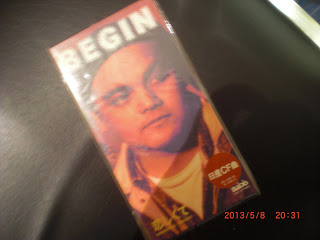
Looking through the Net, I found this song was popping up a fair bit. BEGIN, the band of Okinawan blues, released a single in July 2002 titled "Ojii Jiman no Orion Beer"(Grandpa's Prized Orion Beer), an aural showcase for Okinawa's famous brand of beer. I've had Orion Beer a couple of times when I went to an Okinawan restaurant in Tokyo...it went down smooth enough. As the good folks put it in their lyrics, Orion is the elixir of the gods in Japan's southernmost prefecture. Not surprisingly, it became a commercial song for Orion itself.
Somehow, I don't think the Japanese needed the arrival of the summer solstice to go into happy hysterics today. But I think that a lot of beer of all brands was imbibed.
Well, I hadn't thought it would come quite this quickly but in the past week, I realized that this milestone was very much around the corner. And sure enough, it has finally arrived.
Folks, welcome to Article No. 10,000 on "Kayo Kyoku Plus"!
Thanks kindly! Feel free to try out some of the lovely treats at the buffet table...and don't drink and drive.
I had been wondering what I would write about when it came to Article No. 10,000. I knew that I couldn't really just devote it to any regular song or album. But then, I remembered that yesterday I had posted Masako-san's(マサ子さん)"Psynomey" and noted that the short-lived duo had been one of the competing bands on late-night TBS music program "Miyaki Yuuji no Ikasu Band Tengoku"(Yuuji Miyake's Cool Band Heaven) which ran from February 1989 to December 1990. However, unlike shows including "The Best 10"(ザ・ベストテン) and "Enka no Hanamichi"(演歌の花道), I barely remember catching it despite the fact that I was in Japan for several of its months on air.
Well, one reason is that the show, and henceforth, I will be referring to it by its short name "Ika-Ten"(イカ天), was televised on early Saturday mornings between 12:30 and 3:00 am. I know that I was off on weekends, but frankly, I did want my beauty sleep (not that it ever did me any good). Although the times that I did stay up, I was doing more channel surfing than actual viewing, I recollect coming across brief snippets of "Ika-Ten" but I wasn't really all that big on rock bands at that time, so really any talk about the show itself has been based on YouTube excerpts.
I guess because of the nature of the show which was basically the Battle of the Bands involving up-and-coming amateur groups and the difficulty in placing a 2 1/2-hour program during prime time, "Ika-Ten" got the graveyard shift. However, I think that played to its advantage and coolness factor since the high school kids would most likely, without their parents' knowledge, try to catch the late-night show and all of these potentially kakkoii bands.
Yuuji Miyake(三宅裕司)was the overall host of the show and he later had an even longer run as a music show emcee when he joined the NTV Saturday night program "The Yoru mo Hippare"(The 夜もヒッパレ). But with "Ika-Ten", he ended up quarterbacking a program that became a very bright if brief social phenomenon as it became must-see TV for the young generation at that time due to the groups duking it out and the presence of the latest Band Boom in music. Even that short nickname eventually became one of the top buzzwords for 1990. Twelve bands came onto "Ika-Ten" every episode to vie for a number of awards with the most coveted one being the Challenger Prize. Winning this particular award meant that the band would go up against the incumbent winner of the previous episode, known as the Ika-Ten King(イカ天キング), to see if it could dethrone the band and become the next king. Five straight weekly victories as King meant promotion to Grand Ika-Ten King(グランドイカ天キング)and the promise of a recording contract under a major label and the end of the band's appearances on the show.
Of course, before all that, the band has to play in front of a panel of judges which included music celebrities including songwriters Ginji Ito(伊藤銀次)and Reiko Yukawa(湯川れい子), some of whom could be quite harsh in their assessments. There were also a couple of lamps at each judge's table that were able to be switched on and off: Red was known as the Wipe(ワイプ)which was a bad signal leading to the footage of the band playing getting increasingly smaller. Blue was Kansou(完奏)which I think meant "play to the end".
The system led to some notoriety right from the first episode on February 11th 1989 when a band known as Hysterics (above video) got the Wipe treatment. Well, the Hysterics' leader and female vocalist didn't take that too well and decided to drop trou and everything else below the waist right in front of the camera in anger (the band was disqualified). It was only the quick thinking and reaction of the cameraman and director that prevented the show from getting an R-18 rating. Of course, being in the wee (no pun intended) hours of the morning, I really don't think the TBS switchboard lit up like a Xmas tree, and heck, when there is a bunch of edgy rock bands on stage going for blood, sparks will tend to fly. Besides, the incident brought tons of publicity to the show. Supposedly, the singer left the band and the band itself soon broke up thereafter.
"Ika-Ten" also had issues of drug use among the staff in the two years that it was on, according to a 2016 book focusing on Japanese entertainment scandals. All of the shows including "Ika-Ten" that the staffers had been connected with were shut down for a while at least. In addition to that news, there was also a change in the judges and the lessening of the Band Boom in 1990 which led to the show dropping in popularity, so the decision was made that it would finish its run at the end of the year. However, there was a one-off special version which was broadcast during in the last week of 2007.
Even though I never really caught "Ika-Ten", I personally think that it was a significant show because a number of bands that we've all gotten to know got their start there and have been part of the J-Pop scene. There are a few that I hadn't even realized were competing on "Ika-Ten".
To finish off, here is a brief sample of some of the Ika-Ten Kings and Grand Ika-Ten Kings.
Flying Kids: 3rd Ika-Ten King and 1st Grand Ika-Ten King (5 weeks: March 4th - April 8th 1989)
Jitterin' Jinn: 6th Ika-Ten King (1 week: May 20th 1989)
NORMA JEAN: 11th Ika-Ten King (4 weeks: August 5 - August 26th 1989)
Begin: 12th Ika-Ten King and 2nd Grand Ika-Ten King (5 weeks: September 2nd - September 30th 1989)
Tama: 14th Ika-Ten King and 3rd Grand Ika-Ten King (5 weeks: November 11th - December 9th 1989)
I think that there's a saying about really getting to know your own hometown only when you're separated from it for a length of time.
Perhaps that is the thrust behind Okinawan folk-blues bandBEGIN's"Kono Machi Hanarete" (Leaving This Town), a happy-sad tune that talks of a young fellow who's leaving his own home willingly to go on a search for himself, and maybe to realize how good his birthplace has been to him all these years.
I don't know very much about Okinawan music, but what I do know has been wrapped around the native three-stringed lute known as the sanshin, and with "Kono Machi Hanarete", there's something more foreign. This seems to be more planted in the terra firma of America with a zydeco accordion and a twangy blues guitar that sounds as if someone from Ego-Wrappin' decided to drop in for a spell.
BEGIN was responsible for words and music, and it probably made its first appearance in the band's first BEST compilation, "FAN -- Little Pieces" released in March 1995. But it has also appeared in their third BEST album "Ballads" in March 1999.
Well, it's been a day. It was a day which had an all-morning and all-afternoon session of major jackhammering and drilling due to the ongoing balcony renovation project, all hot water cut off due to pipe replacement for far longer than scheduled due to a gas (?!) leak, and the annual condo owners' meeting tonight whose "guest of honour", the independent auditor went completely AWOL. Well, the drilling and jackhammering has stopped for today, the hot water has finally returned and somehow the meeting went on fairly cheerfully. Glad I just live here.
Still, under the circumstances, I want to go with something pleasant and relaxing. So I remembered that on a recent episode of "Uta Kon"(うたコン), a singer performed a cover of "Shimanchu nu Takara" (Treasure of the Islanders), the 23rd single by the Okinawan band BEGIN released in May 2002.
I never got to Okinawa but wouldn't mind a vacation over to the peaceful islands with plenty of long-lived centenarians. If I did make it over, "Shimanchu nu Takara" would be the theme song for my journey to places like Naha, Churaumi Aquarium and Shuri-jo Castle.
According to a July 2017 article in the Yaeyama Mainichi Newspaper(八重山毎日新聞)in the city of Ishigaki in Okinawa (via J-Wiki), "Shimanchu nu Takara" was born when vocalist Eisho Higa(比嘉栄昇)had asked a former classmate who was now a teacher at Ishigaku Junior High School for his students to come up with their thoughts about the island. From there, Higa was able to distill those thoughts into the lyrics for the song.
"Shimanchu nu Takara" got as high as No. 47 on Oricon and won the Kenkichi Yamamoto Prize for its lyrics. Later on in the year, BEGIN was able to make their first of two appearances on the Kohaku Utagassen to perform the song. It is also a track on the band's July 2002 album"Begin no Shimauta ~ Omototakeo 2"(ビギンの島唄 〜オモトタケオ2〜...Traditional Okinawan Folk by Begin ~ Omototakeo 2).
Now, if you'll excuse me...I will take that hot shower now.
From the back of my mind used to come a very tiny snippet of a song I had heard many years ago when the local Chinese channel was promoting albums of popular Mando-pop artistes at the time. I had no idea what it was called, but I liked what I heard and would always look forward to hearing that commercial. But, of course, as the years went by and the commercial disappeared from TV, I was left with only a vague snippet of that song. It was frustrating having this bit floating around in my head from time to time, and because I didn't fully know the melody, it'd get mixed up with other songs. This occurrance came and went until one fine Saturday afternoon in late 2014.
Natsukawa's version.
At that point in time, "BS Nippon no Uta" was still a fascinating program for me and I yearned to see someone I liked during its "Special Stage", so I was watching it frequently. Then it so happened that one afternoon the Special pairing was the late cool-guy composer Masaaki Hirao, whose name I had seen many times by then, and Rimi Natsukawa (夏川りみ), whom I was unfamiliar with. As per usual, a barrage of kayo was sung, but then came an all too familiar tune by Natsukawa. After at least 10 years since I heard that commercial, I finally knew what the song was called: "Nada Soso". Oh, it was sweet catharsis!
Moriyama's version.
With the island twang to the melody and Natsukawa's crystal clear and tender vocals, one would think that "Nada Soso" was made for this Okinawa native. However, when I looked this song up on Wikipedia, it turned out that it originated as a collaboration between folk singer Ryoko Moriyama (森山良子) and the band BEGIN in 1998. Apparently, Moriyama had requested BEGIN to come up with an Okinawa-themed score; they did and gave it its current title which means something on the line of "falling tears". Moriyama then built on this by writing lyrics that revolved around the memory of her late brother. This was then included in her album "TIME IS LONELY". However, "Nada Soso" wasn't within reach of the spotlight for quite some time as the album didn't do particularly well, and neither did BEGIN's self-cover on 23rd March 2000. It was only until Natsukawa decided to do her own rendition after hearing it at the 26th G8 Summit in Okinawa that very year.
BEGIN's version.
Exactly a year later in 2001, Natsukawa's version came out, along with a couple of other songs BEGIN had composed for her; it was only then did "Nada Soso" receive the acclaim it is now known for. Moriyama then re-released her rendition as a single that December, and in 2003, a special version with her, Natsukawa and BEGIN was released. Incredibly, "Nada Soso" stayed on the Oricon charts for a whopping 5 years, peaking at 8th place on the weeklies, and selling at least 1.2 million copies. Of course, it also came with TV tie-ups. In 2005, TBS created the "Nada Soso Project" for their 50th Anniversary which had 2 dramas, titled "Hiroshima Showa 20 nen 8 Gatsu Muika" (広島・昭和20年8月6日) and "Nada Soso Kono Ai ni Ikite" (涙そうそう この愛に生きて), with "Nada Soso" as their theme songs - the former with Natsukawa's version and the latter with Moriyama's. Furthermore, Natsukawa sang this tune 4 consecutive times on the Kohaku from 2002 (her first appearance) to 2005.
The mandarin version... Dang, that's a trip down memory lane.
Besides that mandarin version I had briefly mentioned earlier, which was apparently sung by Singaporean Mando-pop artiste Joi Chua and titled "Pei Wo Kan Ri Chu" (陪我看日出... Watch The Sunrise With Me... probably), "Nada Soso" has a whole baraage of renditions that spans multiple languages and instrumentals of various kinds. This is truly a global phenomenon! I'm quite curious as to what Moriyama thinks about its success.
I enjoy "Nada Soso" quite a lot as it's pretty nostalgic, however, this is probably the only song I listen to where I have to deliberately ignore the words, otherwise, well, the title will happen. While Moriyama's sweet yet heart-rending words have the memory of her brother imbued in them, I get reminded of my own grandpa.
Every so often I would wonder what it'd be like if he were still around and what would've been different. Well, a lot. For one, I'd most likely be in the States now because I'd force him to come along with me, and knowing him he'd be more than willing to do so. I suppose, in that respect, I'd be more spoiled too, haha! I also wonder what he would think of me now... The old enka bit will definitely be criticized (considering my current taste) but he'd still get me records or CDs, surely.
If there's any phrase from him as told by Mom that I am currently holding on to in this frustrating period in my life, it's "If you really want it, you must be willing to do anything to get it." (Or something like that.) Yes, I get it now. Well, I'm close to a month late for my annual tribute to him as I was trying to sort my life out (along with being lazy), but it's something that I want to keep doing.
As there are stars in the sky As there is sand on the beach In my heart, I just had One small dream
The above is the translated beginning for the lovely and sad ballad titled "Sora ni Hoshi ga Aruyou ni"(As There Are Stars in the Sky), written, composed and sung by Ichiro Araki(荒木一郎)for his debut back in September 1966. It was performed on a recent "Uta Kon"(うたコン), and I thought it was a pretty song so I tracked it down.
Listening to Araki's lyrics, I thought that there was something quintessentially Charlie Brown about it and something that most everyone could relate to. Ol' Chuck is lying on the pitcher's mound long after another losing effort and just wondering what else he could have done, and I think the late Charles M. Schultz was reflecting about anyone who has gone through failure after failure. Considering how kayo kyoku is, when I took a look at his lyrics, I had expected the song to be about a failed romance but there was nothing in there to imply any girl running away. It was merely the expression that a dream for something had run off.
"Soni ra Hoshi ga Aruyou ni" apparently did touch a lot of people. It sold over 600,000 records and earned Araki Best New Artist honours at the Japan Record Awards that year but it didn't get him onto the Kohaku Utagassen for some reason.
In March 1997, the Okinawan band BEGIN did a cover of "Sora ni Hoshi ga Aruyou ni" as their 12th single that, despite the lyrics, sounded more hopeful and perhaps even quietly defiant.
When I first heard this song being played on a commercial advertising the release of the first single by Okinawan band, Begin, in 1990, I was just struck by how lovingly old-school it sounded. I just remember seeing the vocalist in his beret singing this lush bluesy ballad that came across as if it got imported from a Patsy Cline tune. I soon picked up "Koishikute" (Missing You) and when I put it into my portable stereo, I got hit with this wave of beautiful strings tenderly starting the melody before the blues flowed in through the guitar. Whenever I picked up a song by someone that I hadn't known about, there is a bit of trepidation of course, but as soon as I heard those opening notes, I was sure I got the right song.
Begin began with Eisho Higa (比嘉栄昇) (vocal/guitar), Masaru Shimbukuro(島袋優) (guitar/chorus) and Hitoshi Uechi(上地等) (electric piano/chorus), all of them born in 1968, all of them from Ishigaki Island in Okinawa, and all of them friends from elementary school. However, the band formed in Tokyo itself after performing at a friend's wedding in 1988. At first, Begin tried their hand at hard rock, but after finding out that they weren't cut out for the genre, they veered into a more blues/Okinawan direction. In 1989, Begin appeared on the popular TBS program "Heisei Meibutsu TV Miyake Yuji no Ikasu Bando Tengoku"(平成名物TV三宅祐司のいかすバンド天国...Heisei Specialty TV Yuuji Miyake's Cool Band Heaven), kinda like an epic version of those high school "Battle of the Bands" of its day where budding bands of all stripes competed to become the grand champion. Higa and company got high praise from the judges assembled and would eventually become the 12th King of Ika-Ten following other bands like Flying Kids (3rd King) and Jitterin' Jinn (6th King). (both are represented in "Labels")
The above video was taken in March 2005 at Osaka Expo Park. A little more than half a year after getting their championship on Ika-Ten, "Koishikute" was released as the debut single in March 1990. It managed to reach No. 4 on Oricon and remains their most successful single. Begin was also responsible along with folk/pop legend Ryoko Moriyama(森山良子) in creating the very popular "Nada Soso" (涙そうそう) in 1998, although it wasn't until Rimi Natsukawa's(夏川りみ)2001 cover of that song which launched it into the stratosphere. Still for me, "Koishikute" will always be the song for me when I'm asked about Begin. It's not my 18-ban song (see "Yukiguni" ) at karaoke, but whenever the group back in Japan had longer-than-usual sessions at the boxes of Shinjuku, and there was enough of a mixture of beer and Brown Cows in me, I sometimes went for Begin's trademark song. The kanji wasn't too difficult and the laidback tempo was perfect.
I actually had the opportunity to see Begin several years ago....not in a concert, but on the outdoor deck of the Tokyo Bay shopping mall named Decks. Unassuming and relaxed as the guys were, they had a small performance right then and there with a small appreciative crowd clapping away.