Credits

I would like to give credit where credit is due. Videos are from YouTube and other sources such as NicoNico while Oricon rankings and other information are translated from the Japanese Wikipedia unless noted.
Showing posts with label Toshikazu Kanazawa. Show all posts

Friday, November 8, 2024

Shiori Sasaki -- Simple Love(シンプルラブ)


Continuing on from Akiko Matsumoto's(松本明子)cover version of "Tasogare My Love", I would like to also feature yet another loving tribute to the works of Junko Ohashi(大橋純子). "Tasogare My Love" in its original form may have been more of a straight pop or kayo kyoku, but this next one is most definitely in the good-time City Pop mode.

In early 2023, music journalist Toshikazu Kanazawa(金澤寿和)launched the direction of an album compilation of City Pop covers called "City Pop Avenue ~ Paper Moon Project" featuring female singers who have taken the baton for the urban contemporary in recent decades. I'm pretty confident that the name of "Paper Moon" was taken from Ohashi's 1976 album of the same title and it's one of her covers that starts the album off.

"Simple Love" was Ohashi's 5th single from 1977 that seemed to highlight all that was cool and good about the night life in Tokyo. The disco times are back again (including the wacka-wacka guitar) for the cover version by Shiori Sasaki(佐々木詩織), who has been on KKP before as a featured performer with the urban contemporary duo of Blue Peppers, and she sounds as smooth as butter. The arrangement isn't quite as brassy as that for the original but it does reflect how the urban sounds sound these days. Ohashi's husband, Ken Sato(佐藤健), took care of the melody while Takashi Matsumoto(松本隆)was behind the lyrics.

As well, back in 2022, I posted my own favourites by Ohashi so you can have a gander at those, too.

Friday, May 10, 2024

Translation of Liner Notes for Tohoku Shinkansen's "Thru Traffic" Originally by Toshikazu Kanazawa (Part 4)


Happy Friday and welcome to another Urban Contemporary session for KKP today. To begin as we have for the last few Fridays, I have the fourth and final part of the translation of the liner notes for Tohoku Shinkansen's(東北新幹線)legendary "Thru Traffic" from 1982 by music journalist Toshikazu Kanazawa(金澤寿和). This final part goes into the figurative storm clouds that brewed up which led to not only Tohoku Shinkansen producing just the one album before the partnership faded into dust but also how the duo got its name.

Couldn't resist. 

Although the recording itself had gone comparatively smoothly, what came after was a nightmare. There was the growing number of directors and engineers coming in and out, and the work slowed down to a crawl. Even the odd name of Tohoku Shinkansen was given to the duo because “it was just like the actual Tohoku Shinkansen bullet train project which kept getting delayed and never launching”. On top of that, there was very little promotion for the album. As mentioned above, only two of the tracks made their debut at Yagami’s(八神純子)concerts. Perhaps part of the problem was that in the midst of the difficulties of releasing the album, Narumi(鳴海寛), Yamakawa(山川恵津子)and Yamaha couldn’t see eye-to-eye-to-eye. For one thing, Yamakawa, right from the start of Tohoku Shinkansen, had maintained that she wouldn’t participate in any live performances because she didn’t want to be out in front on the stage. Narumi thought that though his partner felt uncomfortable, she should perform if only to promote the release of the album. Then, Yamaha gradually turned the screws onto the two of them to perform. It was from these disagreements that the album only got out to some of Yagami’s fans and Tohoku Shinkansen quietly disappeared.

It was at this time that the one-and-only Tatsuro Yamashita(山下達郎)had heard “Thru Traffic” and invited Yamakawa and Narumi to join his tour as backup chorus. Tats’ hit album “For You” was just released and the man himself was on fire, but in the end, Yagami’s tour had already been scheduled so they couldn’t do it. As well, there was a lot of friction between Narumi and Yagami’s director which led to Narumi not only leaving the band but separating himself from Yamaha. Ultimately, a one-time Tohoku Shinkansen concert wouldn’t finally come into being until August 2004, 22 years later when the duo teamed up once more.

But Narumi would soon join Takao Kisugi’s(来生たかお)band, and then become the sound producer for the late Cindy and Kyosuke Kusunoki(楠木恭介). And after that, he participated as a guitarist for Tatsuro Yamashita’s “Performance ’88-‘89” tour and then recorded the live album “JOY” under a similar framework which greatly raised his profile. Especially through his incredibly soulful play on Tats’ “Soubou”(蒼茫), Tats’ fans were astonished when they heard it. In 1994, he would fully return to the music scene when he formed the band frasco out of which three albums were released.

As for Yamakawa, she quickly distinguished herself as a composer and arranger and became active in a wide variety of genres including kayo kyoku and aidoru music. In 1986, her contribution to Kyoko Koizumi(小泉今日子), “100% Danjo Kousai”(100%男女交際...100% Men And Women Dating) earned her a Japan Record Award for arrangement. Her name has also popped up in the chorus for Tats’ “COZY” and Mariya Takeuchi’s(竹内まりや) recordings among other projects, so that she would participate in over a thousand songs.

Yamakawa: When I look back on things now, I think Tohoku Shinkansen was possible thanks to Hiroshi. I had a really great time singing chorus with him and we meshed well. Though we co-produced the album, it was he who took the initiative. When I was thinking about what I should do to bring out Hiroshi, I thought about my position and took a step back.* However, I still have strong memories of the staff and everyone else enjoying themselves a lot. Regarding all of it, everyone was so generous and we didn’t think about things such as the production costs and made the album that we had wanted to make. As a result, I could hear very warm and nostalgic sounds. If anyone thought about making something similar now, it wouldn’t be possible at all. It’s on that part that I hope you take your time and enjoy it.

Toshikazu Kanazawa 

September 2007

*I put that one statement by Yamakawa in bold since I am not completely sure about my translation there. By chance, if there is anyone out there who has their liner notes of "Thru Traffic" and have tried to figure it out, let me know if it's OK or if I need to make corrections.

Friday, May 3, 2024

Translation of Liner Notes for Tohoku Shinkansen's "Thru Traffic" Originally by Toshikazu Kanazawa (Part 3)


Hello there. It's J-Canuck with Part 3 of the translation of music journalist Toshikazu Kanazawa's(金澤寿和) liner notes for Tohoku Shinkansen's(東北新幹線)one-and-only album "Thru Traffic" from 1982. Today's excerpt goes over the actual production of the album.


After Yamakawa’s entry into Yamaha, she joined Hiroko Taniyama’s(谷山浩子)band as a keyboardist just when Taniyama had debuted as a singer-songwriter. A little later, she also joined Junko Yagami's(八神純子)band because she was recognized for her ability to sing with a similar voice to Junko's. Later on, Narumi, who had become a university student by then, was starting to come to Yamaha frequently, and came to support the bands for Taniyama and Yukio Sasaki(佐々木幸男). It was around this time that Makoto Matsushita(松下誠) (of the band AB’S and so forth), who was like a senpai to Narumi, began to notice him and gave him an electric guitar (up until then, Narumi just had the acoustic guitar). Then, Kazuo Nobuta(信田かずお), who had provided support for singer-songwriter Akira Inaba(因幡晃), had been an instructor at Nemu Music Academy (Yamaha Music Foundation’s original name) and Seiko Matsuda’s(松田聖子)first arranger, brought Narumi aboard for the recording by the band that Matsushita and Nobuta had formed, Milky Way. This was Narumi’s first official involvement in a recording. His strong admiration for guitarist David T. Walker, someone who the connoisseurs would know, came from Matsushita.

One day, there was an opening in Yagami’s band which Narumi filled at Yamakawa’s recommendation. Close in age and musical preference, Narumi and Yamakawa were influencing each other and they gradually came to lending a hand in the stage arrangements while both were in the band. A Yamaha director who was watching this suggested the following: “How about the two of you become a duo?”. This launched Tohoku Shinkansen.

The musical concept would be mostly based on AOR and Black contemporary music of the time. First and foremost, the aim was high-quality and refined urban music. Basically, they were looking at Gino Vannelli, Bobby Caldwell, Earth Wind & Fire, Quincy Jones, George Benson and Eumir Deodato. As well, the two of them, who liked the addition of chorus, shared an admiration for the jazz chorus group The Singers Unlimited. Moreover, neither of them loved songs with simplistic progressions and preferred something with cool tension chords.


Narumi: At the time, rather than us writing the songs, the melodies and the arrangements just seemed to materialize at the same time. For something like the first track, “Summer Touches You”, the song was born right from the intro.


Yamakawa: “Up and Down” was showing its influence from Earth Wind & Fire. Listening to it now, I think that part when the sound clicks out is a bit unnatural but I thought I sang it well.


Narumi handled all of the guitar playing. To him, this album was his starting point as a guitarist and for him to play the instrument on all of the tracks was a great source of confidence. Even on the instrumental track “Spell”, his David T. Walker-style of play was on full display. He would always use Walker’s favourite guitar, the Gibson Byrdland, which revealed an emotional depth of play that couldn’t be imagined within someone who was in his mid-20s. As well, he handled some of the keyboards where he showed some extraordinary prowess. Yamakawa was in charge of all of the keyboard arrangements as well as those for the horns and strings. While the basic arrangement was done between the two of them, Narumi was more than happy to rely on Yamakawa when it came to the score since that was her strong point. However, the biggest strength that the pair had together was their harmonizing. What showed that to its maximum was the jazz ballad version of “September Valentine”. This track was the only one created by a different artist, J-AOR singer-songwriter Yasuhiro Abe(安部恭弘). The song had been chosen as one where they wanted to make it sound like something by The Singers Unlimited. It had originally been recorded by Yukio Sasaki, and Narumi, who had been his support band member, was the first to notice the song. Kentaro Haneda(羽田健太郎)played the piano for the Tohoku Shinkansen version.

As well, bassists Tsugutoshi Goto(後藤次利)and Kenji Takamizu(高水健司), drummer Hideo Yamaki(山木秀夫), percussionist Motoya Hamaguchi(浜口茂外也), saxophonist Jake H. Concepcion along with several other famous musicians participated, but it was Yamakawa and Narumi who discussed and set the lineup, and it was through the former’s personal connections that the number of session musicians grew. Junko Yagami herself also joined in the backing vocals. A singer by the name of Chrissy Faith who was on backing vocals had been a backing singer for Rupert Holmes, an AOR artist who also provided Yagami with a song, “Koi no Magic Trick” (恋のマジックトリック...Magic Trick of Love) on which Yamakawa and Narumi also joined in on. The duet track “Tsuki ni Yorisotte” (月に寄りそって...Getting Close to the Moon) with its faintly wistful feeling sounds just like a Yagami song. 


Yamakawa: Back then, we were together 100 to 200 days out of the year and we all got along so it’s no surprise that we naturally sounded like each other. Obviously, when we were in the backing chorus, we made an effort to follow each other and so we got accustomed to that.


Narumi: For “Last Message” (the final track), the lyrics came out first and as we read through them, our image for the song expanded, and we nailed down the melody within 3 minutes. Etsu sang this for us since they were a woman’s lyrics.

Toshikazu Kanazawa 

September 2007

Next week will have the fourth and final part of the liner notes.

Friday, April 26, 2024

Translation of Liner Notes for Tohoku Shinkansen's "Thru Traffic" Originally by Toshikazu Kanazawa (Part 2)


Hello again. This is J-Canuck and continuing on from Part 1 of a translation I'm doing for Toshikazu Kanazawa's(金澤寿和)liner notes from Tohoku Shinkansen's(東北新幹線)"Thru Traffic" album from 1982, I'm providing Part 2 which will begin the original 2007 liner notes when the classic City Pop release was put onto CD for the very first time. This part mostly covers the history of Etsuko Yamakawa(山川恵津子)and Hiroshi Narumi(鳴海寛)up to the point where they met at the Yamaha Music Foundation.

Tohoku Shinkansen’s genesis can be attributed to the Yamaha Music Foundation known for its Popular Song Contest (abbreviated as Pop Con). The first one of the duo to enter Yamaha was Etsuko Yamakawa, born in Kyoto, growing up with classical music and majoring in vocal music at university. During elementary school, Yamakawa listened to Group Sounds music and then also got into Western pop hits. From an early age, she was able to learn music by ear and played it on instruments like the piano. From high school, she aimed for a career in music and even participated in Pop Con at the recommendation of a friend, but it was from that point that she preferred to be an arranger rather than a performer.

While attending university in Tokyo, Yamakawa managed to get a part-time job at the Yamaha Music Foundation. At first, she was doing office work and serving tea while getting to know the staff in the Creative Work section in the company, also known as the Lab. It was there that she met the big-time arrangers such as Mitsuo Hagita(萩田光雄), Motoki Funayama(船山基紀)and Osamu Totsuka(戸塚修). As she was doing her routine tasks, she would sneak a peek at the scores they had written, and little by little, she would pick up on their methods and techniques. Before long, she would get involved with the popular radio show “Cocky Pop” sponsored by Yamaha and that is where she first met Hiroshi Narumi. Narumi had still been a high school student at the time but his innate talents had already been recognized and it was one of his compositions that had been used as the theme song for the radio show. She eventually got a copy of his demo tape and his transcriptions.


“This guy’s amazing for a high school kid!” she said.


On Narumi’s homemade tape, he had recorded his own overdubbed chorus onto his performance by piano. And when she listened to the sound of his beautiful music, there were these complex chords everywhere that she had never heard before. That was the first step for the two of them.

Narumi’s roots were in Beethoven. Furthermore, for three years from kindergarten to Grade 1 of elementary school, he listened only to the master’s “Moonlight Sonata” everyday without fail as if he were a boy possessed, a feat which astonished everyone. But it was this singular experience that nurtured his amazing ear and well-honed sensitivity. His piano playing was described by his elder brother as something by a child prodigy, and it’s said that Hiroshi memorized his brother’s own piano playing completely by ear. And when his brother started taking up guitar in Grade 3, Hiroshi also somehow began picking it up as well; while he was copying what he saw on televised guitar lessons, he was able to play the instrument in no time flat. In junior high school, Hiroshi was turned onto the pop music of Bread, Carpenters, Burt Bacharach, and The Fifth Dimension. Soon after that, his interest spread to Philadelphia Soul, Stevie Wonder and Al Green, and then on radio, he started listening to Sonia Rosa and as he unraveled the riddle behind her mysterious attraction, he came across Joao Gilberto. While his friends got into raunchy rock, he preferred soft pop and soul. He analyzed the skillfulness of the chord progressions and the precision of their arrangements and then embedded them into his own music over time. Then for his original compositions, he did the dubbing over and over by himself at home for his demo tape over many days. Narumi is widely recognized as a guitarist, but he himself believes he’s adept at both guitar and piano. Whenever he went to the piano after getting worked up, the agitation and his soul tended to cool down.

Toshikazu Kanazawa 

September 2007

Part 3 will be available next week.

Friday, April 19, 2024

Translation of Liner Notes for Tohoku Shinkansen's "Thru Traffic" Originally by Toshikazu Kanazawa (Part 1)


I'm starting off this week's edition of Urban Contemporary Friday on "Kayo Kyoku Plus" with something a little unusual. A few years ago, City Pop podcaster Rocket Brown had asked me some questions about certain passages within the liner notes of the wonderful 1982 City Pop album "Thru Traffic" by the duo Tohoku Shinkansen(東北新幹線)consisting of songwriter Etsuko Yamakawa(山川恵津子)and the late great guitarist Hiromi Narumi(鳴海寛). Yamakawa and Narumi and their one-and-only "Thru Traffic" are a fine example of what can happen when something miraculous and wonderful emerges from the unexpected.

The last time I wrote about Narumi was last September when I posted an article on the digital album, "Around the Thru Traffic", from June 2022 which was a tribute to the guitarist who had passed away in 2015. Last week, I threw "Thru Traffic" into the CD player, lied down in bed and listened to those 40-or-so minutes of pure audio pleasure for a City Pop and J-AOR-loving guy like me. Remembering some of the translation I did for Rocket Brown at that point, I then decided "Why not provide the translation of the whole kit-and-kaboodle for everyone on KKP?". Plus, if I'm not mistaken, the notes also include the reason for the unusual naming of Yamakawa and Narumi's duo.

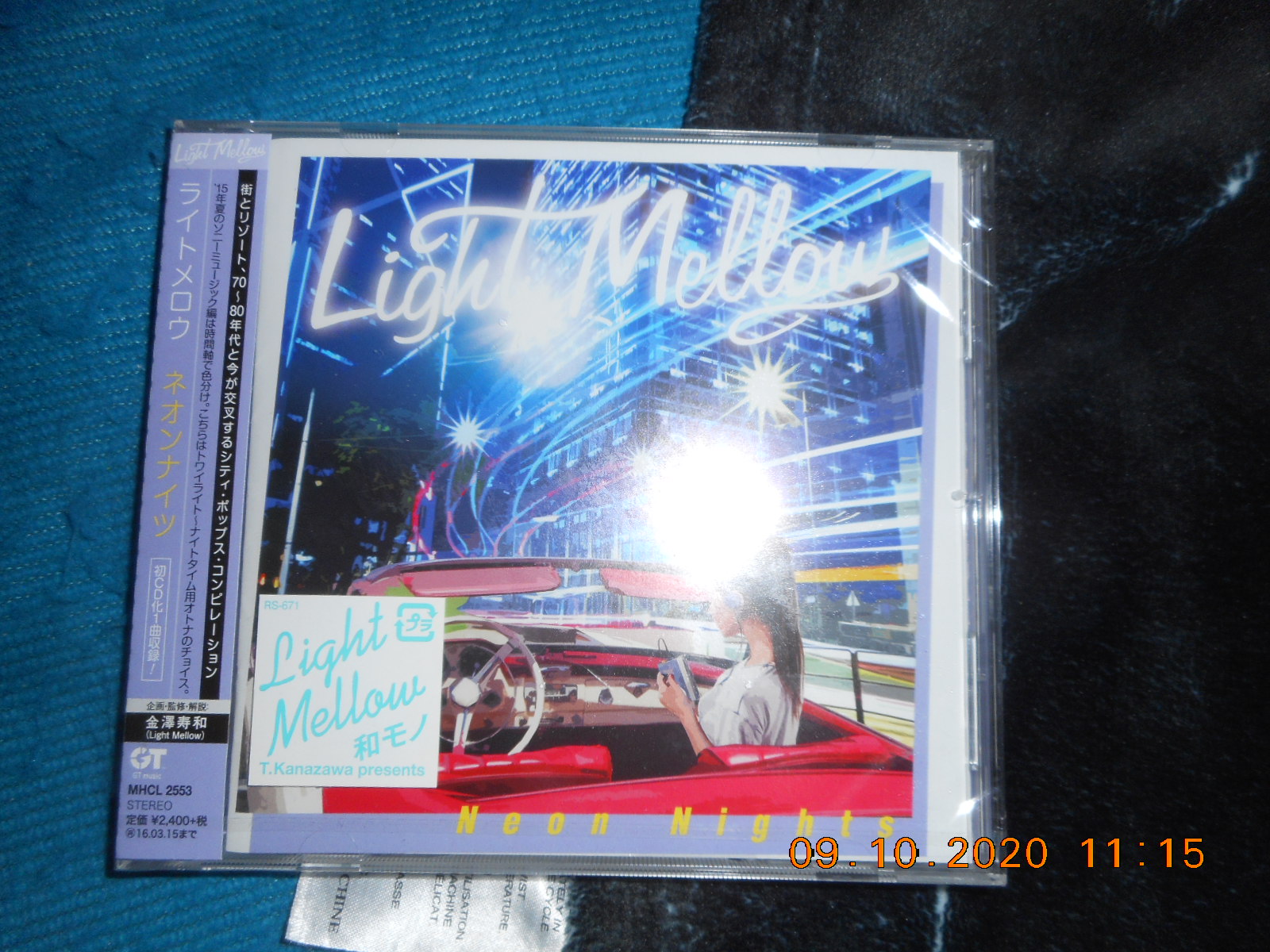
My copy of "Thru Traffic" is the 2017 remaster in the conventional plastic case. Music journalist Toshikazu Kanazawa(金澤寿和), the man who was also behind the "Light Mellow" series of CDs in the 2010s, not only included the original 2007 commentary and interview with Tohoku Shinkansen from the first version of the "Thru Traffic" CD which had then been sold in a cardboard jacket, but the first few paragraphs in the 2017 notes consisted of new insights in the two years since Narumi's death in 2015. For Part 1, which will begin below the video of "Summer Touches You", I will provide the translation for those first paragraphs from 2017 and then in the weeks to follow, I'll add on the 2015 translations.

Of course, some of you may have already taken a shot at translating the liner notes yourselves and may come across errors and omissions in my work. If that is the case, please let me know and I'll do my best in correcting them. But that's enough from me since I will now hand it over to Mr. Kanazawa.


It's been two years since the brains behind Tohoku Shinkansen, Hiroshi Narumi, suddenly passed away in 2015. For that reason, much of his music that had not been released for a long time has suddenly appeared as if a dam had burst, something that I’ve witnessed with mixed feelings. Works by someone of his innate musical artisanship bring about the sad reality that people are drawn to his death, making me feel a little helpless. However, when it comes to this one and only album by Tohoku Shinkansen, that’s a topic for another day. I think this new CD reissue of this “unknown miracle masterpiece” is simply something to be celebrated. As for the first-ever CD issue (in cardboard sleeve) in 2007, both Narumi and his partner Etsuko Yamakawa had been extremely thrilled and I was able to receive a great amount of cooperation from them.

Afterwards in 2014, just before the analog boom arrived, “Thru Traffic” was given an analog reissue. Undergoing a limited release, even through reservation, almost all of the LPs were sold out and regrettably, very few of them made it to stores. On top of that, the 7-inch single “Summer Touches You/Up and Down”, which had only been produced as a promotional record back in 1982, was made commercially available with new artwork for the first time which also garnered a lot of praise. It was soon after that when Narumi died. His treasured music was then gradually brought all together and released in series under the Narumin Music label. Actually, at the same time that “Thru Traffic” was reissued once more in 2017, Narumi’s early music collection “Boku wa Shi Tsukuri” (I am a Poet) featuring the man’s genius in full display from 1975 to 1978, and Junko Yagami’s(八神純子)backing band Melting Pot featuring Hiroshi Narumi’s “Live at Egg-Man+” were also put on sale. Especially in Melting Pot’s live record, the popular song “Summer Touches You”, which was performed by them at Yagami's own concert, is included, so you may want to check that one out.

Now, without further ado, I would like to present this revised commentary from ten years previously when the first CD version of “Thru Traffic” came out including an interview with Narumi and Yamakawa which will now have some added poignancy.

Toshikazu Kanazawa
May 2017

Part 2 will be available next week.

Friday, March 24, 2023

Japan Billboard: Special Interview with Tetsuji Hayashi, Masao Urino and Toshikazu Kanazawa ~ Unraveling the Origins of City Pop and the Background to Its Popularity (Part 3)


Completing the second part of the article last week, we'll be wrapping up this three-parter translation of a Japan Billboard article with singer-songwriter Tetsuji Hayashi(林哲司), lyricist Masao Urino(売野雅勇)and music journalist Toshikazu Kanazawa(金澤寿和)back in 2021. The source article is here with Page 3 being translated today. As I mentioned last week, the link will just head over to Page 1; scroll down to the bottom to press for Page 3.

Tetsuji Hayashi: It seems like even with the young people in Japan, they have been inspired by the music of that time. For instance, Sakanaction created a song where you can feel the essence of Omega Tribe and there are some 80s-like elements in OKAMOTO'S Hama Okamoto's bass. I've also gotten that sort of impression from the kick sound of the drums that I've been hearing lately, .

Toshikazu Kanazawa: That might be Vaporwave's influence. Stuff like background music and short instrumental orchestral pieces have been made through computers and looping with the 80s as the source. Those overseas otaku types first swarmed around Mariya's "Plastic Love" and then spread it around the world via social media. On top of that, the young people who have been coming onto the current City Pop scene have parents who grew up in the 70s and 80s. So there are a lot of folks who've heard Steely Dan, Yuming and Tats on the car radio since they were kids. There's been a high level of DNA imprinted with music.

Masao Urino: Weren't there many musicians who didn't listen to Western music for a while? Whenever I asked who they liked, I got nothing but J-Pop singers. I was surprised by that.

Kanazawa: I feel that things have progressed in a better direction. There are people in their 20s and 30s who have been active in the studio.

Hayashi: Even with all this music programming, there are people who've been seeking the joy of collaboration. With "Stay With Me", the number of young listeners who feel that the man-made groove and the balance between the musical score and the discretion of the musicians have been interesting is increasing.

Kanazawa: Mr. Hayashi, how do you see Mr. Urino's lyrics?

Hayashi: The melody was written first in order to emphasize the sound and to create a Western feel, and our era was the time when the melody-first style first emerged. Having said that, it was truly a work of genius to select words to insert into a melody to create a story. Those who can create even higher quality works will become the hitmakers, so that's why I think that I was really blessed with the lyricists. Mr. Urino is one of the examples. His quintessential songs are Junichi Inagaki's "P.S. Dakishimetai" (P.S. I Want to Hold You) and Carlos Toshiki & Omega Tribe's ballad, "Be Yourself". I had a strong desire to create such songs. However, they wouldn't become singles but the title tracks of their own albums. For me, those were the really important tunes.

Urino: It wasn't telepathy but there was no hesitation between us. At that time during our collaboration, the images were quick to emerge.

Hayashi: With a title like "P.S. Dakishimetai", there is that imaginary world created for the listener. And when Inagaki sings it, it's irresistible. When there were many of those songs like "Be Yourself" with their feelings of grief, they impressed people with encouragement and positive words. I'm so grateful that these very good songs were made.

Urino: The characteristic of Mr. Hayashi's songs is where pictures emerge simply from listening to them. The images naturally surface so I can easily write down that first lyric. I'm the type of person who can't write lyrics until I've listened to a song and can see the whole picture, but when it comes to Mr. Hayashi's songs, the pictures flow out. I had my own concept for "Be Yourself", but the melody for "P.S. Dakishimetai" was so good that I wrote the lyrics in one fell swoop. The title involved a postscript with its cornerstone being The Beatles, but once it became the title for a letter (to a loved one), I was able to adjust things to fit the situation.*

Hayashi: But you were the one to take that title to the end of the lyrics. Of course, the P.S. thing was merely a gimmick, but you put that title at the very end, only once appearing in the whole song. The listeners wouldn't have been satisfied until they heard it.

Urino: Actually, when Ginji Ito was writing, I was told by producer Kenji Kisaki that I had to become the pop version of (legendary lyricist) Yu Aku. I didn't really know what that meant back then, but it was during the City Pop boom, so I took it as meaning that I had to bring a stylish pop feeling with plenty of details to the bold and structured lyrics that was Aku's way. There was pathos, human emotions and the important things, but the pop sense would be slightly lighter with a more superficial sense of life.** From then on, I think that Kisaki had wanted to say that was the necessary thing.

Hayashi: And you actually pulled that off. Mr. Urino always heads off to the barber so when I asked him "Got a haircut?", he replied "Got my beard trimmed". I was surprised that he went to the barber just for that.*** I often throw this out as an example, but if Southern All Stars is a beach house, then Omega Tribe is a bistro. The former can go anywhere in the country even if there is a curtain of ice. But the latter is pretty much restricted to Shonan or Suma. That's where SAS' strength lies.

Kanazawa: It's an enka pops popularity, isn't it?****

Hayashi: But because they sing in a conspicuously Western style, they've got a wide range. It's amazing that no matter how they sing it, it has that SAS taste. That's not doable with Omega Tribe. For example, if those guys tried something in the enka vein, the fans would be disappointed (laughs).

Kanazawa: That must be the charm and limit of City Pop.


*「タイトルは後付けで、要はビートルズだけど、手紙のタイトルになってから辻褄を合わせたの。」

Had a bit of a tough time with that last sentence in Urino's 3rd response from the top, and I gather that what he had meant by The Beatles was that the Fab Four had come up with "P.S. I Love You" in 1962. The lyrics for Inagaki's "P.S. Dakishimetai" come out as a love letter with the last lyric being a true postscript.

**「哀愁とか人の感情とか大事なモノはあるけど、少し軽くて生活感が薄い、それがポップ感。」

I think that I've got a handle on this one which is at the end of Urino's 4th response from the top, but I can always ask for a second opinion.

***Right after that Urino response comes Hayashi's statement whose first half regarding Urino's fastidiousness with beard care might be a comment on the lyricist's approach to lyric writing. The analogy with beach houses and bistros didn't seem to make much sense to me. I personally think that bistros can be placed anywhere...even in Hokkaido in the dead of winter. Still, it was an interesting comparison between Southern All Stars and Omega Tribe.

****Just in case there are folks who aren't familiar with enka, it's the genre representing very traditional music based on emotional themes of pride, love and sadness often played by shamisen, koto and shakuhachi. Saburo Kitajima(北島三郎)and Sayuri Ishikawa(石川さゆり)are just two of the famous singers for enka.

Overall though I was happy to finally read an actual conversation involving three people whose names I've heard and planted down into the blog for years, I was hoping that they could have delved even deeper into what made City Pop tick and its sudden blossoming in the world many years later. I got some impression that like at least a few singers who've made their opinions known on the phenomenon, they are somewhat fascinated, grateful but also befuddled about why City Pop has activated the world's music endorphins so hard. In any case, if any of you would like to exercise some of your translation muscles and check up on how I did, please do so and perhaps a conversation or corrections can be had.

Friday, March 17, 2023

Japan Billboard: Special Interview with Tetsuji Hayashi, Masao Urino and Toshikazu Kanazawa ~ Unraveling the Origins of City Pop and the Background to Its Popularity (Part 2)


Last week, I began the 3-part series on KKP of a translation of a 2021 article involving an interview with singer-songwriter Tetsuji Hayashi(林哲司), lyricist Masao Urino(売野雅勇)and music journalist Toshikazu Kanazawa(金澤寿和). There they talked about the origins of City Pop including the term itself. Part 2 will continue this conversation (the link will just take you to Page 1 of the original conversation; scroll down and find "NEXT PAGE" to go to Page 2).

Tetsuji Hayashi: At that time, did you really feel that kind of trend or mood (of City Pop)?

Masao Urino: It was just (Yoshitaka) Minami for me, although in the West, there was Boz Scaggs.

Toshikazu Kanazawa: But in contrast with the literature whiz kid* (Takashi) Matsumoto, Mr. Urino, you had a direct link to City Pop thanks to you creating those slogans.

Urino: Yeah, yeah. It was the world of symbols, after all.

Hayashi: I also thought that Mr. Urino was the right person. Actually before we met, I had read that book about you, "Poolside ni 3B to Staedtler wo Kure" (Get Me a 3B and a Staedtler by the Pool) after which I got the impression that you really lived the City Pop and AOR life. All that stuff about you owning an old Benz and heading out to Oiso (a resort town) on the weekends.

Urino: Ah, you're talking about the Nagisa Hotel. Sorry, but that's all a lie. It's something the author whipped up (LOL).

Hayashi: REALLY?! But I'd thought that it would be really cool to be a lyricist based on the image from that. That was truly the lifestyle symbolized in the 1980s.

Kanazawa: It was the world that the students and the twentysomethings dreamt about back then.

Hayashi: But that world didn't look bad at all.

Kanazawa: That's where the difference lies between now and the City Pop of those times. The young generation of today is pragmatic and they have no need for anything like cars. They don't even want to become adults. Even if the sound takes us back to the 80s, the lyrics seem like they've gone back to the folk era before then. 

Hayashi: I see. Realism ends up on the page. That's why there is a large number of words crammed in there**.

Urino: There's no space between the lines and the feeling of expression is rather thin.

Hayashi: Whether it was with the lyrics or the melody, the image was entrusted with the listener back then. Nowadays, that comes out directly from the song. It's neither good nor bad, but that's what youth culture is all about today.

Kanazawa: It's also been included in your collection, but what do you think of Junichi Inagaki's "Omoide no Beach Club" (The Old Beach Club) that you co-wrote with Mr. Urino? For that matter, how do you feel about Kiyotaka Sugiyama, Momoko Kikuchi and Carlos Toshiki?

Hayashi: The ambience that symbolizes that era, the lyrics and the sound are all urban, but within all that, there is a sense of basking in that afterglow.

Urino: Even with Yuming, although her lyrics had that realism, I feel that there was that little bit of refinement. Triangle Production's (the music entertainment agency that Suigyama et al had belonged to at the time) output under director Koichi Fujita was trending in that direction as well, and he gathered the right staff for that. There was Mr. Hayashi, Chinfa Kan and then I came along a little later (laughs).

Kanazawa: Did Triangle songs stress lyrics more?

Hayashi: They stressed melody more.

Kanazawa: And the images and keywords were coming from Triangle?

Hayashi: They were particular about the lyrics when it came to the singles.

Urino: Oh yeah. First with the melody, the basic policy was that if it wasn't cool then it wasn't going to be made. When the song was completed and Mr. Fujita was inspired by it, it was at that point that the images came up and then we lyricists went into discussion. Wouldn't it usually be the case that the lyricist thinks up the title? However, he himself took on that prior step and then he met with the lyricists. So, if there was a good idea, our meetings could get very long (laughs).

Kanazawa: It was the age of the tie-up songs which was also very 80s.

Hayashi: That was only natural. There were the traditionalists who never got carried away by trends and there were also the haters, but there were people who emerged at that time such as Chinfa Kan and Haruki Murakami who had that feeling of change and wanted to create new things.

Urino: That's why I intentionally used proper nouns in my lyrics. When I started writing, Ginji Ito was close by and he taught me various ways to write lyrics. So when I put down product names like Coppertone, Volkswagen, Levi's 501 and the Beetle***, they were very popular.

Hayashi: That was the 80s for you. It was just from that urban sensation that the world expanded. It was symbol culture.

Kanazawa: That's also been included in the illustrations of Hiroshi Nagai and Eizin Suzuki, hasn't it?

Hayashi: There were those cassette index cards by them inserted in FM Magazine. They had settings like hotels with pools.

Kanazawa: Mr. Hayashi, how do you see the current boom?

Hayashi: I heard about it from Mr. Urino. I just went "Really?" (LOL).

Urino: I found out online that covers of "Mayonaka no Door" were becoming hits. There was a talk show and I was gathering topics to talk about. That's when I contacted Mr. Hayashi.

Kanazawa: But there were already quite a few covers of "Mayonaka no Door" and it's been a staple for Japanese DJs for over 10 years. The groundwork in Japan had already been established to some extent.

Hayashi: I was told that the 80s stuff was coming back, but there was no big wave...

Kanazawa: But there was in Western music. Bruno Mars, for instance. Tuxedos and the like were showing up in places that were really into it****.

Urino: Oh, really? That's interesting.

Hayashi: I'd assumed that rap and hip-hop wouldn't last too long but they're now mainstream. And making music has changed. From the point of view of the melody maker, there has been a feeling of being neglected. Therefore, I feel that when Bruno Mars performed American music that no longer existed in America today, there were people who were starving for that music and so he cleaned up at the Grammys. Maybe it has something to do with his upbringing.

Kanazawa: He is a Hawaiian who came from a mix of cultures.

Hayashi: I think that he's been familiar with melodious songs since his childhood such as those from the band Kalapana.

Kanazawa: Speaking of Hawaii, it's been said that City Pop has been accepted overseas due to Yacht Rock and Vaporwave. Yacht Rock is known as AOR here in Japan but there was no AOR boom in America so that led to a re-evaluation of the genre. There was a hint of poking a little fun at celebrities through it, but it looked fresh to the younger generation.

As usual, there are some areas as you see above with the asterisks that I wasn't completely sure about and as was the case with Part 1, I wouldn't mind a bit of a peer review especially of those areas.

*「文学少年的な松本さん」I'm not sure whether Kanazawa was being a bit snarky or complimentary but as such, I put it down as "literature whiz kid (Takashi) Matsumoto".

** 「だから言葉数が多くて余裕がない。」Directly translated, it comes out as "That's why there is a large number of words and there's no room" which sounded a bit awkward so I went with "That's why there is a large number of words crammed in there". I believe Hayashi was saying that Neo-City Pop songs or the like have been a little too wordy and there's little room for imaginations to breathe. Yeah, I gather that it's songwriter talk.

***「そこで僕がコパトーンやワーゲン、ビートル、501(リーヴァイス)って商品名を出すと、すごくウケましたね。」I've translated 「ワーゲン」as "Volkswagen" although it's right alongside the "Beetle" which was VW's most famous line of car, although Jisho.org has translated it as the "...Tamiya Sand Scorcher...sixteenth 1/10-scale electric radio controlled car kit".

****「でも洋楽にあったんです。ブルーノ・マーズ。マニアックな所でタキシードとか。」That final sentence was a bit of a corker. I put it down as "Tuxedos and the like were showing up in places that were really into it". I wasn't aware that tuxes were the thing of fashion during the 1980s along with skinny ties and big hair or that they were in again as a retro fad. But maybe someone else can explain this to me.

Anyways, I will complete Part 3 next Friday.

Saturday, March 11, 2023

Japan Billboard: Special Interview with Tetsuji Hayashi, Masao Urino and Toshikazu Kanazawa ~ Unraveling the Origins of City Pop and the Background to Its Popularity (Part 1)


Not that Mondays have officially been made the slot for the translations that I've been providing on KKP for the last little while, but the last few Mondays have been busy with, for example, the translation for that "Record Day Special Interview 2021" involving singer-songwriter Mariya Takeuchi(竹内まりや). This time, though, I'm going with something similar for Friday (or Saturday if it gets too late) since once again it deals with City Pop (I'll see if I can come up with an interesting article about enka or aidoru in the future) and it's been the final day of the usual work week when I write about the songs in the City Pop, J-AOR and J-R&B vein.

I was able to find a fairly long interview piece that I believe was done sometime in 2021 on the Billboard Japan website, and the subjects are a pretty heavy-duty veteran deal in the form of singer-songwriter Tetsuji Hayashi(林哲司), lyricist Masao Urino(売野雅勇)and music journalist Toshikazu Kanazawa(金澤寿和)who I've known as the spearhead behind the "Light Mellow" series of compilation discs in the 2010s (catnip for the City Pop cats) and the blogger responsible for the Japanese-language "Light Mellow on the web ~ turntable diary ~" which has covered the light and mellow albums on both sides of the Pacific.

Last Friday, I wrote about Romansha(浪漫社), the music bar in the Asagaya district of Tokyo that may or may not exist anymore, and there the owners spoke on the blossoming of City Pop overseas to their surprise and delight as well as the possible origins of the term "City Pop". When I came across this particular interview with Hayashi, Urino and Kanazawa, remembering the Romansha video sparked me in thinking that I just had to go through this one because of what I was reading in both the title and the content.

In any case, without further ado, here is Part 1 of my translation which covers Page 1. The source can be found here.

Special Interview with Tetsuji Hayashi, Masao Urino and Toshikazu Kanazawa ~ Unraveling the Origins of City Pop and the Background to Its Popularity

Introduction: Composer Tetsuji Hayashi is the man of note who created "Mayonaka no Door ~ Stay With Me", a song that was given to Miki Matsubara in 1979 which has gone worldwide in the midst of the global City Pop boom. This summer (2021), a 3-CD songbook series "Tetsuji Hayashi Melody Collection" consisting of famous songs that Hayashi composed for many singers will be released. As well, a live performance of his life's works "SONG FILE" will be held for the first time at Billboard Live Yokohama/Osaka. It was during this time that we were able to get a conversation going centering on Hayashi with his good friend, master lyricist Masao Urino and music writer Toshikazu Kanazawa who has been able to get City Pop a second lease on life through compact disc guides and compilations. We asked them about the origins of City Pop and the background to its popularity, and we took a peek at the scenes behind the places for its creation at the time.

Masao Urino: Is it correct to interpret City Pop as Western-style Japanese pop?

Tetsuji Hayashi: That's what we were aiming for. There were many artists, especially Yuming, but not too many composers.

Urino: That's right. You were cut from a different cloth right from the start...you were a little different.

Hayashi: In the beginning, there were no singers who sang pop. There were just a few singers such as Mieko Hirota, Eiko Shuri and Yukari Ito from the jazz field who sang a bit of it. So I feel that things started when we could give songs to Junko Ohashi when she appeared on the scene from among her buddies at Yamaha.

Toshikazu Kanazawa: There was a system of dividing labour when working upon kayo kyoku, and so as an antithesis, folk singers and rock singers emerged who had created and performed their own works after which Yuming and Sugar Babe debuted with their pop music. Mr. Hayashi, you also began as a singer-songwriter, but I feel that you succeeded as a professional songwriter by working on arrangements...while acting as a bridge to kayo kyoku.

Hayashi: I first went with arranging because there was that element where I had wanted to try something new within mainstream kayo kyoku. There was Motoki Funayama, Mitsuo Hagita, Ken Sato and me. It was at that point where Junko Ohashi came from.

Kanazawa: Speaking of Yamaha, there was their Popular Song Contest (PopCon). In the beginning, they were also looking for just tunes through the strong lens of a composition contest. But it was in the mid-1970s that their interest in artists deepened and so it was through there that Junko Yagami and Machiko Watanabe came in. That's why PopCon was closer to middle-of-the-road pops. Infusing the chord progressions and arrangements with jazz, soul and bossa nova resulted in that city feeling and form. It was a new style that wasn't in the folk and rock music of that time.

Urino: Who came up with the name City Pop?

Kanazawa: Well, there was the "City Boy" slogan for Yoshitaka Minami's "Wasurerareta Natsu" (Forgotten Summer) in 1976.

Hayashi: Wasn't it called City Pops? Soft and mellow?

Kanazawa: It was known as City Music back then. "Soft and mellow" was basically a synonym and that was also the case for the AOR which followed with singers like Michael Franks and Boz Scaggs. City Pops, on the other hand, came a little later. For me, what we now call the Niagara sound was called City Music for artists like Masamichi Sugi and Kaoru Sudo who went in a more oldies direction. Now it's all wrapped up into City Pop.

Hayashi: I wonder if taking the "s" off was probably due to J-Pop.

Kanazawa: Ever since Eiichi Ohtaki's "Long Vacation" and Tatsuro Yamashita's "For You", people around me called it Resort Pops. That includes Akira Terao's "Reflections". Life in the city and staying at a resort before returning to the city were two sides of the same coin. But the City Pop that we know today goes all the way back to the band Happy End.

Hayashi: Where do you draw the line where Happy End was in and out of City Pop?

Kanazawa: Their first album "Happy End" is folk but in their second effort, "Kazemachi Roman", drummer Takashi Matsumoto came up with the concepts of "wind" and "city". That was the launching point for City Pop. But melodically speaking, I'd say that it began with their third album (also) called "Happy End", and that's because guitarist Shigeru Suzuki's taste for the genre came to the fore.

Urino: That's easy to understand.

Kanazawa: I wonder whether the period was the transition from Caramel Mama to Tin Pan Alley. Plus, Ohtaki and Sugar Babe were under the Niagara label while Matsumoto produced Minami's "Matenro no Heroine".

Hayashi: I remember Minami well. I also made my debut in 1973 and I thought there were people who were thinking the same thing after listening to it. But the same also holds true for Yuming.

Urino: I was a copywriter in 1976 and was working on Western records. The guy in charge of Japanese music then came up and proclaimed "Wasurerareta Natsu" a winner. When I gave it a listen, it really was good and so I ended up buying "Matenro no Heroine".

Part 2 will be up next Friday.

P.S. There is also one line in the translation for 「分業制の歌謡曲があって、」(Kanazawa's first comment) which I have underlined that I'm not totally sure about. I was weaned on the system of peer review in the editing process so if there are any J-E translators out there who can give the source and my translation a look and provide their thoughts, I would appreciate that. And that goes with the rest of Part 1 as well.