Credits

I would like to give credit where credit is due. Videos are from YouTube and other sources such as NicoNico while Oricon rankings and other information are translated from the Japanese Wikipedia unless noted.
Showing posts with label Shigeru Matsuzaki. Show all posts

Monday, November 17, 2025

Shigeru Matsuzaki -- Yuuhi no Uta(夕陽の歌)/Hassen-Nana-Hyaku-Roku-Jukkai no I Love You(8760回のアイ・ラブ・ユー)


We're starting off this business week on "Kayo Kyoku Plus" with a twofer. As a lot of the kayo kyoku vets know, Shigeru Matsuzaki(松崎しげる)is most famous for his "Ai no Memory"(愛のメモリー), a single released in August 1977 which became a huge hit. 

Until then though, he'd had some very lean years with him and his manager getting doors slammed on them. But on hearing the May 1977 single immediately before the successful "Ai no Memory", I'm hoping that folks have had a change of heart in his earlier works. "Yuuhi no Uta" (Song of the Setting Sun), which was his 13th single, is a lovely little ballad if perhaps a bit on the Kleenex-friendly sentimental side given further heft by Matsuzaki's tender vocals. Along with Shunichi Tokura's(都倉俊一) old-fashioned folksy melody and arrangement are Makoto Kitajo's(喜多条忠)lyrics. It sounds like something that I would have heard on a K-Tel compilation of American pop balladry. I have to say that the young Matsuzaki on the single cover looks like the world's most casually-dressed Secret Service agent.

And speaking of him on the cover, Matsuzaki looks like a veritable kid posing for his high school photo on his very first single as a solo artist. Yes, just to take a little tangent here, back in his days at the Nihon University College of Art, he'd been with Tomiaki "Tommy" Hidaka(日高富明)and Mamoru "Mark" Horiuchi(堀内護)in a short-lived band called Milk or Hot Milk (Tommy and Milk would end up with the band GARO in the 1970s). Famous singer-songwriter Ryudo Uzaki(宇崎竜童)had been a manager at Ohashi Productions who would scout young Matsuzaki during his time with Milk.

Getting back on track, that very first single was "Hassen-Nana-Hyaku-Roku-Jukkai no I Love You" (I Love You 8,760 Times) released in October 1970. Written by Yu Aku(阿久悠)and composed by Kunihiko Suzuki(鈴木邦彦), it stands out for being a regular kayo kyoku compared to his later stuff which sounds more in the New Music vein of things, and of course, his vocals don't sound like the familiar resonant and slightly raspy tones that we've become accustomed to. As for the rather convoluted number in the title, it stands for the number of hours in a year. Mind you, after having "I Love You" said to that special someone once an hour every hour for an entire year, I'm not sure if that someone will want to reciprocate anymore.

Monday, November 4, 2024

Jack Jones -- Love Boat

In last week's ROY article, I gave tribute to Teri Garr, the offbeat comic actress who had been in movies such as "Young Frankenstein" and "Tootsie". I'd also been aware that a singer passed away back on October 23rd and this morning, I discovered that one of America's greatest record producers and composers had left this mortal coil yesterday. The coincidence here is that both men had the same last name.

A few decades before our own family would partake in a few cruises ourselves, we used to watch ABC's "The Love Boat", an hour-long comedy-drama involving the cast and passengers aboard the Pacific Princess and any romantic hijinks which ensued. Every week, we would see a fairly long lineup of entertainers from old and new Hollywood make their way onto the Lido Deck.

There had been the first couple of made-for-TV movies before the series began its nine-season run from September 1977. Of course, when it became a regular weekly series, a theme song was needed and so Charles Fox and Paul Williams came up with this frothy, adventurous and optimistic song called "Love Boat", to be sung by pop and jazz singer Jack Jones whose career started in the late 1950s.

Jones will always be tied to the "Love Boat" theme for most people. Although the show started in the fall of 1977, the single version of the song wasn't released until 1979. If anything, this single version goes even more disco with that wacka-wacka guitar (I can see Isaac the bartender hitting the floor hard now). There have apparently been many covers of the song over the years, but for me, it'll always be Jones inviting listeners to come aboard. He may have even performed the song on a real cruise liner. 

As I mentioned above, a lot of stars passed through the Pacific Princess, including one very young Tom Hanks. The other man in the scene, purser Gopher Smith was played by Fred Grandy who would gain further stature by becoming a member of the U.S. House of Representatives from Iowa. My condolences to Jones' family, friends and fans.

So, when "Love Boat" hit TV screens in September 1977, what was hitting the Top 3 on September 26th that year?

1. Pink Lady -- Wanted


2. Hiromi Go & Kirin Kiki -- Obake no Rock (お化けのロック)


3. Shigeru Matsuzaki -- Ai no Memory (愛のメモリー)

Monday, October 14, 2024

Linda Ronstadt -- It's So Easy


Happy Thanksgiving, Canada! We've already had our turkey but I hope that many of you will enjoy yours tonight. Since it is a national holiday, as KKP custom would dictate, we will have a special Holiday edition of Reminiscings of Youth to start our broadcast day.

Ronstadt on the cover of "Cash Box" (1976)
from Asylum via Wikimedia Commons

Linda Ronstadt has actually been on the pages of "Kayo Kyoku Plus" for about nine years, but strangely enough, it wasn't through a ROY article (it was several years before that series would start up). I had been writing an article on "Kokoro no Honoo"(こころの炎), Akiko Kobayashi's(小林明子)cover of Linda Ronstadt and James Ingram's "Somewhere Out There", the theme song for "An American Tail" in 1986. Of course, I had to include the original.

Therefore, technically speaking, this is Ronstadt's first (but definitely not last) foray into a ROY article. "It's So Easy", coincidentally enough, was also covered by Kobayashi on one of her live albums, and I'd heard this cheerful and happy-go-lucky rock (with a bit of country) song a number of times during my childhood and adolescence...not just through Ronstadt but also through its use in commercials.

"It's So Easy" was released in September 1977 as a single and as a track on her album "Simple Dreams".  The single hit No. 5 on America's Billboard chart and No. 9 on Canada's RPM. Once again, as a running theme on ROY, "It's So Easy" has surprised me in that Ronstadt wasn't the original recording artist behind it. 

That honour goes to the one-and-only Buddy Holly when he was with The Crickets. Coming with an exclamation mark, "It's So Easy!" was released back in September 1958 with Holly and Norman Petty as songwriters. Unfortunately, it didn't chart.

So, what were hitting the Oricon charts on September 19th 1977, just a day before one of Ronstadt's most famous songs hit the shelves? Here are No. 1, No. 2 and No. 4.

1. Pink Lady -- Wanted


2. Hiromi Go & Kirin Kiki -- Obake no Rock (お化けのロック)


4. Shigeru Matsuzaki -- Ai no Memory (愛のメモリー)

Friday, August 26, 2022

Shigeru Matsuzaki -- Ginga Tokkyu(銀河特急)


Just as a preface, "Ginga Tokkyu" (Galaxy Special Express) has nothing to do with "The Galaxy Express 999" (銀河鉄道999), though both did come out at around the same time in the late 1970s.

Actually, "Ginga Tokkyu" was Shigeru Matsuzaki's(松崎しげる)16th single from April 1978 and I heard the veteran singer perform this one on a recent episode of "Uta Con"(うたコン)some weeks ago. It's quite refreshing because whenever Matsuzaki appears on any music show, it's usually de rigueur for him to sing his one-and-only "Ai no Memory"(愛のメモリー). Unless he made the request himself, I'm sure that he was in shock on being asked to perform anything other than his magnum opus.

"Ginga Tokkyu" was written by Takashi Taka(たかたかし)and composed/arranged by Kyohei Tsutsumi(筒美京平)as a happy musical journey for a couple of lovebirds around the Earth. As the tag for the video puts it, it's a slice of Japanese soul strutting with a touch of disco and a splendid background chorus. There's nothing like a love train of the 1970s to get everyone in a dancing mood.

Monday, July 25, 2022

Pizzicato Five feat. Shigeru Matsuzaki and YOU THE ROCK☆ -- Tokyo no Gasshou(東京の合唱)


Frankly speaking, I'm not sure what the state of summer festivals this year is considering that COVID-19 seems to be raging through Japan once more. I'm on the fence here since although I know that people have to stay safe, I also feel for those residents who love their matsuri and have been rarin' to go with them once more after a couple of years of no celebrations. I remember that the Sumida River Fireworks Festival was cancelled this year as well after a tentative date of July 30th, but I'm not sure about some of the smaller and local festivals.

My thoughts above were sparked after watching the video for Pizzicato Five's September 2000 23rd single "Tokyo no Gasshou" (Tokyo Singalong). It has the divine Maki Nomiya(野宮真貴)along with good buddies, singer Shigeru Matsuzaki(松崎しげる)and hip-hop musician YOU THE ROCK☆ painting the town red through Old Tokyo, including my old work area of Asakusa during the summer.

It's quite the thing to see representatives of Shibuya-kei, 70s balladry and turn-of-the-century hip-hop altogether as they ply their vocal trade (Nomiya and Matsuzaki crooning away while YOU weaves rap here and there) while the music reflects the influences, too. Although I don't think "Tokyo no Gasshou" will go down as one of my favourite P5 tunes, I'm thankful for letting the trio show me some of those natsukashii scenes including walking along Nakamise Douri and the rickshaw rides around Asakusa. A couple of friends and I did one such ride around the neighbourhood; I think the operator took one look at me and reckoned that he was really going to earn his pay that night.

The one thing that I never got to do which is featured in the latter part of the video was enjoying a trip on the yakatabune on the Sumida River. I'm not sure how much one would pay for the ride and dinner but I figure that it must be a special occasion. In any case, YOU THE ROCK☆ and P5's Yasuharu Konishi(小西康晴)created "Tokyo no Gasshou".

Thursday, March 10, 2022

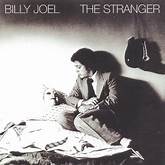
Billy Joel -- The Stranger (album) Side A

Yup, I've already got three of The Piano Man's songs up on "Kayo Kyoku Plus" as part of the Reminiscings of Youth series, and I will continue to do so as long as I can still put up articles for the blog (knock on wood). Today is a little different, though, since this time, it's not going to be one song but at least half of Billy Joel's breakthrough album "The Stranger" released in September 1977.

from Discogs

Indeed a lot of goodness came out of "The Stranger" and even before I was aware that this album even existed, I'd already heard most of the tracks through radio and television.

The very first time that I heard the Grammy winner "Just The Way You Are" was neither through radio nor record but on television. Specifically, it was when Joel appeared on an episode of "Saturday Night Live" to perform this romantic ballad that has been described over the decades since its release as a single alternately as wonderful or as sappy as a maple tree in spring. I'm more than happy to choose the former description, though. 

Not that it ever helped me in my ersatz love life, but I've always enjoyed "Just The Way You Are" as this soothing AOR love song, especially with that Phil Woods sax solo. It did hit No. 2 on Canada's RPM chart as well as No. 3 on America's Billboard. I'm not sure whether it was actually released as a single in Japan, but "The Stranger" was a winning album over there and "Just The Way You Are" even got its own Japanese title under "Sugao no Mama de"(素顔のままで).

The title track was perhaps the second song from the album to come to my ears following "Just The Way You Are". Beginning with Joel whistling as if the setting was meant to be some dark downtown street from a 40s film noir flick, the melody then erupts into a 70s cool rock-funk melody delivered in that same way by the singer as he sings about the notorious stranger who may be a real person or an emotional concept. 

"The Stranger" was actually released in Japan as a single and it did extremely well there by hitting No. 2 on Oricon. Maybe the reason it did so was because of that honne and tatemae thing that I learned in university when I was majoring in Japanese Studies. I also recall that the song was used in a commercial while I was living there.

The first track "Movin' Out (Anthony's Song)" was a Joel tune that I first heard on a radio retrospective regarding his past hits. It really has this inner city vibe which therefore reminded me of Toronto's Kensington Market right by Chinatown although I know that The Piano Man had meant it to be his diatribe against lower-class New Yorkers working their tails off to become the rich snobs that he hates. I could only imagine how he felt when that whole Yuppie thing happened in the 1980s. I didn't take too much notice of the lyrics at the time since I was enjoying the melody and that funny "ack, ack, ack" effect.

My final track here is the epic "Scenes From An Italian Restaurant" which is maybe one of the first times that I got to hear a song that was beyond the usual three to four minutes. Melodically, it starts and ends with a wistful ballad while in between we get Dixieland jazz and rock n' roll. Thematically, I'd always thought that the rock n' roll segment of Brenda and Eddie was just the beginning of their relationship which expanded throughout the entire song. And it looks like from that masterfully produced music video above, it was indeed an older Brenda and Eddie getting together in that beloved Italian restaurant, long divorced but still good friends talking about their lives apart through the balladry and jazz, getting a look at their torrid romance but doomed marriage, before returning to the happier and more mature platonic relationship at the restaurant.

Yup, I know...there is still the B-side but I think that I'll save that for a later ROY. "The Stranger" won Record of the Year in 1978 at the Grammys, and when it was released in Japan, it would also hit No. 3 on Oricon as it stayed on the chart there for about 75 weeks selling more than 370,000 records. In the USA, "The Stranger" managed to sell more than 10 million records.

So, what was being released in August or September 1977, according to J-Wiki and Showa Pops?

Mieko Nishijima -- Gin Lime (ジンライム)


Haruo Chikada -- Roxy no Yoru(ロキシーの夜)

Shigeru Matsuzaki -- Ai no Memory (愛のメモリー)

Thursday, January 17, 2019

Shigeru Matsuzaki -- Sailing Love(セーリング・ラブ)


For me, whenever I hear the name Shigeru Matsuzaki(松崎しげる), I always think of "Ai no Memory"(愛のメモリー), and not surprisingly it's probably his most famous hit.


But then recently, I heard this 1979 single of his titled "Sailing Love", and I rather pursed my lips together approvingly. This, his 20th single released in May of that year, takes things into the Latin disco end of City Pop and I have to admit that images of early Junko Yagami(八神純子)danced over my head. It's a soaring number that brings to mind mirror balls as well as dance parties on the Lido Deck of a cruise ship.


Written by Toyohisa Araki(荒木とよひさ)and composed by Koji Makaino(馬飼野康二), the same fellow who had penned "Ai no Memory", "Sailing Love" also made it onto his 6th album "Matsu For Sale" in July in the same year. The end of the 1970s must have been a particularly rollicking time for City Pop enthusiasts.

Sunday, September 23, 2018

Pizzicato Five -- Nonstop to Tokyo (Album)


Last Thursday, just before I met up with my fellow translators for a meeting downtown, I decided to drop into BMV Books which is a local group of shops selling all sorts of books, DVDs and records/CDs. Since returning to Toronto from Japan, I've kept up the bookstore browsing.

Well, as I was in the basement looking at the LPs and CDs, I did manage to find this EP CD by Pizzicato Five titled "Nonstop to Tokyo", selling for just a little over $5 CDN. Not wanting to look at a gift horse in the mouth, I didn't hesitate and bought it. Plus, there is a bit of a personal connection since that is exactly the plane that I use to get to Japan...the Air Canada nonstop between Toronto and Tokyo.


The EP, released in July 1999 (peaked at No. 55 on Oricon), consists of 5 tracks including the title track. As would be expected from a P5 album, "Nonstop to Tokyo" has our congenial hosts, Maki Nomiya and Yasuharu Konishi(野宮真貴・小西康陽), leading our flight with a light vocal delivery paired with some hip-swiveling groovalicious beats. I can only wish that those nonstop flights to Tokyo would be nearly as fun. Alas, perhaps some alcohol on the way would remedy things somewhat...


"Room Service" is a slightly less frenetic number that still retains that Shibuya-kei style. My imagination envisions those "Mad Men" executives sitting nonchalantly in a 60s space-age lounge knocking back those cocktails as this song is playing. Personally, I've never had room service in a hotel, preferring to get my meals somewhere out on the town. However, when I was in Japan in 2014, I did ask to have a massage in the room, and the masseuse did a very intense job on my shoulders and back. Amazing how far sinews can stretch!


I couldn't find "Bossa Nova 3003" but did find "Mademoiselle" which brings back the energy levels. The Divine Ms. Nomiya could be on the stage leading the way with her mike while a bunch of young ladies and gentlemen are shimmying vigorously all over the dance floor. I don't think I've used the term mademoiselle since Grade 12 French!


The last track is a radio edit of "Nonstop to Tokyo" but I couldn't find it on YouTube. However, I did find an interesting version of the song which was included on a P5 2001 album "Çà et là du Japon", since the vocalist here is not Nomiya but veteran singer and frequent informercial guest Shigeru Matsuzaki(松崎しげる). Although the Wikipedia article for the album lists both Matsuzaki and former Sparks keyboardist Ron Mael as the vocalists, I can only hear the dulcet tones of "Captain" Matsuzaki on this version.


Wednesday, September 28, 2016

Shigeru Matsuzaki -- WONDERFUL MOMENT


Rather like all those supporting actors on the original "Star Trek" such as George Takei (Sulu) and the late James Doohan (Scotty), singer Shigeru Matsuzaki(松崎しげる)will probably end his days always being known for just that one song despite having released 44 singles to date since his debut in 1970. That would be the heart-on-your-sleeve ballad "Ai no Memory"(愛のメモリー)from 1977. Plus there is that perpetual tan of his and his appearances on all of those variety programs and commercials (in voice as well as in person).

However, Matsuzaki has also done his fair share of acting over the decades including this zany detective show on TBS from 1979-1982 called "Uwasa no Keiji Tomi to Matsu"(噂の刑事トミーとマツ...The Famous Detectives Tomi and Matsu). From what little I've seen of the show, the singer played the somewhat grumpy Detective Susumu Matsuyama who has to partner up with the faint-hearted Officer Tomio Okano to take care of cases that improbably get solved despite all of the comical stumbles that the team experiences.


The ending theme of the show turned out to be Matsuzaki's 21st single from September 1979, "WONDERFUL MOMENT" which is also a love song of sorts. However unlike the heartrending "Ai no Memory" with its touch of Latin, this ballad is as mellow and tropical as a trip down to Margueritaville. Perhaps it is where Matsuzaki's tec wanted to flee to after every case with his dopey partner. The singer's crooning style in this case reminds me of rocker Eiichi Yazawa(矢沢永吉)when he is at his most tenderhearted.

Yoshiko Miura(三浦徳子), who took care of a lot of those early Seiko Matsuda(松田聖子)tunes among her huge list of creations, wrote the lyrics while Juichi Sase(佐瀬寿一)composed the song. Sase, incidentally, was the same composer behind the hugely successful and legendary Oricon hit, "Oyoge! Taiyaki-kun"(およげ!たいやきくん)a few years earlier.


The above link heads to the ending credits for "Uwasa no Keiji Tomi to Matsu" which succinctly shows what the show is all about.


Wednesday, July 18, 2012

Shigeru Matsuzaki -- Ai no Memory (愛のメモリー)


Shigeru Matsuzaki(松崎しげる) nowadays pops up on a lot of TV shopping infomercials and quiz shows in Japan. With his perpetual tan, he could probably sell a salon or two. However, back in the day, he was a singer who debuted back in 1970 and had his first hit with "Kiiroi Mugi Wara Boushi"黄色い麦わら帽子....The Yellow Straw Hat) in 1972. After that, came a very dry spell for the next four years.

In 1976, he was recruited to sing a powerful European pop-style ballad written by Takashi Taka(たかたかし) and composed by Koji Makaino(馬飼野康二) at the Majorca Music Festival in Spain. It was thought that Matsuzaki had the chops needed to tackle "Ai no Hohoemi"愛の微笑...Love Laughter) to make a good impression on the foreign audience over there which he certainly did. He placed in 2nd as Best Vocal; an amazing feat considering that the judges included Paul Mariat and Michel LeGrand. But his achievement didn't make any ripples overseas and certainly not in Japan. It would be another long year as insult was added to injury as doors were slammed on him as he and his manager tried to sell his songs; some of the demo tapes were unceremoniously shown the round file.

But finally, the proverbial ray of hope came from the Ezaki Glico company which were willing to put "Ai no Hohoemi"into one of their chocolate commercials. The final stumbling block was another jingle with the same title that was going to be sung by Japan's sweetheart couple at that time, Momoe Yamaguchi and Tomokazu Miura(山口百恵・三浦友和). So, there was a change in lyrics and in the title itself. The new "Ai no Memory"(Love Memory) was released in August 1977 and became a huge hit for Matsuzaki. It peaked at No. 2 on the Oricon weeklies and was the 18th-ranking song of the year. It even managed to stay in the Top 100 in 1978, as it ranked 87th.

Matsuzaki also got his entry into the 1977 Kohaku Utagassen, and "Ai no Memory"remains an evergreen standard from the 70s.