Credits

I would like to give credit where credit is due. Videos are from YouTube and other sources such as NicoNico while Oricon rankings and other information are translated from the Japanese Wikipedia unless noted.
Showing posts with label Ryoko Shinohara. Show all posts

Tuesday, August 17, 2021

J-Canuck's Favourite Commercial Tie-Ups


Y'know...we've gotten used to actress/singer Ryoko Shinohara(篠原涼子)stressing more of that first part of her job description over the past several years to the extent that perhaps it might be surprising to know that Shinohara did start out as an aidoru and sketch comedienne in the early 1990s. And yet, earlier this year, folks in Japan got a reminder of her less heavy material when she began to sing and dance in this series of McDonalds commercials which emphasized the good ol' days of show tunes, especially with Charlie Chaplin's "Smile".

Commenter James Noah sent me a message asking about all those commercial tie-ups which was a good question since in Japan, those popular pop songs and famous brands have frequently synergized as a win-win for all involved. James' favourite ad is the one for Gekkeikan sake with a very clean Hiroyuki Sanada(真田広之), who has seemed to be appearing in Hollywood movies looking all scruffy for some reason, walking to the strains of Anzen Chitai's(安全地帯)"Ano Koro e"(あの頃へ). It's all about that beauteous mood and mood has always been a thing in Japanese commercials. In fact, it once took me a whole minute watching an idyllic scene in Switzerland with a happy family to figure out that the commercial was selling life insurance. You just never know...Clara could have fallen out of her wheelchair to her death off that cliff. Was she in good hands with Allstate?

Anyways, that did get me thinking about what some of my favourite Japanese commercial tie-ups have been over the decade. 

1. Tatsuro Yamashita -- Christmas Eve (1983) and Japan Railways

Now, the song itself first saw the light of day in 1983 but things really didn't get cooking for Tats in the Xmas department until half a decade later in 1988 when Japan Railways used "Christmas Eve" for their Christmas campaign. After those first commercials involving couples on the platforms and in the stations had aired, any romantic meetups in a train depot will most likely have this song planted in everyone's heads. Ironically for the fellow who's been hailed as the summer song guy and one of the pillars of City Pop, "Christmas Eve" may be Yamashita's(山下達郎)most famous song for the public at large.


2. Saburo Tokito -- Yuuki no Shirushi (1989) and Regain Vitamin Drink

I've had my fair share of vitamin drinks when I was living in Japan although I don't personally think that I worked anywhere near as hard as some of those businessmen that I had taught regularly. To me, they all tasted like some tangy-sweet water. I may have even coughed up the yen to guzzle down a Regain. But when the first commercials of the ultra-Japanese businessman played by actor/folk-rock singer Saburo Tokito(時任三郎)hit the air with the proud march "Yuuki no Shirushi"(勇気のしるし), it had folks laughing and throwing out their chests in pride to see if anyone could work those 24 hours with a ton of Regain in them. I had just arrived in Japan when the Regain boom began and I believe that the commercial was of such fame that it even reached Anderson Cooper at CNN.

Ah, while I'm at it...one of my businessman students taught me one way to get rid of a cold lickety-split because of course, businessmen can't be allowed to take a day off. As soon as you get home, take a hot shower, drink down two bottles of vitamin drink and then wrap yourself up in as many blankets as you can in bed. Basically, you're to sweat your cold to death at the sacrifice of some very smelly blankets the next day.


3. B'z -- Bad Communication (1989) and FM Towns

As I have already mentioned in the original article for B'z's "Bad Communication", this was the song that usually woke up in the mornings when I was living in Gunma Prefecture. I believe that it was the morning business show on TV Tokyo or TV Asahi and the commercial was of Rie Miyazawa(宮沢りえ)touting the charms of Fujitsu's FM TOWNS computer which sounds more like a local radio station. "Bad Communication" was the jingle and it was the most dynamic one that I had ever heard thus far. Alarm clocks should be as effective.


4. Carl Anderson -- Pieces of a Heart (1990) and Parliament Cigarettes

Parliament had a long reputation for putting out some very urban and urbane commercials for their death sticks, and although I've never smoked a cigarette in my life thankfully, watching the Parliament ads even had me thinking "I really need that lifestyle...NOW!". Of course, some of those urban contemporary songs by folks like Bobby Caldwell and Boz Scaggs came in handy to add that touch of class. But the one that really hit the heart was "Pieces of a Heart" by Carl Anderson. I believe that the ad came out during episodes of "Music Fair" on Fuji-TV late on Sunday night, and it was definitely something when I always looked forward to watching that one minute and change of the good life in Manhattan or San Francisco.

Are there any Japanese commercials and their tie-up songs that you've cherished over the ages? Let us know.

Monday, November 4, 2019

Junpei Shiina with Ryoko Shinohara -- Time of GOLD


It looks like Ryoko Shinohara(篠原涼子)has been busy as an actress and as a mother for the past few years but there was a point when she was also plying her trade as a singer and tarento. Watching those old video tapes from the 1990s and 2000s, I encountered the above commercial for Canada Dry Ginger Ale and remembered this jazzy duet between her and soul singer and songwriter, Junpei Shiina(椎名純平), the brother of Ringo(椎名林檎). Never thought that ginger ale could get that classy.

But indeed the non-alcoholic golden fizzy drink got the upgrade in treatment to champagne levels, thanks to the May 2003 single, "Time of GOLD". Written by Masato Ochi(おちまさと)and composed by Shiina and jazz pianist Shinji Akita(秋田慎治), it sounds like the accompanying fish n' chips (want ketchup or malt vinegar with that?) got upgraded to filet of sole (Armand will cook and serve by your table, Monsieur) also. This is a pleasant and urbane torch song with Shiina sounding at times like good ol' Masayuki Suzuki(鈴木雅之). For Shinohara, this was her final single to date.

Saturday, July 30, 2016

Ryoko Shinohara -- Lady Generation


Time to pluck myself back to the nostalgic 90s... the time of the Tetsuya Komuro Boom(小室哲哉)with Namie Amuro(安室奈美恵)and trf. With those big stars in there, it can be easy to overlook that actress Ryoko Shinohara(篠原涼子)was also part of the TK collective. I first got to know about her from her mammoth hit "Itoshisa to Setsunasa to Kokorozuyosa to"(恋しさとせつなさと心強さと)with Komuro as the theme song for "Street Fighter II: The Animated Movie".

She was in her early 20s then and was a very well-known face everywhere on the telly. Shinohara graced the magazines and commercials along with her appearances as a comic tarento on variety shows. But of course, there was her music career which began with her time as a member of Tokyo Performance Doll which led to her association with Komuro. A little over a year after scoring big success with "Itoshisa to Setsunasa to Kokorozuyosa to", there was the other song that I knew by her, "Lady Generation". Well, mostly it was from the commercials plugging her 6th single from August 1995 and that saucy cover of the album of the same name. I have just seen the entire video for the first time in the last half-hour.

"Lady Generation" was also another Shinohara-Komuro collaboration but listening to the entire song, I didn't think it had quite the oomph factor that the "Street Fighter" theme had. Mind you, anyone who had a crush on Shinohara probably was quite satisfied from the music video. However, despite the familiar Komuro beat, the melody kinda stayed at the same level throughout.


The song was also used for a campaign involving Family Mart. That's one zippy song for a convenience food chain...although I enjoyed their bento over there. Anyways, "Lady Generation" managed to peak at No. 5 and went Double Platinum. It ended the year as the 64th-ranked single.


Wednesday, September 16, 2015

Ryoko Shinohara -- Rhythm to Rule (リズムとルール)


Even though she had a very brief singing career, Ryoko Shinohara (篠原涼子) is still one of my favorite singers. Some of her songs and albums have already been covered here on the site by J-Canuck and me, but other gems, like “Rhythm to Rule”, are patiently waiting for some love.

Back in the early 90s, Ryoko was one of the main members of the aidoru group Tokyo Performance Doll (東京パフォーマンスドール), which, even if somewhat obscure in the mainstream, managed to build a solid career for some of the girls. Ryoko was the luckiest, as she experienced a real breakthrough, but it wasn’t without her own merits, as not only a gorgeous and sexy young lady, Ryoko Shinohara could sing very well for an aidoru.

In 1994, after a commercial flop with the “Sincerely” single, Ryoko teamed up with famous producer Tetsuya Komuro (小室哲哉) and released the dance-pop “Itoshisa to Setsunasa to Kokoro Zuyosa to” (恋しさと せつなさと 心強さと), a single that was related to the Street Fighter II animated movie and, most important, sold more than two million copies (I even have my own copy of the single), becoming a huge hit for both Ryoko and TK. After that, in 1995, she released the rock ballad “Motto Motto...” (もっと もっと…) and the Latin-oriented “Lady Generation”, which was not only the single released prior to her second album, but also its title track.

After the release of the “Lady Generation” album, Ryoko continued to release singles, although, without TK, her popularity as a singer started to vanish. So, in 1997, after a string of not-very-successful pop songs, she released her third album, which happened to be both her last album and first compilation, titled “Sweets”. Also, it was during that time she started venturing more into her acting career, which proved very successful years later. The sad thing is she really left her singing career behind.

Before stop singing for real, though, Ryoko Shinohara graced the world with a few more singles until the early 00s. One of them was “Rhythm to Rule”, released in March 2000, which was the theme for a drama called “Obaachama, Kowachatta no?” (おばあちゃま、壊れちゃったの?).

“Rhythm to Rule” is a strong pop song with influences from Disco, House, R&B and Latin music. However, besides the fun arrangement, what really grabs my attention is Ryoko’s sexy and mature vocals, which makes me even angrier about the fact she left the music industry. How could a talented and gorgeous girl like Ryoko Shinohara stop singing? Maybe she wasn’t very fond of it, but it would be great if she still sang some of her classic songs, even if just on some TV shows like FNS, for example.

“Rhythm to Rule” reached #63 on the Oricon charts, selling 6,000 copies. Lyrics were written by Shoko Suzuki (鈴木祥子), while music was composed by L. SOUL. As for the arrangement, Shinichiro Murayama (村山晋一郎) was the responsible.

Source: generasia.com

Wednesday, February 25, 2015

Kakko -- We Shoud Be Dancing


I warn you right now... this is pure Stock Aitken Waterman (SAW) magic!!!

First of all, Kakko is a Japanese actress and tarento that started her career as a singer for Stock, Aitken and Waterman back in 1990. Apparently, her name was Kakuko Yamagata (山形香公子), but she also worked under the pseudonym of Anju Suzuki (鈴木杏樹). Yeah, the girl surely changed her name a lot.

“We Should Ba Dancing” was released in February 1990 as Kakko’s debut single under SAW’s wings. As the Hit Factory’s hits were really big in Japan, it’s a great coincidence that a Japanese tarento happened to work directly with the powerful production trio in UK.

About the song, it’s that type of pop tune that, for being so bad, ends sounding good. Well, maybe good isn’t the right word, but it’s surely a strong piece of kitsch pop music from the late 80s/early 90s that probably feels confortable in the guilty pleasure category.

When “We Should Be Dancing” came out, SAW, although still at their peak, was already starting to decline. Their distinctive and happy Disco sound, a mixture of Synthpop and Italo Disco with newly added House elements, still worked very nicely in their favor, but acts such as Kakko and The Reynolds Girls, for example, didn’t reach the success of top artists like Kylie Minogue, Rick Astley, Sinitta, Bananarama and Jason Donovan, to name a few.

In the end, though, “We Should Be Dancing” offers what SAW did best... a catchy chorus and a lively arrangement full of dated synths that people love to hate, but, like Tina Charles sang in the 70s, “I love to love”.

And tell me... how not love the video? As if the song wasn’t kitsch enough, we also have to deal with the bubbly video of “We Should Be Dancing” and a cute Kakko dressed with a gorgeous red bodycon (ボディコン) dress, similar to the dresses used by OL and young disco girls in Japan at the time.

Here’s a young and cute Ryoko Shinohara (篠原涼子), still at Tokyo Performance Doll (東京パフォーマンスドール), singing a Japanese version of “We Should Be Dancing”. What a rarity!


“We Should Be Dancing” was a commercial failure, reaching number 101 in the UK charts. Kakko would release one more single, called “What Kind of Fool”, before quitting her music career and returning to Japan under the aforementioned Anju Suzuki pseudonym.

Finally, there’s a legend about a full lenght Kakko album that was recorded back then, but have never seen the light. Rumours point out that it might get released someday, but, until now, nothing happened yet. Personally, I’d love to hear this underground pop gem...

Thursday, September 26, 2013

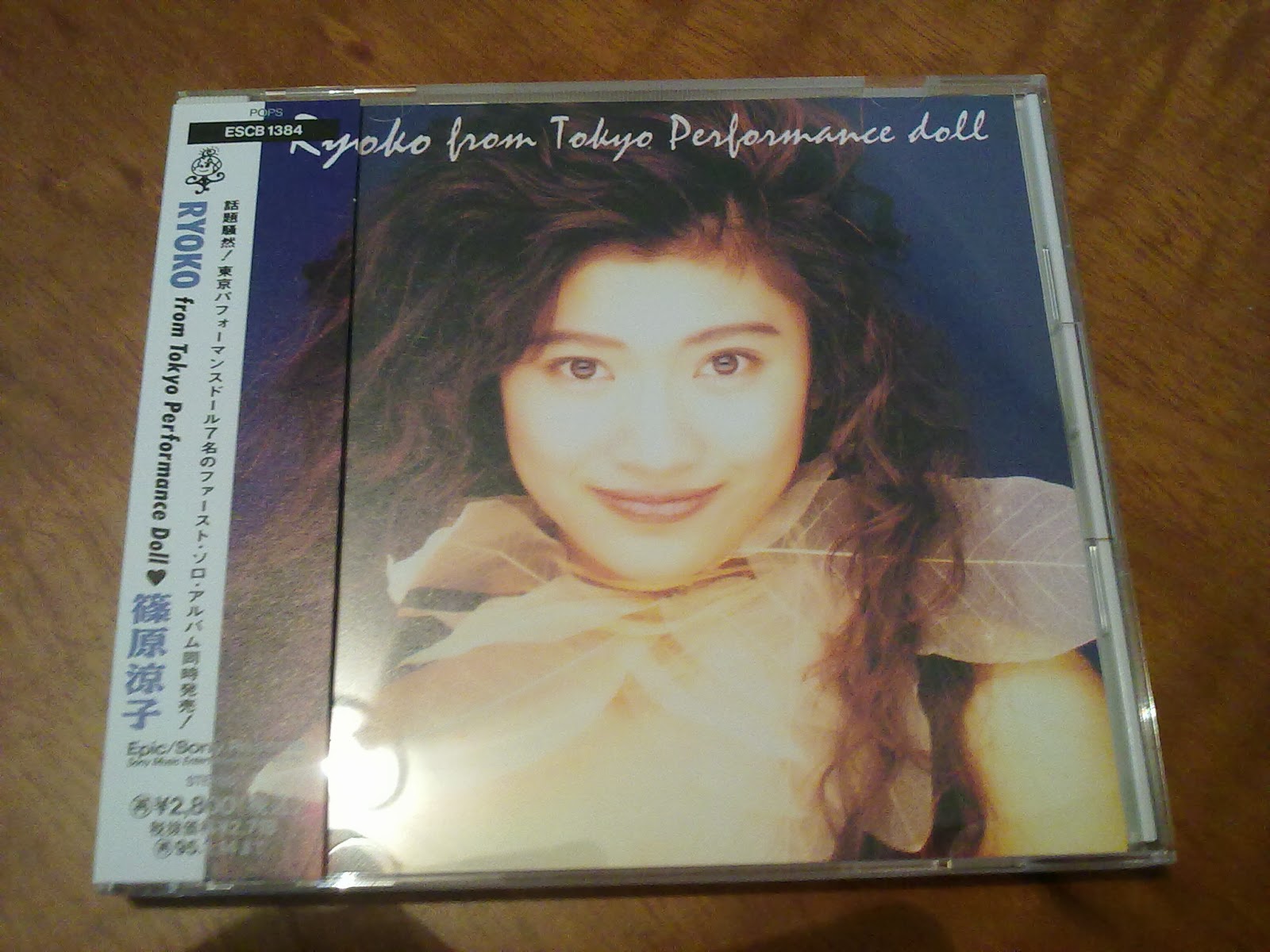
Ryoko Shinohara -- Ryoko from Tokyo Performance Doll


Before Ryoko Shinohara (篠原涼子) hit the big stage in 1994 with “Itoshisa to Setsunasa to Kokorozuyosa to” (恋しさと せつなさと 心強さと), she was a member of the big dance-oriented aidoru group “Tokyo Performance Doll” (東京パフォーマンスドール). And like many other members of the group, Shinohara had the opportunity to release a solo album, which happened to be my chosen album for today, “Ryoko from Tokyo Performance Doll”. The album, released in January 1993, consists of ten solid songs, but I ended up highlighting six of them in this article.

Ima no Mama no Futari de” (今のままのふたりで) is an upbeat and disco-ish pop song featuring lots of horns, synths, and a prominent bassline. It’s very classy, which, like some other songs from this album, contributes to a "night" feeling. The following song, “Ikoku ~TOKYO IN THE NIGHT” (異国 ~Tokyo in the Night), is also a song that combines well with the night. I can totally sense a jazz vibe in it, which makes me imagine a luxurious party in some fancy place wit well dressed high society people enjoying an enormous variety of different drinks. Well, Shinohara’s performance induces the viewer to imagine these things. Check it below.

"Ikoku~TOKYO IN THE NIGHT" starts at the 4:50 mark.


Click here to hear excerpts from the album.

Contrasting with the aforementioned songs, “Kono Akumame!!” (この悪魔め!!) is a sexy and full of attitude dance song featuring a catchy chorus. It’s surely one of the album main highlights. As for the video, it’s a sexy performance from Shinohara’s 95’ Lady Generation Summer Tour.

Our next song, "Hohoemi ni good-bye" (微笑みにgood-bye), starts right after the 4:10 mark.

“Hohoemi ni good-bye” is your typical aidoru pop song with a happy vibe. I like it a lot too. In the video, Shinohara is performing in one of her last "Tokyo Performance Doll" concerts as a member of the group. The clothes are also very different from the sexy and modern looks of her solo career.


And we have come to my favorite songs of this album, the R&B-ish “Watashi no Kokoro ni KISS wo Shite” (私の心にKISSをして) and the synthpop Latin song “Bara ga Nemureru Made” (薔薇が眠れるまで). The first, which is featured above, is a mid-tempo song with some nice violins-wannabe synthesizers. It has a very melancholic melody that combines well with the overall sound of the song. I like it a lot, especially between the 3:33 and 3:52 marks, where she sings "itsumademo kono omoi itsumademo dakishimete futari ni ha dekiru koto sekaijuu afureteru", or something like that (even though I don't know what it means). As for “Bara ga Nemureru Made” (which has already been covered by J-Canuck here), its exotique synthpop arrangement introduces a very mysterious feel that closes the album with a golden key. Also, the guitar solo that fades with the Latin arrangement always remembers me of some classic Santana songs. Listen to "Bara ga Nemureru Made" below.


Maybe that’s just a personal feeling, but I really enjoy this album at night. It’s probably because I listened to the CD for the first time at night, which made me feel comfortable at the time. But the overall nostalgic vibe coupled with a good portion of mid-tempo songs also contributes to this feeling as well. All in all, “Ryoko from Tokyo Performance Doll” is my favorite Shinohara album. It means a lot to me because I received this CD at the most difficult time of my life, just four days before my dear grandmother passed away, which also happened to be last Christmas. Even though the memories aren’t good at all, I never let this fact ruin my overall listening experience of this album, although I always remember fondly of my grandmother when I listen to it, especially during “Watashi no Kokoro ni KISS wo Shite” and “Bara ga Nemureru Made”. In the end, I also find it a much underestimated album, which is a pity.

“Ryoko from Tokyo Performance Doll” reached #63 on the Oricon charts.

“Ima no Mama no Futari de” and “Hohoemi ni good-bye” were composed and arranged by Hideya Nakazaki (中崎英也). The lyrics for both songs were written by Yoshiko Miura (三浦徳子). As for “Ikoku ~TOKYO IN THE NIGHT”, "Kono Akumame!!", “Watashi no Kokoro ni KISS wo Shite” and “Bara ga Nemureru Made”, they were composed and arranged by Ichiro Haneda (羽田一郎). The lyrics were written by Goro Matsui (松井五郎).

To finish, here are some photos of the album.


Wednesday, February 13, 2013

Ryoko Shinohara -- Bara ga Nemureru Made (薔薇が眠れるまで)


(Track 10 excerpt)

Commenter bode1967 (now contributor Marcos V) was good enough to key me in onto this song by Ryoko Shinohara(篠原涼子). Up to now, I'd only known Shinohara for her technopop collaborations with Tetsuya Komuro(小室哲哉)such as "Itoshisa to Setsunasa to Kokorozuyosa to" (恋しさとせつなさと心強さと....already profiled) starting from 1994. I'd been aware that she was with an aidoru unit called Tokyo Performance Doll but little more than that.

So it was with some surprise when I saw this video on YouTube....for one thing, her eyebrows. Well, back then, it was before the age of Namie Amuro so pencil-thin eyebrows were still not quite the norm. But it was nice hearing this song "Bara ga Nemureru Made"(Until The Roses Can Sleep) as one of her first solo efforts on the Tokyo Performance Doll album, "Catch Your Beat - Cha Dance Vol. 5" released in December 1992 (It was also placed on "Ryoko from Tokyo Performance Doll" a month later). It has that synthpop Latin arrangement that was fairly popular in the early 90s for singers like Yumi Tanimura(谷村有美)and even for Miki Imai(今井美樹) when she first started out in the mid-80s.

Tracking down who wrote and composed the song took a bit of doing but finally tracked it down to a site called Yagimai Wonderland! The lyricist was Goro Matsui(松井五郎), famous for helping out extensively with Anzen Chitai(安全地帯), and the composer was Ichiro Haneda(羽田一郎).

Friday, January 18, 2013

Ryoko Shinohara -- Itoshisa to Setsunasa to Kokorozuyosa to (恋しさとせつなさと心強さと)


In the months before I left for Japan in the early 90s, I'd heard bits and pieces from some of my anime-loving buddies about this song. As far as I recollect, my friends loved their anime and computer games but were not too much into the music. However, that seemed to have changed when they spoke about "Street Fighter II: The Animated Movie", and its theme song.

I'm not sure what the circumstances were but one night, either my anime friends were having a small presentation of some of their favourite programs or the Japanese drama-viewing segment of the Japanese-Canadian Students Association was having their regular Wednesday-evening meeting at the International Student Centre at the University of Toronto. I stepped into the room and saw a Japanese music video playing in which some fetching young lady was dancing and singing in front of a set of curtains that made it look like she was performing on the set of "The Tonight Show with Johnny Carson".

Two decades later, Ryoko Shinohara(篠原涼子) is now a firm fixture on Japanese TV but solely as a dramatic actress and commercial pitchwoman. She was recently the tough-as-nails detective on "Unfair" and had a recurring role in that other police show franchise, "Odoru Dai Sosasen"踊る大捜査線....Bayside Shakedown). However, back in the early 90s, she had been just out of the girl dance-pop group, Tokyo Performance Doll, and making her foray into the solo business. She hit pay dirt with her 4th single, "Itoshisa to Setsunasa to Kokorozuyosa to"(With Yearning and Misery and Reassurance) when it was released in July 1994. It was made for that "Street Fighter" movie, but I think it just took on a life of its own outside of the anison field.


By the way, the above video is Shinohara plugging the "Street Fighter II" game. As I said, "Itoshisa to Setsunasa to Kokorozuyosa to"became a monster hit in J-Pop in general. It hit the top spot on Oricon, and was the 3rd-ranked song of 1994 with only Mr. Children and Kohmi Hirose(広瀬香美) topping her. In fact, Shinohara and her most successful hit ultimately topped the 2 million mark in sales, becoming the very first female solo singer to do so. The song also earned a Japan Record Award and an invitation for the ex-TPD member to appear on that year's Kohaku Utagassen for the first time. Considering where she is now, it seems an eternity ago when she was a commercially successful pop star.

For those who are very familiar with J-Pop of the 90s, the song has that distinctive Tetsuya Komuro(小室哲哉) techno touch which would become the representative pop sound for several years in that decade. The single was also a track on Shinohara's 2nd album, "Lady Generation", released in August 1995. It would also hit No. 1 and be the 45th-ranked album of that year.


Strangely enough, in my early years in Japan in the 90s, although I knew Shinohara's success as a singer and would know her later career as a full-time thespian, I first saw her mostly as one of the zany sketch players in "Downtown's Gottsu 'A' Kanji"ごっつええ感じ....Downtown's Feelin' Good), the wildly popular Sunday night Fuji-TV comedy show of the wildly popular Osaka manzai duo, Downtown. Far from the sexy figure on that music video, Shinohara usually played the (victimized) straightwoman or a cutesy-cutesy character.