Credits

I would like to give credit where credit is due. Videos are from YouTube and other sources such as NicoNico while Oricon rankings and other information are translated from the Japanese Wikipedia unless noted.
Showing posts with label Shunsuke Kikuchi. Show all posts

Tuesday, July 15, 2025

Mami Koyama & Koorogi '73 -- Akogare no Suppaman(あこがれのスッパマン)

Wikimedia Commons

Just the one article tonight since I was out all day today with friends for brunch and then we caught the latest incarnation of "Superman" on the big screen at the theatre. 

I'll be honest. I had my doubts about 2025's "Superman" with David Corenswet playing the Man of Steel because of what had come recently before. I mean, I liked Henry Cavill as Superman but I don't think his movies were executed particularly well. So I did have my suspicions about this new one. However, it actually worked out nicely for the most part although there seemed to be a few points of convenient plotting which had me smirking. It struck as being a mix of "Superman II" (1981) and the Marvel stuff, and I thought that the cast got their characters off to a good start for any potential sequels. Basically, compared to George Reeves' smiling Superman, Christopher Reeve's classic and stalwart Superman, and then Cavill's grim Superman, I see Corenswet's depiction as the somewhat Sad Sack or Hey, Dude Superman.

I was actually hoping to find some kayo kyoku that had something to do with Superman. There was nothing connected with the movie, bur I remember that there was a Superman in the manga-turned-anime series "Dr. Slump"(Dr.スランプ)in the early 1980s. Known as Suppaman, this guy was no hero but a jerk who may have looked like Kal-El but had the temperament and vindictiveness of the Lex Luthor I saw on screen today as played by Nicholas Hoult, as you can see above.

Not sure when the pickled plum-sucking Suppaman made his first appearance on Penguin Island but apparently, an insert song in tribute to him did come out in Episode 121 of the long-running "Dr. Slump" (so maybe sometime in 1983 considering the show's debut in 1981). Titled "Akogare no Suppaman" (Our Beloved Superman), this was recorded by Arale-chan(アラレちゃん)herself, Mami Koyama(小山茉美), with support from the chorus group Koorogi '73(こおろぎ'73). Written by Kayoko Fuyumori(冬社花代子)and composed by Shunsuke Kikuchi(菊池俊輔)as a cute little kiddie march, this particular Superman doesn't really deserve the cheerfully heroic song but Arale-chan had had more than a few ways to bring him down to Earth.

Thursday, February 6, 2025

Jiro Kanmuri -- Tabi no Owari ni(旅の終りに)


I'm not sure that's the right type of garb for a male enka singer, but hey, whatever works for him.

On New Year's Day, I related the story of the late enka singer Jiro Kanmuri(冠二郎)and his most popular hit, "Honoo"(炎)from 1992. He had begun his career in music in 1967 but really paid his dues with nothing successful coming in for him for the first decade or so. Then, Kanmuri finally hit the big time for the first time with his 17th single from November 1977, "Tabi no Owari ni" (At Journey's End) which was the theme song for a TV Asahi drama titled "Kaikyo Monogatari"(海峡物語...The Story of the Strait), adapted from Hiroyuki Itsuki's(五木寛之)novel. The contemporary story involves a once-popular music director now down on his luck and how he is able to redeem himself through encounters with other people. It's too bad that I couldn't find any footage of the show on YouTube.

The music and arrangement were handled by Shunsuke Kikuchi(菊池俊輔), someone that I've usually associated with tokusatsu programs and cop shows. The feeling that I get with "Tabi no Owari ni" is, as I described the story of the show, someone on a difficult but necessary march back into the heroic light and I wouldn't have been surprised if it had been used as a theme song for a samurai drama instead. The lyrics were handled by Itsuki himself under a pseudonym and considering the dramatic showmanship that Kanmuri would later become famous for due to "Honoo", the singer sang this one straight and serious. That's because it was Itsuki's request that "Tabi no Owari ni" should be performed as if the singer were going through the toughest point in his life.

"Tabi no Owari ni" became a hit although I haven't been able to see how it did on Oricon probably because of its association with "Kaikyo Monogatari".

Friday, October 11, 2024

Nobuyo Ohyama & Koorogi '73 -- Doraemon Ondo(ドラえもん音頭)


It's been a busy news day on NHK. There was the top segment of Nihon Hidankyo(日本被団協...The Japan Confederation of A- and H-Bomb Sufferers Organizations) winning the Nobel Peace Prize earlier today and then the latest news on the upcoming Lower House elections on the 27th. 

However, in between those two features was the latest fuhou(訃報)for 2024. Actress, singer and seiyuu Nobuyo Ohyama(大山のぶ代)passed away on September 29th at the age of 90 from old age. Her career as an actress started all the way back in 1956 but her time as an anime voice actor began in 1965 which included a brief run in the beloved 1969 anime adaptation of the manga "Sazae-san"(サザエさん)as Katsuo Isono(磯野カツオ), the title character's younger brother.

Of course, Ohyama's greatest claim to fame is her portrayal of the iconic earless future cat, Doraemon(ドラえもん), from 1979 to 2005. There were two other seiyuu who had preceded her and then since Ohyama's departure, there have been a few more voice thespians who have taken on the role but I think a lot of people including myself will always think of Ohyama as the high and raspy voice of Doraemon as he proudly pulls out the latest weird gadget out of his pocket.

So in tribute, I wanted to put up a song from the franchise. With that voice that Ohyama came up with for the character, I figured that there just had to be a min'yo among all of the theme songs and insert songs that had been concocted over the decades for "Doraemon". And it didn't take long to track one down. "Doraemon Ondo" (Doraemon Traditional Folk Song) was released in 1979, just when the second anime iteration had made its premiere. It doesn't seem to be listed as an ending credit theme so I'm assuming that it was a special one-off for a summer festival episode. 

Ohyama is joined by the chorus group Koorogi '73(こおろぎ'73)which had its run between 1979 and 1990 and contributed voices to tokusatsu series throughout the 1970s. The jaunty "Doraemon Ondo" was written by the creator of the original manga, Fujiko F Fujio(藤子・F・不二雄), and composed/arranged by Shunsuke Kikuchi(菊池俊輔).

My condolences to Ohyama's family, friends and all of those Doraemon fans out there.

Friday, March 8, 2024

Mami Koyama & Columbia Yurikago Kai -- Wai Wai Koushinkyoku(わいわい行進曲) ~ Farewell to Akira Toriyama(鳥山明)!


It was late last night when I got the first tweets that mangaka extraordinaire Akira Toriyama had died on March 1st at the age of 68 due to an acute subdural hematoma. Those first tweets then turned into a flood of shock, grief and gratitude from anime and manga fans for his works over the past number of decades. His stature in pop culture was such that he received at least ten minutes of tribute on the main NHK newscast, only preceded by a report on the State of the Nation address by President Biden. News broadcasts around the world including our own news channel here in Toronto noted Toriyama's passing. 

Of course, "Dragonball"(ドラゴンボール)will be stated alongside his name. That was his magnum opus for fans in Japan and elsewhere. However, as I have noted in previous postings of songs associated with his works, his earlier masterpiece, "Dr. Slump"(ドクタースランプ)will always be my favourite manga and anime by him. As with "Dragonball", there were a ton of characters surrounding the main ones of robot or android Arale-chan(アラレちゃん)and her creator Senbe Norimaki (則巻千兵衛)as they got into their hilarious scrapes in basically peaceful Penguin Village. The humour was cute and crude at the same time and I will never ever forget Arale's unique way of making her own soft-serve ice cream. Plus, there was also the long-running question of whether the essentially decent but pervy Norimaki would ever earn the love of young and beautiful teacher Midori Yamabuki(山吹みどり)...happily for all concerned, the answer was yes. 

When my family got its first VCR in 1983, one of the first video tapes that we rented from Nippon Video was a couple of episodes of the anime "Dr. Slump". However, I wasn't as attached to the anime as I was to the original manga that Toriyama had published between 1980 and 1984. It remains the only manga in my home where I've gotten the complete collection and I actually enjoy the drawings there better than in the anime version. I not only have to thank Toriyama for introducing me to another fascinating wing of pop culture in Japan but I also have to give my gratitude to my host sister in Nara for recommending "Dr. Slump" when we were being shown around in the city in the summer of 1981 with her buying me Volumes 5 and 6 in the 18-volume collection.

I've already posted articles on the first opening theme of the original anime series and one of the ending themes (did not know that the first version of the anime lasted so long between 1981 and 1986). Well, I'm now providing the second opening theme by Arale-chan seiyuu Mami Koyama(小山茉美)with help from the children's chorus group Columbia Yurikago Kai(コロムビアゆりかご会), "Wai Wai Koushinkyoku" (The Wai Wai March). Released in 1985 as a single, it was written by Asuna Kawagishi(河岸亜砂)and composed by Shunsuke Kikuchi(菊池俊介). On the Oricon Children's Song chart, "Wai Wai Koushinkyoku" scored No. 38 in the 1985 yearly rankings.

My condolences to Toriyama's family, friends and his millions of fans around the world. バイチャ!

Monday, December 12, 2022

Ichiro Mizuki -- Mazinger Z(マジンガーZ)/Kamen Rider Christmas(仮面ライダークリスマス)


Unfortunately, this week has started with the news of yet another celebrity in the music industry leaving this mortal coil. I found out on NHK News this morning that the Emperor of Anison, singer-songwriter Ichiro Mizuki(水木一郎), had passed away on December 6th due to lung cancer at the age of 74. Born Toshio Hayakawa(早川俊夫)in Tokyo, he was also affectionately known as the aniki or big brother, and I knew him for his appearances on various specials and other shows where he would put his all into his appearance and performances of the many anime and tokusatsu theme songs that he had recorded over many decades.

The first time I'd heard of Mizuki, it was through his recording of the opening theme song for the tokusatsu hero program "Chojin Barom-1"(超人バロム・1...Superman Barom-1), a show that I watched as a kid visiting Grandpa's farm in Wakayama Prefecture back in 1972. However, I think that for a lot of his fans, the theme for the robot superhero anime "Mazinger Z", which came out in the same year, will be the one to remember.

I never saw the anime myself. My first exposure to Mazinger Z was through Marvel Comics when the hero was placed as one of the three "Shogun Warriors". But his iconic looks were such that he would always be instantly recognized on either side of the Pacific for those mecha fans.

Written by Fumihiko Azuma(東文彦), whose real name was Kazuo Koike(小池一夫), and composed by Chuumei Watanabe(渡辺宙明), Mizuki was really putting some vocal acrobatics into "Mazinger Z", kinda like how the actual character was pulling off his moves against the bad guys, a snazzy disco tune which probably had the kids from 8 to 88 shouting along right with Mizuki.

Also in 1972, in a November episode of "Kamen Rider", the tradition of Christmas was broached and the insectoid tokusatsu superhero actually did his part to help Santa Claus out. Mizuki and the Columbia Yurikago Kai(コロムビアゆりかご会)children's chorus group recorded an insert song for the episode, "Kamen Rider Christmas" which has been done as the usual heroic march but with some of those jingle bells thrown in. Mamoru Tanaka(田中守)and Toshio Oka(丘灯至夫)were responsible for the lyrics while Shunsuke Kikuchi(菊池俊輔)took care of the music and arrangement.

It is a pity that Mizuki's dynamic performances in front of enthusiastic fans have come to an end. From what I've read on his Wikipedia profile, the singer had been more than willing to keep up the good fight and please all those who have appreciated his music over the years. My condolences to his family, friends and fans.

Saturday, August 13, 2022

Shunsuke Kikuchi -- Abarenbo Shogun no Tehma(暴れん坊将軍のテーマ)/Ken Matsudaira -- Matsuken EDM(マツケンEDM)


Almost a decade ago when I first started the blog, I wrote about my memories and the famous theme song for "Mito Komon"(水戸黄門), the televised jidaigeki that my family used to watch in the early days of the VCR when the local Buddhist church held video nights on Wednesdays. The theme song's title of "Aa, Jinsei ni Namida ari" (ああ人生に涙あり)was most likely far harder to remember than simply calling it the "Mito Komon" theme, but it's about as memorable and epic as the lightning-fast swordplay which inevitably results in the penultimate scene of an episode.

One of the other famous jidaigeki that has lasted long over the decades is "Abarenbo Shogun"(暴れん坊将軍...The Unfettered Shogun) which first began its run in 1978. Starring veteran actor Ken Matsudaira(松平健), the story revolved around the shogun Yoshimune Tokugawa(徳川吉宗)who brought swordsman justice to the corrupt and evil while in disguise as Shinnosuke Tokuda(徳田新之助), the employee of a fire brigade in the capital. I would have loved Stan Lee's take on this.


As with "Mito Komon", "Abarenbo Shogun" has had its own legendary theme song, simply titled "Abarenbo Shogun no Tehma" (The Theme of Abarenbo Shogun). Not quite the march that "Aa, Jinsei ni Namida ari" is, this theme still reflects the wisdom and intrepidness of Matsudaira's shogun, and the introductory seven-note fanfare is the equivalent of the opening brass blast from the "Dragnet" theme. They both mean "Evildoers, you are so done!"

The late composer Shunsuke Kikuchi(菊池俊輔)who passed away in April 2021 was responsible for the theme song. He's been the one behind themes and incidental music ranging from anime such as "Doraemon"(ドラえもん)to cop shows including "G-MEN★75". For the "G-MEN★75" article on "Kayo Kyoku Plus", I lifted a quote from the Wikipedia article on the composer and would like to use it here again: "...people began to say that 'if Kikuchi Shunsuke is in charge of the music, the show will be a hit.'". Well, "Abarenbo Shogun" did last well into the 21st century, and its theme song is probably as well as known as the one for "Doraemon".

Taking things all the way into this year, this video got put up just yesterday on Matsudaira's own YouTube channel, and it features a new song by him called "Matsuken EDM". Since his fighting shogun days, the actor has also gotten further fame from performing his flamboyant "MatsuKen Samba"(マツケンサンバ). Well, this time, if you're willing to download or stream, you can now also get his latest as he moves away from Rio over to the electronica dance music club. It's basically the techno version of "Abarenbo Shogun no Tehma" surrounded by some extra music and lyrics for Ken-san, thanks to anime songwriter Kenichi Maeyamada(前山田健一). If you can imagine the shogun spinning discs rather than waving katana, then "Matsuken EDM" is for you.

Say bye! Seibai!(成敗...Judgement)

Wednesday, April 28, 2021

Isao Sasaki & Columbia Yurikago Kai -- Daikū Maryū Gaiking(大空魔竜ガイキング)


Another passing that I have to note, unfortunately. I was checking my Mixi account this morning when I came across the news that TV and film composer Shunsuke Kikuchi(菊池俊輔)had passed a few days ago on April 24th at the age of 89. Kikuchi was responsible for the music behind a number of anime, tokusatsu and cop series including the very first tokusatsu series that I'd ever seen "Chojin Barom-1"(超人バロム・1...Superman Barom-1)and the police series "G-MEN★75". He also came up with Meiko Kaji's(梶芽衣子)"Urami Bushi"(怨み節), a kayo ballad that had also got into Quentin Tarentino's "Kill Bill".

Looking at his Wikipedia biography, a newspaper in his native Aomori Prefecture noted that if Kikuchi ever got onto a project, it would always be a success, and that same newspaper moreover stated that he was responsible for the pattern of having a heroic theme for the opening of an anime and a melancholy ballad at the end.

There are many of a certain age, including myself, who remember the "Force Five" collection of mecha anime which hit North American shores in the late 1970s, just before "Robotech", aka "Macross", did. The second entry in the series was "Danguard Ace" whose theme song had originally been recorded by the legend Isao Sasaki(ささきいさお)and composed by Kikuchi.

Well, Sasaki and Kikuchi were also together when they worked on the fifth entry in "Force Five", "Daikū Maryū Gaiking" (Divine Demon-Dragon Gaiking). Now, when it comes to the theme songs, the ones that I remember are the theme for the first "Starvengers", aka "Getter Robo G" in Japan (I'll have to do that one soon) and the one for "Gaiking". 

Simply titled "Daikū Maryū Gaiking", Kikuchi's theme was heroic and slightly disco at the same time, not surprising since the show premiered in April 1976. And it reflected the awesome concept of a gigantic airborne carrier shaped like a dragon which could spit out parts to create the mighty Gaiking. Now that was something worth waking up early for!

The "Force Five" shows didn't have the sung versions of the theme songs during the opening credits so all we got for "Gaiking" was the empty karaoke version and even then it was plenty epic. Yet, there is no one like having the original with the golden tones of veteran anison singer Isao Sasaki and the Columbia Yurikago Kai(コロムビアゆりかご会)at the mike. I'm sure that whenever Gaiking kicked major mecha butt, the theme would come roaring on and kids would be jumping up and down. Kougo Hotomi(保富康午)provided the lyrics with Kikuchi handling music and arrangement.


Sunday, September 20, 2020

Yuri Shimazaki -- Omokage(面影)


The above is a photo of Tetsuro Tanba(丹波哲郎), the star from the 1970s cop series "G-MEN★75" and the 007 flick "You Only Live Twice". He passed away nearly 14 years ago on September 24th 2006 so in tribute, I wanted to see if I could find something connected with his famous TV show to put up onto the blog tonight.

Of course, there is the famous opening theme from "G-MEN★75" by Shunsuke Kikuchi(菊池俊輔)that I covered back in 2015. It is indeed a song reflecting the intrepid cops and their ever-insistent march toward justice. But I kinda figured that any Japanese cop show that has such a proud opening theme will most likely have a mellower and more introspective ballad to finish each episode.

Sure enough, I found out that the show had several ending themes which ran throughout the course of its run. The first of these enders is "Omokage" (Faces) by Yuri Shimazaki(しまざき由理)who recorded this when she was perhaps around all of 18 years of age, but in actual fact, she was already a veteran in the recording booth having released around 8 singles as a child singer beginning in 1968, according to her J-Wiki profile.

Listening to this tenderhearted and melancholy ballad about a past love affair that would probably have been great accompaniment to Superintendent Kuroki (Tanba) and one of his men as they knocked back a couple of scotch-on-the-rocks, I got the distinct impression that composer Kikuchi who also handled "Omokage" brought in some of the melody from the opening theme for this first ending theme. The lyrics were handled by Junya Sato(佐藤純弥).

(1:12)

"Omokage" became a hit after its release as a single in July 1975 as it peaked at No. 6 on Oricon, eventually selling around 1.4 million records going well into 1976. Shimazaki would provide a few more ending themes for "G-MEN★75" before the program finally ended in 1982.


The song was also a favourite to be covered by other singers as folks like Akina Nakamori(中森明菜)and Kaori Mizumori(水森かおり)have. The above is Mizumori's take on "Omokage".

Monday, March 2, 2020

Meiko Kaji -- Urami Bushi(怨み節)


As a kid, I'd heard about this genre of movies which dealt with men or women in prison and how they adapted to what was probably a Hell on Earth.


But if truth be told, the only example that I ever saw was the "SCTV" parody "Broads Behind Bars" with Catherine O'Hara, John Candy, Andrea Martin and Eugene Levy. All I can say is the conclusion is pretty ironic considering Canada and marijuana now.


As much as I love the above part of Canadiana, we should move onto something Japanese. And it looks like the movie industry there also had its share of female prisoner flicks such as the franchise "Joshu Sasori Series"(女囚さそりシリーズ...Female Convict Scorpion)beginning in 1972 starring actress/singer Meiko Kaji(梶芽衣子)as Prisoner #701 Nami Matsushima(松島ナミ), aka The Scorpion.


Kaji also provided the theme song for the entire series, the melancholy "Urami Bushi" (Song of Grudges) which was released as a single in December 1972. With the lyrics provided by the director of the first three movies of the franchise, Shunya Ito(伊藤俊也), and music by Shunsuke Kikuchi(菊池俊輔), there's not only the Mood Kayo aspect, but also an arrangement that reminded me of the lone wolf samurai warrior getting his revenge on those who had murdered his lord and master. I could also imagine Kaji's character of Nami finally singing it years after her release when she's set up her own bar in Shinjuku's Golden Gai. There's a similarity with the late Keiko Fuji(藤圭子)in her delivery although Kaji's vocals are a bit lighter than Fuji's.


The above is the series of trailers for the movies.

Considering that "Urami Bushi" has that Mood Kayo feeling, it was a bit of a revelation to find out from her J-Wiki profile that the Tokyo-born Kaji hasn't drunk a single drop of alcohol.

Wednesday, October 23, 2019

Isao Sasaki -- Suki da Danguard Ace(すきだッダンガードA)/Sono Na mo Takuma Uchuu Pilot(その名もタクマ宇宙パイロット)


In my neck of the woods, it was first "Gatchaman"(ガッチャマン)under the English title of "Battle of the Planets" and then "Uchuu Senkan Yamato"(宇宙戦艦ヤマト), which was known on this side of the Pacific as "Star Blazers", that basically heralded the arrival of Japanimation (as it was called back then) for my generation in the 1970s. We kids were left panting with excitement (and some tears) as we waited for what was coming next from Japan.

In Toronto, that was "Force Five" going into the 1980s which was produced by Jim Terry and involved the bringing together of five sci-fi/adventure anime: "Starvengers", "Danguard Ace", "Spacketeers", "Grandizer" and "Gaiking". Looking back, I think that most of the shows received a bit of the hatchet job in terms of prepping them for viewing in Canada and the United States but back then, these shows were good enough incentive for us to wake up in the morning before heading off for school.

"Danguard Ace" had been known to me even before "Force Five" came on the air here since the mecha was also one of the trio for Marvel Comics' "Shogun Warriors" line that I did buy for a while. I can only imagine Ace showing up in "Avengers: Endgame". Anyways, according to what I read at J-Wiki and Wikipedia, "Danguard Ace" was the only mecha anime that the legendary Leiji Matsumoto(松本零士)ever handled and that was back in 1977 and it was pretty obvious that it was a Matsumoto creation in terms of how similar some of the characters looked when compared to the main characters in "Yamato". I just thought it was the usual gang but not on a massively refit World War II battleship but a transformable robot.


Well, I was listening to the above double-CD album, "Matsumoto Leiji no Sekai"(松本零士の世界...The World of Leiji Matsumoto)which has a lot of the anison involved with the master animator's works such as "Yamato" and "Galaxy Express 999"(銀河鉄道999), and at the top of CD 2 were the opening and ending themes for the original "Wakusei Robo Danguard A"(惑星ロボ ダンガードA...Planetary Robot Danguard Ace). Watching the original "Force Five" opening for "Danguard Ace" back then (and the other shows, for that matter), I quickly noted that the themes were left as empty karaoke versions instead of the totally new themes for "Gatchaman" and the just-as-impressive English-language version for the "Yamato" theme. I had wondered what the original themes sounded like.


Well, thanks to the CD and YouTube, none of us have to wonder any more. I mentioned the legendary animator Matsumoto and now here is the legendary anison singer Isao Sasaki(ささきいさお)providing the full version of "Suki da Danguard Ace" (We Love You, Danguard Ace), created by lyricist Shunya Ito(伊藤俊也)and composer Shunsuke Kikuchi(菊池俊輔).

I read one comment saying the theme is pretty cornball (although he cherished the show), and yep, that it is, in a very sentimental way. "Suki da Danguard Ace" is the typical heroic theme song for the kids...it probably had them marching happily over the tatami. Those horns and the groovy beat would have also been just at home at the time for any variety show on Japanese TV. For me, it was a pity that the full version hadn't been provided on "Force Five" (even though admittedly it would have sounded strange for a Japanese song to be played on American morning TV) since Sasaki with help from the chorus group Young Fresh(ヤング・フレッシュ)really put in the brio in the recording booth. Those words were needed.


Could only find the ending credits version of the closing theme "Sono Na mo Takuma Uchuu Pilot" (His Name is Takuma the Space Pilot) which is slightly more urgent in tone but it has the same songwriters and Sasaki taking care of it. Still, Mom probably yelled at the kids to stop pounding the tatami into chaff.


Saturday, June 15, 2019

Mami Koyama & Columbia Yurikago Kai -- Arale-chan Ondo(アラレちゃん音頭)


Reminiscing over that summer trip to Japan in 1981 with my fellow Japanese Language School graduates, I remember shortly after checking into the Tokyo Prince Hotel near Zojoji Temple going out with the guys for some dinner. We ended up in some small home cooking place near the subway and all squeezed around a slightly rickety wooden table before munching down on some sort of don. On the telly on a corner shelf, there were the ending credits for some anime playing about which had some happy woman with big blonde hair (remember, those were the 80s) dancing ritualistically in a traditional yukata and geta.


Some days later, when we met up with the high school girls at Tezukayama High School in Nara for our 3-day homestay, our host sisters introduced us to the world of "Dr. Slump"(Dr.スランプ)by Akira Toriyama(鳥山明), who's now much better known for the whole "Dragonball"(ドラゴンボール)phenomenon. After all of these years, I still prefer "Dr. Slump", and my entire collection of the original manga is occupying some dark corner of a cardboard box somewhere. I will make it my mandate to dig those out again.

Anyways, those ending credits belonged to the anime version of "Dr. Slump" as I would later learn, and the blonde woman was none other than Midori Yamabuki(山吹みどり), Arale-chan's(アラレちゃん)teacher and later stepmother as she would finally...and somewhat inexplicably...get married to Arale-chan's creator and father, the well-meaning but bumbling and perverted Senbe Norimaki(則巻千兵衛).


Considering that we graduates had gotten to Tokyo in the hot and steamy month of July, it was no wonder that the ending credits for the show switched over to something more festive, and the ending theme matched the typical summery environment for Japan which was the season of festivals. Therefore, each of the summer episodes ended with "Arale-chan Ondo" (Arale's Folk Song) with all of the characters gaily enjoying that festival atmosphere.

Heck, the seiyuu for Arale-chan herself, Mami Koyama(小山茉美), led the song herself with assistance from the children's choir, Otowa Yurikago Kai(音羽ゆりかご会). However, the choir was given the name Columbia Yurikago Kai(コロムビアゆりかご会)when it recorded theme songs for tokusatsu and anime since these were through the auspices of Nippon Columbia.


The video here was for the ending of the "Dr. Slump" movie. Minami Mitsu*(満都南)was the lyricist while Shunsuke Kikuchi(菊池俊輔)took care of the music. Kikuchi was also the fellow behind the first opening theme for the show, "Wai Wai World"(ワイワイワールド).

*Not totally sure on the transcription of the name into English. Once again, if someone knows for sure, please let me know.

Monday, September 3, 2018

Masato Shimon -- Iron King(アイアンキング)

From Scott on Flickr


Now that we've had iron-clad super heroes for a good decade now, I'm reminded of a Japanese superhero who had a similar name but didn't quite have the endurance as those Marvel guys.


This was Iron King, a moniker that Tony Stark most likely would have enjoyed to no end, who had his time on Japanese TV from 1972 to 1973. I know very little about him, especially when compared to the Ultraman and Kamen Rider franchises; in fact, I only found out about Iron King through the pages of a very thick manga compilation that my mother had bought me at the local Japanese food store.

For years, I had thought that the hero was actually named Ion King because of the way the katakana presented itself, and because I knew that the appliance iron was written as アイロン in that syllabary. But I guess to distinguish the hero from the appliance, アイアン was used for the former. And in katakana, ol' Shellhead is actually written as アイアンマン.


A couple of things that I learned today in preparation for this article were: 1) rather ironically, it was the adorably bumbling sidekick-y guy who actually henshin'd his way into Iron King instead of the conventional leading man. So if I were to bring in a Marvel movie universe analogy, it would be Paul Rudd's Scott Lang (Ant-Man) becoming the superhero with his good buddy, Chris Evans' Steve Rogers (Captain America) sans uniform, helping out where he could on the ground. 2) if I read this correctly, Iron King only had a minute to get the job done before he started petering out; basically only a third of the time that Ultraman had before exhaustion started kicking in. I'm not sure whether this was due to sponsors really wanting to squeeze commercials in at the end of the episode.


If he hasn't already been given the accolades, I think singer Masato Shimon(子門真人should be getting some sort of award from the government for his contributions to music. He has sung a tune about a bean jam-filled dessert that still holds the record for being the No. 1 single in Oricon history, has given us one of the more beloved anime themes, and has also recorded another more famous tokusatsu hero theme song.

And he sings the opening theme for this show under the simple title of "Iron King". Written by Mamoru Sasaki(佐々木守)and composed by Shunsuke Kikuchi(菊池俊輔), who also provided the score for the series, the theme has all of the usual 1970s tokusatsu theme song tropes: staccato trumpets, gravitas-laden timpani, racing bass, and the triumphant vocals of Shimon. All of them come together to get those boys and girls glued in front of the sets for a half-hour of laughs and kicks.

Thursday, June 15, 2017

Yoko Nogiwa -- Hijo no License (非情のライセンス)-- The Theme to "Key Hunter"


Everyone in my family got a surprise over breakfast this morning when it was announced on NHK's "News at 9" that vivacious actress Yoko Nogiwa(野際陽子)had passed away from lung cancer at the age of 81 the day before yesterday. Obviously, she wasn't exactly a young person but when someone from the entertainment industry becomes as much of a familiar presence as Nogiwa did through her appearances on dramas, talk shows and variety shows, it still transmits a shock on finding out that she has left this mortal coil.


As you can see from above, Nogiwa was also very prevalent in commercials. My default impression of her was of a very elegant and courteous lady but with a core of iron which wouldn't allow her to suffer fools very gladly.


What I only found out recently was that her first few years on TV had been spent as an NHK announcer (1958-1962) before she decided to go into acting. After that, she became known as an action girl (!) along the lines of Diana Rigg's Emma Peel from the British spy series "The Avengers" perhaps starting with the 1960s "Key Hunter"(キイハンター), a Japanese show that tried to emulate the feel of series such as "The Avengers" and the original "Mission: Impossible" from America. It was quite the revelation to see a young Nogiwa looking quite the fashion plate of the times while kicking all sorts of butt.

The lead guy was Tetsuro Tanba(丹波哲郎)who had been Japanese spymaster Tiger Tanaka on the 007 entry "You Only Live Twice". He played Tetsuya Kuroki(黒木鉄也), former intelligence agent-turned-leader of this motley special missions force which included Nogiwa's Keiko Tsugawa(津川啓子). Tanba would become a star of another famous special good-guy unit show "G-MEN★75", interestingly enough, as another leader with the same last name as his "Key Hunter" character. Not sure whether the producers had wanted to bring in the same mystique surrounding Patrick McGoohan when he played spy John Drake on "Danger Man" and then "No. 6" on "The Prisoner"; there still is some wonder whether the two characters were one and the same.


Anyways, let's get back to Nogiwa. The opening theme for "Key Hunter" was this typically 60s spy show-sounding instrumental of intrigue. Imagine guns and go-go boots. The ending theme was the sung version of the opening theme, "Hijo no License" (Extraordinary License), and the singer was indeed Nogiwa. As far as I could see on Nogiwa's J-Wiki article, this was most likely her only record, and to be honest, I can understand why. I mean, she hit the notes but I think as a singer, she was a far better actress. And judging from the comments I've seen on YouTube and Mixi over the last several hours, she will be missed. I'm not a religious person but perhaps the afterlife just gained a bit more in class.

Jun'ya Sato(佐藤純弥)wrote the lyrics while Shunsuke Kikuchi(菊池俊輔)came up with the music. Kikuchi would also come up with the famous theme song for "G-MEN★75".


Saturday, April 23, 2016

Michiko Maki -- Akatsuki ni Kakeru (暁に駆ける)


I have to admit that I have little idea who Michiko Maki(牧美智子)is. There is not a lot of data on this lady except from what I could find from a Japanese blog which describes her as having been born in Ishikawa Prefecture and debuting in the entertainment industry under the name of Yoko Aihara(愛原洋子)in 1971. She changed her name to Michiko Maki soon afterwards and worked in the geinokai until 1977.

However, I discovered this song that she sang as the theme tune for the TV Asahi cop show "Shin Futari no Jikenbo: Akatsuki ni Kakeru"(新・二人の事件簿 暁に駆ける...The New Case File For Two: Chasing After The Sunrise)which lasted from 1976 to 1977. "Akatsuki ni Kakeru" has that urgent beat about detectives on the beat with that horn and strings arrangement which will be familiar to all those who have seen the old Japanese police dramas. For me, it is that arrangement which has had me all nostalgic for the kayo kyoku of that decade.

The lyrics were written by Kazuya Senke(千家和也)who wrote a number of songs for Momoe Yamaguchi(山口百恵)and provided the words for the sung version of the classic anime theme for "Lupin The 3rd". Shunsuke Kikuchi(菊池俊輔)came up with the music which sounded as if it could have also served as the theme for a samurai drama as it did for a cop show (well, different time period, same sentiments).

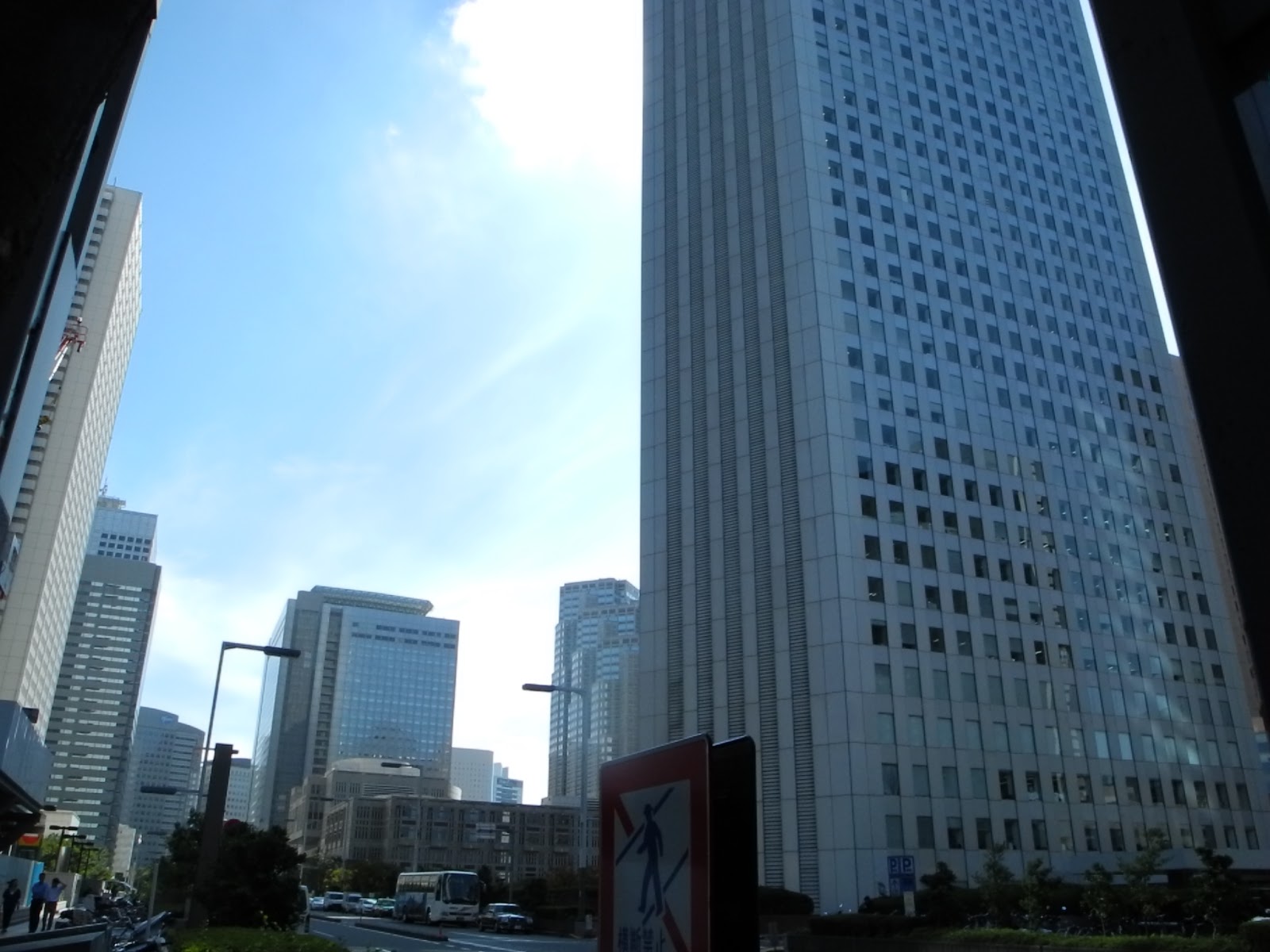
As for the TV show, it featured Agnes Chan(アグネス・チャン)in one of the supporting roles as well as Maki herself as a police officer. The other reason that I wanted to feature "Akatsuki ni Kakeru" tonight was that I thought the cover for the single had a really nice shot of the tall skyscrapers of West Shinjuku. Bright lights, big city indeed!


West Shinjuku

Wednesday, March 25, 2015

Ichiro Mizuki -- Bokura no Barom-1 (ぼくらのバロム・1)


Actually, I don't remember the theme song at all for the early 70s tokusatsu show, "Barom-1". However, it is the first tokusatsu show that I had ever seen during my very first visit to Japan in 1972. And for an impressionable 6-year-old boy like me, watching anything tokusatsu along the lines of "Ultraman" or "Kamen Rider" was like giving catnip to a cat. It was definitely one of my still-strong memories of my time in my grandfather's farm in Wakayama Prefecture.

(from about 4:10)

I had no idea that "Chojin Barom-1"超人バロム・1...Superman Barom-1)originated from a 1970 manga series. It was always about the show. There was the one frail-looking boy and the fat kid who were granted the power to henshin into the powerful superhero, and Barom-1 had this disc which looked like a modern-day computer mouse that could transform into a kickass vehicle that looked like a mix between a road racer and a hydrofoil (apologies for the overuse of relative pronouns here). Of course, Barom-1 could pretty much kick the bad guys into next month as all of these heroes could. Unfortunately, it's been lost somewhere but I used to have a kids' book which was the comic version of an adventure from the TV show.

As for the theme itself, it was performed by anison and tokusatsu veteran Ichiro Mizuki(水木一郎with assistance from the Columbia Yurikago Kai(コロムビアゆりかご会). Written by Saburo Yatsude(八手三郎)and composed by Shunsuke Kikuchi(菊池俊輔), "Bokura no Barom 1"(ぼくらのバロム・1...Our Barom-1) is that fine example of a tokusatsu hero march with that urgent beat exhorting the hero to get the job done. It also has some of the more interesting examples of onomatopoeia that I ever came across in any song.


The one other interesting thing about "Chojin Barom-1" is that I think the show probably sent a lot of kids into fetal-position terror. There was one episode in which the prologue had the gruesome monster of the week show up in some alley somewhere when a drunken nearsighted salaryman just happened to bump into it. For several seconds, the drunken guy tried to apologize to the monster as he fumbled about for his glasses and when he finally put them on, he recognized his one-sided conversation for what it was and screamed. The monster swallowed him whole and then spat out his clothes...rather cleanly, I have to say.

Tuesday, March 17, 2015

Shunsuke Kikuchi -- Theme from G-MEN★75


This morning, one of the movie channels was doing another James Bond marathon so the movie that I managed to catch was "You Only Live Twice", the 1967 entry in the franchise which had 007 encountering the usual supervillains, women and intrigue in Japan. Sean Connery got to meet a pretty laidback chief of the Japanese Secret Service, Tiger Tanaka, played by the late Tetsuro Tanba(丹波哲郎). Indeed it was Tanba but his voice was dubbed by actor Robert Rietti, according to Wikipedia.


Tanba passed away in 2006 at the age of 84. But I saw him fairly often on Japanese TV in previous years as one of the older tarento on variety shows. As the elder statesman, he wasn't quite running around or snarking off at the speed of his fellow younger guests but, if memory serves me correctly, he had that reputation of being that slightly naughty old man with the eye for the ladies.

Also when I hear the name of Tetsuro Tanba, some form of heroic music starts flowing into the brain. Specifically speaking, I'm thinking of the theme song for the 1970s Toei series "G-MEN★75" (1975-1982). Along with "Taiyo ni Hoero!"(太陽にほえろ!)and "Seibu Keisatsu"(西部警察...Police: Western Division), "G-MEN★75" was another Japan-based police procedural  from my memories. There was the usual team of intrepid and sober-sided crime-busting professionals, although the head of this special investigative unit, Superintendant Kuroki (Tanba), had quite the flair for fashion.


Continuing on with the comparison between police shows, whereas the iconic theme of "Taiyo ni Hoero!" had that urban funk groove going on with the sax in the lead, the theme song by composer Shunsuke Kikuchi(菊池俊輔)for "G-MEN★75" seemed to have a connection with the songs for the usual samurai historical drama. After the fanfare of the horns at the beginning, the strings come in a way which says to me that this is "investigative" music as Kuroki and his squad get down to work. The main melody could also describe any lone wolf warrior from the Edo Era, and a lot of those dramas' theme tunes took on that spaghetti western tone with those crisp trumpets slowly tooting the arrival of the hero in a yukata instead of the poncho and hat. But of course in the 1975 era of these G-Men, it's all suits and jeans and leather jackets. And they still look like warriors strolling down that runway.

As for Kikuchi, he's done pretty much everything when it comes to music for TV and movies, He's composed music and themes for jidaigeki, tokusatsu, anime and other dramatic works. In fact, he's the fellow who created the joyful theme for "Doraemon"(ドラえもん). Considering from what I read on him on the English Wikipedia, he must be the equivalent to John Williams judging from the quote to describe him: "...people began to say that 'if Kikuchi Shunsuke is in charge of the music, the show will be a hit.'" High praise indeed.

Wednesday, January 21, 2015

Kumiko Ohsugi -- Doraemon no Uta (ドラえもんのうた)


Ah, yes, Doraemon(ドラえもん)....took me several years to figure out that the famed manga/anime character was a robot cat from the future, but he and his buddies have been in my memories since I was an elementary school student. Born from the mind of the late manga artist, Fujiko F. Fujio(藤子・F・不二雄)in 1969, I remember reading my first manga of Doraemon as he helped his best friend, feckless student Nobita-kun out of his latest jam...I think what the earless cat robot pulled out of his TARDIS-like pocket that time was an instant hole which allegedly could allow the two to escape any bad situation (or Nobita's mom). Of course, the conclusion proved to be far less happier (funnier for the reader) when Doraemon and Nobita ended up crawling out of a stinky can of garbage after Mom innocently threw away the hole.


I didn't get to see my first episode of the anime adaptation until my graduation trip in 1981, though. I was spending the last two weeks of my trip with my relatives in Osaka and Wakayama Prefecture. And one of the things I remember during that leg of my vacation was staying with my uncle and aunt in the tiny apartment over their old stationery shop in Namba City. Incidentally, I caught Princess Di's and Prince Charles' epic wedding live on my relatives' TV, but with my cousins who were themselves elementary schoolers at the time I dropped on by (I was almost 16), we saw that episode of "Doraemon".

Of course, there was the cheerful and magical opening theme song that has become instantly recognizable to basically anyone in Japan (and beyond). Any adult would also probably revert to childhood again on hearing "Doraemon no Uta" (Doraemon's Song) as originally sung by anison legend Kumiko Ohsugi(大杉久美子). It has that light marching beat that would most likely have the littlest of children start proudly strutting on the tatami whenever the show came on. I also got in on the act by actually singing the last couple of lines in Ohsugi's voice which caused no end of mirth for my cousins.

The song made its debut when TV Asahi's "Doraemon" debuted in April 1979. It was composed by Shunsuke Kikuchi(菊池俊輔)and written by Takumi Kusube(楠部工). Kusube, who was only in his mid-teens at the time, has stated that the lyrics were a family effort; his father was Daikichiro Kusube(楠部大吉郎), the president of Shin-Ei Animation(シンエイ動画), the company that produced the show. Whoever was ultimately responsible for the words, there were shoutouts to the various wonderful things that came out of Doraemon's pocket such as the take-coputa(タケコプター...Bamboo Copter)and the dokedemo doa(どこでもドア...Everywhere Door). And Doraemon himself (as played by Nobuyo Ohyama/大山のぶ代) would make a cameo in the song as well.

The song was a huge success as it became the No. 1 song of the year on the Oricon Anime/Children's Songs chart. Of course, it's been covered by a number of artists since its 1979 debut, one of them being Misato Watanabe(渡辺美里)in 2003.


In getting the information for this article, though, I found out that the 1979 anime hadn't been the first try at adapting the manga for the telly. In fact, "Doraemon" had its very first start on the visual medium via NTV's version in 1973 which lasted only a year. And the theme song, "Doraemon" was far different from "Doraemon no Uta" in terms of the melody. As sung by Harumi Naito(内藤はるみ), it sounded like a kayo of a drunken spree on an izakaya-filled street...not that I'm lambasting the song. It was just a very different animal. Doraemon's creator, Fujiko himself came up with the lyrics while Nobuyoshi Koshibe(越部信義)composed the music.


The above video features the opening of the original NTV version of the show.

Saturday, November 23, 2013

Ado Mizumori -- Wai Wai World (ワイワイワールド)


One of the first television programs I caught in my first few hours after arriving with my fellow classmates at the Tokyo Prince Hotel in that torrid July of 1981 was at a nearby eatery. It was just the two other guys and myself and I believe we ended up ordering either gyudon or tendon...whatever it was, there was a goodly amount of rice at the bottom. In any case, up on the tiny telly in the upper corner ledge of the restaurant, Akira Toriyama's(鳥山明) pre-"Dragonball" magnum opus was playing on Fuji-TV, the happily anarchical "Dr. Slump" (1981-1986), starring the cute-if-destructive android, Arale-chan, and the somewhat perverted-if-goodhearted inventor, Senbe Norimaki.

I didn't pay too much attention to the program at the time since I was rather famished and I was enjoying my bottle of coffee milk (perfect for terribly hot-and-humid weather....one of the things I truly miss about Japan now that I'm no longer there), but several days later, as we were with our homestay hosts, the college students from Tezukayama in Nara, my own host, Akiko, recommended that I try the manga of "Dr. Slump" since it was so funny and popular at the time. So I ended up getting a couple of issues and sure enough, I did enjoy them. Actually, I enjoyed the original manga more than the anime itself since the drawings seemed even more hilarious in print. I also looked forward to seeing those guest appearances by Clint Eastwood and Leonard Nimoy from time to time.


Then, a year later, when my brother did his graduation trip from the Toronto Japanese Language School to the country, he brought back a couple of handheld video games. One was the classic Nintendo clamshell Donkey Kong, and the other was a Dr. Slump game with built-in wake-up alarm which consisted of a cute little tune. That tune was actually the theme song for "Dr. Slump" the anime, "Wai Wai World" (Yeah Yeah World). Sung by actress/singer/artist Ado Mizumori(水森亜土), the theme had those synth boops and beeps that seemed to be in vogue for a number of anison at the time, and reflected that certain genkiness that the main character had....often to the detriment of friend and foe alike. It was composed by Shunsuke Kikuchi(菊池俊輔) and written by Asuna Kawagishi(河岸亜砂)....I hope I got the readings right on those kanji.


My interest in "Dr. Slump" carried on over the next several years. The very first video tape that we put into the ol' Panasonic VHS in 1983 was a couple of "Dr. Slump" episodes, and then during my 2 years in Gunma, I was able to track down the entire manga series and bring the whole kit-and-caboodle home. Unfortunately, after returning from my latest tour of duty in Japan, my series seems to have disappeared somewhere among the boxes of no-longer-essential stuff in my home.