I've been a fan of Japanese popular music for 40 years, and have managed to collect a lot of material during that time. So I decided I wanted to talk about Showa Era music with like-minded fans. My particular era is the 70s and 80s (thus the "kayo kyoku"). The plus part includes a number of songs and artists from the last 30 years and also the early kayo. So, let's talk about New Music, aidoru, City Pop and enka.
Credits
I would like to give credit where credit is due. Videos are from YouTube and other sources such as NicoNico while Oricon rankings and other information are translated from the Japanese Wikipedia unless noted.
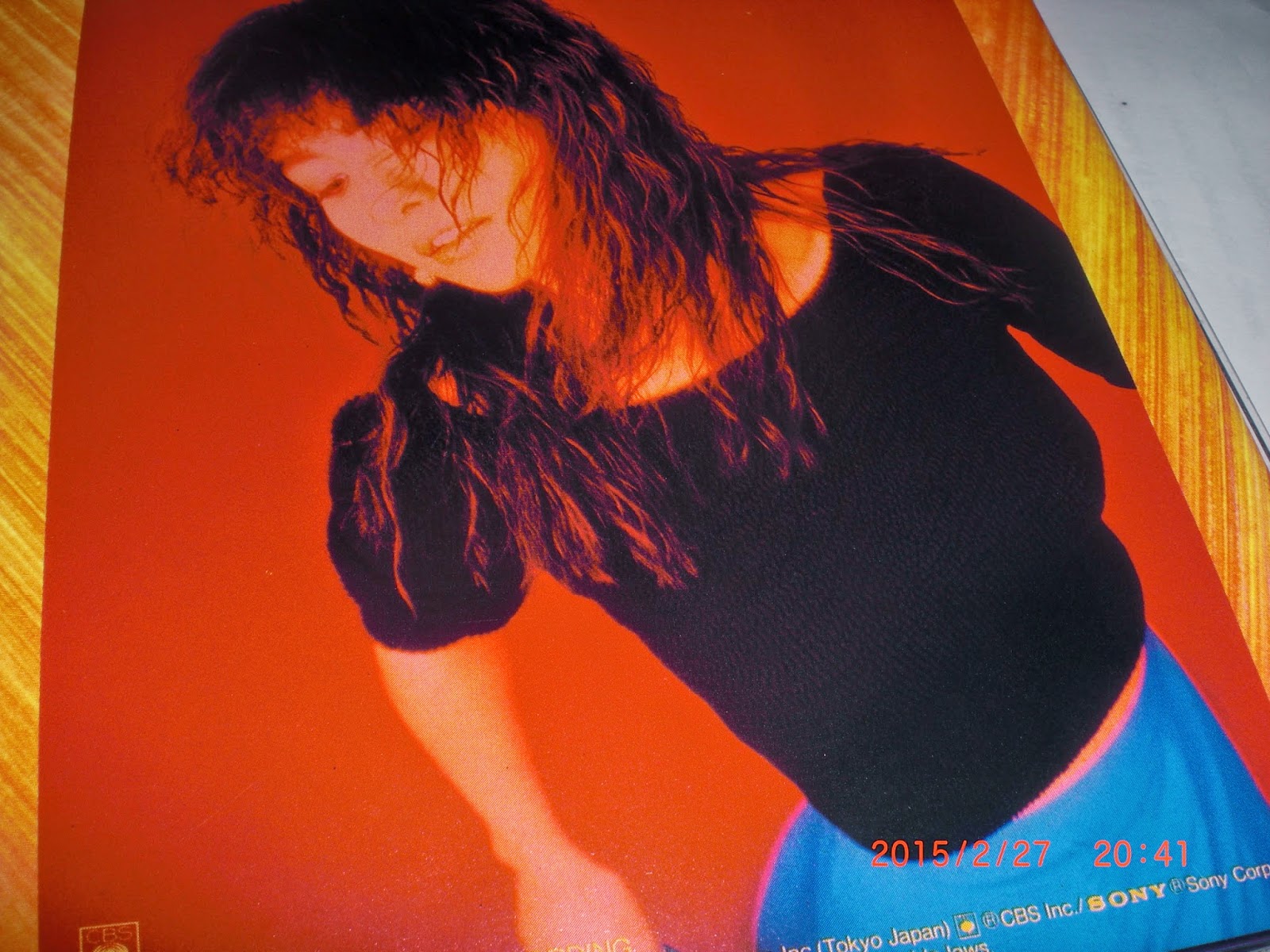
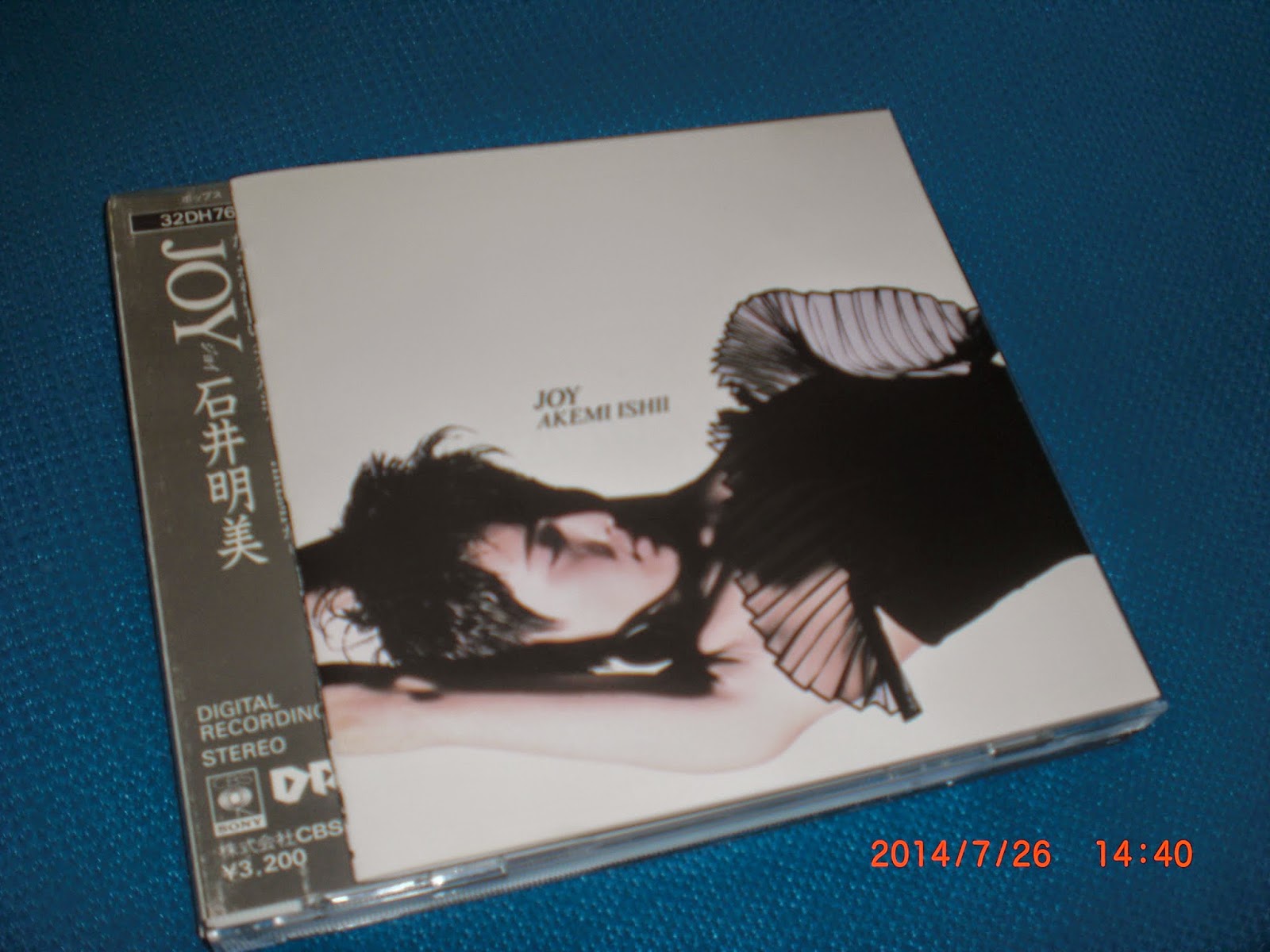
For the first number of times that I saw Akemi Ishii(石井明美)on television and heard her on the cassette player, she seemed to be that young singer who loved some of that spicy Latin sauce in her music through songs like "Cha-Cha-Cha". Then a few singles in, I heard her "JOY" from July 1987 and figured that she could do the straight-up pop song as well.
Well, now I've just heard the B-side from "JOY" and now it's been affirmed that Ishii was able to come up with the odd City Pop song. "Yasashii Hito"(Nice Guy) was written by Takashi Matsumoto(松本隆)and composed by Kyohei Tsutsumi(筒美京平), quite the golden duo of songwriting, and it's a smoky nocturnal number which includes a bluesy sax solo. I gather that the title is meant to be an ironic one since Ishii keeps singing "You are cruel!" at the end of each chorus. Betrayal in the big city can be a City Pop trope.
It was often the case that if I were doing an obituary article, it would be for someone in the Japanese music industry. I would wake up in the morning and catch NHK's "News at Nine" which broadcasts live some fourteen hours ahead of us here in Toronto when we're on Eastern Standard Time and then find out if a singer or other person within the industry had passed away.
via Twitter
This morning though, it was a little different. Via the CP24 news scroll, I found out much to my shock that actor-director Rob Reiner and his wife Michele Singer Reiner had been found murdered in their home. Reiner was someone that I'd known since I was an elementary school student. The first time I was aware of him was when he had his memorable if brief guest part in an "Odd Couple"episode in the early 1970s when he was performing with the late Penny Marshall who'd had a recurring role on the show as Myrna Turner and who'd been married to Reiner at the time. Unfortunately, I couldn't find any clip of that scene on YouTube or elsewhere but I was able to find a photo that you can see above. Reiner is the man in the white dress shirt, third from the right standing next to Marshall who would become an A-lister director herself.
Reiner would gain further fame that decade as Mike Stivic, the hippie son-in-law of the irascible and conservative Archie Bunker played by Carroll O'Connor in the landmark CBS sitcom "All in the Family". Not surprisingly, sparks flew fast and furious between them.
I didn't watch a lot of "All in the Family" but I did remember catching one episode "Mike the Pacifist" in which Mike had to do something drastic while he and his wife were traveling on the scary New York subway.
Reiner would follow more heavily on the directing track rather than acting which he did on both TV and movies. His directing career was all for the big screen, and like Japanese songwriters Yu Aku(阿久悠)and Kyohei Tsutsumi(筒美京平), I often went "He did that?!" when I scrolled down Reiner's filmography as a director. He helmed "This is Spinal Tap", "When Harry Met Sally" and "The Princess Bride" among other flicks. I caught "A Few Good Men" and also "Stand By Me", the August 1986 coming-of-age movie mostly based in 1959 with some rough around the edges. There were stars in the making in that one including Wil Wheaton who would take on the role of Wesley Crusher in "Star Trek: The Next Generation" the following year and then Kiefer Sutherland who would become the Jack Bauer of "24" fame.
I remember when the movie came out, the old 1961 Ben E. King classic of the same name was unearthed as the main theme song to much acclaim. During the movie's run, "Stand By Me" got a lot of airplay on the radio and then as a music video starring King alongside at least some of the actors starring in the movie. When King's song was released in 1961, it hit No. 4 on US Billboard and even with its revival a quarter-century later, it returned to the Top 10 there at No. 9. In Canada, it did even better by hitting the top spot. Personally, I also remember "Stand By Me" as a favourite karaoke song in both Toronto and in Japan...not sung by me, of course. It deserved a better fate than that.
My condolences go out to almost all of Reiner's family, friends and many fans.
So for this special ROY, what was being released as music singles in Japan in the same month as "Stand By Me"?
Over the years, I've come to believe that there has been a long love affair between France and Japan, culturally and diplomatically speaking. The French seem to have enjoyed manga, anime and cosplay for decades; some of the first anime I saw back in Canada were in French thanks to CBLFT-25. Meanwhile, the Japanese have often gone ga-ga for all of that haute couture and cuisine. I think even the late French president Francois Mitterand once had a dog named Sumo.
Well, the idea was only percolating in my mind over the last several hours but I was thinking for my next Author's Picks, I would bring over some of that kayo kyoku with French titles. But these songs aren't covers of French originals...just tunes whose singers and songwriters thought that a title in French would be c'est si bon. And so, without further ado:
(1981) Circus -- Petit Dejeuner ~ Nichiyoubi no Choushoku(日曜日の朝食)
Welcome to the continued dog days of summer, and yep, it's still plenty torrid here even in Toronto. I can't even imagine what it's like now in Japan although I hear that the southern regions have been getting pounded by torrential rains.
Akemi Ishii(石井明美)is someone that I haven't heard from in a while so allow me to rectify that. In addition, she has her own big kanreki birthday (as do a few of us this year) coming up in a few weeks, so we should wish her a happy one.
"Celebration" is a non-single track from her 2nd album"Joy"(August 1987) that I have heard before but just haven't covered as of yet. Not sure whether composer/arranger Kyohei Tsutsumi(筒美京平)and lyricist Ikki Matsumoto(松本 一起)were aiming for Eurobeat or some mix between it or pop, but there is something in there that reminds me of Cutting Crew's big hit "(I Died) In Your Arms Tonight" from 1986. Matsumoto's lyrics are filled with paradoxes with the basic one being whether someone's happy with that other person or without. Quite the celebration.
When it comes to the oeuvre of singer Akemi Ishii(石井明美), I've always pictured her as being someone resolutely linked with the mid to late 1980s. For that matter, her music usually had me thinking Eurobeat or something with some Latin pizazz. "Cha-Cha-Cha" and "L'Amant"(ラマン)come to mind.
"Celebration" is a song that I first heard on a BEST compilation by Ishii so I had initially not known about where it originally came from. It is a coupling song from her 11th single from October 1993, "Anatarashiku Ite"(あなたらしくいて...Stay As You Are) so that is one personal trope broken about her. The other trope broken is that I'd often associate her works with cover versions of Eurobeat songs and "Celebration" sounds as if this would be another one although the arrangement doesn't show off the Eurobeat all that strongly.
However, "Celebration" is a homegrown product with Kyohei Tsutsumi(筒美京平)and Kazuo Otani(大谷和夫)handling the melody and arrangement respectively while Ikki Matsumoto(松本一起)is the lyricist. But, as one commenter on YouTube has pointed out, "Celebration" does have some similarity with Cutting Crew's big 1986 hit "(I Just) Died in Your Arms".
I guess Kayo Grace and Mr. Calico both have the same idea. It's summer, the patios are open as well as the dance floors, and right now in Toronto, there is the annual Salsa Festival for this weekend. Plus, if I'm not mistaken, the annual Samba Festival will be taking place in Asakusa, Tokyo later this season. Frankly, I was thinking about putting up some previously posted songs which can potentially have listeners doing a bit of the salsa, cha-cha, samba and other dances from around the Equator (well, the salsa is actually from New York) and southwards. Enjoy!
It's been a little over four years since I posted my last Akemi Ishii(石井明美)article and that was for her "You Make Me Happy" song from her debut album"Mona Lisa"(モナリザ)from November 1986.
"You Make Me Happy" was something that I noted as a City Pop contribution to "Mona Lisa", and listening to it again after a while, yep, it's very much of the Japanese urban contemporary stripe. However, its track mate on "Mona Lisa", "Ai wa Arashi" (Love is a Storm) is quite different in that it sounds more like a European synthpop tune. The late Rei Nakanishi(なかにし礼)provided the lyrics but then I saw the composer whose name was Romano Musumarra, an Italian composer and arranger.
And sure enough, with a bit of digging, I realized that "Ai wa Arashi" is indeed a cover of a synthpop tune originally recorded and released by Princess Stéphanie of Monaco in March 1986 titled "Ouragan", French for "windstorm". According to its Wikipedia page, the official English title though was "Irresistible". It was a big hit in France as it went all the way up to No. 1 and it didn't too badly in Spain and West Germany either since it reached No. 2. There isn't all that much different between the original and Japanese versions aside from a breathier delivery by Ishii.
I knew that I had mentioned the great 80s soul crooner Lionel Richie in a past article on KKP years ago but not given him that Reminiscings of Youth attention for that particular song (at least, not yet anyways), but it was still a surprise to realize that after a few years of regular ROY articles as this is, Richie still hadn't made his debut here. Well, that ends right here and now.
Of course, for all those Richie fans, there is "All Night Long", "Running with the Night" and "Dancing on the Ceiling" as those huge hits for the singer from Alabama. However for me, there was one single that came out in September 1986 that perhaps didn't become a classic like the ones above, but it still hits me as one of my favourites. I first heard "Love Will Conquer All" on the radio ranking shows on the Toronto stations as a university student and it has stuck with me ever since. It's got the Quiet Storm vibe along with the feeling that this is a content soulful stroll as illustrated by Richie and his co-vocalist Marva King.
Created by Greg Phillinganes, Cynthia Weil, and Richie, "Love Will Conquer All" just has those amazing keyboards and whenever I hear those "Ooooohs" in the intro by the singer and King, I know that I'm going to be in a world of aural good. I always waited in anticipation for those "Ooooohs" on the ranking shows and then once I really started to appreciate this song, I always wanted to hear the longer version at 6 to 7 minutes. Several years would pass until I realized that there was a music video for "Love Will Conquer All" in which Richie drove hundreds of miles up California to make amends with his girlfriend. It certainly looked like love conquered all although maybe distance may have also conquered the car tires.
All joking aside, it still remains one of my favourite R&B tunes from the 1980s. Plus, "Love Will Conquer All" didn't do too shabbily on the rankings either since it hit No. 9 on the Billboard Hot 100 in the States while it reached No. 19 here in Canada. The song was also a track on "Dancing on the Ceiling" the album. And so what was also doing well on the Oricon charts when this song was released? I have Nos. 1, 3 and 5.
Can't help you there, guy. 😕 I don't think that I was ever cool enough to know a Wang Chung (although it's supposed to mean "yellow bell"). Still, the theme song was fun.
During the annual major cleaning of the home before the end of 2021, we managed to unearth a big stack of dance remixes in a cardboard box, and lo and behold, one of those LPs happened to be British New Wave band Wang Chung's"Everybody Have Fun Tonight". Man, was that a party anthem for the 1980s! I first heard it on radio and heard it over and over again, thanks to those supremely catchy synth-horns and the repeated mantra of "Everybody have fun tonight, everybody Wang Chung tonight!". I mean, I knew about Jack Hues and Nick Feldman beforehand because of their "Dancehall Days" which was also a long stayer on the music video shows, but it was "Everybody Have Fun Tonight" that really got Wang Chung on the map.
Released as a single in September 1986, I used to listen to CHUM-AM's weekly singles countdown on Thursday nights, and I remember hoping that "Everybody Have Fun Tonight" would eventually hit the top spot, which it did, and it even reached No. 1 on Canada's RPM chart while it got to No. 2 on US Billboard's singles chart. But what also added to the song's fame was the music video which has probably ended up as one of the trippiest creations ever made with that jitter effect. Loved the video with all of the musicians cavorting about but I didn't dare watch it in a dark room.
Such was the popular party hearty nature of the song and those lyrics that it's become a long-standing pop culture gag on various shows and movies.
Just judging from some of the relatively few live performances that I've seen and their straight-faced expressions in the music video for "Everybody Have Fun Tonight", I'd long had an impression of Hues and Feldman being rather serious and unapproachable. Well, seeing this interview from a few years ago, I'm glad to see that they are actually quite nice and regular fellows.
And it was around 2019, some 33 years after "Everybody Have Fun Tonight" was first released that Wang Chung decided to have fun with the Prague Philharmonic Orchestra and make a new recording of the song...complete with jittery video again. I can only hope that someday that everybody will have fun every night again.
So, what were at No. 1, No. 3 and No. 5 on Oricon in September 1986?
In this Reminiscings of Youth article, I will let you know what the "power" songs were with my university friends and I when we hit the discos back in the 80s. I may have already mentioned at least some of them in past articles but here goes: Ministry's"Every Day is Halloween", Paul Lekakis' "Boom Boom" (although not my personal favourite), and Depeche Mode's"Strangelove".
Then, there were the works of British band New Order. I swear that all of their songs were worthy of wearing out our shoes on the dance floor, no matter how late the hour, but the one single that had us rushing from our drinks, conversation and tables was the Extended Mix of"Bizarre Love Triangle". As was the case with Pet Shop Boys and the aforementioned Depeche Mode, New Order had its own distinctive sound when it came to the synthesizers, bass and percussion, plus of course, Bernard Sumner's cooing vocals. No matter where we went to dance, whether it be the Copa, the Diamond or Sparkles in the CN Tower, the DJ would always play the Extended Mix...had to keep the joy going for as long as possible.
"Bizarre Love Triangle" was released in early November 1986. I remember that our disco-ing days began soon after I joined the inaugural form of the Japan-Canada Students' Association when it started up in that same month, so the timing was excellent. From what I've read of the song on Wikipedia, I gather that my fellow club members and I weren't alone in our love of the song. Although it didn't exactly set the general charts in the US or the UK on fire, it did well on the dance and indies charts and has been included in Rolling Stone's"The 500 Greatest Songs of All Time" at No. 204 as of 2004.
I can no longer see myself getting anywhere close to a dance floor nowadays except in the possible position of a chaperone which is just as well. If I hear "Bizarre Love Triangle" again in that situation, my legs may just propel me back onto the floor. That would probably launch this reaction from the younger folk:
Anyhow, since the release date of "Bizarre Love Triangle" was November 5th 1986, what were the Top 3 songs on Oricon's October 1986list?
Happy Monday! I've got another delayed shipment of CDs and there's supposed to be one more coming in tomorrow. Therefore the stereo will be fairly busy for the next several days; I know that my mailman has.
But none of them include Akemi Ishii's(石井明美)"Mona Lisa", her debut album from November 1986, which is a pity since it has her most famous "Cha-Cha-Cha" and this particular track, "You Make Me Happy", which indeed does make me happy since it is the first time I've heard it.
There is of course the City Pop aspect but if I can go into the nitty-gritty, there is that harmonious background chorus with Ishii that I enjoy as well. I've heard it in Junko Yagami's(八神純子)"Jealousy"(1983) and Junko Ohashi's(大橋純子)"Nemurenai Diamond"(眠れないダイヤモンド)from 1988, and the early 80s release of Yagami's song aside, the way that certain chorus sounds always has me reminisce about the classy champagne sounds of late 80s City Pop.
My compliments go to lyricist Yoko Aki(阿木燿子)and composer Kyohei Tsutsumi(筒美京平)for this melodic and dreamy night out on the town.
Welcome back to the blog, Akemi Ishii(石井明美)! It's been a while.
I found this song which shared vinyl space with Ishii's Latin jazzy"Hibiki wa tutu"(響きはtutu)and the mid-tempo title track from her 2nd album"Joy" from August 1987. "Haru no Madoromi"(Spring Slumber) was created by the wonder team of lyricist Takashi Matsumoto(松本隆)and composer Kyohei Tsutsumi(筒美京平)as this sultry song of dreaming of that Mr. Right.
To be honest, I was a bit stuck in terms of how to categorize this one since it had that hip-swiveling arrangement, but it wasn't really Latin and the instrumentation hinted at City Pop but somehow, I didn't think it quite fit in that genre, either. So, I've just put it in as a pretty cool evening pop number. I'm starting to realize that "Joy" the album has got some good variety.
If it's a spicy Latin number in Japan in the 1980s, then it's most likely Akemi Ishii(石井明美). The summer is slowly but steadily ebbing for another year, so it's time to get another hot song up before it gets too far into September. I found out about "SHAKE UP - Dakishimete"(Hold Me) when I bought Ishii's 3rd album, "Fanatique" some years after its release in November 1988 which came out after the song had come out as her 6th single a few months earlier in August.
Written by Ishii and composed by Masayoshi Takanaka and Masahiro Takatsuki(高中正義・高槻真裕), I prefer the short and sweet and spicy original version rather than the extended remix which came out on "Fanatique". As was the case with a lot of remixes of songs on both sides of the Pacific during that decade, there was a lot of jittery repetition of certain words or phrases, and with the longer remix of "SHAKE UP", there was only so much of Ishii's repeated "hip" (sounds like hiiiiip, hiiiiip, hiiiiip) I could take. But whether they were real horns or some good synths, I did like the brass section blasting away during the bridge.
For all of the snazzy and dynamic Latin-flavoured tunes that Akemi Ishii(石井明美)introduced during the late 80s, it was a bit odd to hear her 10th single, "Sha-La-La". Not that I have anything to complain about the song. It's a pleasant tune that was written by Ishii herself and composed by prolific Kyohei Tsutsumi (筒美京平)about a woman totally in love with her beau, but for the stuff that I have heard from her, it's a bit subdued. Even her voice sounds a bit less energized as if the song was meant to be a cool-down from the previous singles. By the way, it was released in November 1990.
Mind you, "Sha-La-La" wasn't the first case of a relatively quieter Ishii song. A few years earlier, she had released "Joy"which was also very straight-on pop. Actually the song that I was interested in featuring was the coupling tune to "Sha-La-La", "Door wo Akete"(ドアを開けて...Open the Door), a ballad that has a similar lyrical theme to the A-side but has a European Latin/enkavibe that made it sound like something that the late Teresa Teng(テレサ・テン)would have tackled in her sleep. Unfortunately, there is no sign of it anywhere on the Net, so I will just have to bide my time.
I think that saxophone intro alone had me needing a cold shower. So it figures that this Akemi Ishii(石井明美)song is titled "Nettaiya"(Sultry Night). It comes from her 1990 album of the same name that also included her version of "Lambada"...the one dance that grabbed a lot of attention in Japan for at least half of my time in the mountains of Gunma.
Along with "Lambada", the title track from "Nettaiya" is one of the songs that stood out in the album. There is this sense that the music by Hideya Nakazaki(中崎英也)was a fond echo from another steamy ballad back in the 1960s, "The Look of Love" sung by Dusty Springfield (created by Burt Bacharach and Hal David) and used in the first wacky "Casino Royale"; some have said that the song was probably the only good thing about the movie. Kaoru Asagi(麻木かおる)provided the lyrics concerning that torrid romance in the tropics somewhere. That famous image of a woman taking an ice cube and trailing it down her slim neck comes to mind as Ishii is singing away.
Ladies and gentlemen, the incomparable Dusty Springfield!
Years before the Macarena enraptured the planet for a short while, I was witness to another dance phenomenon that had swept Earth (including Japan) for a good year...or at least, the song that the folks danced to did.
I am talking about the Lambada....at the time, I had no idea where it descended from exactly, only that it took hold within Japanese pop culture via variety shows and music programs. There was no way to escape it from 1989 to 1990. As much as the songs of Wink and Princess Princess filled the air, the Lambada also managed to carve its aural niche.
Akemi Ishii(石井明美)was the one singer who decided to do a cover version of "Lambada" as her 8th single released in March 1990. As someone who also fell under the thrall of the Latin rhythm, I not only ended up getting her cover via her 4th album, "Nettaiya"(熱帯夜...Sultry Night)which came out later in July, but I also got the original version by French-Brazilian pop unit, Kaoma, via CD single (released in 1989). And I'm still glad that I got that single, too, since whenever I do pop it into the player, I get all those feels from my JET days once again.
The crazy thing, though, is that Kaoma really wasn't responsible for the original version. And "Lambada" wasn't really the original title.
"Llorando se fue" was the birth title (in Japan, it is known as "Nakinagara"...泣きながら/While Crying), and it was released all the way back in 1981 by the Bolivian folk band, Los Kjarkas. Translated as "Crying, He/She Went Away", the true original was quite a bit more laid back in delivery unlike its peppy incarnation as "Lambada". Los Kjarkas got rather peppy as well since Kaoma apparently did an unauthorized interpretation of the song which resulted in the worldwide phenomenon. One lawsuit later, the latter started paying the licensing fees to the former, and presumably, Los Kjarkas was dancing its own way to the bank.
"Llorando se fue" was written and composed by Ulises Hermosa and Gonzalo Hermosa. As for the Ishii cover, Kaoru Asagi(麻木かおる)took care of the Japanese lyrics.
I never dared to dance to the Lambada, and especially now I would most likely break my hip instead of shaking it.
I discovered this video hanging about on YouTube not too long ago. Thought it sounded pretty familiar so I dug up Akemi Ishii's (石井明美)2nd album, "JOY" from the shelves and (re-discovered that it was). "C'est La Rose" was the opening track for the 1987 album.
I hadn't heard this one in ages, and it was nice listening to it again (and the whole album) with fresh ears. When I got "JOY" in the early 90s, I had been going through a lot of the Oricon-friendly songs via various sources for several years so the sound of that time eventually became an aural blur to me. However, in the decades hence, I've heard the different changes in Japanese pop music so to come back to the older stuff once more was quite nice. Aside from her huge debut Eurobeat hit of "Cha-Cha-Cha" in 1986, I think Ishii was becoming known for her songs' zesty arrangements with a flash more urban contemporary via Latin or jazz than the average aidoru tune at the time. "C'est La Rose", by Reiko Yukawa and Kyohei Tsutsumi(湯川れい子・筒美京平), has got quite the nighttime zip and Ishii provides some vocal oomph into the proceedings.
There are quite a few songs from "JOY" that I've already featured in the blog: "Hibiki wa tu tu", "L'Amant" and the title track itself. So, basically I've spread out an article on the album itself, and I think there are one or two more songs from it that I can feature in the future.
I've got a few albums by Akemi Ishii(石井明美), one of them being her BEST release, but I have yet to get my copy of her debut album from November 1986, "Mona Lisa". Of course, from that one I know her smash hit debut single, "CHA-CHA-CHA" but that was about it.
Then, just by accident a couple of nights ago, I discovered this track from "Mona Lisa" titled "Je t'aime - Kanashimi no Mieru Mado"(The Window That Can See Sadness). Fairly depressing title but the song itself is pretty nice...has that nighttime urban contemporary feeling to it. "Je t'aime" was written by Hiromi Mori(森浩美)and composed by Akihiro Yoshimi(吉実明宏).
The Japanese, generally seem to have a love for all things Gallic, and in the case of at least one former French president, the love was very much reciprocated. In terms of all things music, the expression "Je t'aime" has made for a popular title or lyric in a number of songs including Ishii's entry here. I recollect one aidoru song using it as a refrain and there was a Ruiko Kurahashi (倉橋ルイ子)song with that title, as well. Perhaps the other big French word in kayo kyoku/J-Pop usage would be "amour".
Recently with all of these movie-and-TV reboots that have been happening in Hollywood("Star Trek", "Ironside" etc), the theme songs have also been getting facelifts....which reminded me of some of the go-to songs that Japanese variety shows have used to introduce certain segments. For example, whenever there is a segment (or corner, as the Japanese put it) that involves New York City, a Big Band jazz song frames it. If there is some sort of mind-stumping quiz question and the situation needs "thinking time" music, they often use the aforementioned "Ironside" theme (just wonder if Quincy Jones gets any copyright money considering how much the Japanese networks use it).
(karaoke version)
And then, whenever a magician comes out to dazzle the crowds, what is the music the networks use? It's this one. So, going back to those facelifts, back in 1989, Akemi Ishii(石井明美), who likes a bit of Latin in her music, decided to cover the famed "Olive no Kubikazari" (An Olive Necklace) as her 7th single in November 1989. With Japanese lyrics by Rei Nakanishi(なかにし礼),the "Japanese Magicians' Theme" gets that level up through the spicy arrangements to the extent that one almost forgets that little bunnies and birds often popped out of thin air to the song. In fact, when I first heard it on Ishii's 4th album from 1990, "Nettaiya -- Brazilian Night"(熱帯夜...Sultry Night), images of Princess Tenko suddenly appeared in my head.
The above video is for that magical theme itself. With the somewhat giggleworthy title of "El Bimbo",Paul Mauriat and his orchestra first released their version back in January 1975, after which it was used in a wine commercial featuring Mauriat (who was very popular in Japan) himself and then as a frequent go-to tune on the late-night variety show, "11 PM" on NTV, before it became the well-worn tune for magicians. Although I hadn't known about Mauriat's involvement in "El Bimbo", I did know him for one other song long ago in my toddlerhood, his 1967"Love Is Blue".
But the history of this song goes even further back. "El Bimbo" was actually created by the 70s French disco group, Bimbo Jet, via Claude Morgan and Laurent Rossi. It became a big international hit in 1974 and 1975, selling 3 million records worldwide. And for those fans of the "Police Academy" movie series, the song was used as part of a running gag in The Blue Oyster Bar scenes. Always brought a smile to my face.
This came from one of my purchased compilation tapes from Chinatown, but "L'Amant" from Akemi Ishii(石井明美)is actually a song that I like even better than the debut song by her that got her that overnight success in the summer of 1986. It's because of that somewhat adventurous tropical sound. Written by Takashi Matsumoto(松本隆)and composed by Kyohei Tsutsumi(筒美京平)as Ishii's 3rd single for release in February 1987, the melody behind "L'Amant" itself just proceeds to tell a seeming story of intrigue and romance down in Havana, despite the French title and the fact that the lyrics actually relate a story of former lovers meeting again in a Nishi-Azabu café-bar. I only wonder if Matsumoto and Tsutsumi were watching an old 40s movie when they got inspired to create this song.
"L'Amant" may have first come to my attention from that old tape, but it was also a track on Ishii's2nd album, "Joy", which came out in August 1987. It may not have been a hit for the singer, but any of my memories of Japanese pop music in the 80s will always include this tune.