I've been a fan of Japanese popular music for 40 years, and have managed to collect a lot of material during that time. So I decided I wanted to talk about Showa Era music with like-minded fans. My particular era is the 70s and 80s (thus the "kayo kyoku"). The plus part includes a number of songs and artists from the last 30 years and also the early kayo. So, let's talk about New Music, aidoru, City Pop and enka.
Credits
Thursday, March 3, 2022
Tunnels -- Ikki!(一気!)
Hitomi Ishikawa -- Kurumiwari Ningyo(くるみ割り人形)
Well, it's once again March 3rd which means it's time for Hina Matsuri(ひな祭り...Doll Festival) in Japan. A couple of years ago, I commemorated that observed holiday by writing about Mini-Moni's "Mini-Moni. Hina Matsuri!"(ミニモニ。ひなまつり!), so you can take a look there to find out a little more about it. I got my reminder on Sunday while we were watching "Chibi Maruko-chan"(ちびまる子ちゃん)and there was an episode on the holiday.
Obviously since I have "Mini-Moni. Hina Matsuri!" up there already, I had to search for another doll-themed kayo, and although it doesn't have any direct connection with Hina Matsuri, I did find something that's in my spirit of celebration. This would be Hitomi Ishikawa's(石川ひとみ)"Kurumiwari Ningyo" (Nutcracker Doll).
Her second single following "Migi Muke Migi"(右向け右), "Kurumiwari Ningyo" was released in September 1978, and thanks to Koji Makaino's(馬飼野康二)melody and Masaaki Omura's(大村雅朗)arrangement, the song has that late 1970s jaunty disco feeling that I've often associated with the aidoru music of that time. Not sure if I read them correctly, but Yoshiko Miura's(三浦徳子)lyrics seem to talk about a doll coming to life and exploring love and the world. Along with the beat, I was also won over by Ishikawa's spirited and clear-as-a-bell delivery here.
The song did somewhat OK on Oricon by peaking at No. 42. "Kurumiwari Ningyo" was also the title for Ishikawa's first album which came out in December 1978.
Wednesday, March 2, 2022
TWEEDEES -- Hanataba to Jiryoku(花束と磁力)
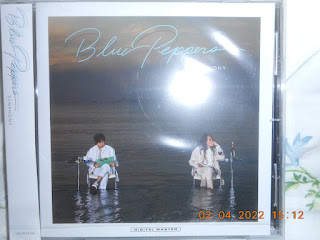
Finding about the band TWEEDEES because vocalist Natsumi Kiyoura(清浦夏実)helped out on one of the songs in Blue Peppers'(ブルー・ペパーズ)"Symphony", I decided to see what else I could find about this collaboration between Kiyoura and bassist Reiji Okii(沖井礼二).
According to their J-Wiki article, TWEEDEES formed in 2015 and the first meeting apparently had Okii doing a guest appearance on Kiyoura's radio program. Okii was also the one who had started up the band Cymbals with Asako Toki(土岐麻子)in the late 1990s, and since Kiyoura was a big fan of that group, one thing led to another and TWEEDEES was born.
Between 2015 and 2019, singles have been released through digital download and EPs with three full albums and two mini-albums coming out up to 2021. Through their third full album "Delicious", here is "Hanataba to Jiryoku" (Bouquets and Magnetism) which is one wild-and-crazy sprint through a municipality and life. TWEEDEE's music has been categorized on J-Wiki as pop and Shibuya-kei and with "Hanataba to Jiryoku", there is a feeling of Shibuya-kei through the frenetic percussion and the breezy vocals by Kiyoura (topped with Parisian berets) but then again I also hear some of that jazz coming out through a piano.
Words and music were provided by Okii. Being a pop culture fan, I couldn't help but get visions of the Tenth and the Eleventh Doctor from "Doctor Who" leading their comely young companions by the outstretched arm as they race breathlessly through time and space because of what I've understood of the lyrics. The Doctor will lie, charm and thrill with his own amalgam of bouquets and magnetism as he takes folks on his magical and oft-dangerous ride through the universe.
Blue Peppers -- Symphony (album)
Well, we Blue Peppers(ブルー・ペパーズ)fans had been waiting for this new album for the longest time since their last full album was "Retroactive" from 2017, but finally Naoki Fukuda(福田直木)and Kaoru Inoue(井上薫)released "Symphony" last December, and I was all game to acquire it which I did. I did get my appetizer from the album via "Acacia"(アカシア), one of the tracks and that was enough for me to part with my yen happily.
I will need a few more listens to "Symphony" to get a good gauge on it, but from what I've heard so far, the general consensus is that this album hews a little closer to the American AOR of the late 70s and early 80s when compared to the neo-urban contemporary of "Retroactive". Case in point is the first track "I'll Be There" by Fukuda and Inoue which seems to hearken back to some rock-tinged West Coast AOR of those 1980s thanks to some twangy guitar and some nostalgic keyboard work. I also get some Sing Like Talking vibes from the singing by Fukuda, too.
Tuesday, March 1, 2022
J-Canuck's Favourite Masayuki Suzuki Songs
| Why am I so cool? Tis the question of my life. |
Well, my family received a bit of a shock tonight. We were just comfortably watching "Uta Con"(うたコン) as usual on Tuesday night when after a performance by miwa at around the half-hour mark (average running time is 45 minutes), the ending credits suddenly flashed on and the hosts quickly gave their goodbyes to everyone. OK, what the devil happened there? I searched Twitter, NHK and even "The Japan Times" but there was no explanation to be found. Maybe there was some sudden need for NHK News to do a bulletin?
A bit miffed about what had transpired, I was still satisfied that Masayuki Suzuki(鈴木雅之)had appeared as the top batter to perform his 1992 classic "Mou Namida wa Iranai" (もう涙はいらない), and so being back at my desk a little prematurely (well, only by 15 minutes), I figured that I could do an Author's Pick on Martin since I'd realized that I never did one on The King of Love Songs. After all, I'm a big fan of his and I'm expecting that he will be doing another amazing theme song for the third season of the anime "Kaguya-sama wa Kokurasetai ~ Tensai-tachi no Ren'ai Zunousen"(かぐや様は告らせたい〜天才たちの恋愛頭脳戦〜).
It was fairly tough though to keep things pared down to where I ultimately had my half-dozen songs, but one criterion was that I kept out his duets just to make things easier for me. As usual, I'm not putting my Martin faves in any particular order.
Love Dramatic(ラブ・ドラマティック)and DADDY! DADDY! DO!
Might as well as get these two out of the way right now. I'm killing two birds with one stone by providing a reaction video for both of these songs, "Love Dramatic" (2019) and "DADDY! DADDY! DO!" (2020) that were the themes for Seasons 1 and 2 respectively of the aforementioned "Kaguya-sama". There are a few of these videos with different folks watching the opening credits as I realized that Martin was being presented to a whole new audience who had never heard of him before. And the reaction has been that of massive shimmying and dancing about in the chair. As I stated in the original article for "Love Dramatic", I never would have thought that Suzuki would sing anison but he provided the anime adaptation of the manga with another reason to love the franchise and its characters.
Mou Namida wa Iranai (もう涙はいらない)
I mentioned this one above in the first paragraph and I was thrilled to hear it. "Mou Namida wa Iranai" is one of my big favourites by Suzuki since that arrangement has made it its own big and cool drama in the megalopolis, and dang, that sax solo near the end is absolutely sublime. I know that it would never be used as a theme for Season 3 of "Kaguya-sama" since it had already been used as a theme song for a detective series, but I've always wondered if it can be used as an insert song in one of the more dramatic scenes in an episode of the anime. The song is simply one of the coolest 90s City Pop tunes.
Bayside Serenade (ベイサイド・セレナーデ)
"Bayside Serenade" from 1990 is that melodic tribute to the good life in the big city with all of that champagne, caviar and cars in a much higher tax bracket than I will ever inhabit, although the lyrics are about a fellow's troubles with his girlfriend. It's sophisticated but at the same time, it also sounds a bit hedonistic and maybe even cheerfully louche as if for the couple involved, all that luxury is humdrum and everyday.
If the cover for the originating album, "Radio Days" (1988), had pores, it would be oozing coolness and martinis just because of "Misty Mauve". All that slow funk and the horns coming in midway make this another thriller killer of a tune. The icing on the cake is that it was the City Pop power couple of Tatsuro Yamashita and Mariya Takeuchi(山下達郎・竹内まりや)behind music and lyrics respectively. If I'm feeling down or tired, I can put this one on.
Wakare no Machi (別れの街)
I'd known about Martin's old doo-wop band Chanels/Rats and Star but didn't know the name of the leader back then, so it was still very revelatory to hear "Wakare no Machi" (1989) on that Camellia Diamonds commercial. It was the first time for me to hear Suzuki sing solo when I was living in Japan on the JET Programme, although all of those wonderful songs such as "Misty Mauve" had already come into being. Living in the mountains of Gunma at the time, that song on that ad had me thinking about what it would have been like living in the megalopolis. I would find out less than half a decade later, but it wasn't quite as opulent as I had fantasized. Still, "Wakare no Machi" did the trick and I became a Martin fan. As with "Misty Mauve", it also had great songwriting pedigree in the form of Kazumasa Oda(小田和正).
I guess in a way that sudden shortchanging by "Uta Con" was a good thing for me. I finally got to cover Suzuki and his urbane material once more.
| Creased but still cool |
Momoko Kikuchi -- Yokohama City of Lights
Back on Saturday, I wrote up "Yokohama Fantasy"(横浜幻想) -- Disc 1, an article on the first half of the 2-CD set that I recently purchased focusing on Japanese pop songs based on the bright lights and big port city of Yokohama. I also mentioned that the Mood Kayo representatives of the metropolis were missing, but then again, there are just so many songs about the city in kayo history that I gather it was inevitable that a good chunk of songs had to fall by the wayside in the decision-making process.
This song, though, is by no means a Mood Kayo at all but it also didn't make the cut onto "Yokohama Fantasy" on either CD. However, I was glad to hear that it did make in onto Tetsuji Hayashi's(林哲司)enormous compilation album since that's where I first heard it. Indeed, Hayashi composed the shuffle-happy nighttime-friendly "Yokohama City of Lights" for City Pop aidoru Momoko Kikuchi(菊池桃子)for her May 1987 album "Escape from Dimension".
Shiro Sagisu(鷺巣詩郎)also provided the kakkoii arrangement of a night in Yokohama while Masao Urino(売野政男)wrote the lyrics of Momoko having a romantic evening right by Yokohama Harbour sometime in the winter months. There are no horns to be heard in "Yokohama City of Lights" but the synths and a nice harmonica solo still give off that feeling of sophisti-pop in the port city.
I think "Yokohama City of Lights" can join Yasuha's(泰葉)"Fly-Day Chinatown" (フライディ・チャイナタウン) among others as one of those wonderful City Pop highlights in Japan's 2nd-largest city by population. And I guess for Momoko, this is her representative urban contemporary tune for Yokohama to go alongside her equivalent number in Tokyo via "Shibuya de Go-ji" (渋谷で5時).
Perfume -- Sweet Donuts(スウィートドーナッツ)
Welcome to March 2022! No, no...there's nothing here that signifies that the first day of the third month has been designated as Donut Day. Supposedly in the United States, June 3rd has that distinction this year. But I did want to show off that box of Krispy Kreme donuts that I brought back for the staff at my last school. Yep, back in the day, Japan went absolutely gaga over these sugar bombs; it was like cats discovering catnip for the first time. From the late 2000s into the early 2010s, Krispy Kreme had about 4 or 5 branches in the Tokyo area alone but the last time I visited in late 2017, there was just the one store in the Diver City mall in Odaiba as far as I know.
The other reason that I came up with the donut theme to start things off for this first KKP article for March 2022 was that I wanted to put up this Perfume song "Sweet Donuts". Yeah, really, it is a Perfume song. In fact, this was the trio's first single as an indies unit in August 2003.
However, I can understand if some of you may have shaken your heads or did double-takes at the above thumbnail for the video and then the actual music video for "Sweet Donuts" below. This was very early in Perfume's career and I guess this can come under the TV Tropes category of Early Installment Weirdness. (Not to say that Perfume was ever weird) There are examples such as Lieutenant Uhura of classic "Star Trek" wearing a mustard-yellow Command uniform instead of her usual red one or the fact that Richie and Joanie actually had a big brother named Chuck in "Happy Days" for the first couple of seasons before he "disappeared" from the series.
The technopop is certainly there as Yasutaka Nakata(中田ヤスタカ)and lyricist Kinoko(木の子)crafted the song; for the former, this was his first work with Perfume. But there was no stylized dancing or dance club-worthy fashion or tons of computer graphics behind the trio. the music video just had the cute teens in summer aidoru-esque wear serenely making the donuts. Make mine chocolate glazed please!
"Sweet Donuts" didn't get into the Oricon charts which is probably another example of that early installment weirdness but it was a track on Perfume's debut album "Perfume〜Complete Best〜" from August 2006. The first pressing of that album hit No. 66 but a subsequent release garnered better results with it coming in at No. 24.
The best was naturally yet to come for Perfume with the next single after "Sweet Donuts" being "Monochrome Effect" that got quite the boost on "American Dad". Also, "Sweet Donuts" also has the cover of "Jenny wa Gokigen Naname"(ジェニーはご機嫌ななめ)which was originally performed by Juicy Fruits.