Credits

I would like to give credit where credit is due. Videos are from YouTube and other sources such as NicoNico while Oricon rankings and other information are translated from the Japanese Wikipedia unless noted.

Tuesday, February 21, 2017

Saburo Kitajima -- Fusetsu Nagare Tabi (風雪ながれ旅)


Ah, seeing the Oricon article on Toru Funamura's (船村徹) passing hit me harder than I had expected. I guess it's because he was behind the scores of a number of my favourite songs, most notably Hideo Murata's (村田英雄) "Osho" (王将), and he was one of the famed showa era songwriters I had the chance to see alive on TV - I was ecstatic when "Kayo Concert" did a special on him a couple of years ago. However, he did look rather frail, and at over eighty years of age, it was only a matter of time... That didn't lessen the shock and sadness of seeing him go though - those ninjas had chopped some onions.

J-Canuck had recently done an article aptly summarizing the life and works of this big figure in the world of enka, but I'd like to pay tribute to him as well by writing about one of his pieces. My choice was Saburo Kitajima's (北島三郎) "Fusetsu Nagare Tabi". I believe I had mentioned that Funamura's musical style had two extremes: Heavily melancholic with a mysterious atmosphere - like a thick layer rolling over a lake at night, or grandeur and powerful - like the theme song of a noble man. This iconic single falls under the latter category, and I do love hearing stuff from this category.

That is such a cool entrance...

"Fusetsu Nagare Tabi" was able to grab my attention with its dramatic score. Those blaring trumpets with that manly thumping of the drums and the hissing of the shakuhachi makes for a quite the grand entrance for an enka singer of Ol' Sab's status, especially in the past two decades. The only bit that is on the milder side is during the Tsugaru shamisen solo, which gives a little tranquility to the melody that sounds like a raging blizzard itself - that is, of course, if there is only one shamisen player at work and not a whole army of them. As forceful and impressive as Funamura's melody is, there is this wistful undertone to it to match the lyrics of another great showa era songwriter, Tetsuro Hoshino (星野哲郎). Over here, Sabu-Chan emotively warbles about the struggles of a weary Tsugaru shamisen player travelling around northern Japan (correct me if I'm wrong). Interestingly, the "Fusetsu" in the title can mean a snowstorm or refer to hardships, and in the case of "Fusetsu Nagare Tabi" I think both meanings were intentionally used.

Sabu-Chan's 37th single was released on 15th September 1980, and it allowed him to win the grand prize for the 1st Koga Masao Commemoration Music Awards (古賀政男記念音楽大賞). He had sung "Fusetsu Nagare Tabi" a total of 7 times out of his 50 appearances on the Kohaku with the first being in 1980 and the last being in 2012. As to why I say this is one of his iconic works, it's due to a confetti storm (or sometimes shower) that engulfs the singer whenever he were to tackle it - both an awesome and hilarious spectacle, the latter from seeing Sab's struggling to sing with confetti in his mouth.

While this is Kitajima's tune, it almost wasn't as the first person chosen to sing "Fusetsu Nagare Tabi" was in fact Murata. However, he declined the offer as, quoting and roughly translating from the J-Wiki, "Although I am born and raised by the shamisen and rokyoku, this is about Tsugaru shamisen". Not exactly the reason why I'd think someone would turn down a song, but I'm sure Muchi had his reasons for sticking to the non-Tsugaru shamisen... initially. In his later years he gave it a shot, which you can listen to in the link below. Personally, I think Muchi's image fit Funamura's melody better and he give a rougher edge to "Fusetsu Nagare Tabi", but then again, I feel that Sab's could bring out the character's angst better.


"Fusetsu Nagare Tabi" has been attempted by many enka singers, but the one I see the most has got to be Aya Shimazu's (島津亜矢). She does it justice with those muscular vocals of hers.


Rest in peace, good sir.
helpubuy.dimbuy.com/item/rakuten/book:15891068

Monday, February 20, 2017

Chorogons -- Ishukan Communication (イシュカン・コミュニケーション)


Well, what a difference a couple of days make. Approaching the end of last week, we were in quite the deep freeze after getting a pounding of snow last weekend. Then from the weekend, the temperatures rose up to very spring-like levels. A good amount of the snow has dissipated so we can enjoy some of this good weather before things inevitably get back to normal for the remaining weeks of winter.


And what a difference a month makes in the anime season. A little over a month ago, I had written up about the opening theme for "Kobayashi-san Chi no Maid Dragon"(小林さんちのメイドラゴン...Miss Kobayashi's Dragon Maid) which was fhana's super-happy earworm "Aozora no Rhapsody"(青空のラプソディ). Back in January, I hadn't even caught the first episode of the anime and was wondering whether the show would live up to the promise of that song.

Well, my anime buddy and I have now almost reached the halfway point of the season and it looks like "Kobayashi-san" has become a pleasant surprise to a lot of the viewers including us. The titular female character was this rather lonely and stoic office worker until a whole group of dragons-turned-humans entered her life and apartment. It's gotten rather crazy now but at the same time, Miss Kobayashi has come to the realization that she has also become happier with this sudden addition of a family. Considering that today is Family Day here in the province of Ontario, I couldn't have asked for a better article to write about.

Plugging onto the satisfaction level is the fact that the ending theme is also an earworm. Titled "Ishukan Communication" (Interspecies Communication), this is performed by four of the dragon characters voiced by  Yūki Kuwahara(桑原由気), Maria Naganawa(長縄まりあ), Minami Takahashi(高橋未奈美), and Yūki Takada(高田憂希). On the website "TV Tropes", the opening theme of "Aozora no Rhapsody" was described as being arranged in a "classic" style. Well, it looks like "Ishukan Communication" is following in a similar vein although I would call the snappy arrangement here as almost being old-style vaudevillian.


The full version of "Ishukan Communication" is back up on YouTube (for now). Yohei Matsui and Junichi Sato(松井洋平・佐藤純一), the latter being a member of fhana, created this earworm. The group name for the seiyuu performing this is Chorogons (ちょろゴンず), a term that was coined by Miss Kobayashi in one episode to describe her new buddies as "laidback dragons". Not sure how it has done on Oricon but for fans of the show, I'm fairly positive that the song has also managed to bury itself deep into their heads.


When I first read the title for "Ishukan Communication", I had thought
that first word was isshukan or "one week" which seemed rather
odd for this show. Ishukan makes much more sense.

globe -- Freedom


Yep, that's my copy of globe's very first and very successful album, "globe" which was first released in March 1996. I think this was smack dab in the middle of the Komuro Boom years. With Tetsuya Komuro(小室哲哉)founding his own group with vocalist Keiko and rapper Marc Panther, I think the dance-pop Svengali finally had a base of sorts as his other charges such as TRF and Tomomi Kahala(華原朋美)continued to spread his brand of J-Pop gospel.


It didn't take too much of an arm lock for me to purchase "globe" since the first five singles by globe all came to roost in this album, and along with this 5th single, "Freedom" which came out at the same time as "globe", I've already written about three of the others: "Feel Like Dance", "DEPARTURES" and "Sweet Pain". You might say that I've already written about the album just over a period of years.

The Komuro-penned "Freedom" was a single that I had found out about via the TV commercial with a whole bunch of special effects pouring out from the screen. However, I actually waited to get the album to finally listen to it. With "Joy To The Love", I thought that it and "Freedom" were probably two of the lesser singles in my opinion with the others having more personality. Still, I found Panther's rapping and Komuro's backup droning somewhat less annoying here than in the other singles which actually does say something.


"Freedom" was the final single to come from the album and it hit No. 3 on the Oricon weeklies with the song eventually becoming the 57th-ranked single of the year. The "globe" album itself did succeed rather magnificently and you can read about that in the article for "Feel Like Dance".

Mariko Takahashi -- Tasogare no Machi kara (黄昏の街から)


The above photo is of Mariko Takahashi's(高橋真梨子)2nd album "Sunny Afternoon" from February 1980. Back in the day, I was trying to pick up the chanteuse's early albums since I figured (quite correctly) that they would become quite difficult to find. And sure enough in the last few years of my stay in Japan, I really couldn't find any of her albums before the 1990s in the major CD shops in Tokyo.

(excerpt only)

Unfortunately, I have yet to get her 4th album into my possession. This is "Tenderness" from March 1981, and there is something about the cover photos from those early albums with Takahashi photographed in that slightly fuzzy manner which makes those releases all the more nostalgically appealing.

What will make "Tenderness" even more appealing to obtain is the final track "Tasogare no Machi kara" (From The Sunset Streets). That voice and that arrangement make a lovely pairing for an ending ballad. I'm just imagining standing on one of the pedestrian overpasses in West Shinjuku looking at the sun go down on another Tokyo day as I listen to this. I had to look fairly hard to find out who the songwriters were. Well, I basically went "Naruhodo" when I found out it was Etsuko Kisugi and Takao Kisugi(来生えつこ・来生たかお). The songwriting siblings were always very accomplished at creating these wonderfully soft ballads.

Koji Tsuruta -- Kizu Darake no Jinsei (傷だらけの人生)


The record cover among the pile of old 45"s that has remained in my memory the longest is in the picture above. At the time that I had first seen it, I had no idea what it was about and why the old guy in the photo needed to expose his right shoulder like that. I couldn't read the kanji at the time but seeing some of the old videos at the Wednesday night VCR showings at the former site of the Toronto Buddhist Church on Bathurst had me thinking that this guy was some samurai warrior without the chonmage.


Well, as I would later find out much later, that rather dramatic-looking fellow was singer-actor Koji Tsuruta(鶴田浩二). Noelle has already started the Tsuruta file with his 1953 song "Machi no Sandwich Man"(街のサンドイッチマン), the ballad about the working man in postwar Japan. As my fellow writer would put it, the song had that certain jauntiness that was reminiscent of a score on an old-fashioned Walt Disney picture.

Tsuruta's biggest hit would come some 17 or 18 years later with his 16th single "Kizu Darake no Jinsei" (A Life Filled With Scars) which was composed by Tadashi Yoshida(吉田正), the same man who had created the melody for "Machi no Sandwich Man", and written by Masato Fujita(藤田まさと). Supposedly when Fujita had first come up with some of the lyrics, he had Tsuruta in mind.

On that above point, I have to say that I barely know anything about the life and career of Tsuruta (1924-1987), but the lyricist must have seen in the late singer a time of struggle and hard work in his life. According to the Wikipedia bio for the Shizuoka-born/Osaka-raised singer, his parents had divorced and he ended up as an underachieving delinquent before getting drafted into the Imperial Army. When he entered show business, he gained a reputation as one of the hardest-working thespians around.


I'm not sure whether Tsuruta's life had been as tough but "Kizu Darake no Jinsei" certainly has its protagonist crying some major blues. Perhaps the hero was a world-weary warrior in the Edo Era or the Showa Era but Fujita's lyrics made it rather clear that he was pretty much at the end of his rope and wanted to relay his story to someone who would listen...maybe at some bar or at lonely stand serving oden. There were a couple of lines which particularly intrigued me:

It's said that the old guys in particular want to have the new things.
Well, where are these new things?

I wonder if Fujita had been bearing in mind a certain group of people at a major change in Japanese history. Would it have been the tumult that accompanied the opening of Japan when Commodore Perry and his ships sailed in or was it when the nation went through its high-growth period after the war. Perhaps there were people who had felt left behind with the change in society. And especially considering the title, did the protagonist wonder if all of his efforts were for naught?

Although I'm not sure whether Tsuruta had done this with every performance on stage and/or in front of the camera, but according to J-Wiki, it was his habit whenever he sang to have a handkerchief in his right hand when holding the mike while his left hand would go to his ear. Apparently, his right hand got very sweaty during performances and his left ear had been injured while serving in the army so he needed that left hand in helping to hear the music.

"Kizu Darake no Jinsei" was not a happy ballad at all but it struck a huge chord with fans since it was his first song to break into the Top 10 when it was released on Christmas Day (of all days) 1970. In fact, it hit No. 2 on the Oricon weeklies and was the No. 4 song of 1971 as it stayed in the Top 10 for 3 months straight, selling close to a million records. Tsuruta also earned a Japan Record Award. And furthermore, two movies were made based on the song, both with the same title.

You would think that such a hit would have gotten Tsuruta a place on NHK's Kohaku Utagassen in 1971. However, all the national broadcaster got at the time was enmity from Tsuruta. For some reason, someone at NHK decided to make up a list of "Songs Not Preferred for Public Broadcast" and "Kizu Darake no Jinsei" was included. The singer was said to have become furious when he heard about this and boycotted any future appearances on the network for about 6 years. When Tsuruta and NHK finally buried the hatchet though, the former did perform the song on the various music programs.


Hiroshi Itsuki(五木ひろし)would perform a cover of the ballad on one of his albums in 1988.


And Keiko Fuji(藤圭子)also gave her version.


Even the crusty Dad from venerable anime "Tensai Bakabon" (天才バカボン...Genius Bakabon) addressed those two lines that I'd mentioned before launching into his cover of the song on a "Nodo Jiman"-like program. And he won a prize, too!

Saturday, February 18, 2017

Hi-Fi Set/Yoichi Takizawa -- Memorandum (メモランダム)


Nice and lovely Saturday out there! It might still be a little too cool for al fresco dining and drinking at a high of 11 degrees Celsius but after a bunch of days hovering around the zero mark or far below, I'm sure a lot of Torontonians are lapping up the warm weather like thirsty kittens.


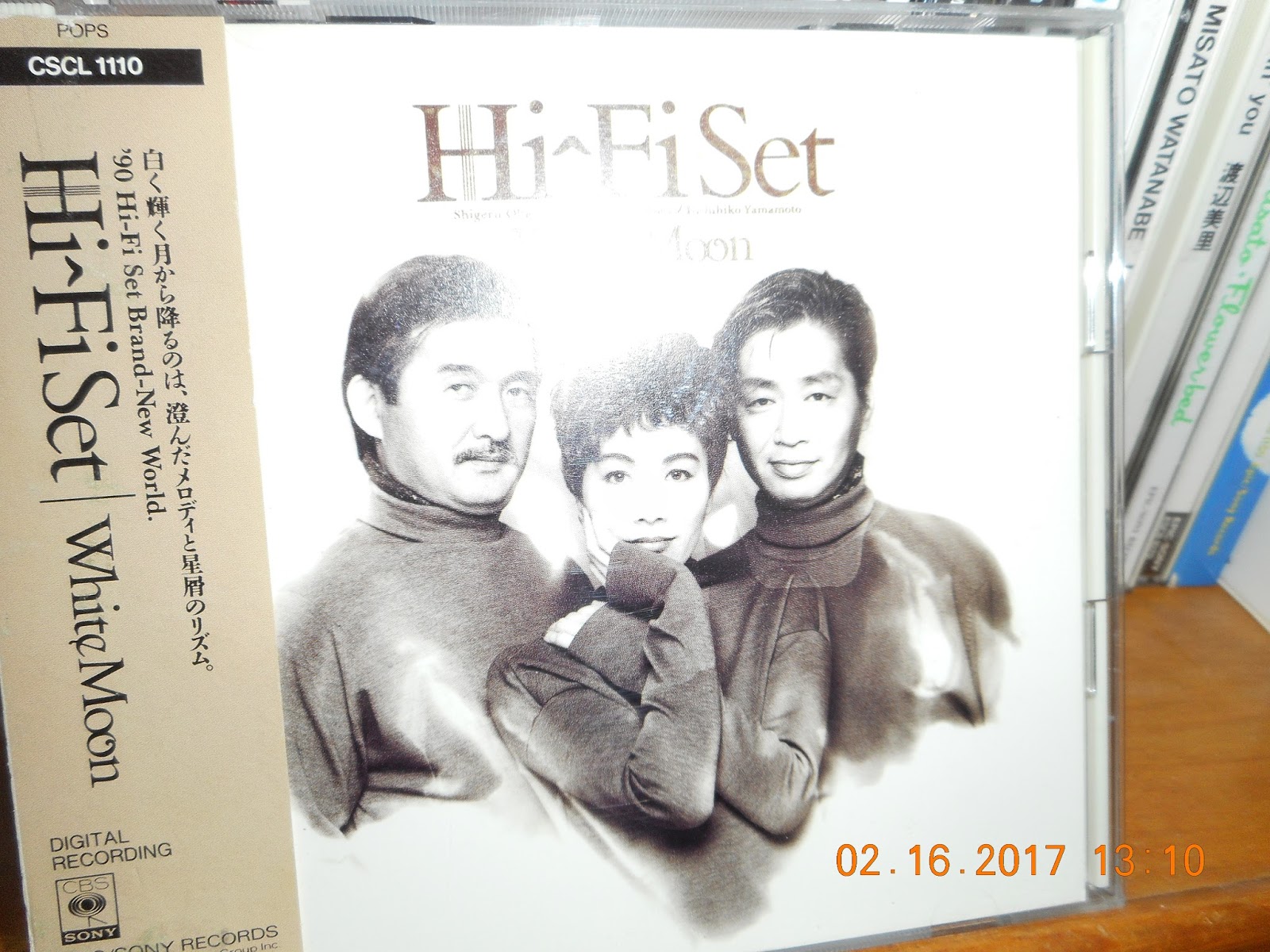
Well, why don't I give you a taste of the Riviera then through some 1970s sophisticated pop? Of course, when I mention that decade and that genre, I can only think of the vocal group Hi-Fi Set (ハイ・ファイ・セット). It's been a while since I've brought another article by this Japanese version of The Manhattan Transfer. From covers of Yuming hits to jazzy numbers, Junko Yamamoto(山本潤子), Toshihiko Yamamoto(山本俊彦)and Shigeru Ohkawa(大川茂)could interpret the entire New Music songbook.

I just discovered "Memorandum", Hi-Fi Set's 9th single from April 1977. It's a champagne-and-caviar number with a light touch, and the vocal harmonies by the Set haven't been better. Dining on the good stuff by the Mediterranean probably found itself a theme song with this one. The music does take one to sunnier climes abroad although the lyrics by Rei Nakanishi (なかにし礼) are slightly more melancholy as a woman leafs through an old memo book left by a former paramour.

"Memorandum" was also a track on the group's 4th album from September 1977, "The Diary". That release also has another favourite Hi-Fi Set song of mine, "Koi no Nikki"(恋の日記).


The music was by singer-songwriter Yoichi Takizawa(滝沢洋一), a singer-songwriter who I haven't been able to find much in the way of information. He has apparently provided songs for many other singers but according to Tower Records, he himself had only released one album which was in 1978, "Leonids no Kanata ni"(レオニズの彼方に...Beyond Leonids). On that album is his own cover of "Memorandum".

His version is just as sunny and made even lighter thanks to his high-toned vocals. But instead of that luxury resort that Hi-Fi Set's original version envisages, Takizawa's take is a nice stroll along on the boardwalk while wondering how life is like in that resort. "Leonids no Kanata ni" has been described as one of those "mystery albums" due to its rarity. I can take that as a challenge.

Especia -- Twilight Palm Beach (トワイライトパームビーチ)


The above was taken not too far away from home during a heavy snowstorm. It's about as February as February can get in my city. And then we hit the deep freeze in the beginning of the week.


But nothing can be taken for granted when it comes to weather in Toronto. As I've continued to say, it's predictably unpredictable. It's Saturday today and yep, we are hitting 11 degrees Celsius. Time to break out the flip-flops and sunblock lotion!


So, let me bring in some premature summery times via the good ladies at Especia. This is "Twilight Palm Beach" from their 2013 EP "Amarga - Tarde".

In Marcos V's recent articles in the last couple of months, it seems like the niche aidoru group that had been trying to corner the neo-City Pop/80s market was moving on and perhaps passing on the baton to groups such as Dance for philosophy. However, back then, Especia was bringing back the urban contemporary groove of yesteryear.

With a title like "Twilight Palm Beach", you couldn't get more City Pop/Resort Pop. There's also that nice slow beat just like lapping waves on the sunset shore. It's about as relaxed a ballad as I've heard from Especia. Heck, the cover for the EP also fairly screams the genre.


Along with the laidback music by Schtein and Longer, the lyrics by mirco and Paul Moriya(ポウル守屋)relate the bittersweet ending of a romance to go along with the cooling of the seasons. One would expect a cool basso profundo DJ to introduce and give a finishing narration to the song. "Amarga - Tarde" reached a peak ranking of No. 52 on Oricon.

Speaking of cooling of the seasons, our balmy weather will probably go into the week but rest assured, there will be at least a few more weeks of frosty times before spring finally comes into view.