I've been a fan of Japanese popular music for 40 years, and have managed to collect a lot of material during that time. So I decided I wanted to talk about Showa Era music with like-minded fans. My particular era is the 70s and 80s (thus the "kayo kyoku"). The plus part includes a number of songs and artists from the last 30 years and also the early kayo. So, let's talk about New Music, aidoru, City Pop and enka.
Credits
I would like to give credit where credit is due. Videos are from YouTube and other sources such as NicoNico while Oricon rankings and other information are translated from the Japanese Wikipedia unless noted.
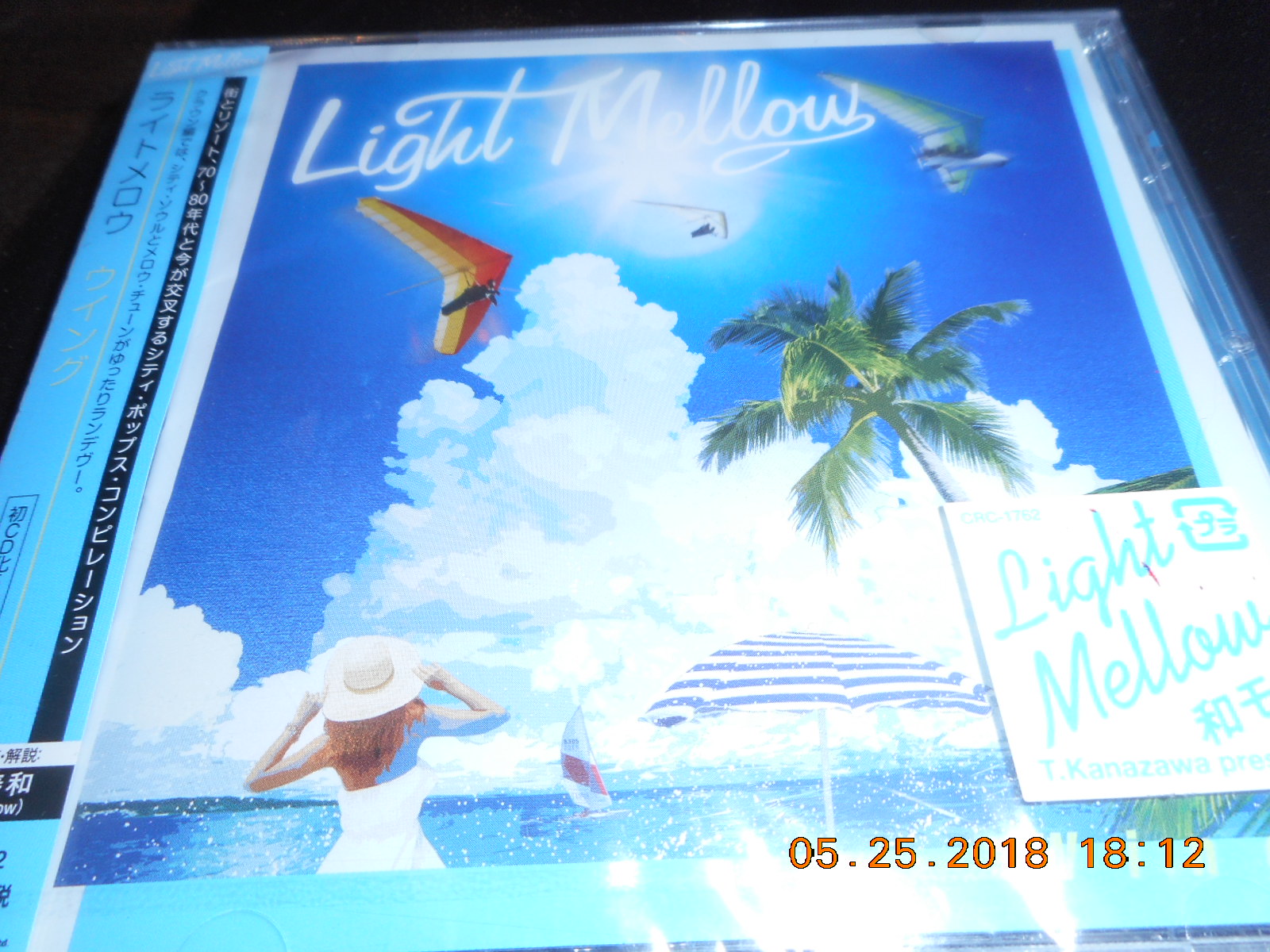
Continuing with my story of that DIY Van Paugam City Pop Radio from my previous article on "Kizuita Toki wa Osoi Mono"(気づいたときは遅いもの)by Masataka Matsutoya(松任谷正隆), I'm providing another track from "Light Mellow ~ Wing". I just happened to use that disc to enjoy a Tokyo drive via one of YouTube channel J Utah's videos.
Noriyo Ikeda's(池田典代)"Hitonemuri" (A Nap) was originally the B-side for her debut single"Adios"(アディオス)from 1979. Written by Yoshiko Miura(三浦徳子)and composed by Ken Sato(佐藤健), the breathy vocals by Ikeda and the Coffee Mate-mellow arrangement make "Hitonemuri" a nice accompaniment for that afternoon respite, as she sings about the transformative effects of a good nap, especially where romance is concerned. It certainly made for a fine music buddy as I was going through that J Utah drive in Tokyo.
It was about time that I added a second song to the Ikeda file here, next to her most notable contribution, "Dream in the Street". Not sure but this may be the first time that "Hitonemuri" has been recorded onto CD via "Light Mellow" since it hasn't been included on any CD releases of the album "Dream in the Street", although it hadn't been given that asterisk beside its title on the playlist on "Wing". Maybe it's been included onto other City Pop compilations.
And we're onto Friday so definitely throwing in some City Pop/J-AOR today.
Perhaps it was about a year ago when the virtual hangout club for Japanese urban contemporary music enthusiasts known as Van Paugam's City Pop Radio was taken down much to our grief. I think probably since then a lot of genre compilations have popped up like baby rabbits, and it's possible that fans learned a lesson from the City Pop guru and started listening to the music while viewing some soothing car-traveling videos on YouTube and the like.
A few days ago, I discovered the YouTube channel J Utah which specializes in showing videos of driving through some of the great cities in the world, and that includes my old stomping grounds of Tokyo. Included in that list is the above glorious sunrise video of driving near Tokyo Bay with a crossing of the Rainbow Bridge. I threw in one of my "Light Mellow" discs and being a long-play CD, it took about three of those videos to get through the disc and to recreate that City Pop Radio feeling, but it was great!👍
One of the song's on the "Wing" playlist was Masataka Matsutoya's(松任谷正隆)"Kizuita Toki wa Osoi Mono"(Always The Last To Notice), a track originally from his sole contract-mandated album "Yoru no Tabibito"(夜の旅人...Endless Flight)from November 1977. Just the perfect song for a Van Paugam drive, it is indeed Yuming's(ユーミン)husband behind words, music and mike as he describes how much of a goofball he is for not noticing the love of a young lady close to him. Not quite sure if the song was an autobiographical thing.😏Speaking of the album, there is also "Hong Kong Night Sight" to listen to, and that was also covered by his wife.
It's short but definitely sweet and has all of the musical ambience of a romantic stroll through the park on a sunny Sunday. Plus, it brings that feeling of what a 70s City Pop/AOR tune, thanks to the rhythm section represented by none other than Tin Pan Alley including bassist Haruomi Hosono(細野晴臣)and guitarist Shigeru Suzuki(鈴木茂).
So if any of you City Pop fans are still pining for that Van Paugam radio feeling, you can try out one of J Utah'sTokyo videos as the visual while throwing in your favourite compilation as the aural.
My love for R&B usually centres around the late 1970s and early 1980s with the funk and soul being the fine ingredients for my own soul.
Having said that, I have enjoyed this particular sunny tune by singer-songwriter AISHA, "SHY demo Ii yo"(OK To Be Shy). A track from her 2nd album from 2015, "Pink Diamond", this song actually has me reminiscing about those old days, and I do get these Christina Aguilera vibes when I hear her voice. As well, the video is shot around Omotesando in Tokyo, one of my favourite haunts in the megalopolis although it was a cinch that I couldn't afford to shop in probably 90% of the stores there. It is a nice place to take a stroll there, though, and AISHA was taking full advantage of that.
You can take a look at her English bio right over here. AISHA and MANABOON were responsible for the songwriting on "SHY demo Ii yo".
From reading my article on H Jungle with t's"WOW WAR TONIGHT" from 2018, I think you will know my feelings on that particular song. It wasn't a favourite of mine under any circumstances but obviously I was in the minority since it was one of the biggest hits of 1995 (No. 1 in the Oricon weeklies for several weeks and No. 2for the entire year).
About a few months after the release of "WOW WAR TONIGHT", comedian Masatoshi Hamada(浜田雅功)and producer/songwriter Tetsuya Komuro(小室哲哉)decided to aim for another single, and in July, "GOING GOING HOME" was released. Again, this was another song that got a lot of heavy billing on TV but because of my feelings for that first single, I didn't really pay Single No. 2 by H Jungle with t too much attention.
Strangely enough, though, on hearing it again after so many years, "GOING GOING HOME" didn't force me to scrunch up my face. The experience wasn't actually too bad with that light reggae beat and a more pleasant arrangement. It was enough that I could even withstand H's delivery this time around.
I couldn't find the original music video for "GOING GOING HOME" but I remember seeing it in the ads, and according to an interview in the magazine "Bart" via J-Wiki, although Hamada and Komuro were going to shoot it against a green screen of a tropical island, it was decided to actually head over to Managaha Island located near Saipan, a popular resort for many Japanese.
In addition, according to that same interview, Hamada had apparently thought that "GOING GOING HOME" was so much more complex to sing than "WOW WAR TONIGHT" that at one point he ended up going going home in a huff but obviously cooler heads prevailed and the song got recorded. Incidentally, although the melody and the title had intimated that the tune was all about making that long way to the hearth and family, the lyrics were actually about returning to the woman you love and perhaps realizing that she was being taken for granted.
"GOING GOING HOME" didn't enjoy as much fame as "WOW WAR TONIGHT". It scored a No. 2 ranking in the Oricon weeklies and became the 20th-ranked single for 1995. As a source of Western Japanese pride, it has also been placed alongside BORO's"Osaka de Umareta Onna"(大阪で生まれた女)and Masaki Ueda's(上田正樹)"Osaka Bay Blues" as a song infusing plenty of strong Kansai dialect through Hamada's singing, according to an article in the music magazine "WHAT's IN?". Finally from my vantage point, who would have thought that the really loudmouth half of the popular comedic duo Downtown would end up having two Top 20 hits within the same year?
It's been trending on Twitter for a lot of the day today, but Florian Schneider, one of the founders of the legendary electronic music band Kraftwerk had passed away some time after his birthday last month, it was announced.
At the same time that I was getting into Japanese pop music, I was also developing my interest in pop music in general thanks to music videos and radio. However as a subset of this, technopop was also on my Like radar. It all started with Yellow Magic Orchestra and then it spread to New Wave music.
In the beginning of the 1980s, it was folks like Gary Numan, The Human League and then later on, it was New Order which became a staple on the dance floor in the discos. Man, was New Order danceable!
And I found out that Kraftwerk, which started up in 1970, had influenced all of these artists including YMO and whole genres such as hip-hop, techno and club music. In fact, after hearing the name for so long, I finally got to know a bit about Schneider, Ralf Hutter, Wolfgang Flur and Karl Bartos because of YMO.
Back in junior high school, during my lunch break, I had gone to the library (yep, instead of playing sports, I enjoyed reading books like a geek) and tried a record which had tracks of late 1960scomputer music, as it was called. It was just tracks of weird bleeps and bloops. However, YMO and Kraftwerk illustrated to me that music made with synthesizers and samplers didn't need to sound like aural Dadism. As I would later find out, Yellow Magic Orchestra made their initial technopop as some experimental fun of filtering other genres of music (exotica, surf rock, etc.) through those fascinating machines. My impression of Kraftwerk through my early listenings to them was that the band was reaching for something crystalline, futuristic and elegant...but catchy, such as their 1974"Autobahn".
Finding out more about Kraftwerk was during my second stint in Japan between 1994 and 2011. "Trans Europe Express" from 1977 was another song that I discovered, and from that, I could understand how 1980s bands such as the ones that I mentioned above got their mojo. Incidentally, there's something very soothing about how the members sing "TRANS...EUROPE...EXPRESS" over and over just like the way the rhythmic clacking of a Tokyo subway would often lull me into slumber as it took me home at night.
"Tour de France" from 1983, aside from the giggle-sparking panting (yes, I'm sure that it's all about riding the bikes up that hill) throughout, seems to be the ideal theme song for the utopian city of the future with lots of soaring buildings of weird shapes and angles. I met up with a couple of friends in Ebisu for dinner one night (one of whom looks just like a young Schneider, although I've never told him this) and the one not looking like Schneider just when on and on about "Tour de France" to the extent that I had to find out about the song.
My apologies and thanks for your patience. On hearing the news about Schneider's passing today, I ended up listening to their 1976 single"Radioactivity", a haunting and contemplative song that is translated in Japanese as "Houshanou"(放射能).
One reason for this is that I saw Kraftwerk's participation in the No Nukes 2012 event following the Fukushima nuclear disaster. I was totally absorbed in their performance on stage which included adjusting the lyrics to bring in the city of Fukushima in their intoned list of cities that have been affected by nuclear accidents. Additional Japanese lyrics were provided by Ryuichi Sakamoto(坂本龍一)from YMO. Incidentally, the concert was held at Makuhari Messe, not too, too far away from my home in Ichikawa.
Indeed, it is amazing that a good chunk of the music that I ended up listening to and even danced to during my high school and university days was inspired by Kraftwerk. Certainly I'm grateful for them to provide a light to YMO, one of the entry points for me in terms of my love for pop music in my second home away from home.
Going to be dating myself yet again but my favourite version of the theme song from the motion picture "Around The World in 80 Days" is Arthur Fiedler & The Boston Pops' enthusiastic take on the Victor Young original. It's epic, sweeping, romantic and has that nice flavouring of Latin spice. I first heard it on that collection of standard LPs that we got when my parents purchased the humongous RCA stereo player, and through multiple listenings of The Pops' version, it's basically imprinted itself as the version for me.
A few nights ago, I listened to Rocket Brown's latest mixtape of City Pop favourites. This time, his theme was New York so he had folks such as Tatsuro Yamashita(山下達郎), Casiopea and Hi-Fi Set to entertain me before bedtime. The next day, I thought about making my latest Author's Picks article and basing it not just on songs about The Big Apple, but on a variety of kayo having to do with those far-flung places outside of Japan. There have been plenty of them, y'know.
Well, I just had to start from my nation, eh? Still don't know what had composer and singer Masaaki Hirao(平尾昌晃)decide that The Great White North would make for the ideal setting for a hit kayo, but hey, if it helped inbound tourism to places like Banff and Toronto, all the better. It certainly worked out for the duo of Hirao and Hatanaka.
Let's take that one-hour flight from Pearson International in my hometown over to Manhattan, and we've come to "Purpletown", a love letter of sorts to The Big Apple (although I never found out why the colour purple was significant for New York City) Indeed, it was the JAL campaign song for tours to ol' Gotham, and just from all that fun funk by Yagami(八神純子), Foster, Kennedy and Conrad, I can only hope that a lot of Japanese tourists were happily lured over the Pacific.
Well, it was done to me decades ago, but whenever I hear about the Aegean Sea, in a downright Pavlovian fashion, I will always remember Judy Ongg's(ジュディ・オング) most famous hit "Miserarete"(魅せられて). It stands as one of the most famous examples of that exotic kayo involving adventures in those far-flung places that was the trend back in the late 1970s. Perhaps it helped draw Japanese tourists to Greece. Perhaps it also helped in sales of billowing white dresses.
A relatively short hop from Greece to another representative exotic kayo, Mayo Shouno's(庄野真代)"Tonde Istanbul"(飛んでイスタンブール). I'm not sure whether the melody by the prolific Kyohei Tsutsumi(筒美京平)actually reflected Turkish music but it certainly sounded adventurous enough. One piece of trivia from the J-Wiki article for the song that I hadn't included in the original article was that Tsutsumi had actually created "Tonde Istanbul" for 70s aidoruGoro Noguchi(野口五郎)but later realized that a female vocalist would do better justice with his work.
As I hinted in the original article for the album "First Light" by Makoto Matsushita(松下誠), the first time that I heard "One Hot Love", I didn't think of downtown Tokyo but downtown Los Angeles. There was something so Airplay, Doobie Brothers and a ton of other AOR artists imbued into this classic that the ghost of my old SONY radio almost materialized in front of my eyes. It didn't help that the original cover for the album is composed of a glorious photo of LA (at least, I think it's LA). How West Coast sound is that?
Honestly speaking, I never think of Rick and Ilsa when I listen to "Aishuu no Casablanca"(哀愁のカサブランカ), but there's that feeling of traveling far afield to places surrounding the Mediterranean and enjoying a truly luxurious night. I'm just surprised that one of Hiromi Go's(郷ひろみ)trademark hits was never used to sell something like an airplane tour, a car or a cologne. The video above has a newly arranged version of the song.
We're finally jumping over to Asia and visiting Hong Kong, a place that I thoroughly enjoyed for a few days with my students over a decade ago. Yuming's cover of her husband's original tune seems to encapsulate a first-timer's visit to the famed area with all of the starry-eyed observations of places like Kowloon and Central. I thought that this was more "Blade Runner" than any place in Japan. I hope that Hong Kong will recover from not only COVID-19 but also the political turmoil that it had been wracked with even earlier.
Our final destination is somewhere in France, perhaps The City of Light itself. The reason being the final song is Taeko Ohnuki's(大貫妙子)"Tsumuji Kaze"(つむじ風), a track from her 1982 album"Cliché". Aside from that synthpop intro, everything else about it just has that fragrance of Maurice Chevalier's and Charles Boyer's Paris. Croissants and café au lait come to mind here.
When deplaning, make sure you haven't left any of your belongings. Just follow the signs over to Immigration and Customs. Hopefully, in the not-too-distant future, we will all be able to hear the first two sentences again for real.
Well, seeing that yesterday's tutorial by Masa on the techniques of Tatsuro Yamashita(山下達郎)was the 99th article on "Kayo Kyoku Plus" concerning the City Pop king, I kinda went "What the heck?" and have decided to go for No. 100 today. Go ahead.
"Go Ahead" indeed, as I quote Tats' December 1978 3rd studio album. As it turns out, the last song on Side A of the original LP has ended up as the first track on Rocket Brown's first YouTube mixtape on his Come Along Radio channel (unfortunately the video has been taken down but it's been replaced).
(cover version)
"Tsuite Oide" (Follow Me Along) is another magical collaboration between Yamashita and lyricist Minako Yoshida(吉田美奈子). The first minute or so is a slow and smoky intro into what becomes a tempting melodic and lyrical invitation to get out of the blues and join ol' Tats on a magical carpet City Pop ride surrounded by the usual happy-happy-joy-joy beats and claps. But of course, with Yoshida's cooperation on the lyrics, the package has the added goodness of her vocals in the background. Finally at the end, there is a sweet solo by Nagoya-born jazz trombonist Shigeharu Mukai(向井滋春).
Maybe one of you folks who's better at understanding music theory can help me here. According to the J-Wiki information on "Go Ahead", Yamashita created "Tsuite Oide" because he had wanted to get into some of that 16-beat world that was apparently popular in American pop music at the time. I wouldn't know the difference between a 16-beat tune and two beaten eggs for Sunday breakfast. I just know that the song is Tatsuro-excellent. One other thing that I don't quite understand is how "Go Ahead" only managed to rise to No. 75 on Oricon.