Credits

I would like to give credit where credit is due. Videos are from YouTube and other sources such as NicoNico while Oricon rankings and other information are translated from the Japanese Wikipedia unless noted.

Friday, October 24, 2014

Petits Rabbit's -- Daydream Café/Chimame-tai -- Poppin' Jump (ぽっぴんジャンプ)


According to the good folks at Wikipedia, an earworm is "...a catchy piece of music that continually repeats through a person's mind after it is no longer playing...The word earworm is a calque from the German Ohrwurm...first used in the 1980s".

I myself also like to envision the earworm as the Ceti Eel used to torture and subdue Commander Chekov and poor Captain Terrell in the original version of "Star Trek II: The Wrath of Khan" all the way back in 1982. One wonders whether a German Trekkie was inspired by that movie to come up with the name for a song that just...blast it all...won't leave your mind.


For this year, I've got a couple of those aural larvae hanging out in my brain, and they just happen to come from the same anime. My buddy unleashed "Gochuumon wa Usagi desu ka?"(ご注文はうさぎですか?...Is The Order A Rabbit?)on me earlier this year, complete with the opening and ending themes. As for the show itself, it was adapted from a manga, and it's basically a pleasant half hour of watching 5 cute girls going through life while working at 3 different cafés in a small European-type town. Mind you, among those kids are a girl with a sister complex, a future NRA member and a moe version of Mr. Spock (yes, another "Star Trek" reference). Bringing in the foodie analogy, when I view "Space Cruiser Yamato" as some serious kaiseki ryori and "Space Dandy" as delectable junk food, "Gochuumon wa Usagi desu ka?" is basically a nice cup of coffee with a small slice of strawberry shortcake. And I do appreciate my cup of joe and shortcake.


"Daydream Café" is the opening theme, and just like the show itself, it is an adorable and breezy ditty featuring all of the 5 main seiyuu put together as the group Petits Rabbit's (as a former English teacher, that apostrophe in there annoys me to no end). Written by Aki Hata(畑亜貴)and composed by Kaoru Okubo(大久保薫), it is as sugary as a Xmas candy cane but without the added calories and can almost get me to skip on the street whenever I hear it...over and over again. I was surprised to find out that Petits Rabbit's Ayane Sakura(佐倉綾音), Inori Minase(水瀬いのり), Risa Taneda(種田梨沙), Satomi Sato(佐藤聡美)and Maaya Uchida(内田真礼)even pull off a nice little song-and-dance in the official music video as above.


Ceti Eel II is the ending theme, "Poppin' Jump" by Chimame Tai( チマメ隊). Inori Minase is joined by Sora Tokui and Rie Murakawa(徳井青空・村川梨衣)who voice two of the minor characters, and the name chimame is an acronym of the three characters of Chino, Maya and Megu who are classmates. If anything, "Poppin' Jump" is even cuter than the opening theme and if taken in large doses, could induce uncontrollable hopping just like the titular animal in the show's title. As it is, though, it has just gotten me to sway my head. Still, it is what it's doing inside my head that's been the problem. I can blame the creators of the song, Uran(うらん)and Yuuki Kimura(木村有希)for making me feel like a 5-year-old at Xmas time.


"Gochuumon wa Usagi desu ka?" will most likely not enter the annals of significant anime in the 2010s (note from 2019 me: Oh, really?) but neither will it send me to bed racking my brain about what the meaning of life is or trying to purge existential horrors. And you know what? The songs there are probably what I would like to hear in my brain when I enter and exit a particularly welcoming small café...not a Starbucks or even a Timmies.
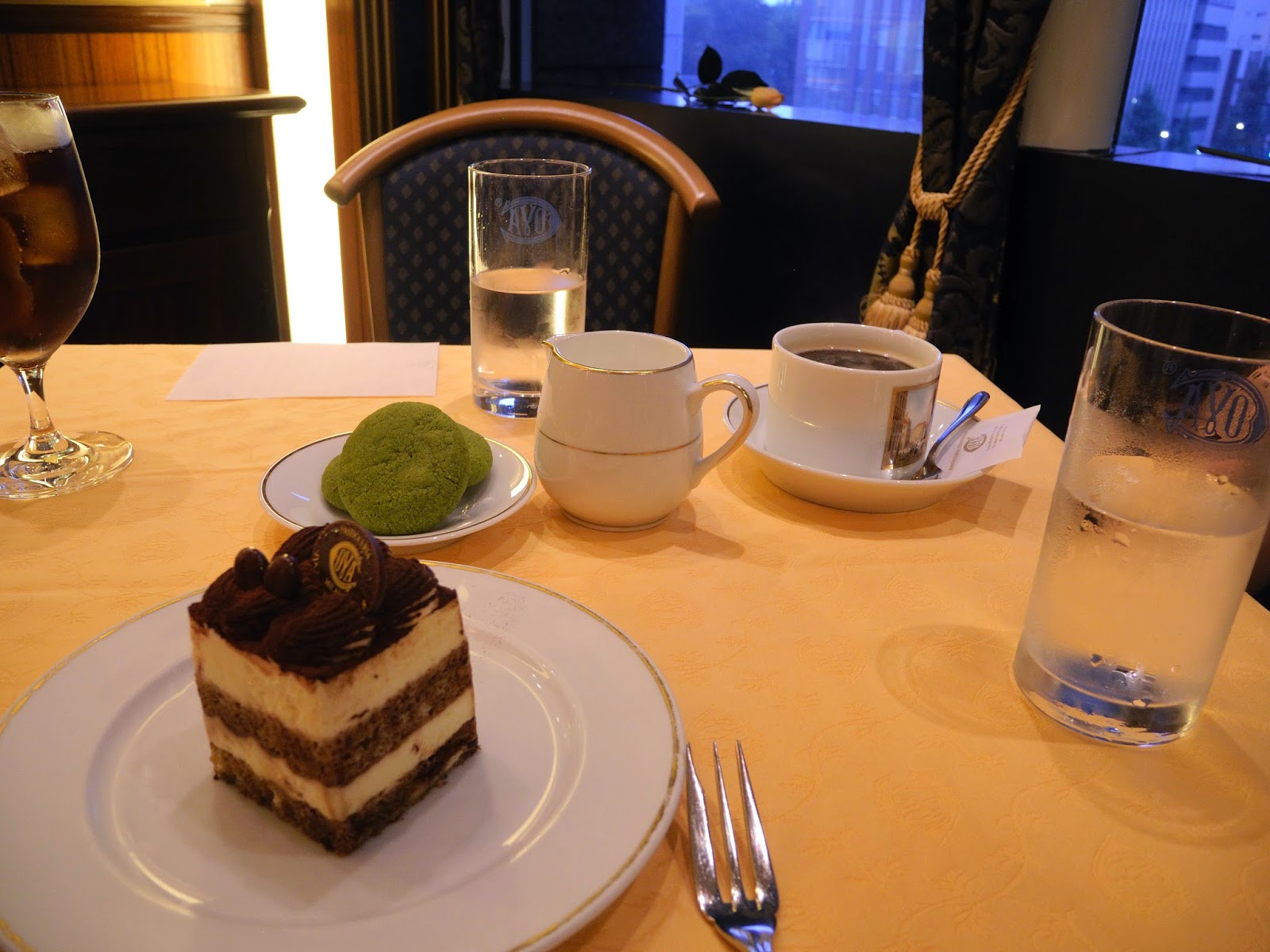

Tiramisu and coffee at Cova
in Shinjuku Times Square

Hiroshi Itsuki -- Yozora (夜空)


Oh my goodness, he's so cool...

Pretty much satisfied with what he had to offer in the early 2010's, I became more willing to delve deeper into Hiroshi Itsuki's (五木ひろし) large repertoire of hits after being enamored by the electric guitar playing Enka singer in a navy blue pinstriped suit with no tie and rolled up shirt sleeves from his 2012 single 'Yoake no blues' (夜明けのブルース).

'Yozora' (Night sky) was one of the first to come along after that. Thinking it was one of those slow and I dare say boring ballads or another 'When you wish upon a star' kinda thing (well, it is called night sky), I mostly gave this song a pass. But with Ikuzo Yoshi (吉幾三) having a go at Itsuki's 21st single on an episode of 'Nippon no uta' about half a year ago, I had decided to give in and see why it was one of the massively popular Enka singer's hits.

Anticipating the gentle notes of string instruments to come on first after that trademark tinkling (I don't know how else to describe it) that sounds like a shooting star through the dark sky, I was taken aback when the trumpets took over instead to start off the relatively fast paced song. And unfortunately it was also when I realized that Mr. Sake's husky voice isn't fit to sing such songs.

With its lyrics and music done by Yoko Yamaguchi (山口洋子) and Masaaki Hirao (平尾昌晃), also known as the same duo who spawned Itsuki's breakthrough hit 'Yokohama tasogare' (よこはま・たそがれ) two years before, I suppose there's no wonder 'Yozora' made it all the way up to 4th place on the Oricon charts in 1973 and allowed Itsuki to bag the grand prize at the 15th Japan Record Awards. But he only sang it once more than two decades later during his 29th appearance on the Kohaku in 1999.


So far it seems like 'Yozora' has gotten faster and more intense over the years. Sounding more placid in its earlier state, the current amped up renditions of it has Itsuki swaying around more and throwing out punches into the air with more vigor, especially at the angst-filled 'Akirame ta' part.

Wow, just wow.
www.snowrecords.jp

Thursday, October 23, 2014

Minako Tanaka -- Weekend Pain


Minako Tanaka (田中美奈子) was an edgy and sexy girl during the late 80s and early 90s. Her debut album, “Kimi no Hitomi ni Utsukushiku” (君の瞳に優しく), which was released in January 1990, featured some of her most memorable singles, but also had interesting hidden gems inside, just like “Weekend Pain”, for example.

Although Minako Tanaka started her career in a more Eurobeat vein with songs like “Namida no Taiyou” (涙の太陽), “Be My Baby” and “Tell me”, the overall sound used in her album was an interesting fusion of the Stock Aitken Waterman’s Eurobeat sound with touches of Janet Jackson’s New Jack Swing. “Weekend Pain”, for example, follows this formula, and it works.

It may be strange to somes that I brought up New Jack Swing to the table, but although really melted down (well, the genre itself is a melted result of fusing Hip-hop, R&B and Pop), Minako Tanaka’s debut album features an evident New Jack Swing in songs like “Weekend Pain”, “Shinku no Kyouhansha” (真紅の共犯者), “Fujitsu Paranoia” (不実パラノイア) and “Amai Sensou” (甘い戦争), for example.

Back to the song, I like the beginning with the synth twinkles (they really sound like “the party is about to start” to me), the background percussion and the steady electronic bass. Also, although the verses are kind empty in the arrangement department during the first half of the song, some interesting crashing synths are introduced in the second half's verses. As for Minako, it’s not a mystery that I really like her vocals. They’re sexy and, most of the times, she sings in a correct manner.

After the album release, her subsequent single, the Komuro-penned (小室 哲哉) “Yume Mite TRY” (夢見てTRY), was a return to a more SAW Eurobeat sound, but she soon would commit herself with the edgy New Jack Swing sound once more in “Dancing in the shower”, the lead single for her sophomore album, “Gimmick”.

The “Kimi no Hitomi ni Utsukushiku” album reached #15 on the Oricon charts. Lyrics for “Weekend Pain” were written by Natsumi Tadano (只野菜摘), while music was composed by Paul Chiten and Sue Sheridan. As for the arrangement, Tatsuya Nishiwaki (西脇辰弥) was the responsible.

To finish, here's my "Kimi no Hitomi ni Utsukushiku" album.


You Kikkawa -- URAHARA Temptation (URAHARAテンプテーション)


I’m a longtime You Kikkawa (吉川友) fan. In late 2011, she released a great single called “Konna Watashi de Yokattara (こんな私でよかったら), and when she performed it on Music Japan in early 2012, I watched it live on my television. I just adored the song, and really hoped she kept releasing nice songs. Well, Kikka didn’t release another interesting song during 2012 and 2013, unfortunately. In 2014, though, she redeemed herself with the club banger “URAHARA Temptation”.

“URAHARA Temptation”, which was released in June 2014, was a departure from what she’s been doing since her debut in Hello! Project. Unlike her cheerful aidoru stuff, this new song was dance-oriented and even sexy in its nature. I confess that Kikka is not very good at portraying a sexy girl in the video, but she tries, and that’s adorable per se.

About the song, it’s not very different from nowadays America’s mainstream electronic pop music. I didn’t think I’d be so hooked on this song, mostly because I have some restrains when J-Pop acts tries to emulate what’s trendy in America, but I’m listening to it non-stop since it was released three months ago. Even Kikka’s rap is fun.

I really think this new direction Kikka is following will be good for her (I’m waiting for a new album next year). Now, in late October, she’s releasing another single which follows the same formula inaugurated with “URAHARA Temptation”: a double a-side single with the first song being edgy and the second one portraying Kikka’s cute persona. But this new single is a talk for another day.

“URAHARA Temptation” reached #17 on the Oricon charts. Lyrics were written by NOBE, while music and arrangement were done by michimoto.

Tetsu and Tomo -- Horoyoi Blues (ほろ酔いブルース)


This week's episode of Kayo Concert was pretty interesting, with the theme revolving around trains and all. We had the sibling duo Karyudo (狩人) - that's such a cool name - singing their debut single 'Azusa ni Go' (あずさ2号). It was the first time I heard most of the song, and now I know why it was such a big hit. And then there was this young Enka singer by the name of Hiroshi Miyama (三山ひろし) singing the late Enka veteran Michiya Mihashi's (三橋美智也) 'Aishu no Resha' (哀愁列車). His delivery of the angst-filled song was alright save for the fact that he kept smiling throughout!

Moving on, the performance that piqued my interest was by this other duo present, Tetsu and Tomo (テツ . トモ). I pretty much knew they weren't an Enka duo when they began to sway and dance in such a lighthearted manner as they sang their latest single that mentioned something Shinbashi train station (released on 15th October 2014). After a little research a while later, I learnt that these fellows are in fact a comedy duo who began their careers in 1998, comprising of Tetsuya Nakamoto and Tomoyuki Ishizawa (中本哲也 . 石澤智幸). Well, that explains their names, overall goofiness and enthusiasm. Hmm, so I guess they're something like Tunnels?

'Horoyoi Blues' had its lyrics done by Natsumi Watanabe (渡辺なつみ) and was composed by renowned composer Keisuke Hama (浜圭介). Listening to the music, I could just see the 2 of them doing that little jig of theirs in tuxedos and canes. Actually, it sounded more like an Enka/Mood Kayo song that someone like Hiroshi Itsuki (五木ひろし) would sing!


There's this other thing that I had just discovered this morning while listening to 'Horoyoi Blues' again: This song seems to sound a little like the sped up and funkier version of 'Hoshi wa Nandemo Shiteiru' (星は何でも知っている), sung by another famed composer, Masaaki Hirao (平尾昌晃) in his younger days. It's either that or I was still groggy from waking up early again for school, or as I had said in an earlier article, I do not very very discerning ears.

In Red most of the time: Tetsu
In Blue most of the time: Tomo
                                                               geitopi.com 

Wednesday, October 22, 2014

Keiko Fuji -- Kyoto kara Hakata made (京都から博多まで)


I heard this torch song, "Kyoto kara Hakata made" (From Kyoto to Hakata) last night on NHK's "Kayo Concert"(歌謡コンサート)sung by one of the guest performers, and on hearing that this was a Keiko Fuji(藤圭子)song during the introduction, the Yu Aku(阿久悠)lyrics pretty much cemented that fact. Fuji once again brings forth a story of womanly woe about going on a seeming fool's errand by getting on that train from the ancient capital to one of the major cities in western Japan to go after that man that she's fallen for.

Kosho Inomata(猪俣公章)was responsible for the cool urban feel of Fuji's 11th single from January 1972, and as usual, I'm a sucker for a lonely trumpet. I could imagine the singer in that trenchcoat as a lonely figure waiting for that last train on a rain-soaked platform. Apparently, the supposedly quixotic voyage was patterned from an actual train run by the Matsukaze (now known as the Super Matsukaze according to Wikipedia), a limited express service operated by JR West. Inomata, by the way, was also behind Fuji's big hit from a couple of years previously, "Onna no Blues"(女のブルース).

"Kyoto kara Hakata made" peaked at No. 20 on Oricon and first appeared as a track on Fuji's 8th album, "Shiranai Machi de"(知らない町で...In a Town I Don't Know)from December 1971 before it got its official single release. Several months later, she would perform it on the Kohaku Utagassen of 1972 which is shown above.

Revisiting the old shops

During my 2 weeks back in Tokyo, I managed to visit some of my old music haunts in the hopes that I would be able to pick up some good discs.


First off, my anime buddy and I hit Nakano Broadway. Now, it was my buddy who told me that Recomints had closed down during his last visit there in 2012. Well, going there in 2014, Recomints has apparently given a Wolverine-like "I got better" response, and to my relief, was very much alive, However, the two different outlets in Broadway selling discounted Japanese and Western discs respectively have merged into the original space for the Japanese stuff on the 3rd floor. The tables of cut-rate discs are gone only to be replaced by shelves as you can see above but the mix of Western and Japanese albums is still very cheap.

Happily, I was able to make my first purchase for the trip there, Akiko Yano's classic "Gohan ga Dekita yo".

(July 5 2016: Here is an update on Recomints...not a happy one, though.)


Of course, a visit to the planet's largest music store, Tower Records in Shibuya, was mandatory. At around 2010 and 2011, the store enabled the re-mastering kick of some of the old albums from the 70s and 80s. Well, going back to Tower three years later, that re-mastering has gone into high gear. In fact, I found a section on the 3rd floor which paid tribute to 70s/80s City Pop. As much as I had wanted to grab the entire selection, I just went with Tomoko Aran's "More Relax" from 1984. Such is the lot of a person on a limited tourist's budget and yet, I hit the place twice and purchased a total of 8 CDs there.


The J-Pop section was moved sometime during those 3 years from the 2nd floor to the 3rd floor. Now, the formerly 7th-floor magazine/book department was moved down to the 2nd floor, and to boot, a pretty cool-vibe cafe has been placed on that same floor. After that first giddy visit to Tower, we just had to relax a bit there with some lattes. Early in my time as a teacher in Tokyo in the mid-90s, Tower Records Shibuya did have a cafe in the basement which had the rather hilarious arrangement of having a non-smoking spot in the centre of the remaining smoking area without any barriers. That incarnation didn't last too long.

*Ah, I should let you know about one thing about Tower. The store does accept credit cards, but the staff doesn't ask for PIN numbers to be typed in...they just swipe it through something. I made my purchases on credit there and there was a bit of a consequence. Some days later when I was to pay my share of the hotel bill by that same credit card, I was rejected, even though I had informed the credit card company before the trip that I would be using the card overseas (thankfully, I was armed with another card). After returning to Toronto, I called up the credit card hotline and the operator there told me that it's possible that Tower apparently not needing the PIN but having the purchases go through anyways may have put up some red flags and froze things on my card for security purposes. However, the operator told me that things were fine and dandy now.


After my second trip to Tower a few days later (and a satisfaction for a craving of McDonalds), I hopped onto the Hanzomon Line (purple on the Tokyo subway map) and made a beeline toward Jimbocho Station. And I was reassured when I saw the familiar blue-and-white sign of Tacto once more. Tacto, as I mentioned in the article for the shop, specializes in the older and/or rarer CDs and I gave the shelves on the first floor there a good browse before I settled on four or five discs, including Kenjiro Sakiya's BEST collection.

I also visited RecoFan in Shibuya and Yamano Music in Ginza although I didn't take any shots of those old haunts. But as you have noticed, when I go to Japan, there will always be a standing order for me to replenish my want of kayo kyoku/J-Pop.