Credits

I would like to give credit where credit is due. Videos are from YouTube and other sources such as NicoNico while Oricon rankings and other information are translated from the Japanese Wikipedia unless noted.

Friday, February 20, 2015

The Peanuts/Sachiko Nishida/Yujiro Ishihara/Lisa Ono -- Una Sera di Tokyo (ウナ・セラ・ディ東京)

Main intersection of Ginza

Imagine someone asking me back in Japan, "What did you do last night?" If I had answered, "Oh, I went to Tokyo", my conversation partner probably would have looked at me in askance and given me a look that would have matched the same expression if I had been asked "What did you have last night for dinner?" and I answered "I had food".

There are too many different areas in the The Big Sushi. If I went to Akihabara, it would be to race into the electronics shops before they closed up. If I went to Shibuya, it would be to browse in Tower Records or some of the used CD shops to look for a hidden gem. If I went to Shimbashi or Ginza, it would be having dinner with some friends at a local izakaya, and if I ended up in Akasaka, people would be asking me how many zeroes there were in my client's bank book. One night in Tokyo means many things depending on which area I go to.


A few nights ago, I was watching the latest episode of NHK's "Kayo Concert", and the theme of the night was classic kayo duets. Two of the guests came out and did an exquisite number called "Una Sera di Tokyo" by The Peanuts. I had never heard of this entry by Emi and Yumi before, and the title alone screamed Mood Kayo even before I heard a single note. The rest of the performance was just so soothing and bar-friendly. Needed to swirl that whiskey on the rocks.

Well, when I started looking up the information for this song, I uncovered quite an interesting story for this Friday night. And as you can see from the heading for today's article, I think I may have brought together the Ocean's Eleven of Mood Kayo stars. First off, "Una Sera di Tokyo" (One Night in Tokyo) started life slightly differently. It had actually been conceived as a November 1963 single by The Peanuts titled "Tokyo Tasogare"(東京たそがれ...Tokyo Twilight), and that is the above video. Created by lyricist Tokiko Iwatani(岩谷時子)and composer Hiroshi Miyagawa(宮川泰), it was a pleasant enough ballad, I suppose, but I think it suffered a bit from a lack of oomph and an intro that sounded like something from an old monochrome horror movie. Not surprisingly, it wasn't such a big hit.


However, there was an unforeseen catalyst that came in from Italy. Singer Milva, who had gained a popular reputation in Japan as The Queen of Canzone (another title to add to two others: La Rossa and The Panther of Goro, arrived in 1964, presumably to hold some performances. King Records (which produced "Tokyo Tasogare") must have sponsored the tour since it was a staffer from that company who suggested that Milva could do a cover of The Peanuts song. The singer not only agreed to do the cover version but she did it in accurate Japanese.

Well, the skies opened, the rays of light beamed down and a chorus of Hallelujah rang down. Milva scored raves for her version of the song.


Light bulbs turned on above the folks at King Records, too. They and The Peanuts decided to give the song another chance. And with some tweaking in the arrangement and a wholesale change of the title from "Tokyo Tasogare" to "Una Sera di Tokyo", the new and improved version came out as a single in September 1964, almost a year after the first version had come out. To use my baseball analogy, a bloop single became a grand slam home run.


In fact in that year, a lot of musicians jumped onto the bandwagon. The Peanuts were up against Mood Kayo experts Hiroshi Wada & Mahina Stars(和田弘とマヒナスターズ), Sachiko Nishida(西田佐知子)and Sumiko Sakamoto(坂本スミ子)in the "Una Sera di Tokyo" sweepstakes. All of those folks had released their own version of this hit. 

Sachiko Nishida's version had a more intimate and sultrier vibe to it. According to the J-Wiki article on the song, the winner of the "Una Sera di Tokyo" race was the Mahina Stars. However in terms of legacy, I think The Peanuts ultimately got the trophy.


And in the years hence, a lot of other singers have done their own special take on the song...never bad if a song is aiming for a certain timelessness. Master crooner Yujiro Ishihara(石原裕次郎)just had to cover it as well. In addition, Yosui Inoue(井上陽水)and Akiko Yano(矢野顕子)have covered it.


Then, I came across this lovely and rich version by Lisa Ono(小野リサ)when she included it on her 2011 album, "Japao".

(2:27)

Of course, Oricon didn't exist at the time so the song's success didn't register on the charts. However, to add to the Cinderella effect, both Iwatani and Miyagawa earned prizes in their areas at the Japan Record Awards of 1964. And The Peanuts ended up performing "Una Sera di Tokyo" three times on the Kohaku Utagassen: 1964, 1969 and 1973. The above video is for their 1969 performance.

And in a great tribute to the composer, when Miyagawa passed away in 2006, it was this song that was playing at his wake. It would also become one of The Peanuts' most remembered songs.

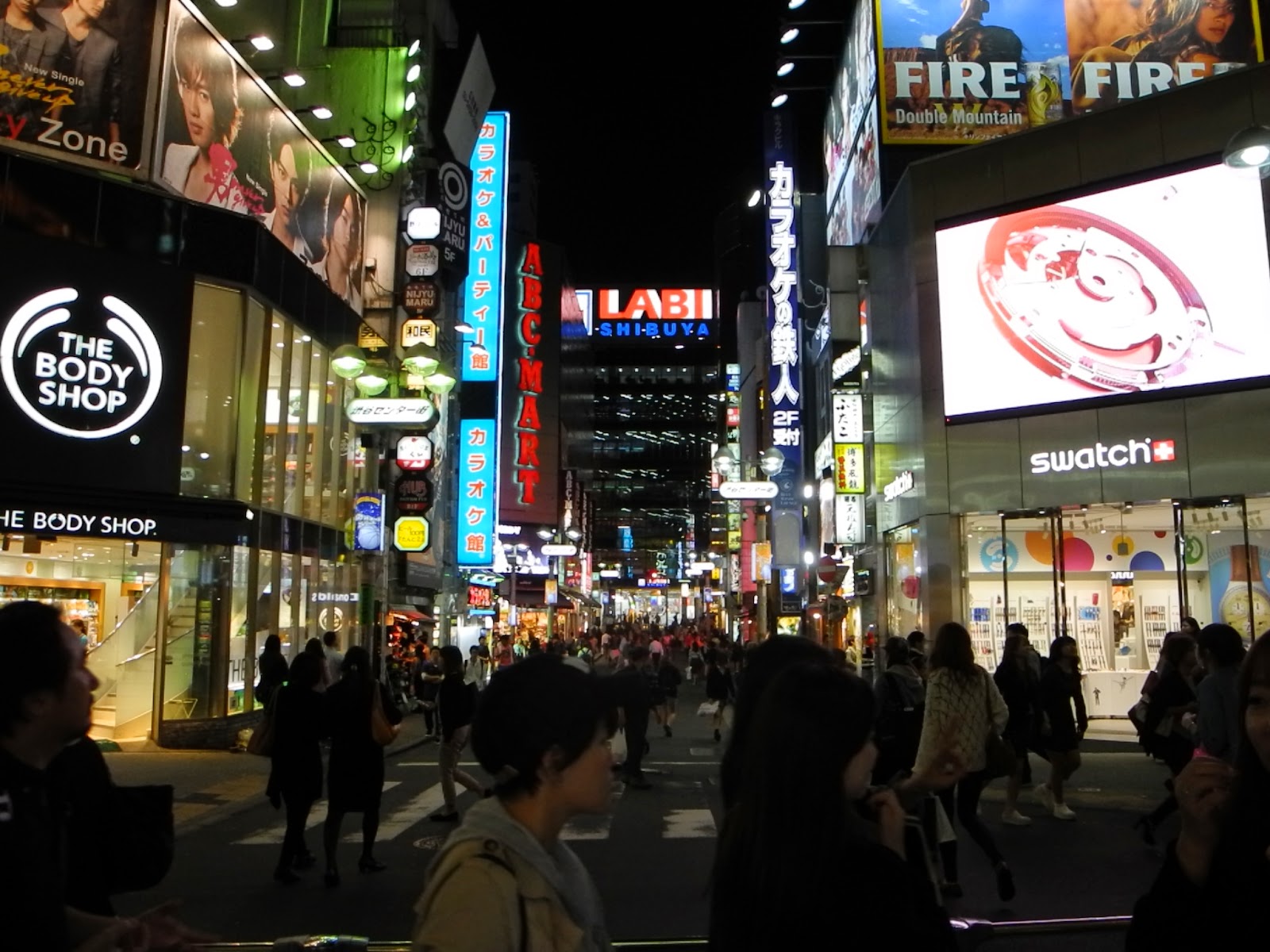
Side street in Shibuya


Shibuya


Asakusa

Thursday, February 19, 2015

Toshio Shiba & Honey Knights -- Furusato wa Chikyuu (故郷は地球)


It's been a while since I wrote a tokusatsu article. On top of that, the one I'm writing about today is for a theme song for a superhero show that I had never seen, except for some of the excerpts on YouTube. But the theme for "Silver Kamen"(シルバー仮面...Silver Mask)has been one that I used to hear tons of times on the old RCA Victor just because it was on the same record of tokusatsu themes, sandwiched between the themes for "Mirror Man" and "Ultra Seven".


The show itself had a 6-month run on TBS from November 1971 to May 1972. The hero, Koji Kasuga (played by Toshio Shiba), was one of five siblings, whose father was a designer of an advanced rocket. Some dastardly aliens had their own plans to steal the designs and end up killing Dr. Kasuga and burning down his house. Somehow, Koji becomes the great superhero Silver Kamen and works for truth, justice and the Japanese way.


Re-hearing the theme song "Furusato wa Chikyuu" (My Home is Earth), I thought the theme had its own style. Not as cheerful as Mirror Man's song and not quite as majestic as the theme for "Ultra Seven", "Furusato wa Chikyuu" had the atmosphere of a moody and urgent spy caper, and I think the pilot episode certainly started the series off as if it were less a tokusatsu show and more of a conspiracy thriller.

Star Toshio Shiba(柴俊夫)was accompanied by Honey Knights, those go-to guys for tokusatsu theme songs. And the composer was none other than Kosho Inomata(猪俣公章)who had created a couple of enka classics for Shinichi Mori(森進一)and Hiroshi Mizuhara(水原弘)a few years earlier. Mamoru Sasaki (佐々木守)was the lyricist, and his words described a lone and lonely warrior willing to protect his adopted home (kinda has that Superman ring to it), although I thought the hero was happily surrounded by family and friends.

I wrote an article on techno unit Denki Groove's "Drill King Anthem" last year, and I rather wonder if Takkyu Ishino(石野卓球)had been inspired by "Furusato no Chikyuu" when he came up with the Groove's own tongue-in-cheek tribute to all things tokusatsu.

Etsuko Yakushimaru -- Zettai Monsieur Sei (絶対ムッシュ制)


I've got my copy of Etsuko Yakushimaru's(やくしまるえつこ)"X-Jigen e Yokoso"(X次元へようこそ), the trippy ending theme for anime "Space Dandy", and I've had it on fairly heavy rotation which means that I've also been listening to its just-as-trippy coupling song, "Zettai Monsieur Sei" (An Absolute Monsieur System) from January 2014. The single managed to peak at No. 30 on Oricon.

No idea about what Yakushimaru's title (or the lyrics, for that matter) is all about, but it's got a pretty good beat, and it brings in a fair mix of genres such as rock and techno...perhaps some funk as well. And I really like those drums. Plus that little toodling on the synth during the intro had me thinking of a revved-up version of some traditional bushi dancing. In any case, it's a bit more of the singer in "night" mode.

I guess when it comes to the enigmatic Yakushimaru, anything is possible in her music, and that's all right by me. I'm not sure whether she had anything to do with the official short-form video above, but it had me wondering if the director had been imagining a bad dream by Albert Einstein after he had one too many burritos in the patent office.

(instrumental only)

If "Space Dandy" decides to come back on-screen, I wouldn't mind having Yakushimaru come back and do another theme...along with Yasuyuki Okamura(岡村靖幸). Heck, I will have everyone who did the music for that show back on.

Wednesday, February 18, 2015

Senri Oe -- Kakko Warui Furarekata (格好悪いふられ方)

Yup, that question above exactly. I'm not sure if this had been some sort of trend at the end of the 80s going into the 90s but there seemed to have been some popping up of singers/songwriters who I probably would have pegged as being adorkable. These were the type of guys who wouldn't star as the main heartthrob in a trendy drama but would be the 2nd or 3rd-stringer good buddy of the main heartthrob. They were the decent Richie Cunningham guys of the show.

But we are talking about musicians, aren't we? Well, around that time, there were folks like the slim bowtie-sporting Kan and the lovable lug Noriyuki Makihara(槇原敬之)who were hitting the charts. And there was also bespectacled Senri Oe(大江千里). He looked like the sort of guy who would get chosen last in a pick-up basketball game or would win the school chess championship 5 years in a row. Oe may not win too much in the romance department but he'd be the best buddy for any girl or guy.


So I guess it was a bit of kismet working overtime here that his most successful hit was "Kakko Warui Furarekata" (Lame Dump) from July 1991, his 23rd single since his debut in 1983. Oe wrote and composed this nimble song about getting dumped by the girl and then going through some major trauma about it. I think the other thing that connects Oe with his contemporaries Kan and Mackey is that all three like to bang out a good piano melody, but the guy with the glasses is the one who composed the song in the way that the poor dumped schlep was probably feeling after the horrible deed was done: breathless and jittery.


The first time I heard of "Kakko Warui Furarekata" was when I caught a bit of the TBS drama, "Kekkon Shitai Otoko Tachi"(結婚したい男たち...Guys Who Wanna Get Married)and saw the opening credits. The story was pretty much what the title said but of course, there was also the moral debate about what was more important: getting to the altar as expeditiously as possible or taking the time to find that true love for both the male and female characters. The one scene I remember from the show is where actress Tomoko Yamaguchi's(山口智子)character of Shinobu sat in seiza style too long and ended up stumbling around like some drunken sailor since her legs had fallen asleep. Yup, I know that feeling all too well. I read that even Oe had a small role in the show as the brother of one of the characters.


As I said, this was Oe's biggest hit. It managed to peak at No. 2, selling 500,000 copies. Hearing the song again, I'm not sure but perhaps that could've been Misato Watanabe(渡辺美里)on the backup vocals. In the same year, Oe composed her "Natsu ga Kita"(夏が来た), and I've always thought that the two had a similar musical sense.

My coda for this article is that in 2008, after heading over to the United States, Oe got married to that special someone.

PUFFY -- MOTHER


Well, the above is quite a treat...not sure how long it will stay up, though. The show is "Pa-Pa-Pa-Pa-Puffy", Ami and Yumi's own late-night variety show on TV Asahi that lasted for about 2.5 years. I distinctly remember where the stuttery title came from. It just happened to be when Puffy appeared on the old Fuji-TV music program "Hey Hey Hey Music Champ", and co-host Hitoshi Matsumoto(松本人志)of comedic duo Downtown was doing his usual riff at the guests' (cordial) expense. At one point, in a stream-of-consciousness moment, he just blurted out "Pa-Pa-Pa-Pa-Puffy!" Not too long after, buoyed by Puffy's growing popularity, the quip became a title.

Oops...and I have digressed from the point of the first sentence, haven't I? Well, the guests on the show are none other than the current top guys on the Johnny's Entertainment mountaintop, Arashi(嵐), just when they were starting out. Apparently, some hypnotist was playing around with them.


At around the same time, Puffy came out with their 5th single from December 1997, "MOTHER". Written and composed by their good friend, Tamio Okuda(奥田民生), the song is a down-home relaxing guitar pop song about some buddies getting bored with life only to happily re-discover what it should be all about. I think the former lead singer of Unicorn probably cornered the market on making these happy-go-lucky guitar-driven tunes. Still not quite sure where the mother part comes in, though.


"MOTHER" peaked at No. 5 on Oricon. Although I heard it often on the music shows and commercials, there was also the fact that it was a theme song for a drama that I had tried to watch for a few episodes before giving up on it. It was titled "Eve -- Santa Claus Dreaming" starring then It Girl Riona Hazuki(葉月里緒奈)as a spoiled brat who starts growing up under an eccentric psychiatrist played by comely Toshiaki Karasawa(唐沢寿明). Ironically, I think Hazuki made a bigger impression playing a wife/victim/host of life form in the sci-fi flick "Parasite Eve" which came out the same year.

The song was also part of Puffy's 2nd album, "Jet CD" which was released in April 1998 and hit No. 1 as a million-seller.


Tuesday, February 17, 2015

Anri -- Kaze no Jealousy (風のジェラシー)


Although I've got the first few albums ever released by Anri(杏里), I still think there is a lot to explore about her early years. Of course, all of us fans know her as the singer who will always have that ready smile while standing in front of a lot of palm trees and surf. And I think even back in the late 70s when she first appeared, there was some of that summery feeling already in her music while she was still exploring her way.

Case in point: I came across her 5th single from April 1980, "Kaze no Jealousy" (Windy Jealousy). Written by Fumiko Okada(岡田冨美子)and composed by Ichizo Seo(瀬尾一三), I don't think this song ever got into any of her albums, BEST or otherwise, so it was completely new to me. And though it has that sunny seaside flavour, I also got that impression of  sounds emanating from both sides of the Pacific whether it be 70s kayo from Japan or a bit of disco from the States. There was also a very City Pop-sounding sax along with some strings that sounded as if they were lifted from an Electric Light Orchestra album.

It's been quite the interesting journey taking a look at her career between that first impression from "Olivia wo Kikinagara"(オリビアを聴きながら)and "Cat's Eye" several years later.


Kiyoshi Maekawa -- Tasogare no Nioi (黄昏の匂い)

Oh, Maekawa...

Among the handful of Cool Five hits that introduced me to this here gentleman in a dapper suit, "Tasogare no Nioi" (The smell of evening) was the first solo effort I had heard from him about a year back. It was hard to ignore the YouTube thumbnail of the song's MV that had presented a still of Kiyoshi Maekawa (前川清) reclining on a sofa with a red rose in hand, so I went ahead to see what exactly I was in for. For the record, I thought he looked kinda goofy in that pose and up to that point in time, I hadn't seen a singer do something like that before.... But I ain't complaining.

Anyway, I loved Mae-Kiyo's attempt at being/looking seductive as much as the blare of the sax throughout this mostly mellow tune, but the added sting of the electric guitar gives the modern Jazz Mood Kayo a kick to it. Quite relaxing and it's lounge-worthy music. A good song to listen to at the bar after an arduous day of work while having a drink too. I usually listen to it on the train ride home, especially when I leave late and the rays of the light orange setting sun shine into the carriage... quite atmospheric and nice when I think about it now, the flesh is mostly too tired and harassed by the peak-hour commute while there and then to realise that though.

(karaoke version)

"Tasogare no Nioi" was released not too long ago on 20th March 2013. Like some of Maekawa's better known singles, the lyrics and music were done by Toyohisa Araki and Takashi Tsushimi respectively (荒木とよひさ . 都志見隆) . It did fairly alright on the regular charts, peaking at 93rd position.

The rose petals remind me of "American Beauty",
a movie I'm too lazy to get myself to watch.
www.teichiku.co.jp