Credits

I would like to give credit where credit is due. Videos are from YouTube and other sources such as NicoNico while Oricon rankings and other information are translated from the Japanese Wikipedia unless noted.

Sunday, June 18, 2017

Saburo Kitajima -- Ginza no Shousuke-san (銀座の庄助さん)


I may have learned how to drink in Japan but that didn't mean I ever became a great lover of imbibing. Therefore, it's a bit of a wonder that I managed to survive the social circuit in my adopted nation all those years, but I'd like to put it to down to a very understanding group of colleagues and friends along with a palate that simply preferred sweets far over alcohol.

Thus, the bars of Ginza barely saw me darken their thresholds. In fact, I barely remember one place in the neighbourhood that I went to, and that was because some of our corporate students had wanted to take a few of us teachers for drinks after successfully completing a course. One of the peppier lads was interested in trying out a Western-style cocktail for the first time, and so one of us suggested a Grasshopper...basically a liquid chocolate mint. He ordered one, gulped it down and the drink basically took him for a spin for the next few hours. Luckily, he wasn't too heavy to carry.


If I'm not in error, this article is the 2nd Ginza-based writing in as many days. But today, I was watching NHK's "Nodo Jiman"(のど自慢)on which one fellow sang one of Saburo Kitajima's(北島三郎)earlier songs from 1963, "Ginza no Shousuke-san" (Shousuke-san of Ginza).

I thought it rather interesting since my whole impression of Sabu-chan was that he was the enka king of all music out in the rough wilderness or ocean. He was the earthy blue-collar guy throwing out nets or hewing wood in the forest. Never thought that the Hokkaido native would sing an enka about the tony district of Ginza, which I had always assumed would be the environment for all things Mood Kayo.

Still, to adapt an old phrase, you can take the guy out of the country but you can't take the country out of the guy. And Kitajima's "Ginza no Shousuke-san" might take place in a very ritzy spot in Tokyo but it sounds like this Shousuke-san still has this country bumpkin air as this interloper from the regions who has made it a habit to barhop all over the area. Not sure through the song how Shousuke has been treated: is he this hail-fellow-well-met or this barely tolerated barfly who spreads out the cash through his visits? But perhaps it is this uncertainty that is the point; it's about Shousuke and his oblivious fun and no one else as long as the flow of booze lasts.

I couldn't find any videos with Kitajima himself singing the song so perhaps the fans may not consider "Ginza no Shousuke-san" as one of his major legacies to enka but I did find the two videos here done by other folks through karaoke or cover versions. Tatsumi Miyake(三宅立美wrote the lyrics while Shousuke Ichikawa(市川昭介)came up with the happy-go-lucky melody under the pseudonym of Yutaka Izumi(いづみゆたか). I'm not sure whether Ichikawa went with the fake name just to avoid folks having to wonder whether the Shousuke in the song was Shousuke the composer, although the kanji are completely different.

Saturday, June 17, 2017

Anri -- Last Summer Whisper

Amazon.jp

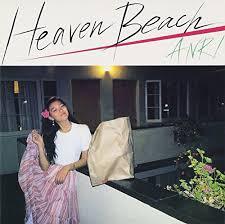
Y'know...I have my fair share of Anri(杏里)albums but I have yet to acquire "Heaven Beach" which was her 4th studio album from November 1982. Despite the autumn release, it must have been quite nice to hear the summer sounds from this one. Well, I assume considering the lady and the song of this article which is a track from the album, that it is a summery concoction.


"Last Summer Whisper" probably hasn't gotten onto any of Anri's many BEST compilations since the song is perhaps a little too mellow in a generic sense. However, I think it's one of those songs that Anri fans like me will come across for the first time and remark, "Gee, where have you been all my life?" It's really just a nice song of that time period representing City Pop and J-AOR. Not surprisingly, it's City Pop guru Toshiki Kadomatsu(角松敏生)who took care of words and music, and perhaps it was from this album that the Anri/Kadomatsu collaboration era began.


Of course, when I mention Kadomatsu these days, I start thinking about how all those Vaporwave and Japanese Future Funk fans may be kneeling in awe of him for providing so much material to mold. I've been hot and cold with some of those creations on YouTube. However, I have to admit that this one fellow, Boosted Bob (who's quite self-effacing in his description), did a pretty good job with his Vaporwave rendition of "Last Summer Whisper".

The music still sounds pleasing with a bit of spookiness while Anri's voice has been transmogrified to sound like either a supremely mellow Ken Hirai(平井堅)or Noriyuki Makihara(槇原敬之). Rather remarkable how that turned out.

Anyways, the original "Heaven Beach" only went as high as No. 89 on Oricon. I guess folks were too much into Christmas by that point. But no worries since Anri would go on an upswing as the 80s passed by. Plus, I still want to get the album.


Akira Kurosawa & Los Primos -- Ame no Ginza (雨の銀座)


Had a nice brief lunch with the anime buddy earlier today. We haven't done our usual biweekly Sunday routine for a number of weeks due to scheduling difficulties on both our ends so the outing at Olde York Fish N' Chips was quite good. Even got some of the good stuff for my parents since they also like the place.

It was quite summery this morning with a touch of humidity but we've been getting some fairly wet weather in the last several minutes. I'm sure folks out on the patios aren't too thrilled with the sudden change but having the humidity washed out for a little bit doesn't bother me.


Y'know, I don't quite remember all that much of a rainy Ginza when I was living in Japan. My memories of one of Tokyo's most expensive neighbourhoods have usually been quite sunny ones. Of course, Sundays have been the days when the main drag is closed down to vehicular traffic for about 6 hours so that the pedestrians can enjoy more walking and sitting space. Unlike old Akihabara which had a lot of the weird performance art and Akiba aidoru concerts, Ginza was pretty sedate with all of those tables and deck umbrellas covering them. However, I did remember seeing one Akiba-centric thingie with a cosplay girl playing dead on Chuo Avenue while her rabid partner as photographer was taking shots like a soldier on a machine gun. It's safe to say that the surrounding folks were mildly scandalized.

In any case, I did find this November 1967 Mood Kayo titled "Ame no Ginza" (Rainy Ginza) by Akira Kurosawa & Los Primos(黒沢明とロス・プリモス). This was their 5th single written by Masako Tokaki(冨樫政子)and composed by Hiroyuki Nakagawa(中川博之), and deals with a heartbroken woman standing on a Ginza corner in the rain, bereft of her man since the louse apparently found a replacement. I guess constant precipitation is also a good sign for the sad end of a romance along with falling leaves.

Now as for the lyricist 冨樫政子, I couldn't be completely sure of the reading of her name since I had never heard of her before and both her first and last names have different readings. So if Noelle or anyone well versed in her music can correct me, that would be greatly appreciated.

(empty karaoke version)

Ahhh...one of my old stomping grounds. I do hope that Yamano Music is still there when I visit the area next time.

Not sure how "Ame no Ginza" did on Oricon but the main vocalist here was Shoji Mori(森聖二)who became the 2nd leader of Los Primos after Kurosawa's departure in 1980. Kurosawa passed away in 2009 just before his 75th birthday (and again, this isn't the famous movie director Kurosawa) with Mori himself leaving this mortal coil a little more than 6 months later at the age of 70.

Friday, June 16, 2017

ORESAMA -- Ohkami Heart (オオカミハート)


Again, it's not usually my custom to feature a singer or a band twice within a month but some time after I read commenter Karen's remark how much she liked ORESAMA's debut single after reading my article on their contribution of an anison to the show "Alice to Zouroku"(アリスと蔵六), I decided to take a look at the song.


Well, I gotta say that "Ohkami Heart" (Wolf's Heart) is quite the fun song and I think the video really helps! I guess I've always enjoyed those whimsical day-glo images that transports me back to the 80s. Don't know or can't quite remember who they were but there were some artists back then who came up with those images. In any case, whoever produced the video gets my compliments especially in their rendition of ORESAMA members Pon(ぽん)and Hideya Kojima(小島英也). As for the song itself, there is something old and new in the arrangement as if 80s technopop band PSY-S passed the baton to its next generation.


ORESAMA's debut came out in December 2014 as the ending theme song for the anime "Ōkami Shōjo to Kuro Ōji"(オオカミ少女と黒王子...Wolf Girl and Black Prince). My anime buddy never showed me this one despite the big-name seiyuu; I guess from what I've read of the plot, perhaps it was a little too sappy romantic for him. Vocalist Pon took care of the lyrics while Kojima composed the music.

I see that the band's other single, "Dramatic" has a video with a similar graphic design theme. Will have to look at that one, too.

Masao Suzuki/Michiya Mihashi -- Tankō Bushi(炭坑節)


This article is a sequel of sorts to my talk with my new friend, Aja, who has been practicing Japanese dance for years, Yesterday, she sent me a list of various songs that she has known, and one of them was "Tanko Bushi" (Coal Mine Melody). Now that song rang a whole lot of memory bells since I've not only heard the classic minyo but I've actually danced to it.

Let me explain. 30 years ago when I was an undergraduate at the University of Toronto, the Japanese-Canadian Students' Association (as it was called back then) had just begun its time at the St. George Campus in downtown Toronto. Not long after its genesis, we heard an advertisement for some cultural festival that was to be held, and I believe one of the components was a demonstration of the world's dances. So, one of our more effervescent members, Yoko, who had experience in dance, wanted to get a small group together to demonstrate Japan's "Tanko Bushi". My good friend, Laura, (who introduced me to Aja), myself and a few others decided to take part and so we learned how to dance it in the large common room of the residence where Yoko had lived. And the dance was practiced as how you see it above in the training video.

Somehow our motley crew got our act together and when the dance demonstration was done at the main auditorium of the Medical Sciences Building, we not only did it but we did it a second time inviting members of some of the other dance troupes. It worked out pretty well but I distinctly remember (and felt) the participating member of the Jewish Students' Union accidentally smacking me in the knees during the second run. No offense taken, though, obviously.


"Tanko Bushi" was originally recorded back in 1932. According to Wikipedia, the most popular version was the one recorded by minyo singer Masao Suzuki(鈴木正夫), although it didn't state whether Suzuki's take was the very first recording (his career lasted from 1931 to his death in 1961). It is, though, the recording that our JCSA group followed.


The minyo is known as a folk song from Fukuoka Prefecture and at this time, it is said to have originated in the city of Tagawa with the lyrics referring to the old Miike Coal Mine. As for those lyrics and the melody, I couldn't find any record of who created the song unfortunately.

From what I've read, there have been a number of variations on "Tanko Bushi", so I'm sure enka and other kayo singers over the last century and into this one have given their renditions. The legendary Michiya Mihashi(三橋美智也)gave his contribution in 1956 according to the description under the above YouTube video with Kikutaro Takahashi(高橋掬太郎)providing some more lyrics and Toshiro Yamaguchi(山口俊郎)giving perhaps a more mellower enka-like feeling to the proceedings. Perhaps it can still be danced to.

Anyways, I'm providing the translation for the song below. It comes straight from the Wikipedia article on "Tanko Bushi".

The moon, has come out,
Oh, the moon is out, heave ho
Over Miike Coal Mine has the moon come out.
The chimney is so high,
I wonder if the moon chokes on the smoke...
Heave Ho!

Thursday, June 15, 2017

Yoko Nogiwa -- Hijo no License (非情のライセンス)-- The Theme to "Key Hunter"


Everyone in my family got a surprise over breakfast this morning when it was announced on NHK's "News at 9" that vivacious actress Yoko Nogiwa(野際陽子)had passed away from lung cancer at the age of 81 the day before yesterday. Obviously, she wasn't exactly a young person but when someone from the entertainment industry becomes as much of a familiar presence as Nogiwa did through her appearances on dramas, talk shows and variety shows, it still transmits a shock on finding out that she has left this mortal coil.


As you can see from above, Nogiwa was also very prevalent in commercials. My default impression of her was of a very elegant and courteous lady but with a core of iron which wouldn't allow her to suffer fools very gladly.


What I only found out recently was that her first few years on TV had been spent as an NHK announcer (1958-1962) before she decided to go into acting. After that, she became known as an action girl (!) along the lines of Diana Rigg's Emma Peel from the British spy series "The Avengers" perhaps starting with the 1960s "Key Hunter"(キイハンター), a Japanese show that tried to emulate the feel of series such as "The Avengers" and the original "Mission: Impossible" from America. It was quite the revelation to see a young Nogiwa looking quite the fashion plate of the times while kicking all sorts of butt.

The lead guy was Tetsuro Tanba(丹波哲郎)who had been Japanese spymaster Tiger Tanaka on the 007 entry "You Only Live Twice". He played Tetsuya Kuroki(黒木鉄也), former intelligence agent-turned-leader of this motley special missions force which included Nogiwa's Keiko Tsugawa(津川啓子). Tanba would become a star of another famous special good-guy unit show "G-MEN★75", interestingly enough, as another leader with the same last name as his "Key Hunter" character. Not sure whether the producers had wanted to bring in the same mystique surrounding Patrick McGoohan when he played spy John Drake on "Danger Man" and then "No. 6" on "The Prisoner"; there still is some wonder whether the two characters were one and the same.


Anyways, let's get back to Nogiwa. The opening theme for "Key Hunter" was this typically 60s spy show-sounding instrumental of intrigue. Imagine guns and go-go boots. The ending theme was the sung version of the opening theme, "Hijo no License" (Extraordinary License), and the singer was indeed Nogiwa. As far as I could see on Nogiwa's J-Wiki article, this was most likely her only record, and to be honest, I can understand why. I mean, she hit the notes but I think as a singer, she was a far better actress. And judging from the comments I've seen on YouTube and Mixi over the last several hours, she will be missed. I'm not a religious person but perhaps the afterlife just gained a bit more in class.

Jun'ya Sato(佐藤純弥)wrote the lyrics while Shunsuke Kikuchi(菊池俊輔)came up with the music. Kikuchi would also come up with the famous theme song for "G-MEN★75".


Mondo Grosso feat. bird -- TIME


As someone commented for the above video, it's been too long since the last collaboration between bird and Mondo Grosso. I still fondly remember their sunny "Life" from 2000.

"Time" isn't an instant earworm but it's still pleasant enough. At first, I couldn't quite believe it was actually bird singing but as the song went along, that distinct voice started emerging again. Nice to hear her after so long.

It is the first track on Mondo Grosso's latest album "Nando demo Atarashiku Umareru"(何度でも新しく生まれる...Newly Reborn Over and Over)that was released just last week. And MG's website has some videos for the tracks. Along with bird, UA gives her contributions as well as actress/singer Hikari Mitsushima(満島ひかり)and Asuka Saito(齋藤飛鳥)from Nogizaka 46(乃木坂46).